
Secrets of NYC
I Worked at Calvin Klein. Here's What 'Love Story' Got Right
Untapped New York Founder Michelle Young gives us a peek inside the NYC fashion company!
Untapped New York Founder Michelle Young gives us a peek inside the NYC fashion company!

For almost a century, this example of the great master's early work went unrecognized!


Untapped New York Founder Michelle Young gives us a peek inside the NYC fashion company!

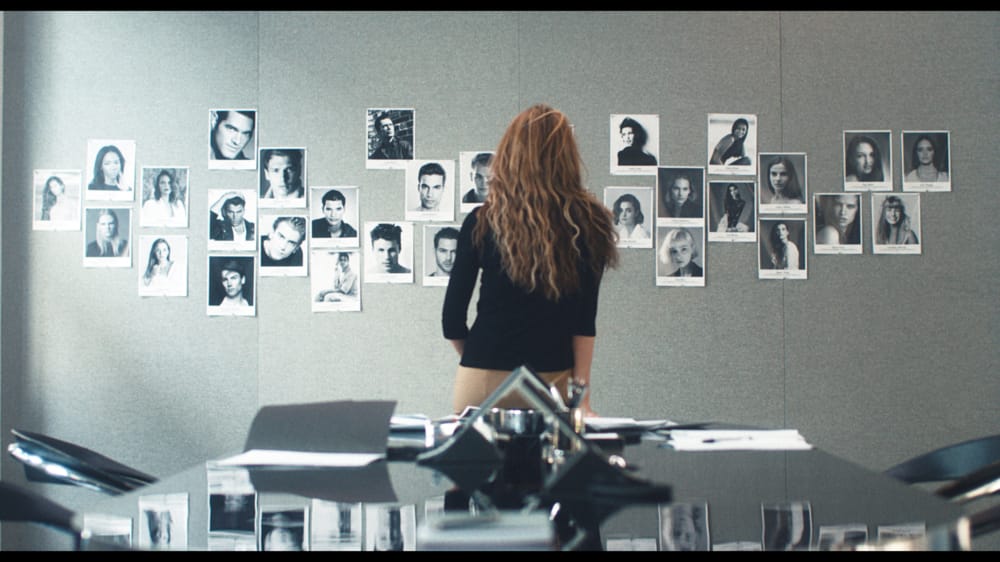
Something I did not have on my 2026 bingo card: going viral for a story on my past life as a fashion buyer at Calvin Klein. Nearly two million people saw my description of the Calvin Klein office, which had a very controlled aesthetic. Strictly black and white only, down to the paperclips, Post-It notes, pushpins, hangers, desks, lamps, and garbage cans. My favorite was the directive I got on day one: If someone is going to send you flowers, they must be white!
The brouhaha stems from the new Ryan Murphy series Love Story, about JFK Jr. and Carolyn Bessette. People are obsessed. Apparently, Gen Zers are looking longingly at the more minimalist, analog time when we used landlines and left voicemails on machines. I've been fielding interview requests from journalists around the world wanting to quote me about the company vibe.
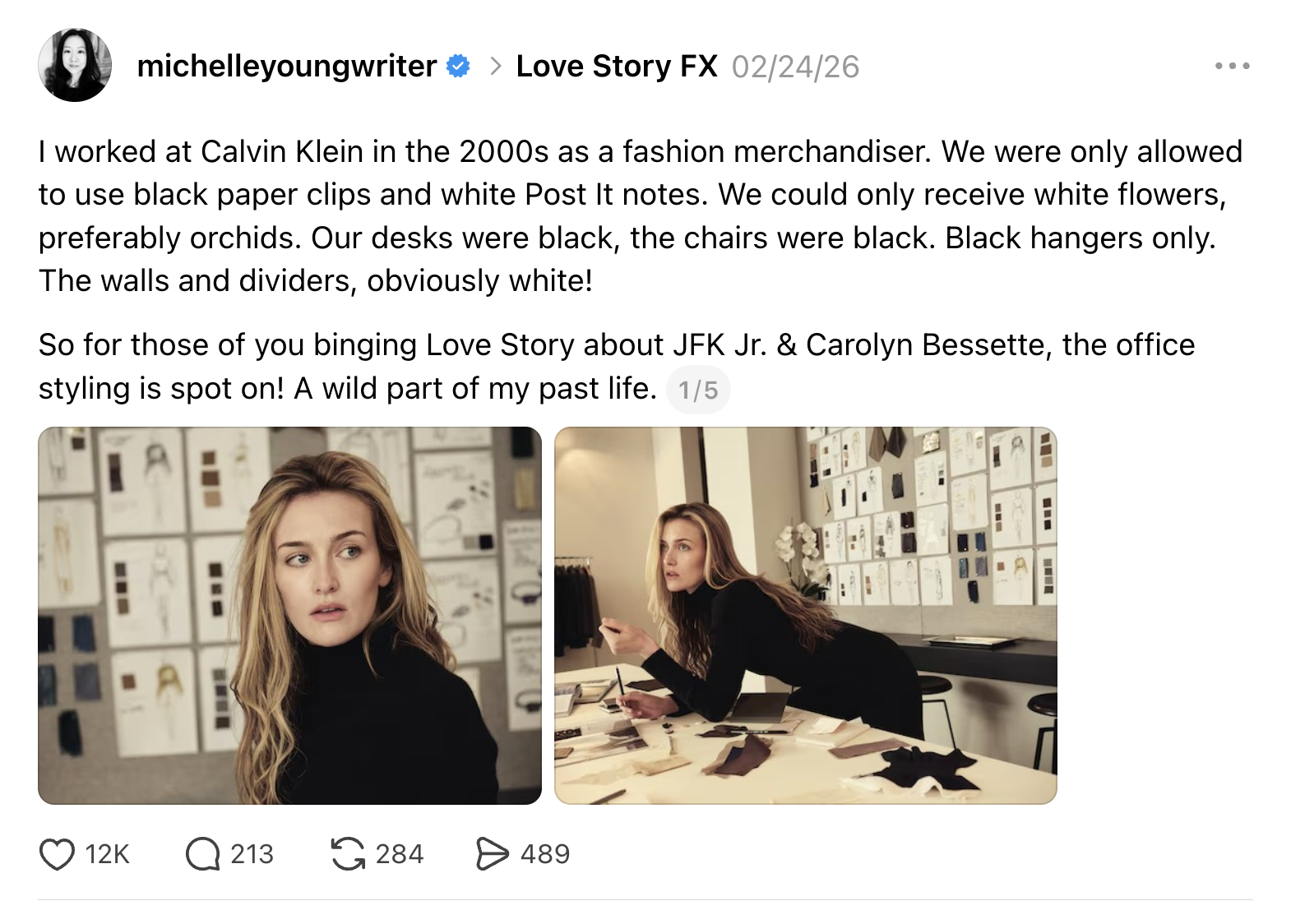
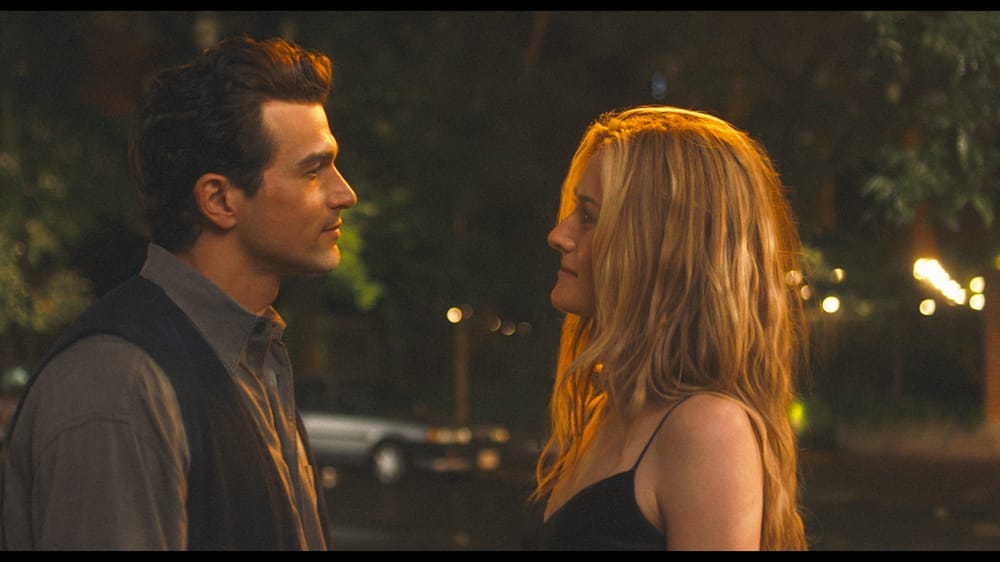
As the series comes to a finale this week, I feel torn about the show in general. It is very entertaining and bingable, in large part because the set designers did such an incredible job recreating '90s New York. The actors are both compelling, although I'm not sure it's possible to truly capture that ethereal look Carolyn Bessette had. Nonetheless, I think the casting of Sarah Pidgeon and the show's projection of Carolyn's personality works perfectly for the modern era. She's given an agency we couldn't see in the few still photographs of her. Mostly, though, there is something unsettling when much of the content about real people is so obviously imagined, especially knowing how their story ended—tragically.
As a nonfiction writer, I never make up dialogue or facts—every adjective has a source. I rarely use literary devices to surmise what might have happened—the would have, could have. It can work when you need to pull emotively at the reader, let's say when you know that something major happened in someone's life, but they never spoke about it. But I find a book hard to sustain when it's full of the would-haves, or when you have to write around the main character. The show got me thinking about what the fact/fiction boundary is for me in terms of film and television, what is allowable under the guise of "inspired by actual events."
I founded Untapped New York, but for the last five years, I have been working full-time as an author. My most recent book, The Art Spy: The Extraordinary Untold Tale of WWII Resistance Hero Rose Valland (HarperOne), was named a Best Book of 2025 by the New York Public Library, Hyperallergic, and Library Journal, and is a finalist for several awards, including the Marfield Prize, the National Award for Arts Writing. Rose was a Resistance spy who worked right under the noses of the most high-ranking Nazis in France and secretly documented their looting of art, en masse, from France.
I recently learned that The Art Spy is also a finalist for the Lambda Literary Award for Best Lesbian Memoir/Biography. This nomination means a lot to me because of how deeply I researched Rose Valland's personal life and her fifty-year relationship with her partner, Joyce Heer.
My personal obsession with getting to the truth of a story is one of the reasons I spent three months of my multi-year research on The Art Spy just looking at Rose's relationship with her partner, Joyce Heer. I had a hunch that their fifty-year relationship and their wartime life together was the key to bringing Rose to life and unlocking who she was. Joyce's wartime ordeal—arrested by the Nazis (with help from the collaborationist French police) and interned in a prison in the east of France—was particularly harrowing.
In order to figure out a part of their lives they deliberately kept secret, I had to track down every possible piece of research that might be available, down to identification cards, job applications, and similarly mundane documents. I scoured letters and scribbled notes for clues. I knew their story needed to be treated delicately, and I have been truly touched that this aspect of the book struck a chord with many readers and that Lambda Literary is honoring the book as an LGBTQ story.
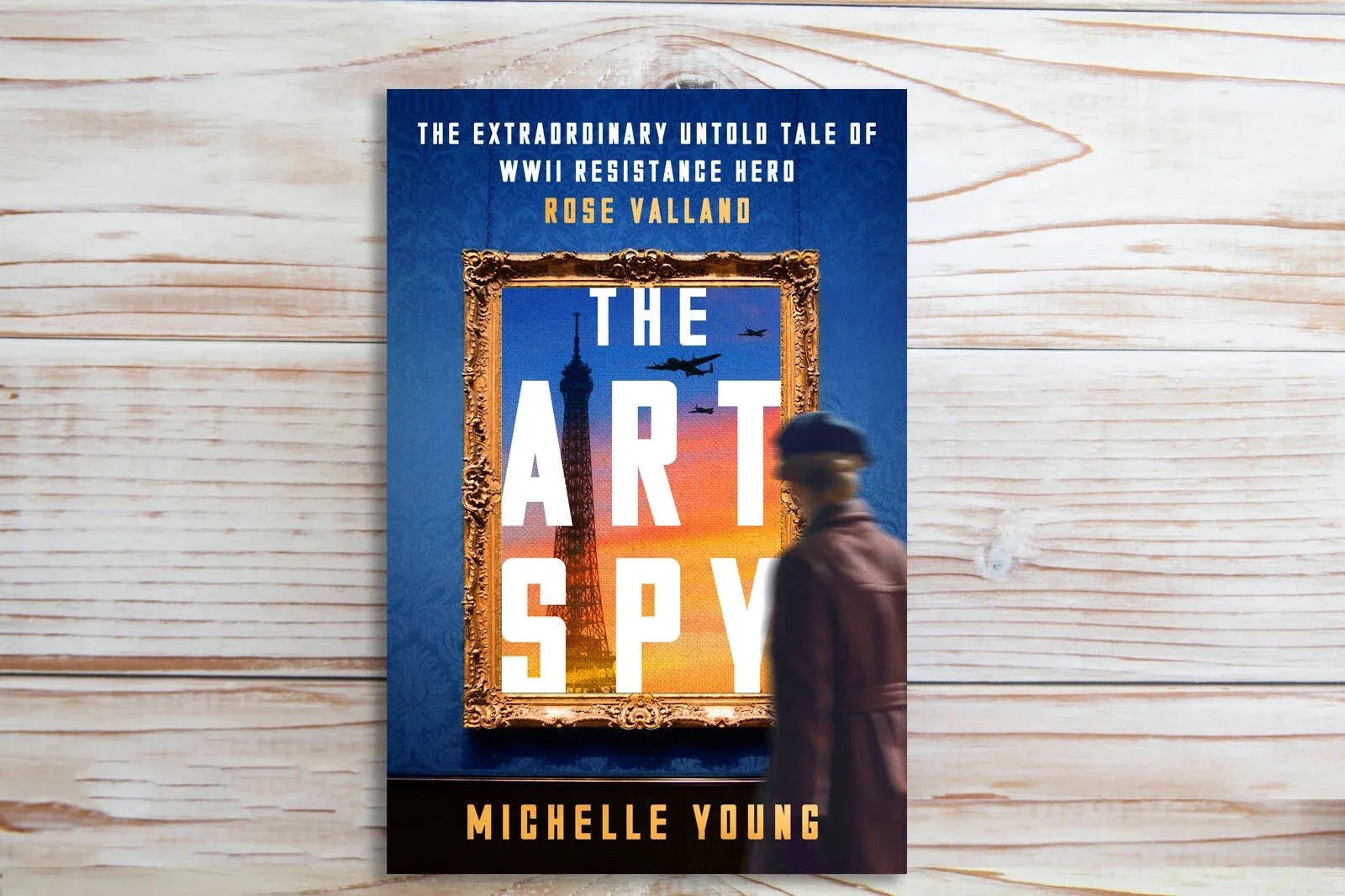
From Bookshop.org, Amazon, or an autographed copy from Michelle's website
But back to Love Story...I did love seeing the New York City I grew up in during the 1990s. I was accepted into the Juilliard Pre-College School of Music as a cellist when I was eleven years old, and on the weekends, I lived in a New York City that was gritty, sometimes eerily empty, but also exciting. In high school, when I escaped the oversight of my parents, I went clubbing at places like Tunnel, where I saw the legendary DJ Paul van Dyk spin live as my friends sat on the speakers, piled high in the club, blasting their ears out. As a crew, we also hit up Exit and Limelight, went to sing at karaoke in Korea Town bars, and shot pool in billiard halls around the city.
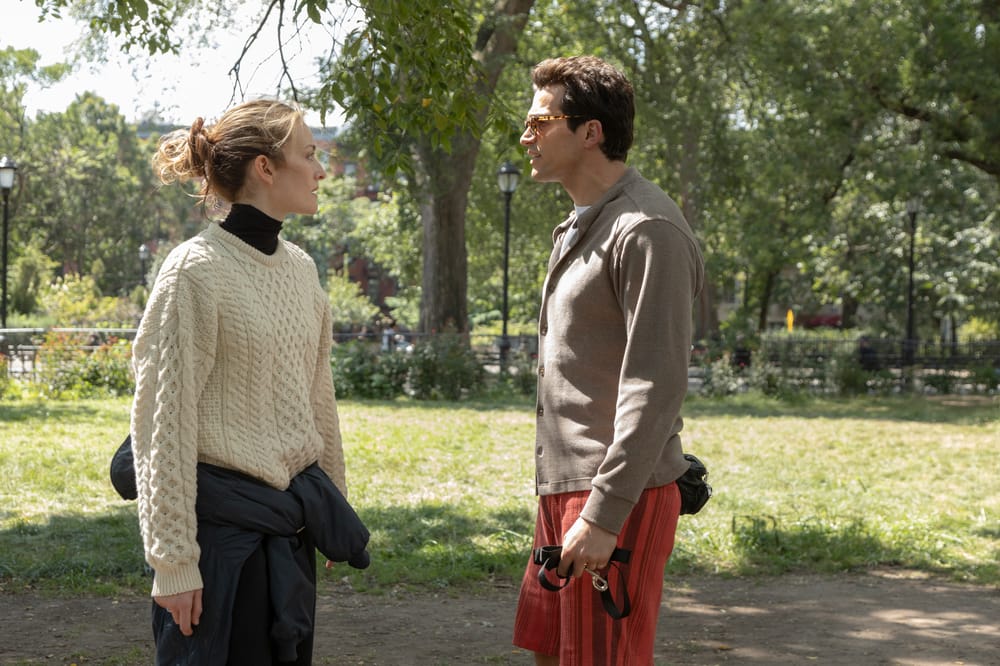
As I got my career started in the fashion industry in 2000s, I hung out in a lot of the spots shown in Love Story: Tompkins Square Park, the filming location for the infamous public fight that happened between JFK Jr. and Carolyn Bessette (Washington Square Park is where it happened in real life), Panna II restaurant (a fictionalized first date location) near the now-closed Raj Mahal and Taj Mahal combo, and of course, the Calvin Klein office. Much later, my mom and I went to the Four Seasons Restaurant for lunch to celebrate my birthday. In the show, it's where Kelly Klein launches her book on pools, appropriately in the restaurant's famous Pool Room.
When I first started working as a buyer at Calvin Klein, my desk was in the 39th Street building. I was working on the launch of a new specialty retail brand, Calvin Klein White Label, and was subsequently moved into a new office on 40th Street, where the company applied the strict monochrome brand aesthetic. The required office supplies were at our desk when we started working, along with a white orchid. I could never keep mine alive.
The hangers all had to be black, too. But because the company would not pay for all the black wood hangers needed, we spent long hours in the closet moving clothes from plastic black hangers to wood ones and back, depending on what would be shown in meetings. Much bonding was done in that closet! My boss had trouble remembering things, so she made us put mini white Post-Its (cut to fit) on the back of the hangers with the key item number, price, buy, and set date so she could look like she had it all memorized during meetings. But since the hangers always had to be swapped in The Great Black Wood Hanger Shortage, we had to move those Post-Its too. If we missed one, she would go bezerk. Every few weeks, I would sneak in more orders of black wooden hangers with the admin to save everyone just a little more time and reduce the freak-outs.
Calvin Klein was mostly out of the picture by then, because he had sold the business to Philips van Heusen. A lot of the Calvin Klein product people knew—the underwear, the perfume, and the jeans—had been licensed away long ago, so the company did not actually control any of it. But the office personalities were still what you might imagine a fashion brand would have. Fashionistas who organized their closet by color and fabric, mixed with more business-oriented people.
We did a combination of old-school buying in Garment District showrooms and producing our own clothing—all of it would get the Calvin Klein label regardless of origin. There was cocaine around, done at parties and weddings, although I was very clean cut and avoided all that, even though I was in a rock band at the time. (In a moment documented for posterity in The New York Times, Mick Jones from The Clash came to my band's first show at Lit Lounge in the East Village, where you could still smoke indoors. Mick asked me to hang out after the show, and I told him I couldn't because I had to go work the next day—what was I thinking???)
We worked late hours and weekends. There were times when I was told I could not take a scheduled vacation. Some days were hard, and I would cry in the HVAC room—the only place in the office that was not black and white! The open office layout made it hard to hide away. As I approached the five year mark as a fashion merchandiser and buyer, I just wasn't sure what the point of all of it was anymore. I wasn't passionate enough about fashion to persevere in an industry that was often superficial, fickle, and political. We spent a lot of time doing things like swapping out hangers, rather than building the business.
I remember the day I quit. It was May, and I told my boss I was leaving to go back to school. She said with a look of panic, "But don't you need the money???" And I answered, "Actually, no." From there on out, I hustled. I tutored SATs and other subjects to students all around New York City and the Tri-State area. I played cello gigs—live ones, in recording studios, and on films (and ended up in Steven Soderbergh's film Side Effects for which I still receive royalties!). I continued to tour and perform with my band—we played SXSW showcases twice and NXNE. I studied for the GREs and the GMATs and put together my applications for school. And then in grad school at Columbia University, where I later became a professor of architecture, I founded Untapped New York. And the rest is history.
I love that Gen Z is fascinated with that time period, before digital devices took over. We were so present. My Blackberry did not have a camera worth talking about, so even when we did crazy things, like illegally climb to the top of a New York City skyscraper, we didn't bother to document it. I remember one time, as we sat perched on a spire thousands of feet up, I looked out over Manhattan's West Side, to the Hudson River and into New Jersey. On the dark, clear night, it felt like we were the kings and queens of the city. And, looking back, we really were.
