


Spot Car Parts on the Chrysler Building Facade
Hubcaps and hood ornaments can be see on this iconic NYC landmark!

Few buildings in New York City are as recognizable as the Chrysler Building. Its shining silver spire and gleaming eagle heads that loom over 42nd Street and Lexington Avenue make this Art Deco skyscraper instantly identifiable. But if you look beyond these signature features, even more defining markers come into view.
The Chrysler Building was originally supposed to be the Reynolds Building, named for William H. Reynolds, the former New York senator and real estate developer who leased the plot of land it sits on in 1921. Reynolds commissioned architect William Van Alen to design a skyscraper for the site and construction began in 1928. However, Reynolds soon ran out of money.
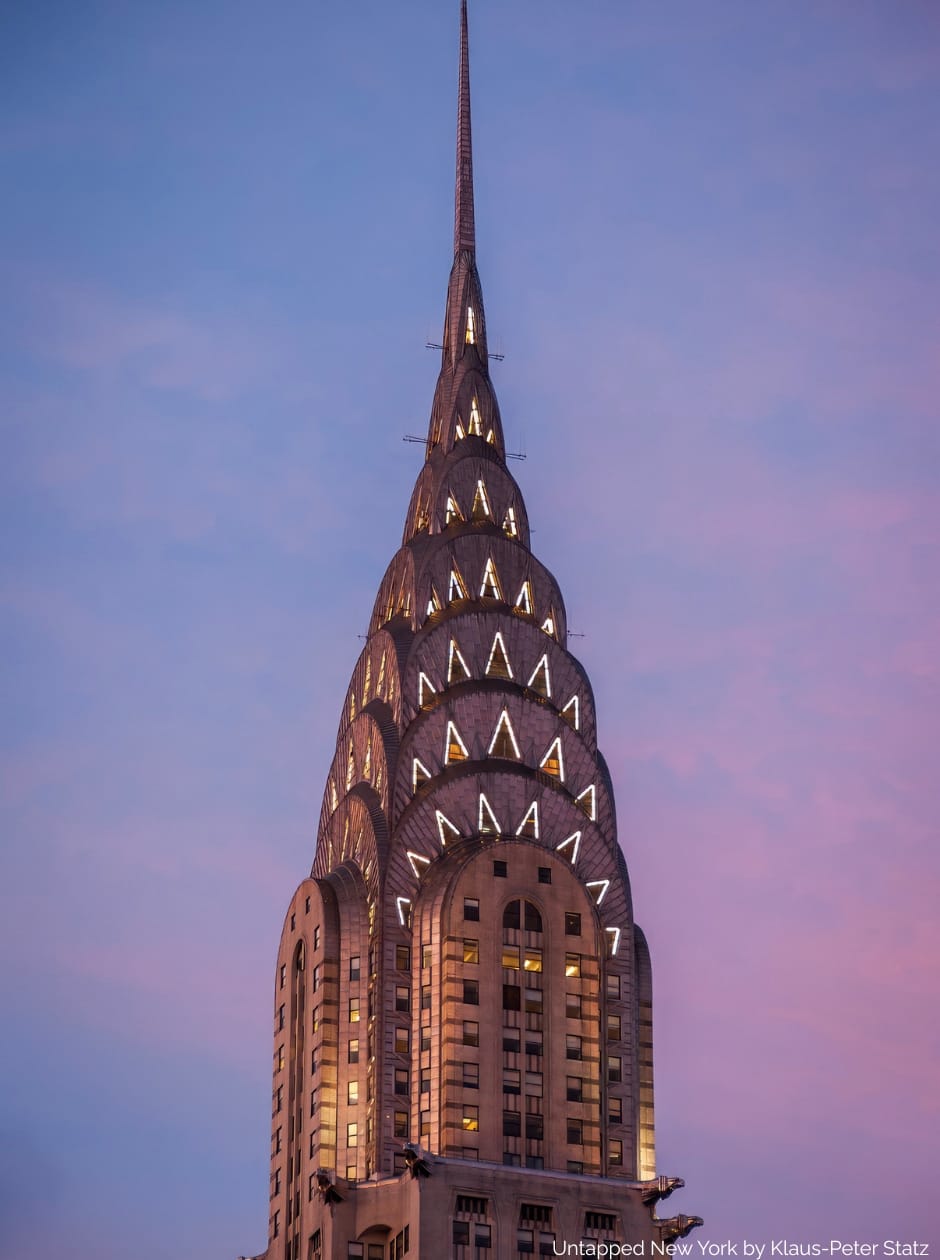
Automotive magnate Walter Chrysler took over later that year and worked with Van Alen to revise the design. They demolished what was already built of the Reynolds project and moved forward with plans for what would become the world's tallest skyscraper (surpassing the Woolworth Building, which held the title at the time).
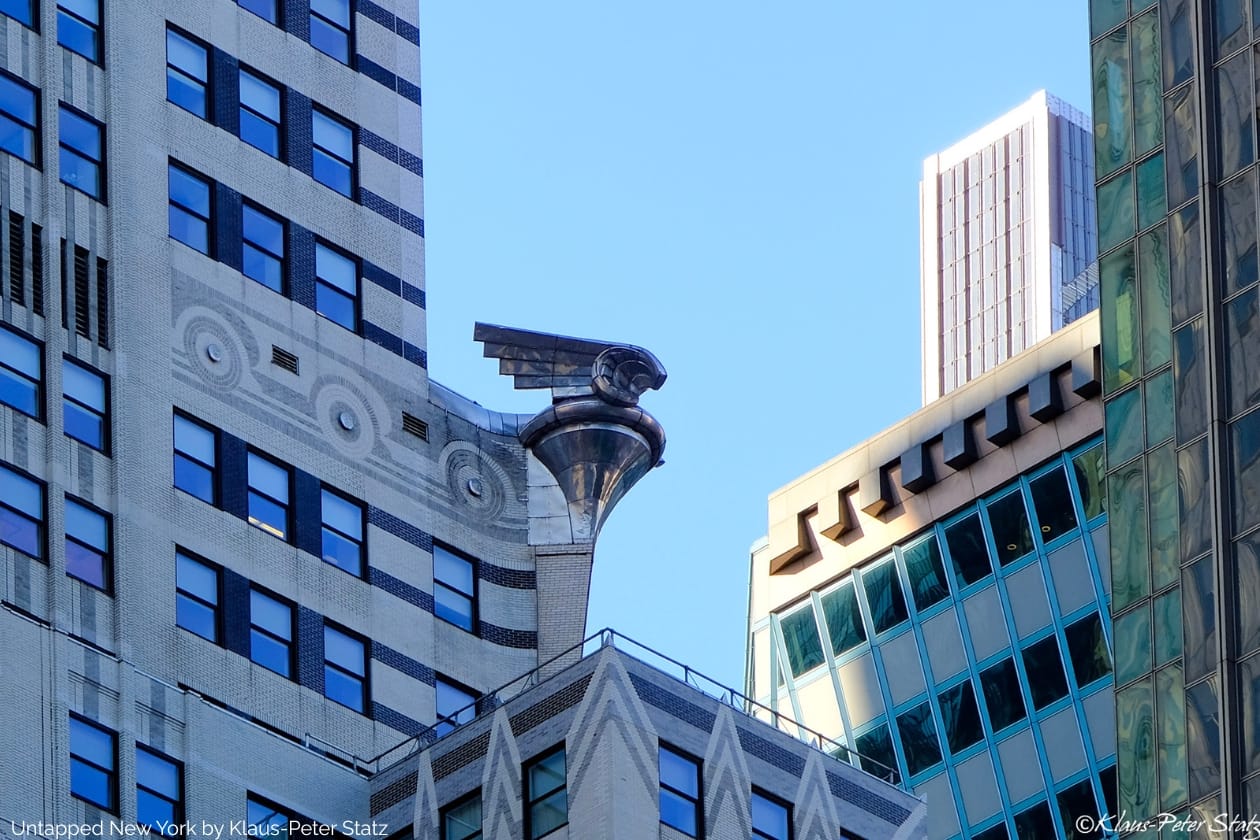
Van Alen and Chrysler added new ornamental details to the revised plans that nod to Chrysler's car empire. At the 31st floor, large sculptural steel figures that resemble the winged hat of the messenger god Mercury grace the corners of the building. These figures are similar to the hood ornaments that adorned Chrysler cars at the time.
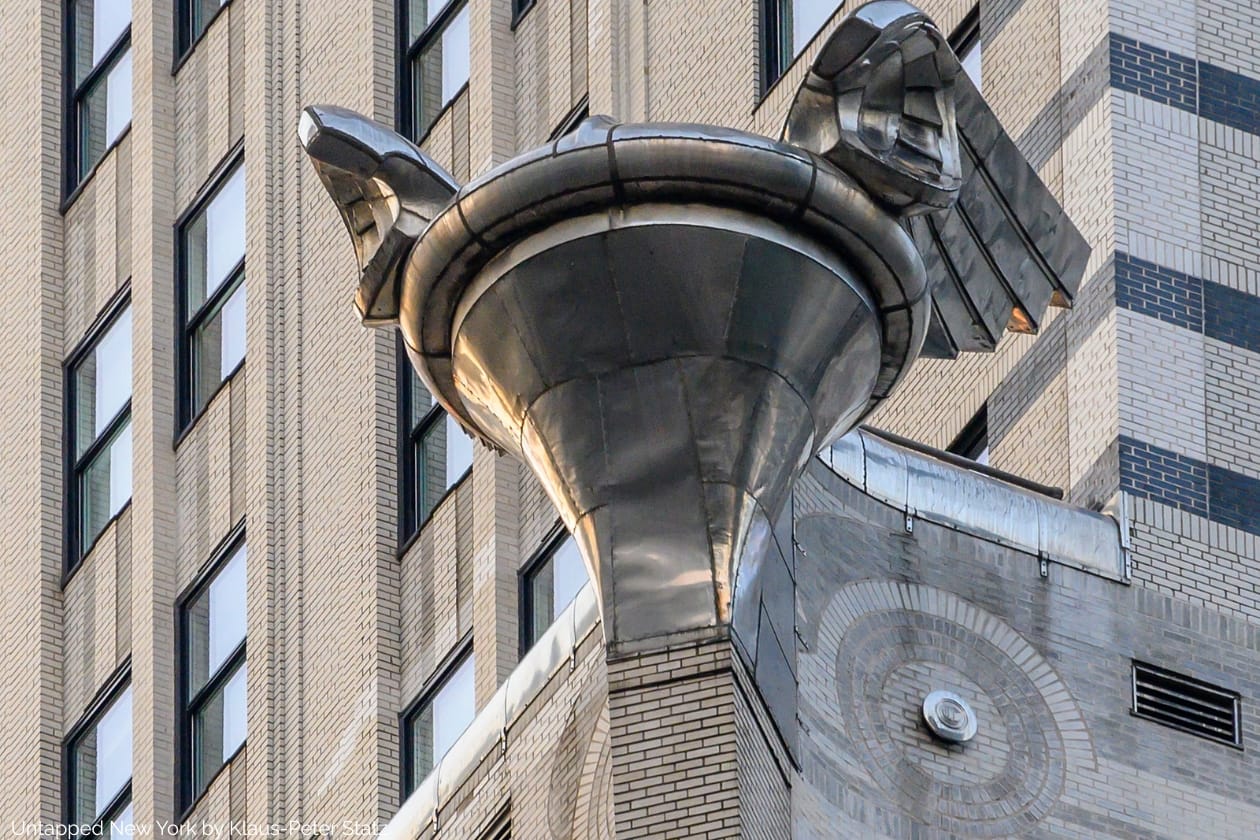
The Chrysler Building was the first American project to make use of "Nirosta," a new form of stainless steel developed in Germany. The ornamentation at the 31st floor, the eagle heads at the 61st floor, and the sunburst crown are all clad in this material.
Also at the 31st level, the brickwork gets decorative. A polychromatic pattern of grey and black bricks takes on the shape of car fenders with wheels. Small, round, metal hubcaps at the center of the circular forms complete the automotive illusion.
Architecture critics of the time, like George Chappell writing for The New Yorker, saw these ornamental elements as gimmicky, noting that the building had "no significance as serious design," but was “merely advertising architecture.” Over the years, these critiques have softened, and the Chrysler Building is now one of the most beloved structures in the city's skyline.
Uncover more hidden stories of the Chrysler Building and other Art Deco skyscrapers when you join Untapped New York for an upcoming Art Deco Icons of NYC walking tour!
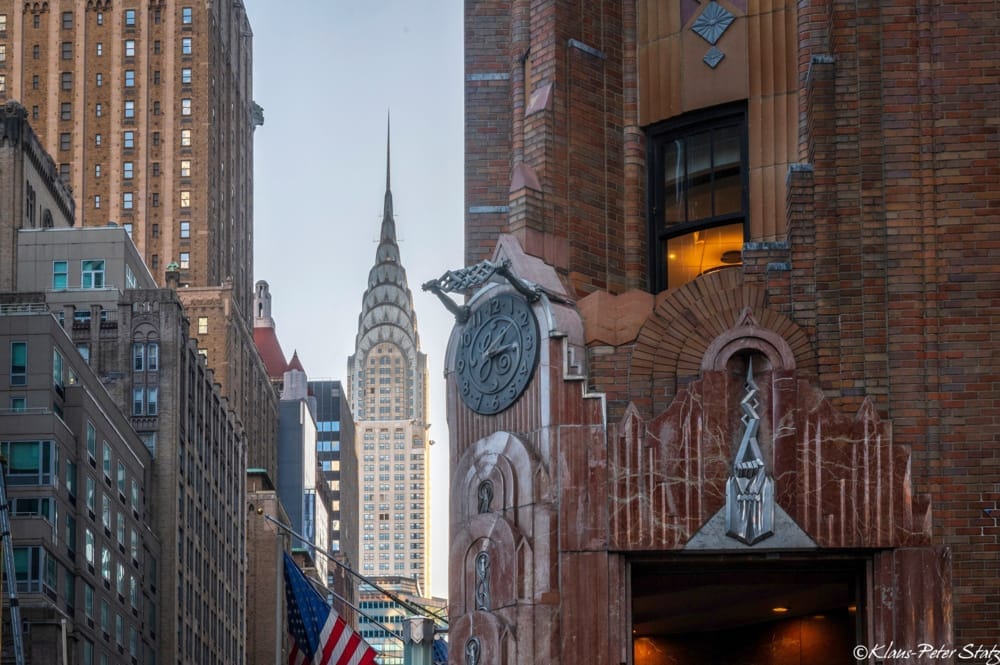
Art Deco Icons of NYC Tour
🗓️ Fridays at 4 pm and Sundays at 10 am
Explore landmarks like the Chrysler Building, Rockefeller Center, and more from a new perspective.
⭐ Free for Insiders and Explorers! Members book here.
