
Things to Do
🏆 Untapped New York Named One of the Best Tour Operators in America by Newsweek
Our Secrets of Grand Central tour has earned national recognition!
Our Secrets of Grand Central tour has earned national recognition!

Untapped New York Founder Michelle Young gives us a peek inside the NYC fashion company!


Explore Rauschberg's photographs and collages featuring images of NYC!


The extraordinary exhibit of Robert Rauschenberg's photos and art at the Museum of the City of New York, celebrating the centennial of his birth, tells us about Rauschenberg, his lovers, friends, and collaborators. Just as importantly, it tells us about New York City at a unique time, not so long ago, when giants walked the earth and strode through Manhattan. Jasper Johns. Merce Cunningham. Cy Twombly. John Cage. Trisha Brown. Jackson Pollock. Willem de Kooning. Robert Motherwell. And more.
Whether friends or strangers, these people were crucial to Rauschenberg's art. “My whole area of art has always been addressed to working with other people,” he once said. “Ideas are not real estate.”
Ideas are not real estate, and he happily plundered ideas, images, objects, even debris from others, a sort of communal approach to art. "I refuse to be in this world by myself," he said. "I want an open commitment from the rest of the people."
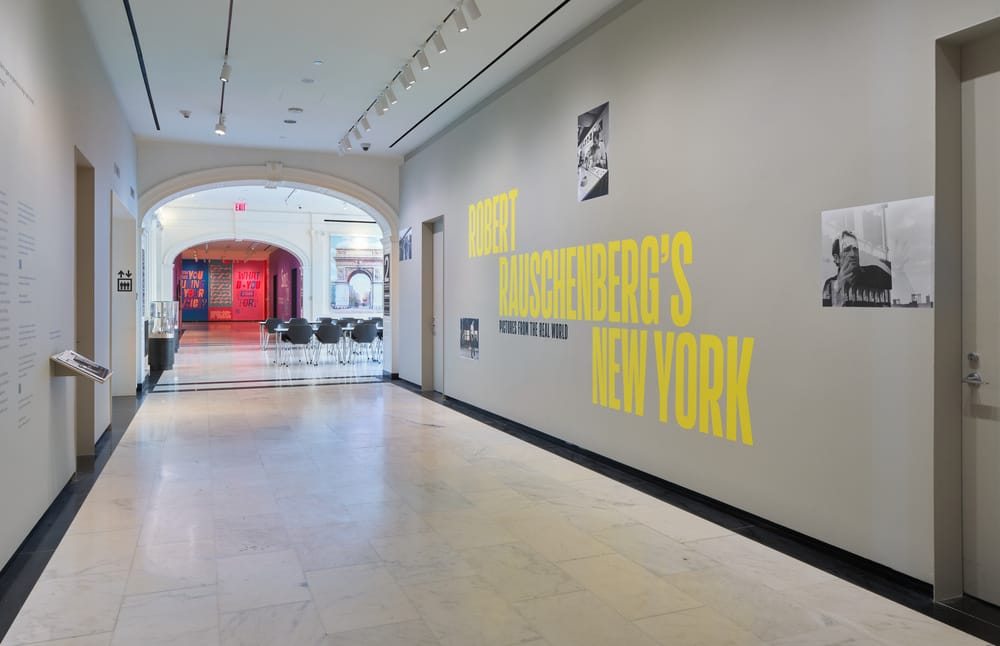
Rauschenberg saw New York in all its density and complexity and converted its "constant irrational juxtaposition of things" into art, notes Courtney Martin, the Robert Rauschenberg Foundation's Executive Director. In the book that accompanies the exhibit, Martin begins by pointing out that Rauschenberg's first encounter with New York in May 1948 was a false start.
The 22-year-old from Port Arthur, Texas, prematurely disembarked from the train in Newark, having misheard the conductor. (He was dyslexic.) There, the famous skyline stretched out before him, on the other side of the river. He left for a hiatus in Paris, where he met artist Susan Weil, whom he later married. Together, they attended the renowned Black Mountain College in Asheville, North Carolina. In the summer of 1949, they returned to New York, which became his inspiration and his home.
Sean Corcoran, the Museum of the City of New York's Curator of Prints and Photographs, gave us a tour of the exhibit:
MCNY president Stephanie Hill Wilchfort writes that this exhibit celebrates and embraces "the qualities that define New York: money, diversity, density, and creativity—all of which are palpably manifest in Rauschenberg’s life and work."
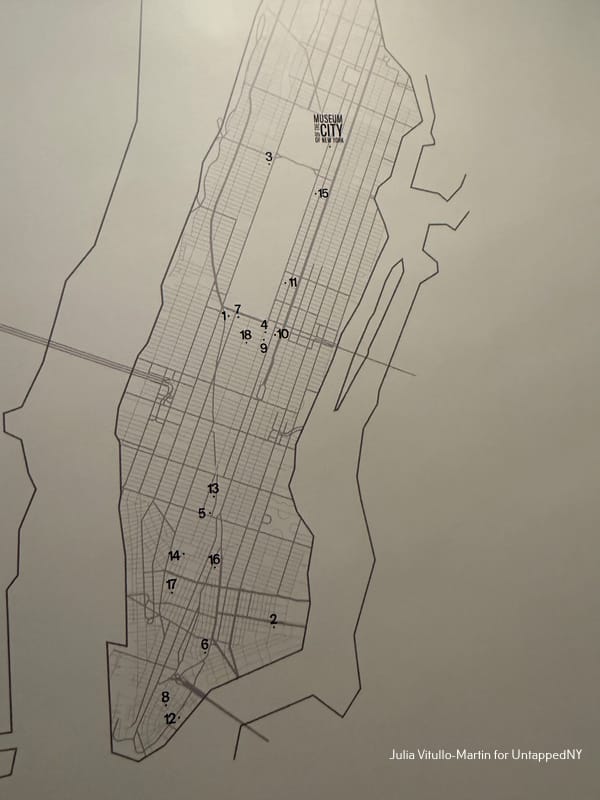
A useful map at the start of the exhibit shows Rauschenberg's New York, the local addresses that became synonymous with different phases of his work, says Courtney Martin: 61 Fulton, 278 Pearl, 128 Front (these three locations have been demolished), 809 Broadway, and 381 Lafayette, the former convent of Saint Joseph’s Union Mission of the Immaculate Virgin. Having won the International Grand Prize in Painting at the Venice Biennale in 1964 and sold increasing amounts of his work, he was able to buy the convent in 1965. Today, it serves as the headquarters of the Robert Rauschenberg Foundation.
Why downtown New York? For one thing, it was cheap in those days, and for another, other giants, such as Ellsworth Kelly and Agnes Martin, were already there. "You could smell the river air—the kind of air that helps to open your mind," writes Hilton Als in The New Yorker.
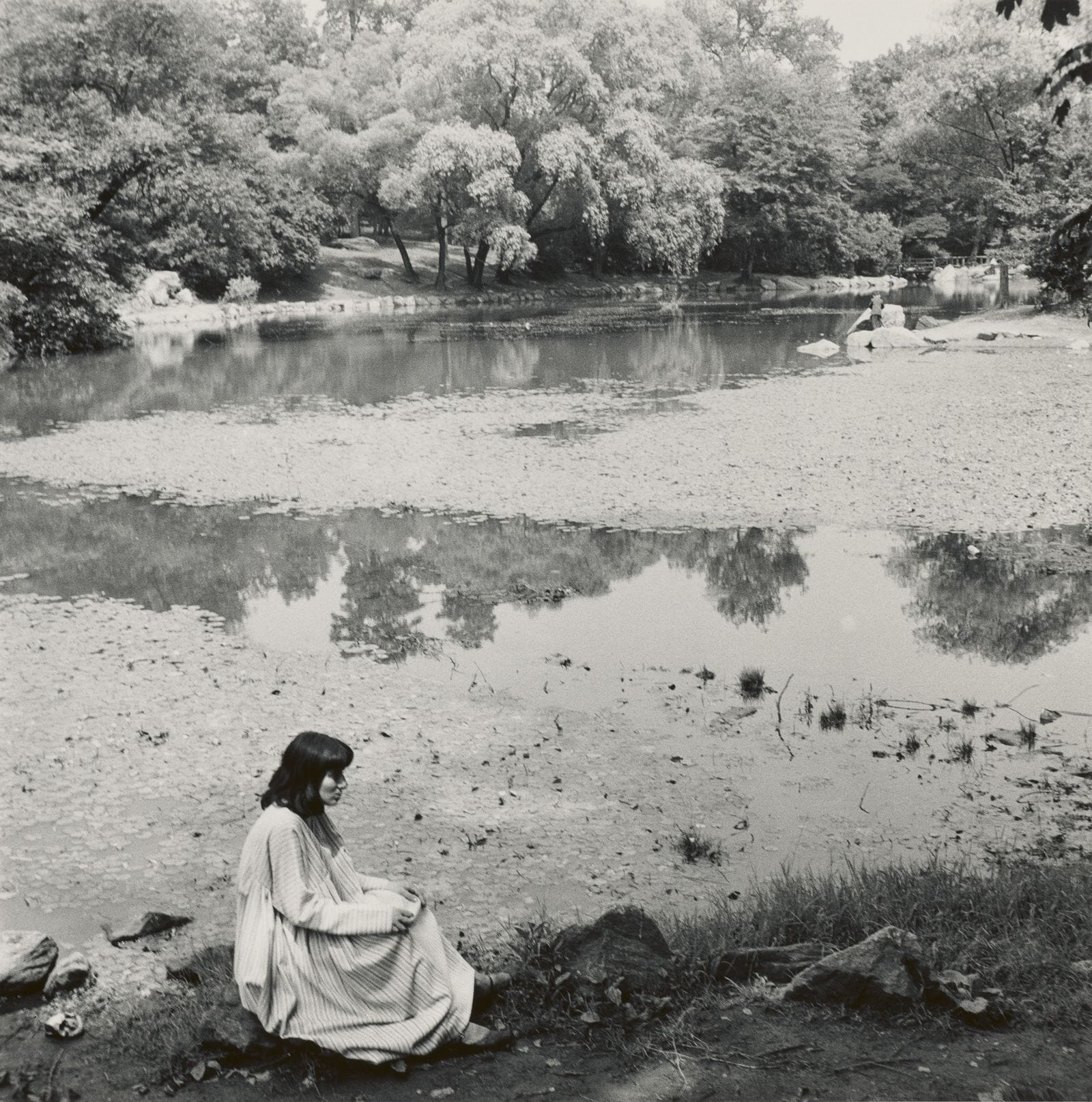
But it's the people—the artists, dancers, musicians, and random strangers—who were his friends and muses that ignite this show. The photograph below of Susan Weil, captioned simply "Susan," shows Rauschenberg's ability to capture beauty, sadness, and longing. The marriage was productive—Weil is an innovative artist in her own right and taught Rauschenberg experimental techniques—but short-lived.
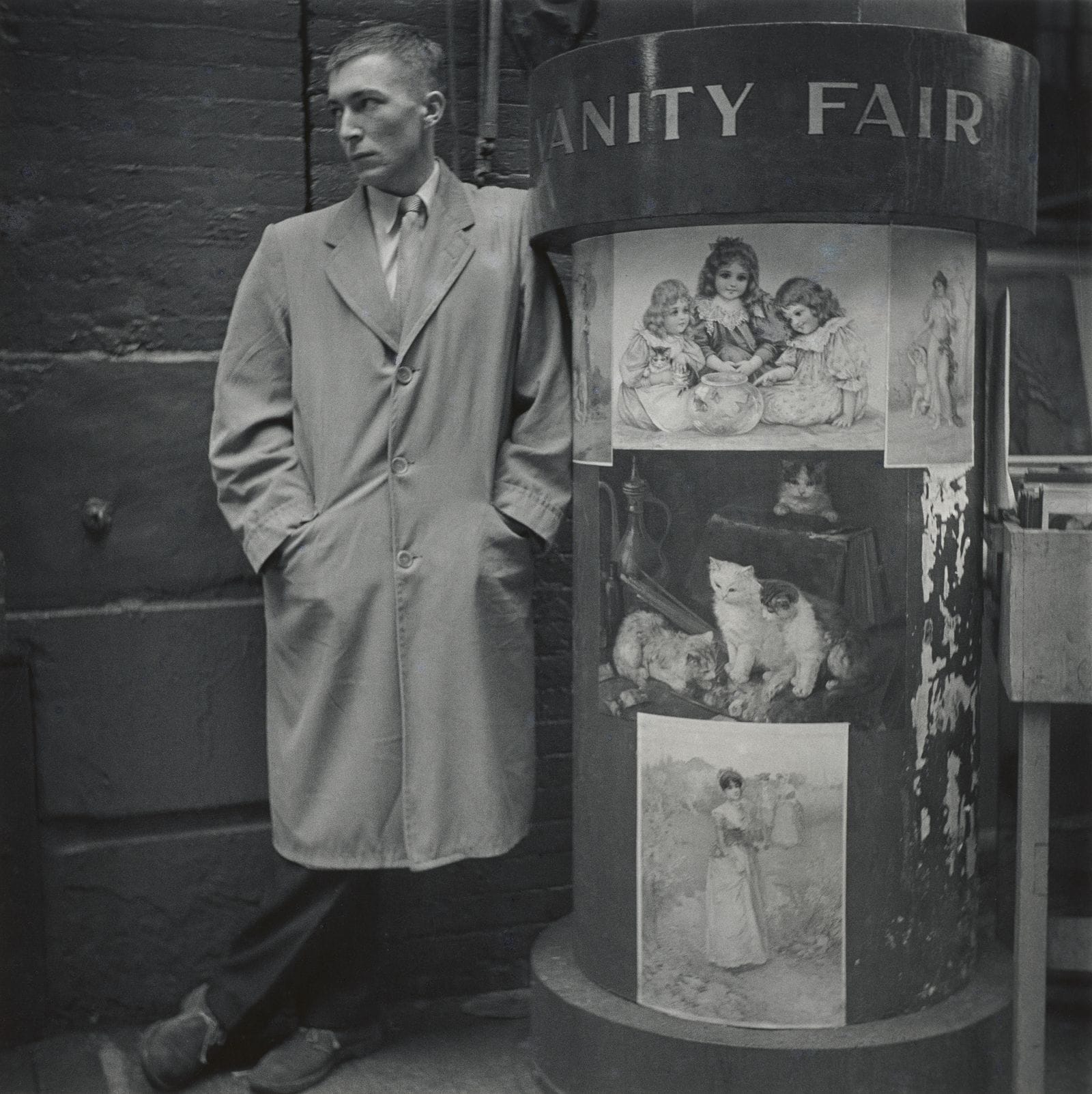
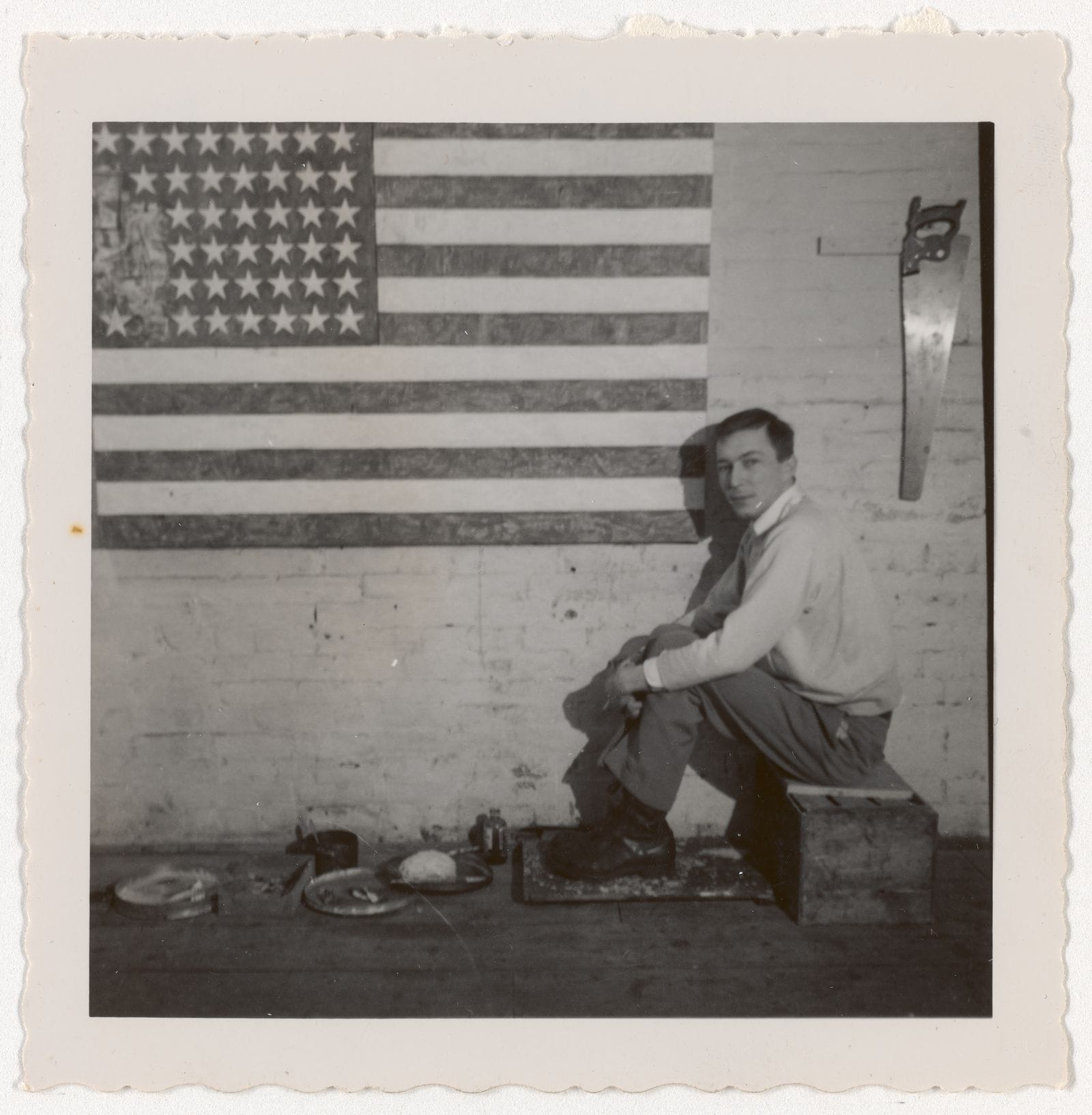
By 1954, Rauschenberg's marriage was over, and he had met Jasper Johns. They soon began what MCNY curator Sean Corcoran calls "an intellectual, artistic, and romantic partnership." Rauschenberg rented a loft on the floor above Johns's loft at 278 Pearl Street. A few years later, they moved to a loft at 128 Front Street, where Johns took the upper floor. They stayed together until the early 1960s, profoundly influencing one another's work.
In the photo below, critic Hilton Als especially admires "Johns’s self-containment, his inscrutability," which "makes the portrait more formal, like the beautiful overcoat he wears as he stares out of the frame at the waiting world, his hands in his pockets."
"What is it that makes Robert Rauschenberg’s photography so provocative?" asks Rauschenberg curator Helen Hsu. "At the inception of his career, Rauschenberg’s photographic activity was integral to the formation of his artistic ethos. It developed in parallel with his democratic appreciation of an expansive spectrum of things, from the abject castoffs of commodity culture to the market-priced preciosity of gold."
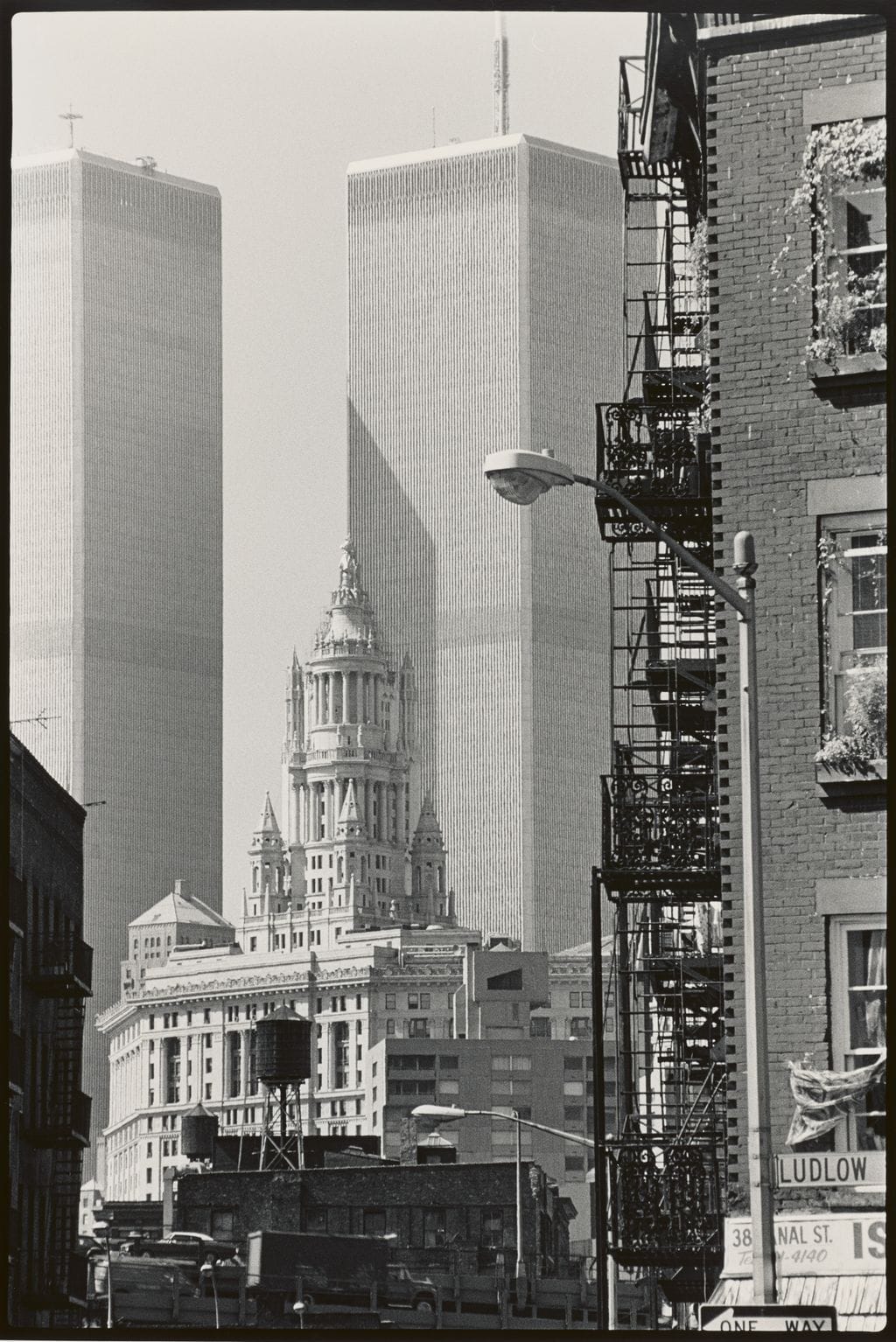
His "expansive spectrum of things" allowed him to move objects, even huge buildings, to please his aesthetic sense. Thus, he positioned New York's Beaux-Arts Municipal Building, which is actually located at One Centre Street, in front of Minoru Yamasaki's austere World Trade Center, destroyed by terrorists on September 11, 2001. What would Rauschenberg make of this image today? He once said, "The artist's job is to be a witness to his time in history."
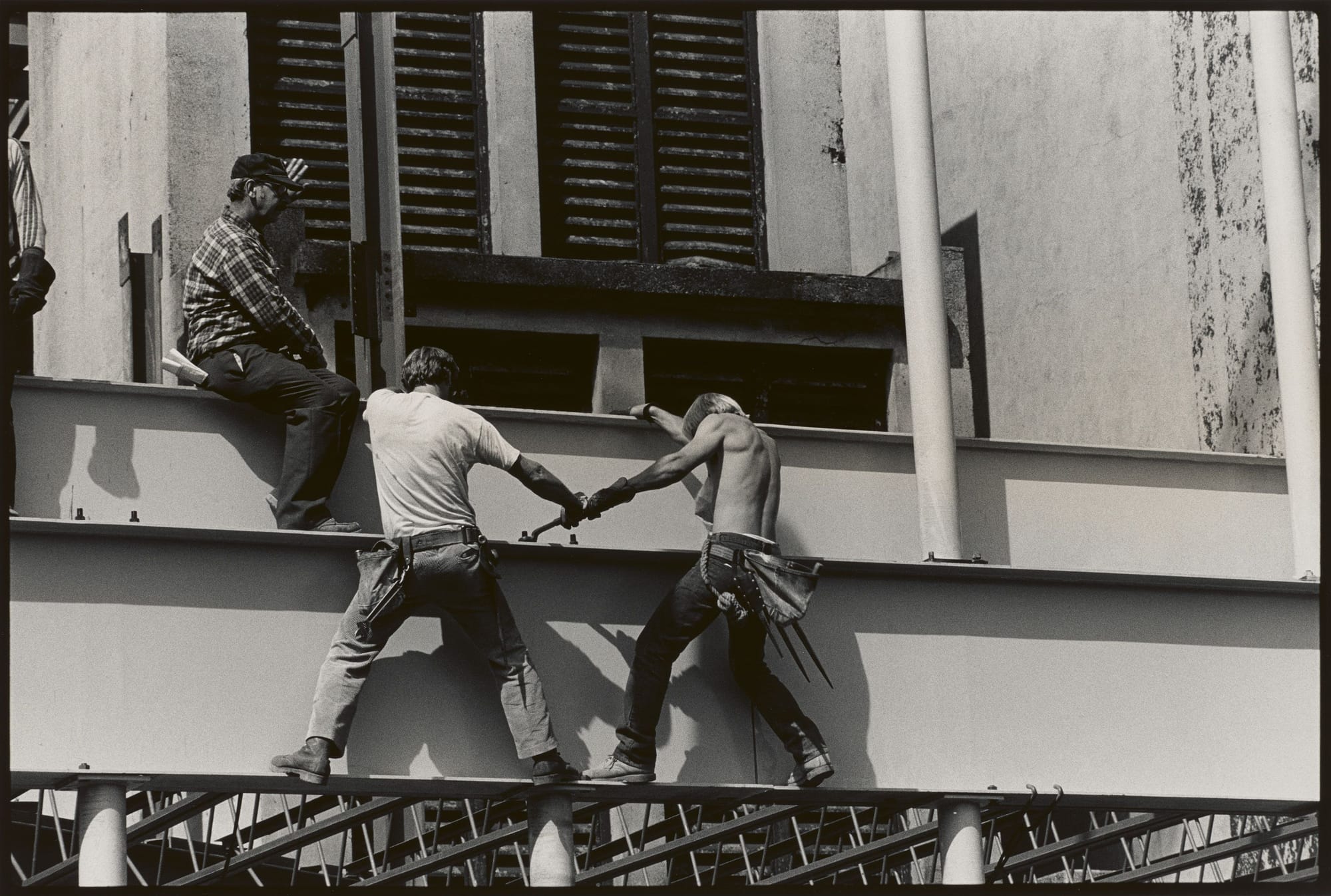
He was clearly interested in men at work, especially those doing hard physical labor, such as construction workers. Rauschenberg said that photography was "the most direct communication in non-violent contacts," an unfiltered view of reality. Did he speak to his interesting-looking subjects?
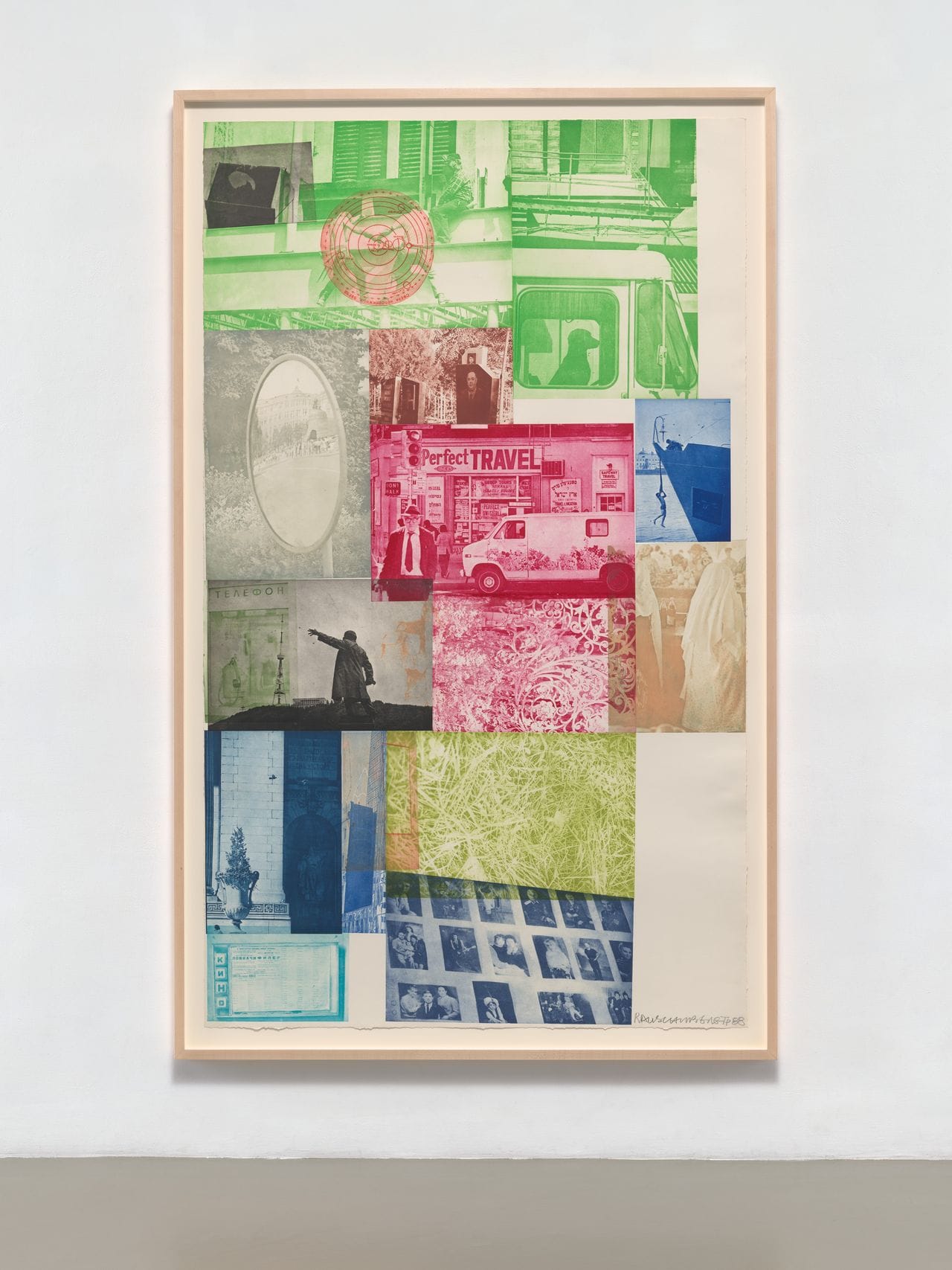
In the hopes of fostering cultural exchange Rauschenberg began the Rauschenberg Overseas Culture Interchange, or ROCI (pronounced ROCKY), in 1984: “I feel strong in my beliefs, based on my varied and widely traveled collaborations, that a one-to-one contact through art contains potent peaceful powers, and is the most non-elitist way to share information, hopefully seducing us into creating mutual understandings for the benefit of all,” he wrote. He traveled to ten countries where relations with Americans could be improved, says Sean Corcoran, including Mexico, China, Cuba, Germany, and the USSR.
One result, juxtaposing his New York photographs with those from the USSR, is below. Even with his back to us, the familiar photo of Lenin is immediately recognized. Above Lenin to the right is an amusing, Elliott Erwitt-type dog in a car, gazing out at the world.
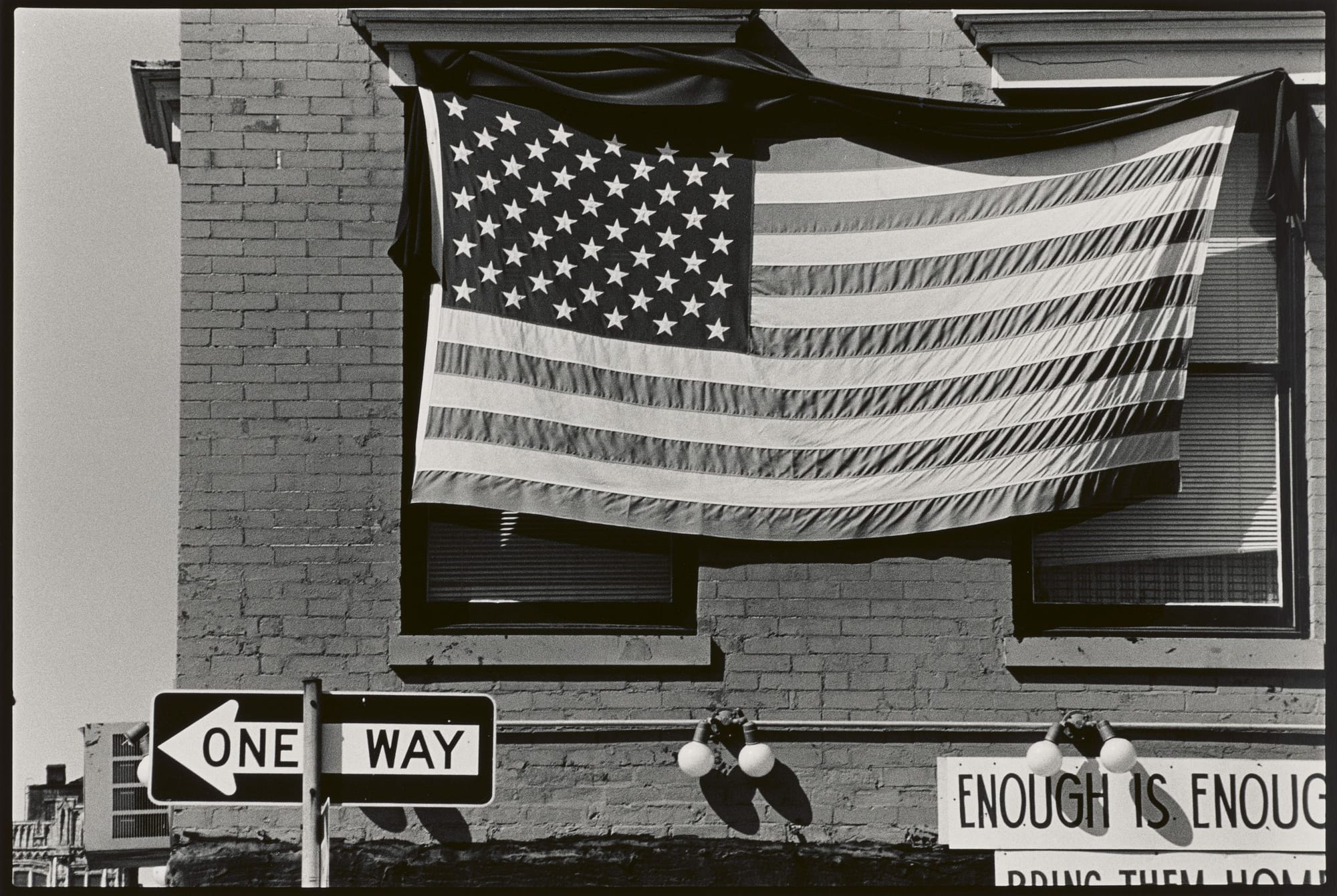
Given his interest in the signs and symbols of human culture, surely Rauschenberg would laugh at the political relevance today of his 1980 photograph of the American flag above a One-Way sign and another sign saying, "Enough is enough."
And cut off but readable is the Vietnam-era slogan, used since for many humanitarian causes: "Bring them home." Rauschenberg was non-partisan, but he famously summarized his views: "It is impossible to have progress without conscience."
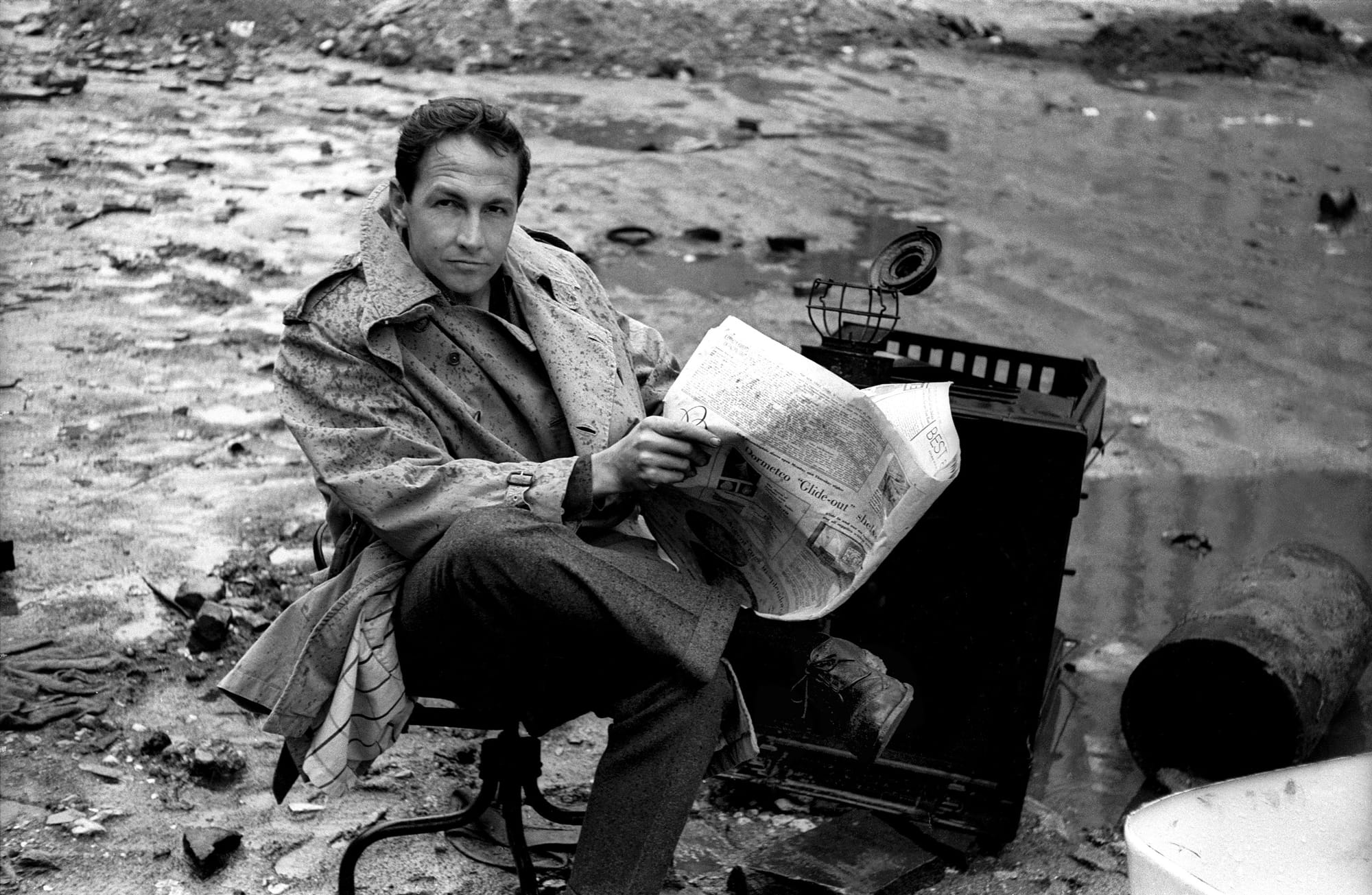
Of the many extraordinary photos in the exhibit, one stands out as telling it all: Fred W. McDarrah's photo of Rauschenberg reading the New York Times in an empty lot. With his strong, direct gaze, Rauschenberg looks at McDarrah with a touch of hostility. Surrounded by trash and debris, Rauschenberg looks as if he were in a post-apocalyptic film. But no, it's just a vacant lot in 1961 in downtown New York, which Sean Corcoran calls his "artistic anchor."
The Museum of the City of New York is located on the Upper East Side at 1220 Fifth Ave at 103rd Street. It is open Monday through Friday from 10 am to 5 pm and on Saturdays and Sundays from 10 am to 6 pm.
Robert Rauschenberg's New York is open through April 19, 2026.
Subscribe to our newsletter