Secrets of NYC
✉️ The Lost Pneumatic Tube System at the NYSE
Long before fiber optics and wireless networks, bursts of compressed air kept Wall Street moving.
Long before fiber optics and wireless networks, bursts of compressed air kept Wall Street moving.

A new exhibit explores the unrealized, extant, and lost projects of this prolific NYC artist!


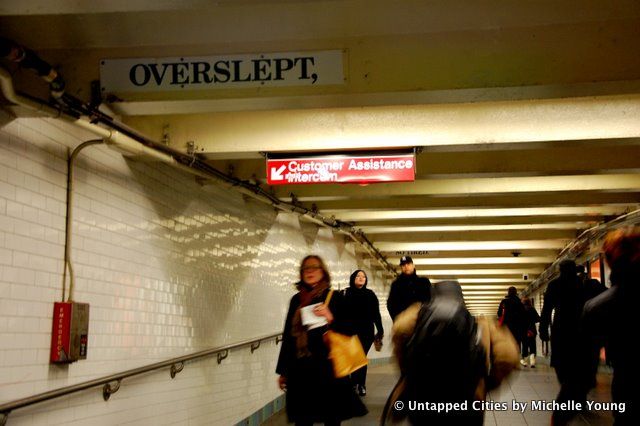
I think New Yorkers are a fan of sequences. Maybe it’s because our lives are so mobile–we’re always on our way somewhere. These are two sequences that I love in New York. The first is the poem in the tunnel between the Port Authority and Times Square, transferring from the A/C/E to the 1/2/3/7 trains. It reads:
“Overslept,
So tired.
If late,
Get fired.
Why bother?
Why the pain?
Just go home.
Do it again.”
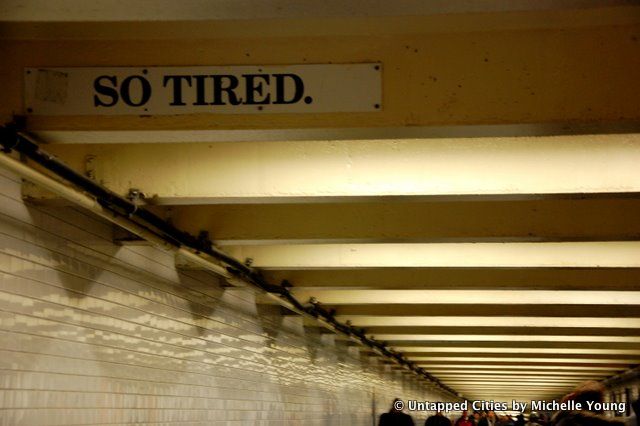
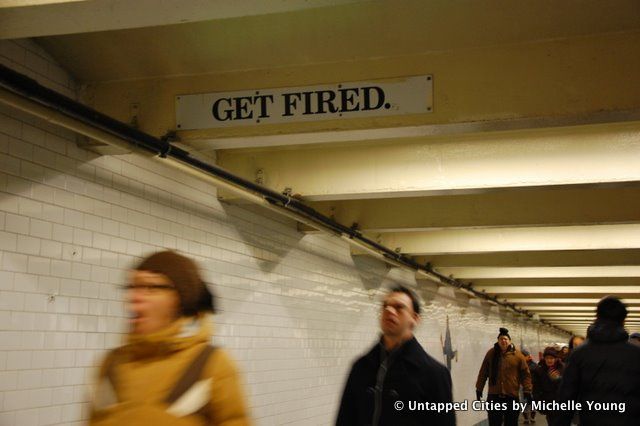
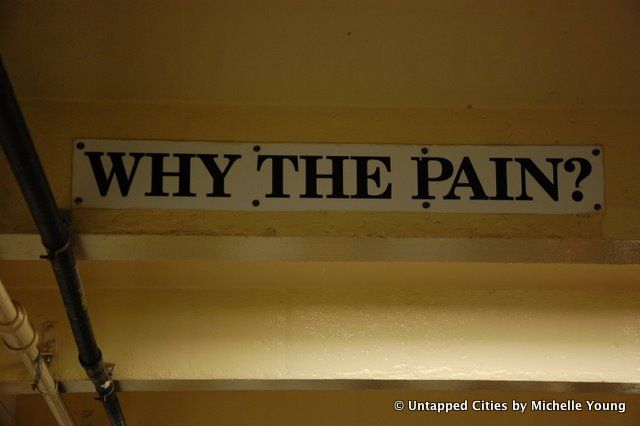
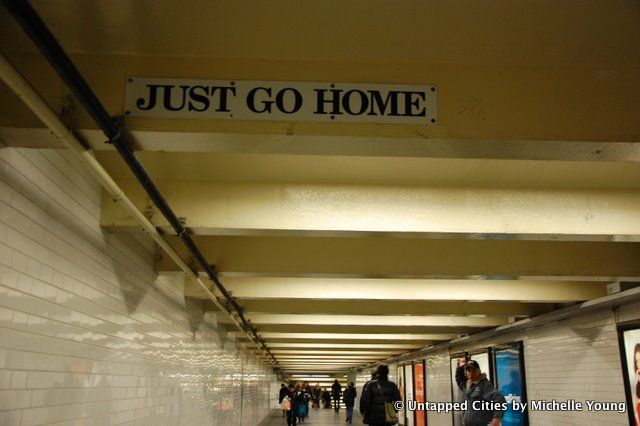
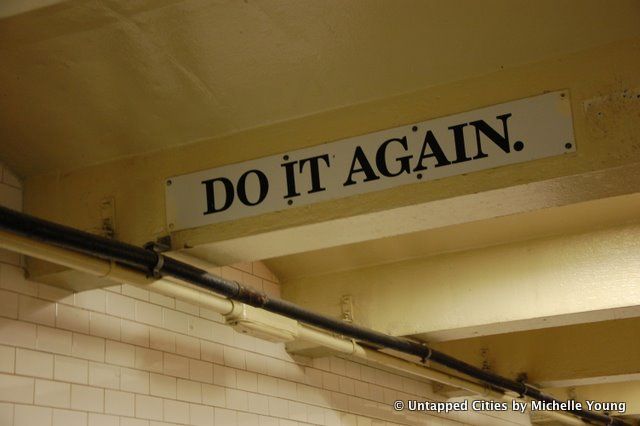
This work was by artist Norman B. Colp and commissioned by the MTA in 1997 at a cost of $5000. The artist wrote to nycsubway.org in 2006, “The work is incomplete, for the last panel (a 24″x36″ B/W image of a slept-in bed) was removed for the station renovation last year. I do not have any info from Arts for Transit when it will be reinstalled. Also missing are wall labels at the beginning and end of the sequence which identifies the work as THE COMMUTER’S LAMENT or A CLOSE SHAVE. The second part of the title also refers to Burma Shave, a men’s product (1930’s to 60’s approx) which was well known for series of signs, like my homage.” Colp passed away in 2007.
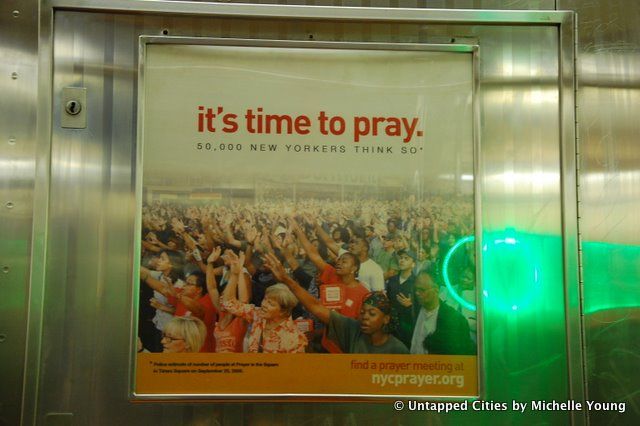
This tunnel (like the one between the S and the 4/5/6 in Grand Central) is usually peppered with extreme evangelical Christians. Today, there was a guy bemoaning of the evilness of Satan but he really did it with pizzazz: “I like your style,” he told a girl. She took the card he was handing out and said “You’re still creepy though.” A typical New York moment. And then I got to the 7 train and saw this poster. Europeans think our obsession with religion is weird–it’s probably partially because of what they come across in this highly trafficked transit station!
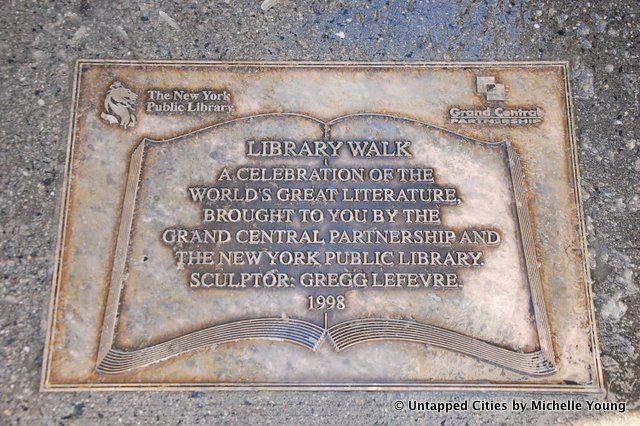
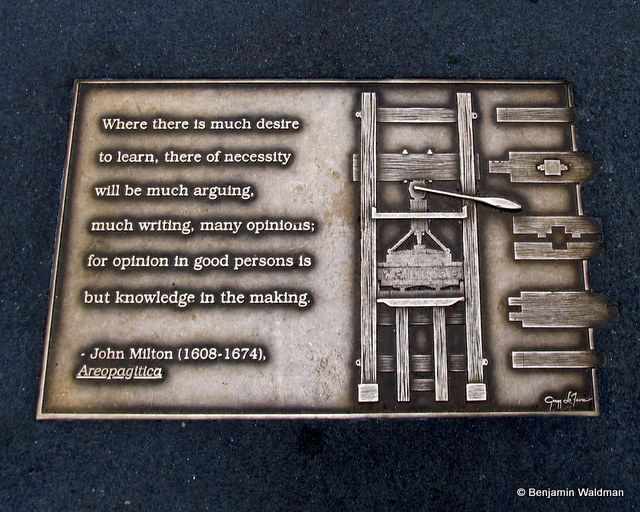
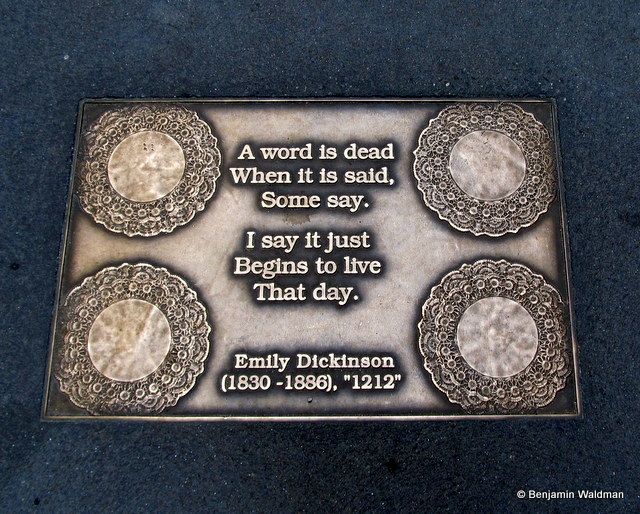
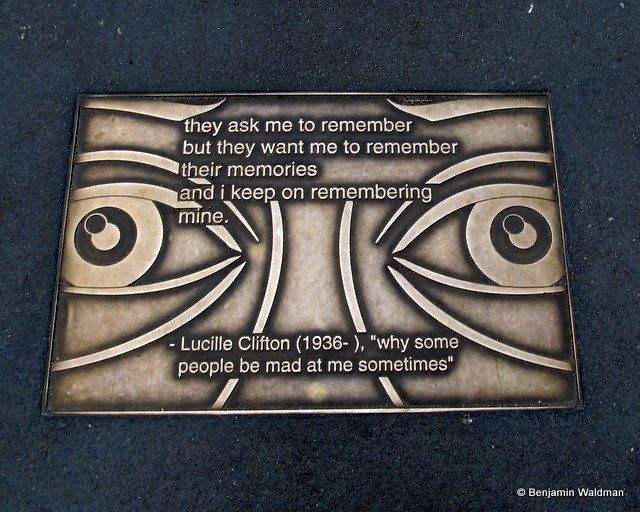
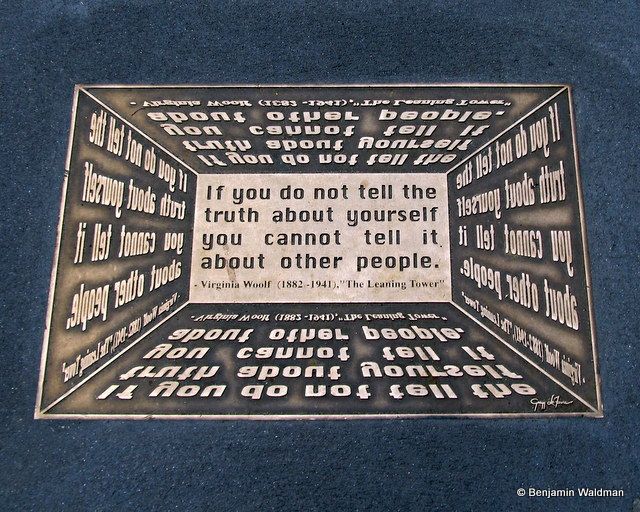
Another beloved sequence of mine is the “Library Walk” on 41st street between Madison and Park Avenue (near Bryant Park). It’s by sculptor Gregg Lefevre and is an ode to the great writers from antiquity to present. Many of the plaques appear more than once for some unknown reason. My favorite one is the one by Gertrude Stein that is backwards, with “this is not gibberish” in the top left hand corner. “The knowledge of different literatures frees one from the tyranny of the few,” reads another. It is also remarkable that many of the plaques break the fourth wall, extending onto the sidewalk.
Forever Parted: Graveyard by Gu Cheng
Of Studies by Francis Bacon
O Pioneers! by Willa Cather
In My Craft or Sullen Art by Dylan Thomas
The Plague by Albert Camus
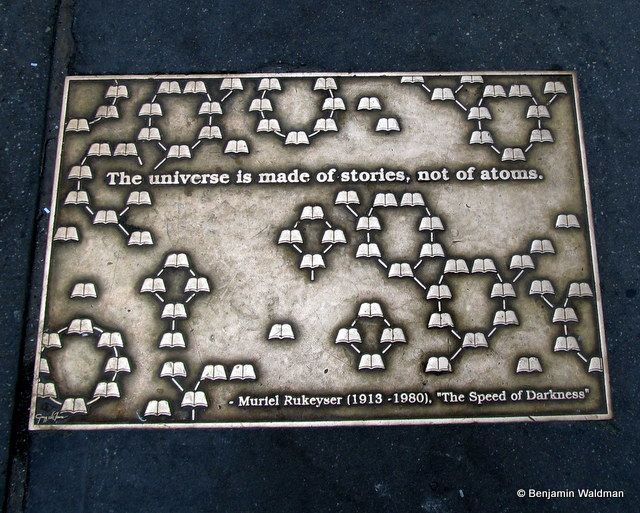
The Speed of Darkness by Muriel Rukeyser
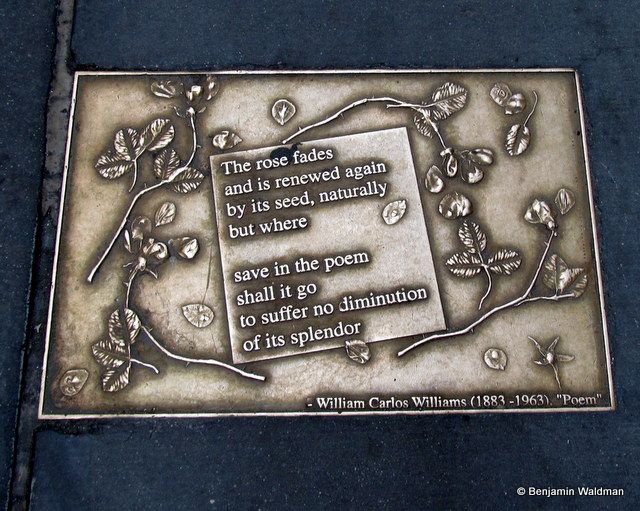
Poem by William Carlos Williams
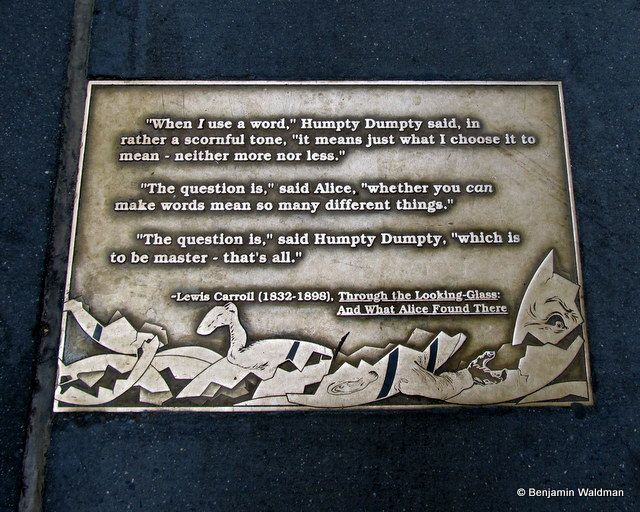
Through the Looking-Glass and What Alice Found There by Lewis Carroll
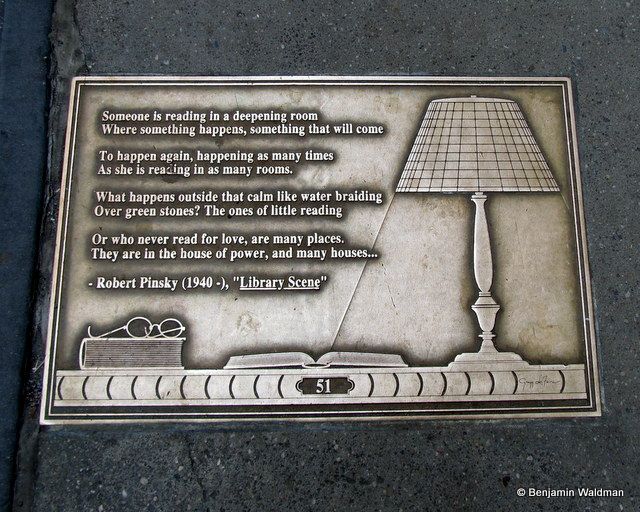
Library Scene by Robert Pinsky
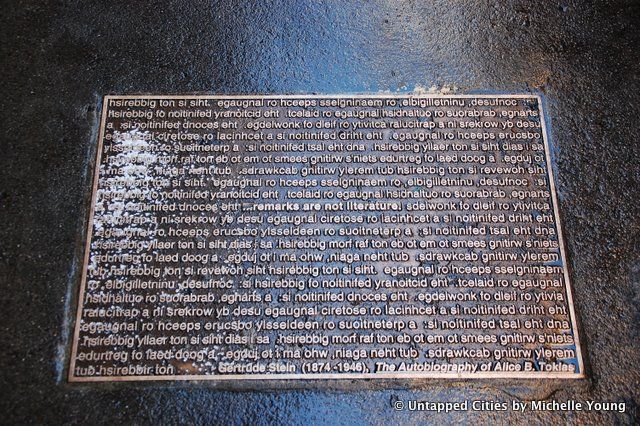
The Autobiography of Alice B. Tolkias by Gertrude Stein
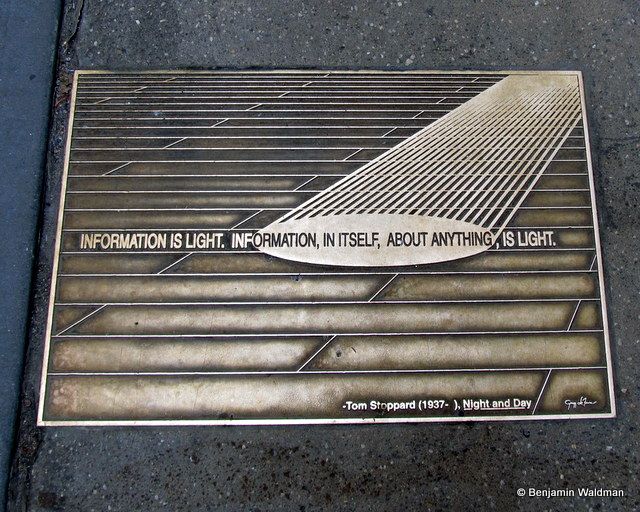
Night and Day by Tom Stoppard
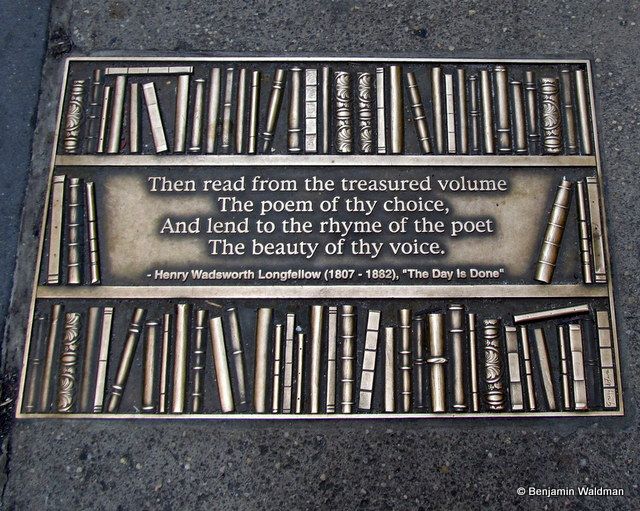
The Day is Done by Henry Wadsworth Longfellow
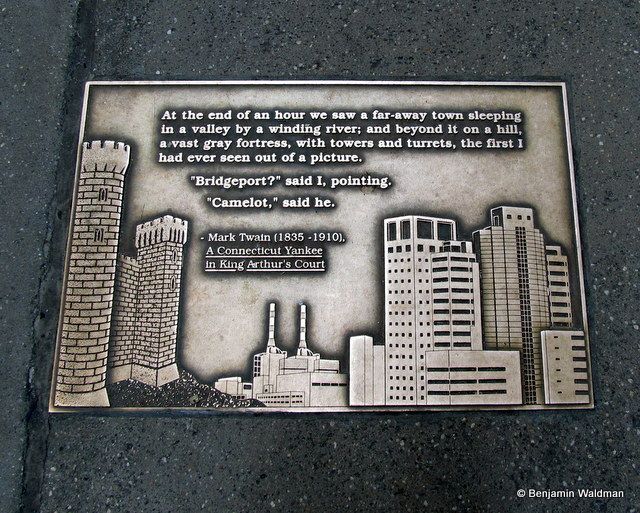
A Connecticut Yankee in King Arthur’s Court by Mark Twain
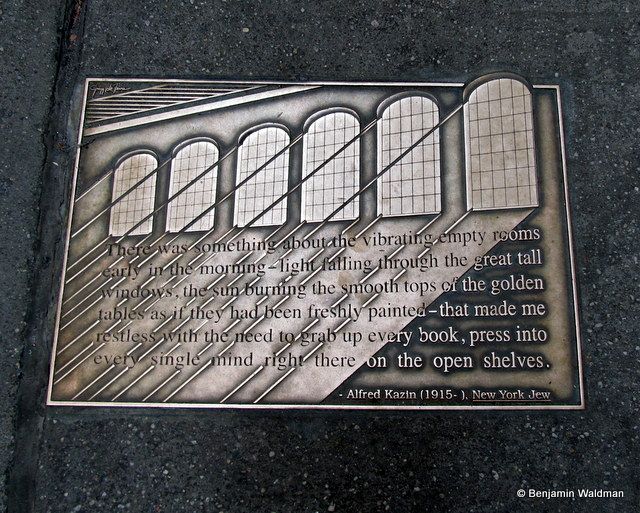
New York Jew by Alfred Kazin
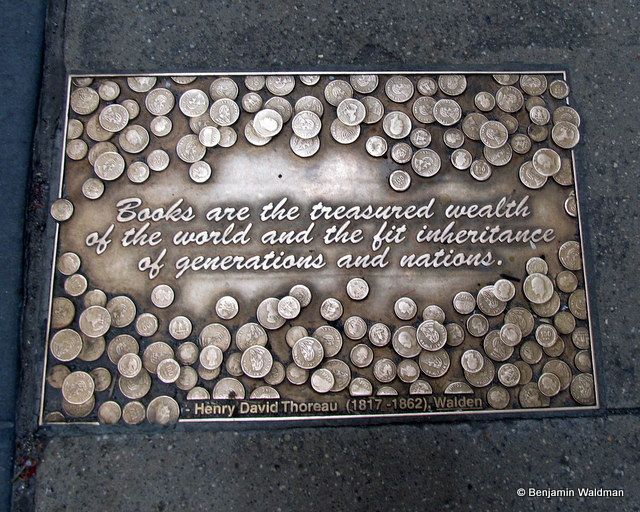
Walden by Henry David Thoreau
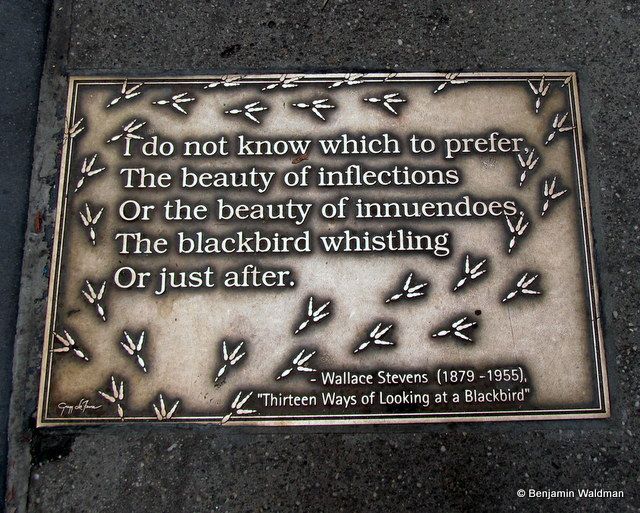
Thirteen Ways of Looking at a Blackbird by Wallace Stevens
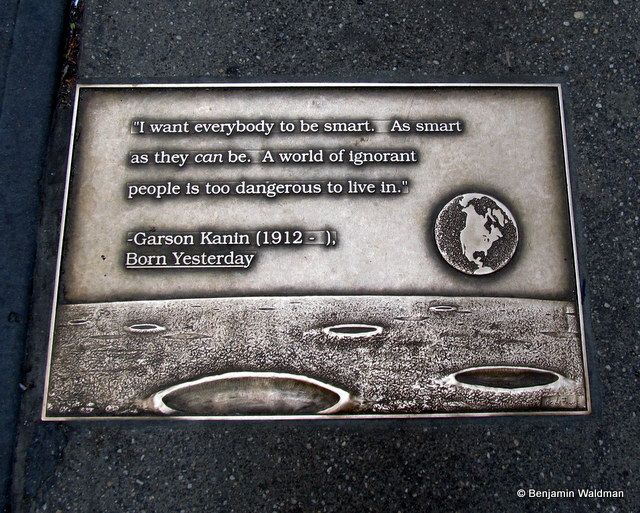
Born Yesterday by Garson Kanin
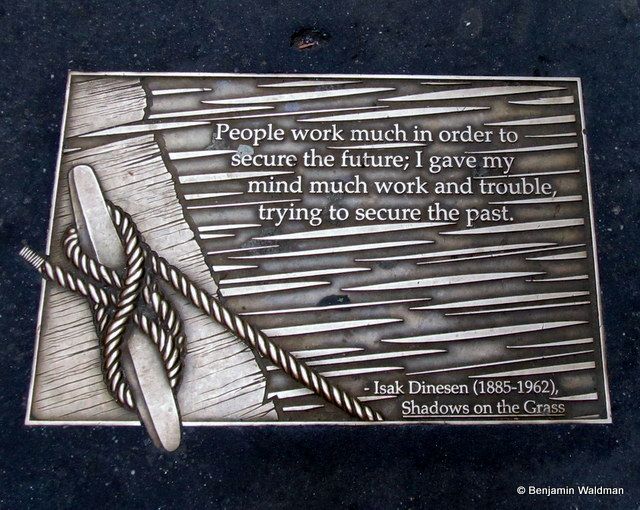
Shadows on the Grass by Isak Dinesen
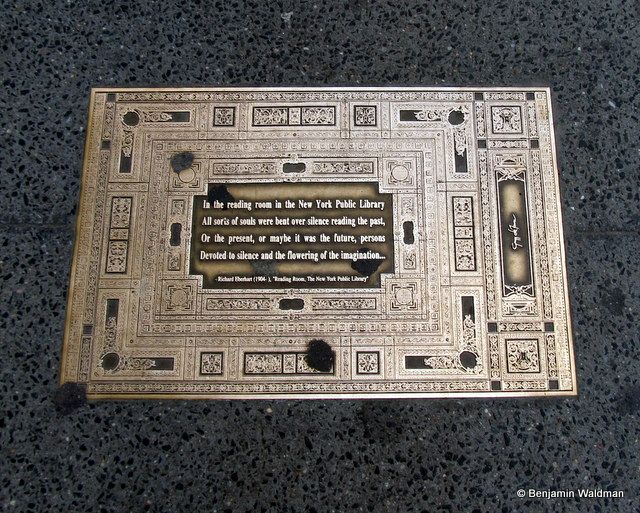
Reading Room, The New York Public Library by Richard Eberhart
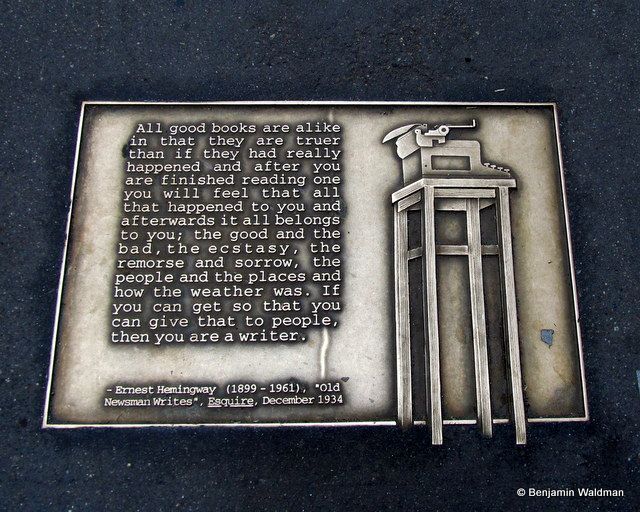
Old Newsman Writes by Ernest Hemingway
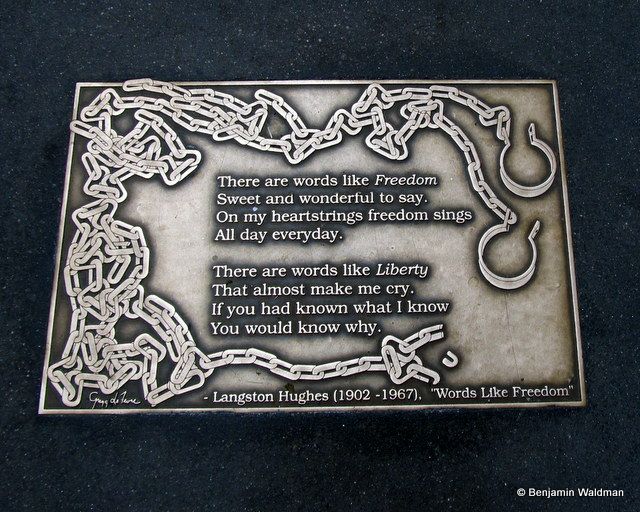
Words Like Freedom by Langston Hughes
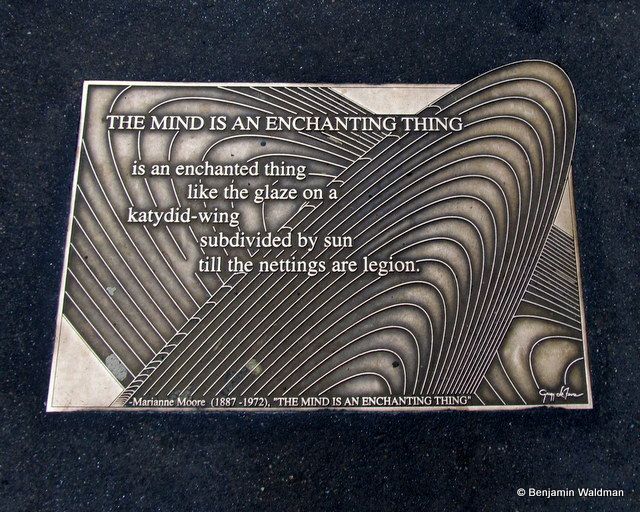
The Mind is an Enchanting Thing by Marianne Moore
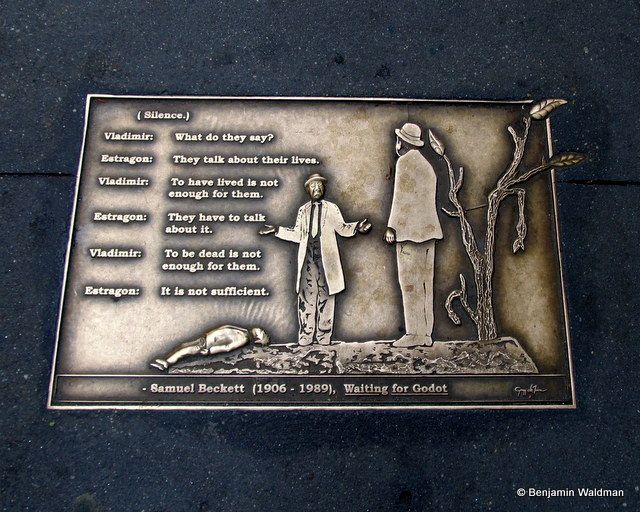
Waiting for Godot by Samuel Beckett
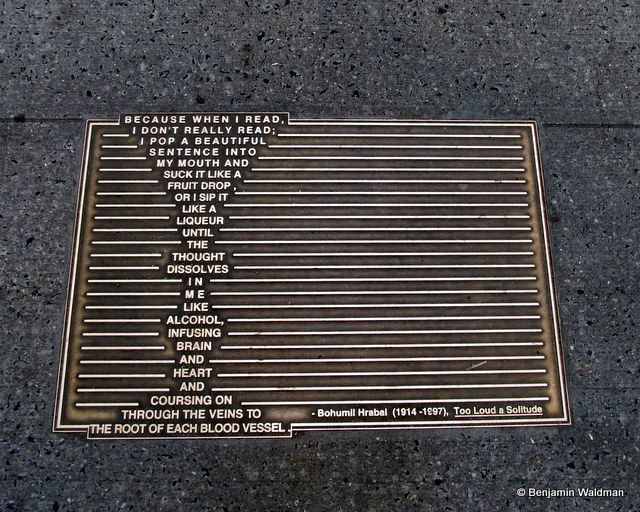
Too Loud a Solitude by Bohumil Hrabal
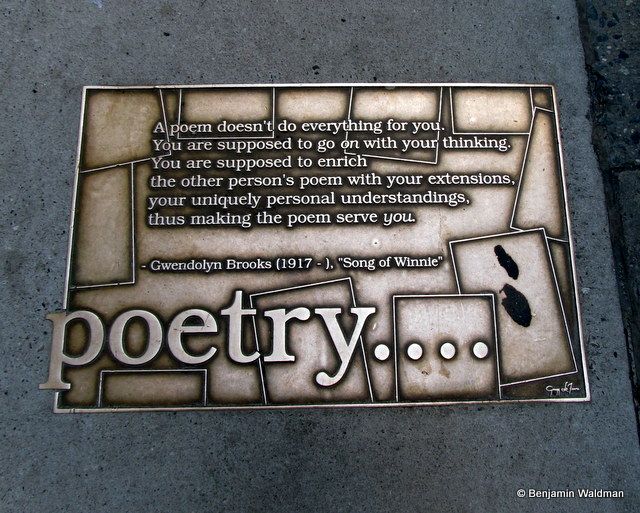 Song of Winnie by Gwendolyn Brooks

Areopagitica by John Milton

1212 by Emily Dickinson

why some people be mad at me sometimes by Lucile Clifton

The Leaning Tower by Virginia Woolf

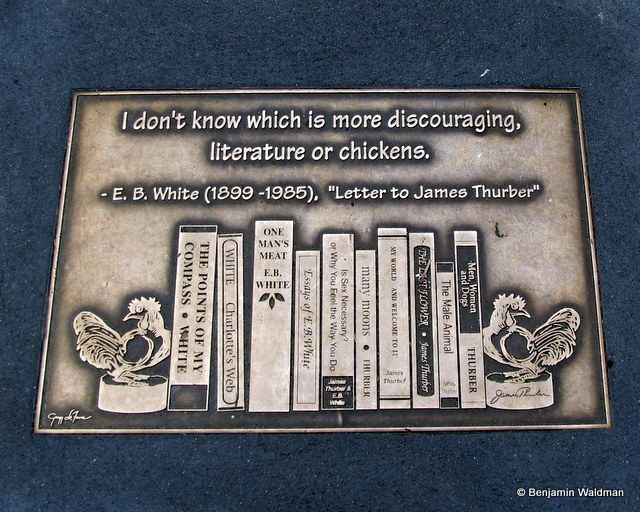
Letter to James Thurber by E. B. White
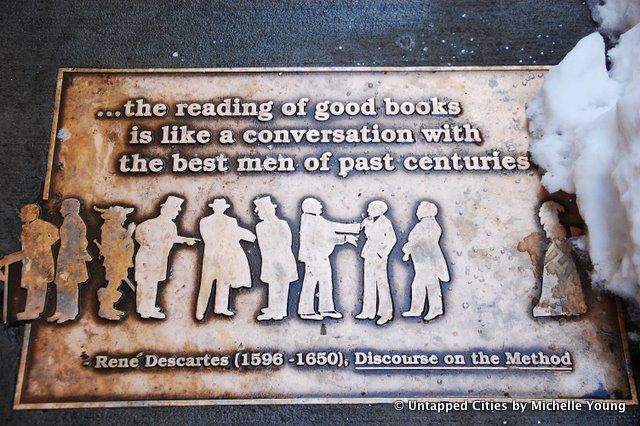
Discourse on the Method by Rene Descartes
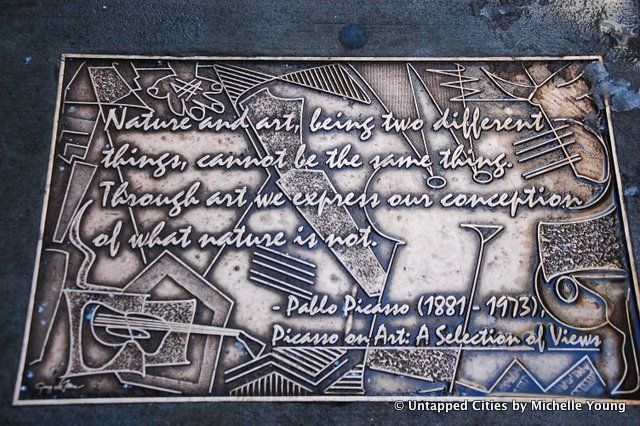
Picasso on Art: A Selection of Views by Pablo Picasso
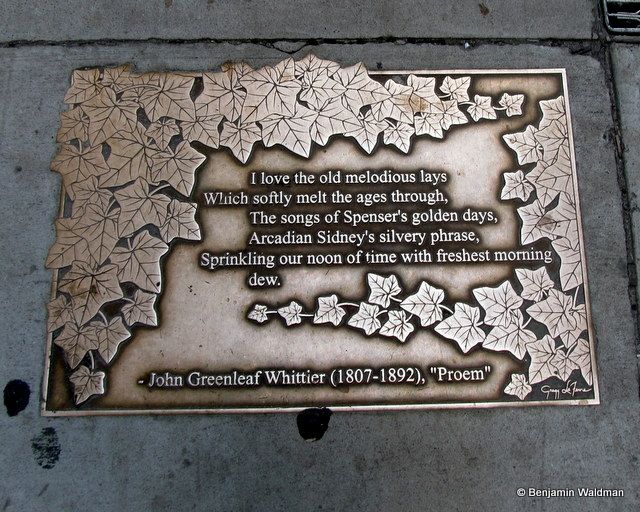
Proem by John Greenleaf Whittier
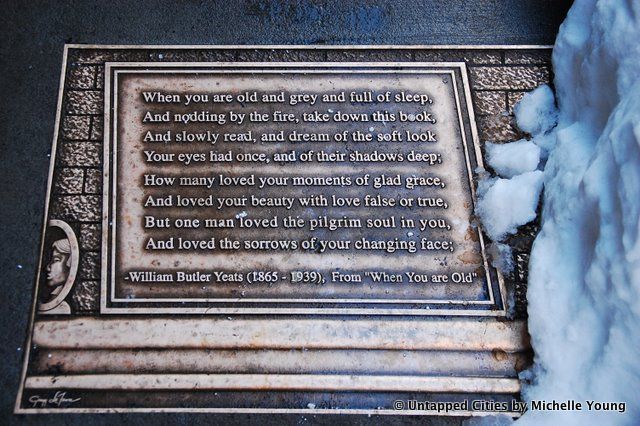
When You are Old by William Butler Yeats
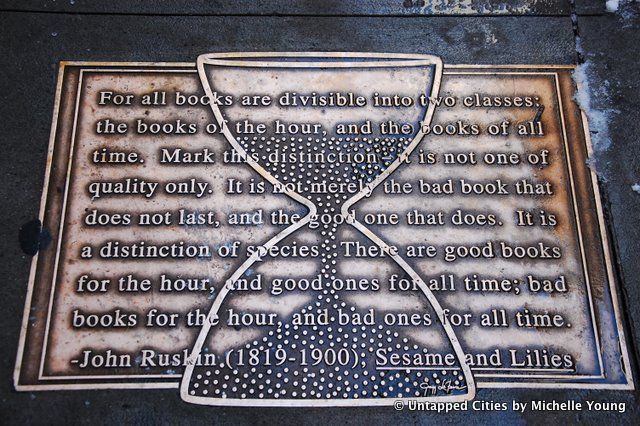
Sesame and Lilies by John Ruskin
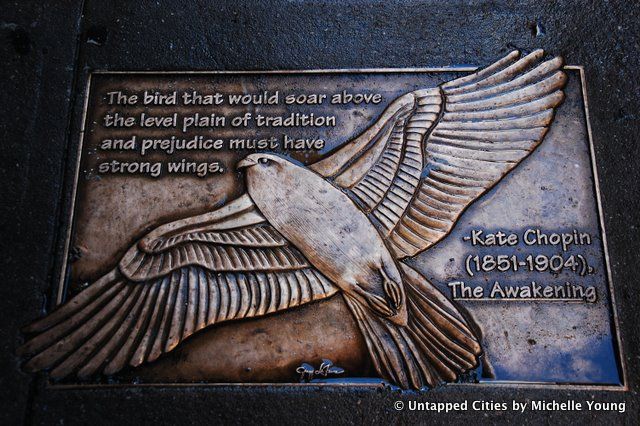
The Awakening by Kate Chopin
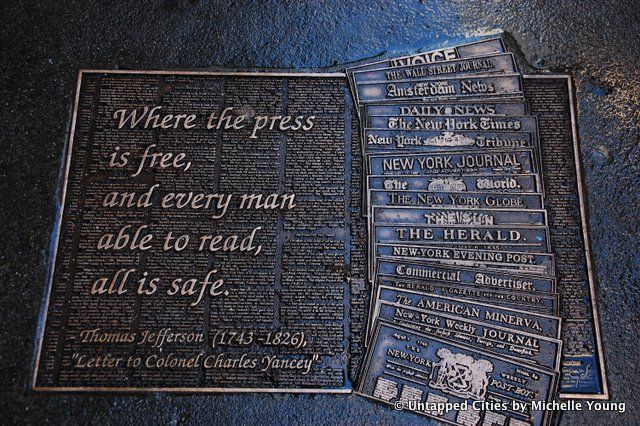
Letter to Colonel Charles Yancey by Thomas Jefferson
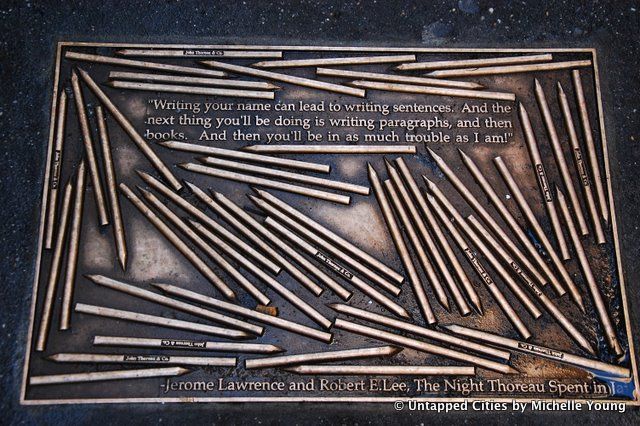
The Night Thoreau Spent in by Jerome Lawrence and Robert E. Lee
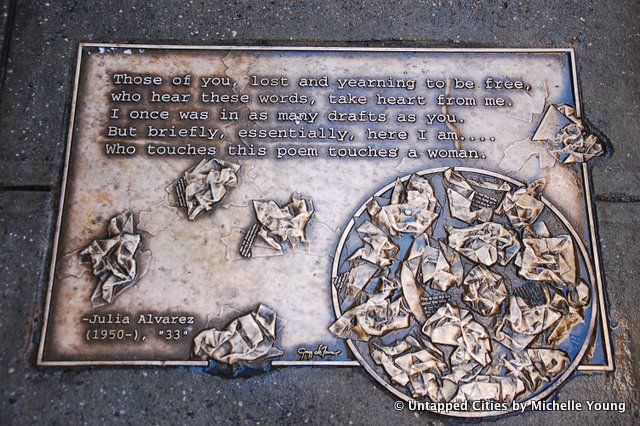
33 by Julia Alvarez
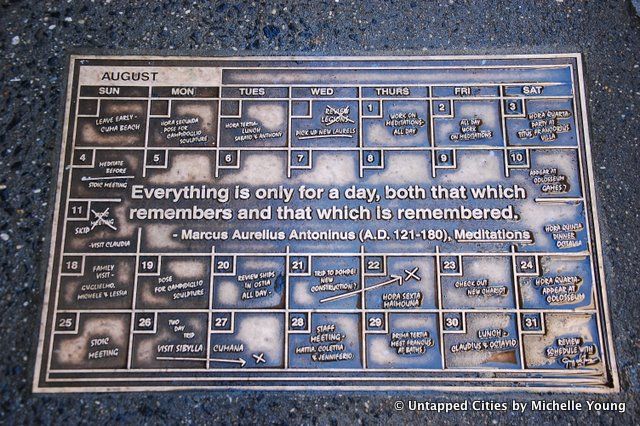
Meditations by Marcus Aurelius Antoninus
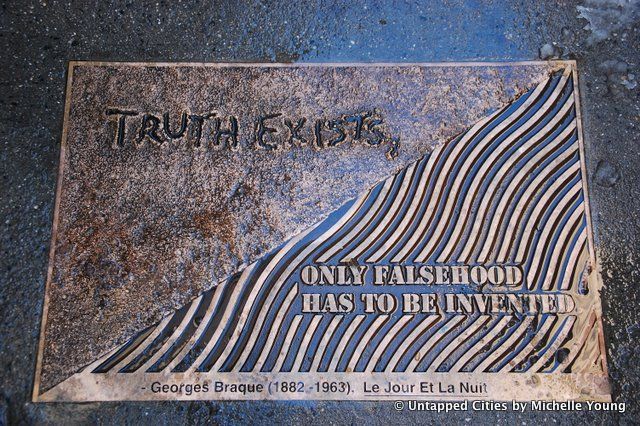
Le Jour et la Nuit by Georges Braque
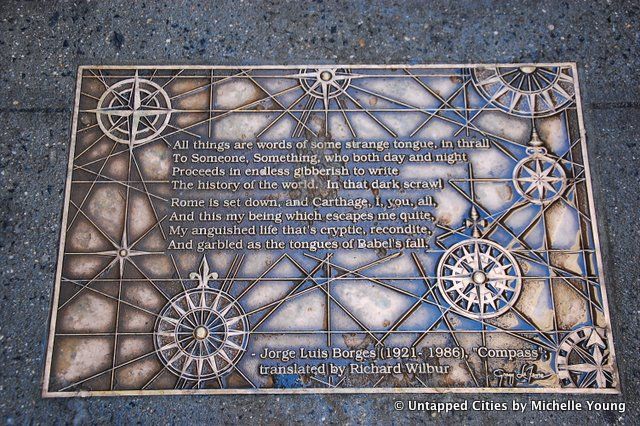
Compass by Jorge Luis Borges
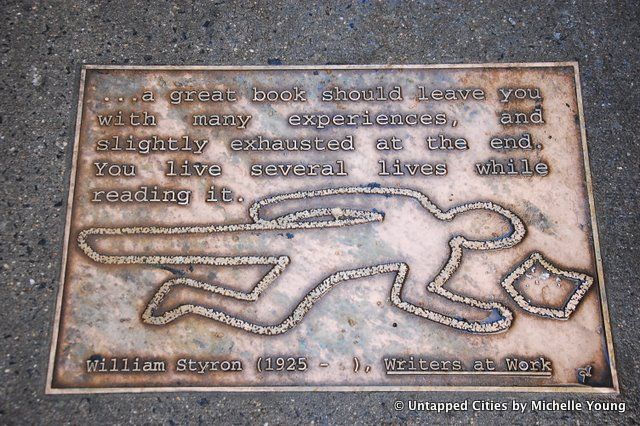
Writers at Work by William Styron
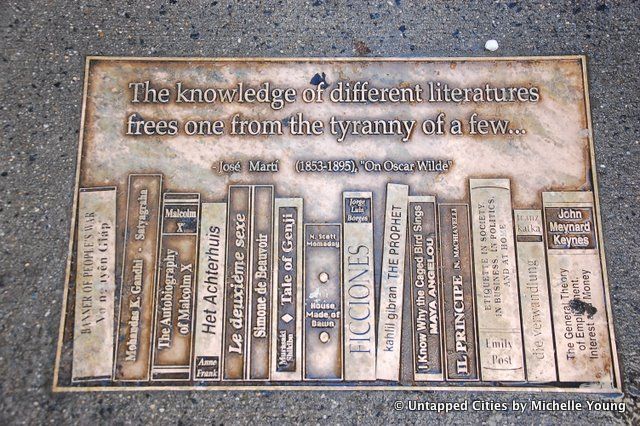
On Oscar Wilde by Jose Marti
What other sequential pieces of art do you know about in New York or other cities?
Subscribe to our newsletter