

Secrets of NYC
✉️ The Lost Pneumatic Tube System at the NYSE
Long before fiber optics and wireless networks, bursts of compressed air kept Wall Street moving.
Long before fiber optics and wireless networks, bursts of compressed air kept Wall Street moving.

A new exhibit explores the unrealized, extant, and lost projects of this prolific NYC artist!


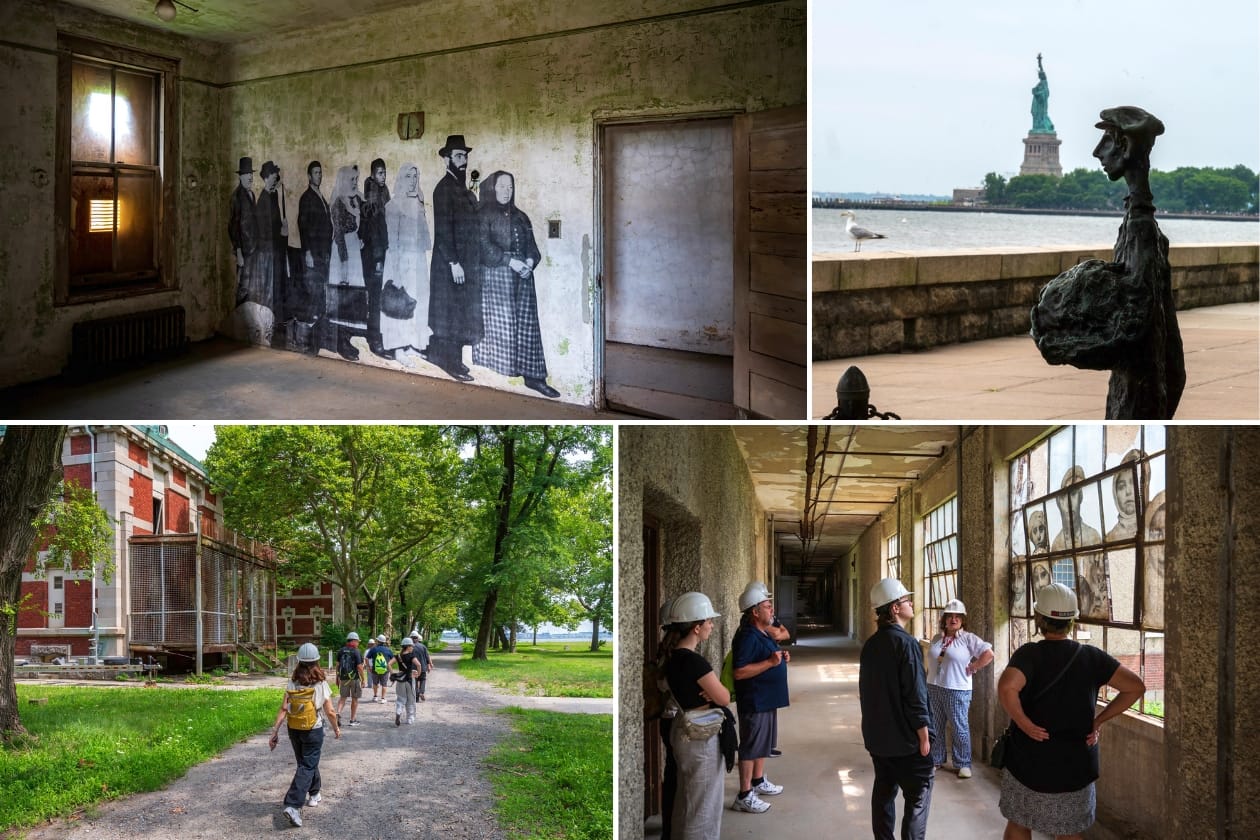
Ellis Island is one of New York City’s biggest tourist attractions and is well known as being one of America’s first immigration stations, but as you step off the ferry and head towards the National Museum of Immigration, the building where upwards of 12 million immigrants were processed, you may notice another sprawling complex of brick buildings just across the waterway. These structures are the abandoned remains of the once thriving Ellis Island Hospital, in use from 1901 until 1951. Though the site has been out of use for over seventy years, the walls of the hospital continue to reverberate with history, untold stories, and amazing facts, which we explore below!
You can gain access to explore inside this abandoned complex!
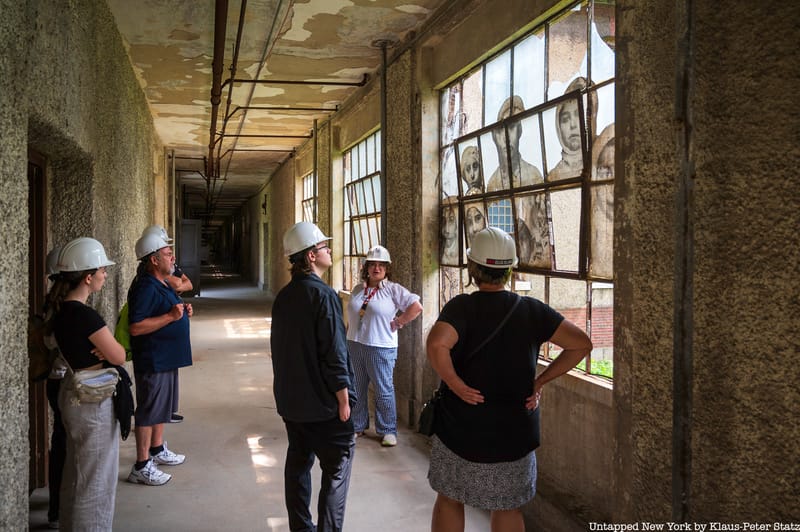
Gain access to off-limits rooms you normally cannot enter, including the kitchen and autopsy room, with an expert educator from Save Ellis Island.
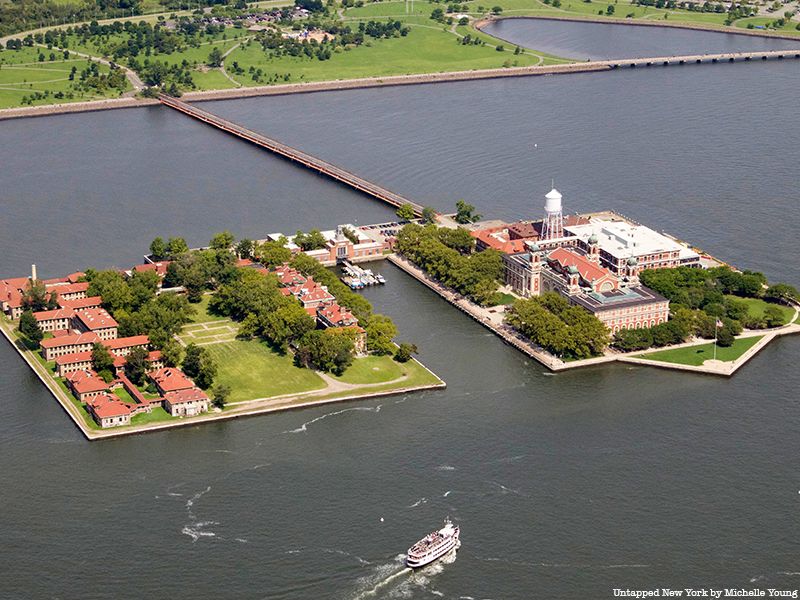
Did you know that the only natural part of Ellis Island spanned just 3.3 acres? Between the years 1903 and 1910, two new islands were constructed in order to create additional space there, bringing the island’s present-day footprint to roughly 27.5 acres. The foundation upon which the abandoned Ellis Island hospital currently stands is actually man-made—built out of landfill that was excavated during the construction of the New York City subway.
The 22 buildings of the hospital were spread out over the two southern islands (Islands 2 and 3), with Island 2 housing the hospital administration and contagious diseases ward, and Island 3 housing the psychiatric ward. However, the space between the islands was eventually filled in during the 1920s to create the base for what was to become a great lawn. That’s because it was believed that fresh air and sunlight were vital for the treatment of diseases. Also, read about other man-made islands here.
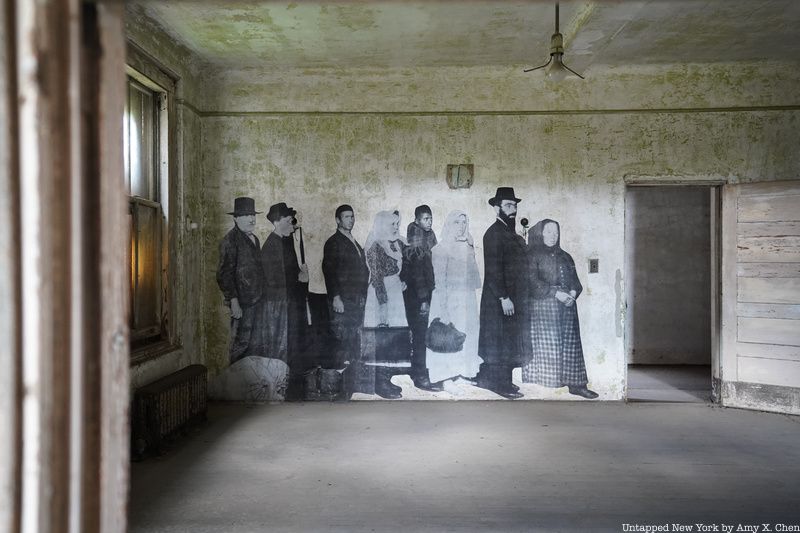
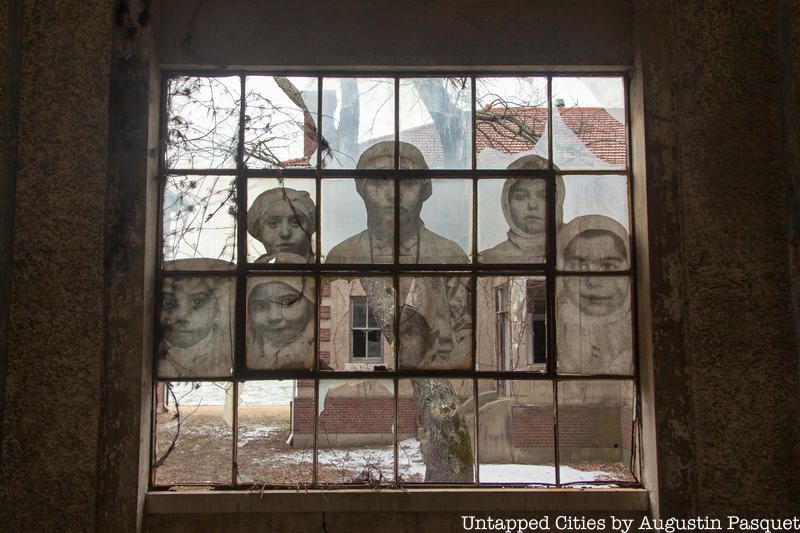
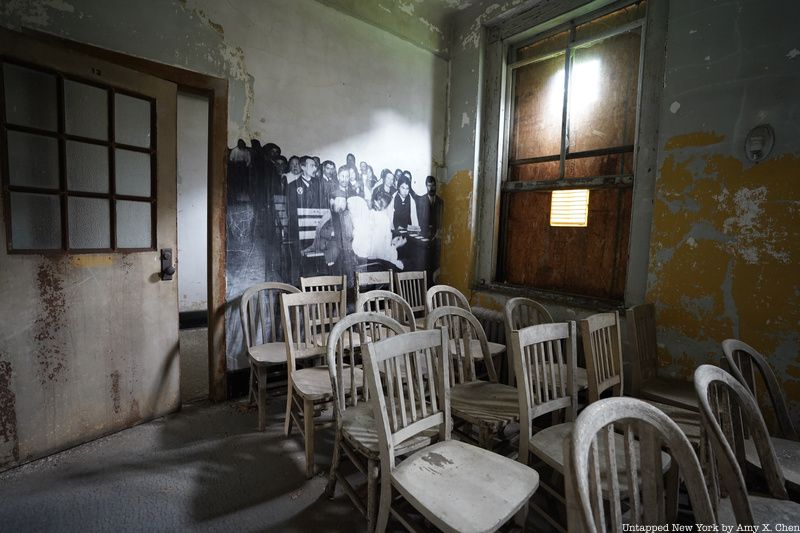
Walking the hallways of an abandoned hospital would give anyone shivers. But what if apparitions from times past unexpectedly appeared in the adjoining rooms, windows, and staircases? Scattered within the South Side hospital complex on Ellis Island, you can spot Unframed, an installation by Parisian street artist JR that opened on October 1, 2014.
JR is known for his installations of large-scale photographs in places accessible to the public, like New York City’s Times Square, the Pantheon in Paris, and the favelas of Brazil. For this project, he partnered with Save Ellis Island and blew up photos from the island’s archives to paste on the walls of the hospital.
This means that all the images you see on view were actually captured on Ellis Island. Only one, however, is presented in the very spot the photograph was taken. It’s of the hospital’s psychopathic ward (psychiatric ward), which has a caged-in porch area. Learn more about the installation here.
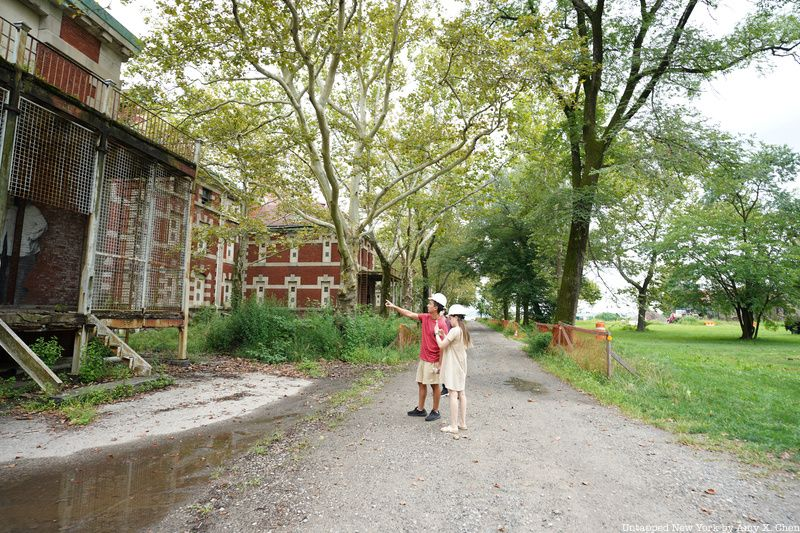
The Ellis Island hospital didn’t always serve as a health facility. After it closed in 1930, the FBI briefly utilized the space as a field office. During World War II, military detainees, including German and Italian prisoners of war, were housed on the islands, and wounded U.S. soldiers were also treated there.
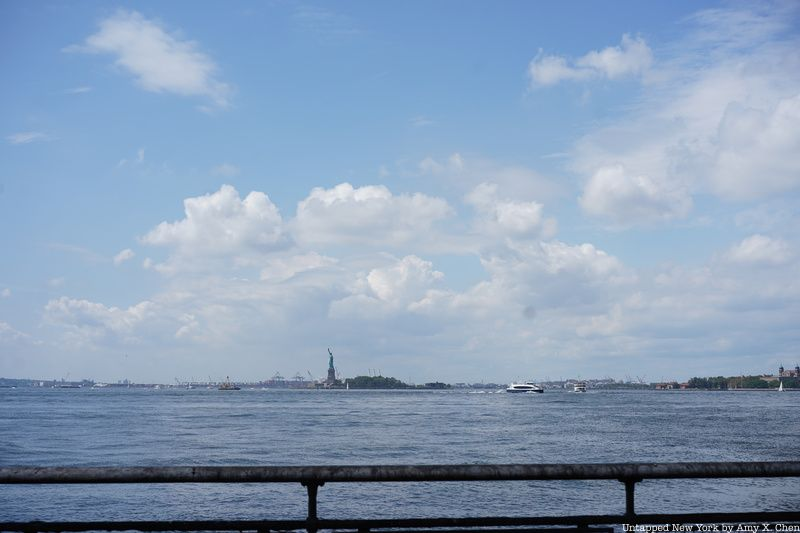
The Ellis Island Hospital closed to immigrants in 1930 due to tightening restrictions on immigrants in the United States— think anti-immigration legislation and the Great Depression. However, the land continued to be used up until 1954 for a variety of services. The FBI used it for an office. German prisoners of war were held there, as were sick and wounded U.S. soldiers.
Between 1939 and 1954, the United States Coast Guard used Ellis Island as a training ground for over 63,000 enlisted men and officers. Our guide informed us that the recreational center on the hospital grounds hosted entertainers for the servicemen.
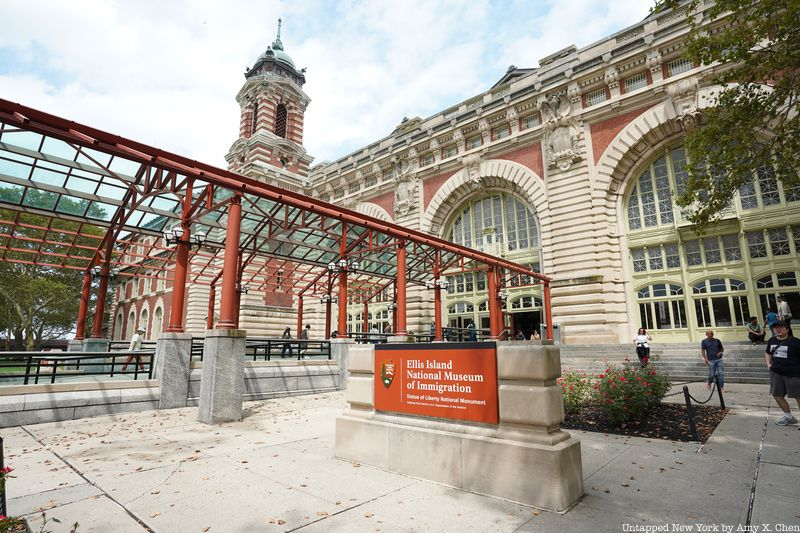
From 1855 to 1892, immigrants arrived in New York City via Castle Clinton’s immigration station, then known as Castle Garden. It is believed that about 8 million immigrants were welcomed during this period, including people like Andrew Carnegie and Nikola Telsa. However, unlike the well-oiled system that Ellis Island would eventually become, Castle Garden’s station was a bit unscrupulous. There was little screening for immigrants coming into the United States in terms of diseases. Some would bribe guards in order to pass inspection. In addition, new arrivals were met with scam artists trying to take advantage of their naivety. Many immigrants bought fraudulent train tickets or ended up working as cheap labor.
In 1890, the federal government took control of immigration processing, and the station was moved to Ellis Island in 1892. The island location helped avoid the negative activity rampant on the mainland. It also allowed for regulated health inspections.
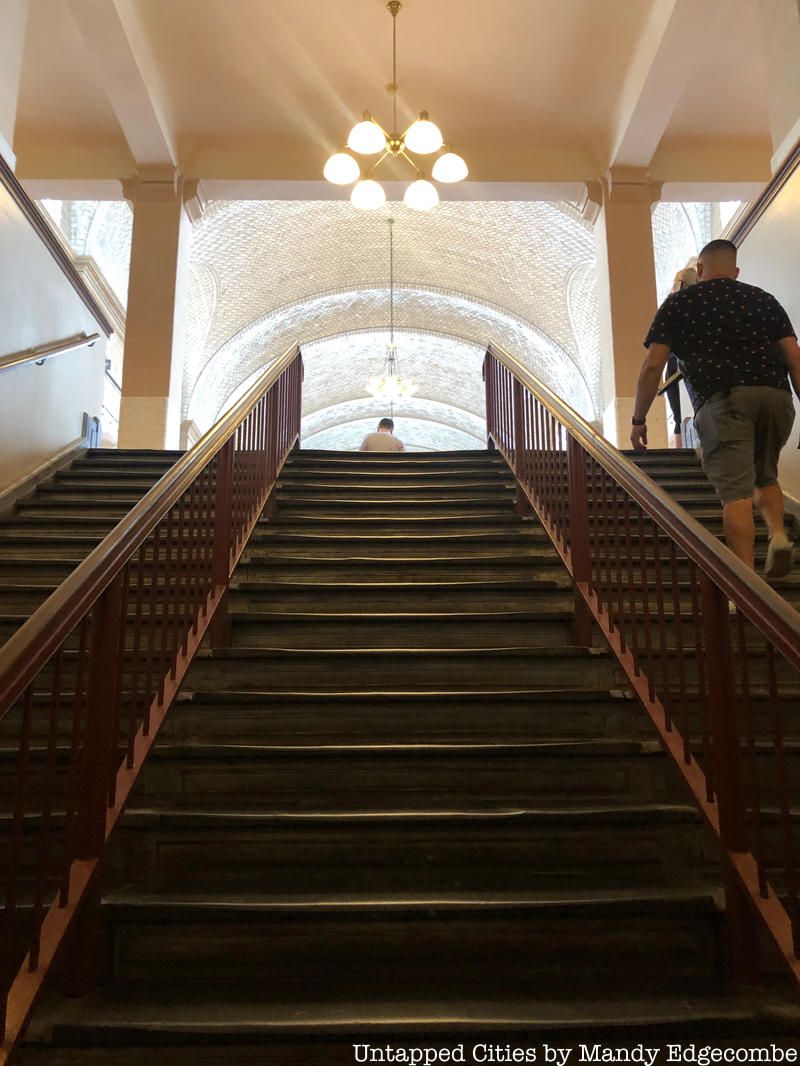
In its heyday, Ellis Island processed between 2,500 to 10,000 people per day. Each new arrival had to pass a health inspection in order to be allowed entry into the United States. They were first screened while on their ship coming into Lower New York Bay. This is where those with “the plague” were weeded out and quarantined to stations on two islands: Hoffman and Swinburne Island. The rest of the passengers funneled through Ellis Island.
Upon arrival on Ellis Island, immigrants would shuffle to the Great Hall for further inspection. Using a quick “doctor’s gaze,” doctors would mark immigrants with a code chalked onto their clothing, indicating the ailment (such as PG for pregnant or B for back). After a full assessment, immigrants were released from the processing center via the “stairs of separation.” If exiting through the left side staircase, immigrants were headed to the detention center. If they were sent through the middle staircase, they were usually headed to the hospital for further inspection or a long-term stay. Those who passed inspection would likely take the right side staircase out to ferries that would carry them into America.
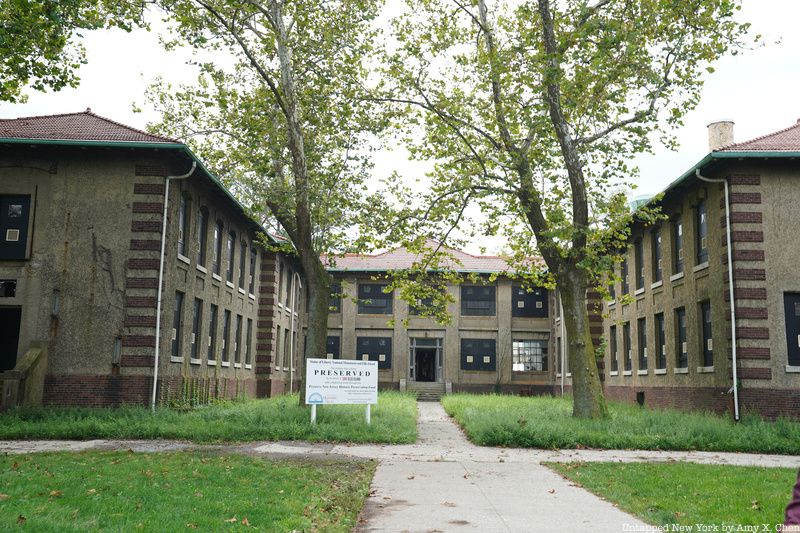
Ellis Island Hospital was not initially set up to treat infectious diseases. The government didn’t provide sufficient funding, nor were there enough beds for the large influx of immigrants. Alas, many of the first sick patients were taken to the mainland until the high demand called for adequate facilities to be built on the island. The hospital eventually grew to be the largest public health facility in the country. Though a plethora of diseases were present in the hospital, steps were made to deter cross contamination.
The concept was simple: separate patients with different infectious diseases, a “pavilion” style plan based on Florence Nightingale’s theory. This was accomplished by putting doors at least twenty-five yards away from the next, or putting highly contagious diseases on different floors. Rooms never faced each other, so the diseases weren’t transmitted easily. They also made sure to separate the maternity ward from patients with infectious diseases using a 100-yard waterway. Thanks to this system, the Ellis Island Hospital was on par with any other hospital in the world. There were only about 4,000 mortalities which amounted to about 2% of the patients.

Nurses played a significant role in the Ellis Island Hospital. After all, patients needed a friendly face in the midst of language barriers and illness. The hospital employed about twenty-five nurses, all of whom had to be unmarried. In addition, these nurses were considered to be highly qualified. They had to have two years of college as well as three to five years of nursing school. According to the tour guide, nurses only made about $600 per year despite the hardships they faced in dealing with contagious diseases.
Though the pay wasn’t anything to write home about, the nurses were known to form unique bonds with their patients. Mothers would name their newborn children after them. Memos were circulated that warned doctors and nurses to stop with all the hugging. In fact, the loving care was so effective at this hospital that New Yorkers themselves tried to get in.
Female immigrants who were examined and deemed pregnant were marked with a chalk “PG” in their initial arrival onto Ellis Island. Being pregnant meant a burden to their new country, and they were often detained. That is, unless they could prove they would be taken care of and supported. Some of these women were sent back to their home countries— especially if unmarried— others were taken to the hospital where they gave birth.
According to our tour guide, these new mothers were treated well. They were taught English and literacy skills to help them successfully transition to the mainland. However, one consequence of being born in limbo was that these babies were not initially issued birth certificates. When they did obtain them, the certificates didn’t state where they were born.
Despite the hospital’s many redeeming qualities, it was still a hospital in the early 20th century, and the notions of mental illness carried different meanings. For example, patients were lumped into the same category whether they had epilepsy, cultural/language barriers, or an actual mental handicap. Perhaps equally unfortunate was how certain patients were labeled at the hospital.
American psychologist Henry H. Goddard developed an intelligence testing program at the Ellis Island Hospital. Through this test, he could classify hospital patients based on their IQ. This was used to help keep “feebleminded” immigrants out of the United States. A “moron”— from the Greek word “moros” meaning dull— referred to people with an IQ between 51 and 70. Other politically incorrect classifications included “imbecile” (25-50 IQ) and “idiot” (0-25 IQ). Needless to say, about 80% of the immigrants studied at the hospital were deemed “feebleminded.”
Gain access to spaces usually off-limits to the public!
Written by Tamatha Frederick and with additional reporting by Untapped New York Staff

Subscribe to our newsletter