

Secrets of NYC
✉️ The Lost Pneumatic Tube System at the NYSE
Long before fiber optics and wireless networks, bursts of compressed air kept Wall Street moving.
Long before fiber optics and wireless networks, bursts of compressed air kept Wall Street moving.

A new exhibit explores the unrealized, extant, and lost projects of this prolific NYC artist!


Uncover the unseen systems that make cities run at a new interactive exhibit in Queens!

Have you ever heard from the sandhogs who dig the world's largest water tunnels, or listened to the workers who test New York City's drinking water talk about their day? What about a bodega cat? You can hear first-hand accounts (and meows) from these workers and more at CityWorks, a new exhibit at the New York Hall of Science (NYSCI) in Queens, which explores the often unseen networks of urban infrastructure that make a city run.
This interactive exhibit has five parts: Transit, Sanitation, Water & Wastewater, Construction & Urban Development, and Integrated Systems. Throughout each section, visitors of all ages can engage with hands-on activities. You can drive a bus through city streets, build your own neighborhood, take a virtual elevator ride hundreds of feet underground, trace the flow of water through our sewers, and much more.
"By definition, infrastructure that's working well includes things that everyday residents aren't paying attention to," says Katie Culp, Chief Learning Officer at NYSCI, "Making those systems visible is a way to open up people's eyes to be more attentive to their own everyday experience in the city. It's a pathway into a lot of conversations about science, technology, and engineering."
The first section of the exhibit tackles perhaps the most visible infrastructure system in New York City: Transportation. A colorful train table invites young kids to play, while in-depth text and more complex activities—like designing a city street—engage older visitors.
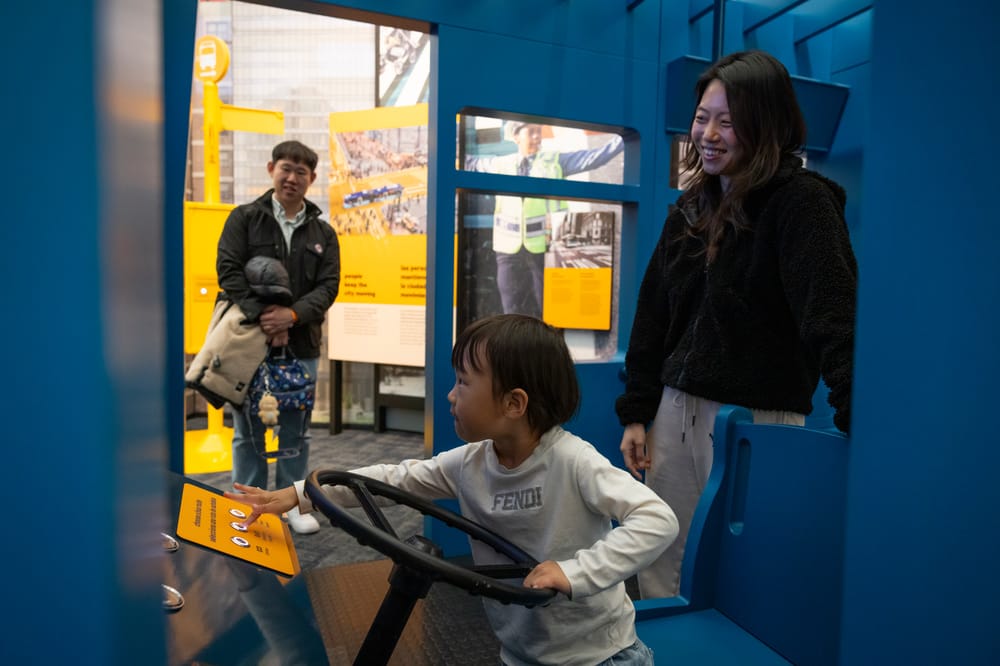
A cross-section of a city bus invites visitors to sit in the driver's seat and observe obstacles that pop up along routes through Times Square, Queens, and other areas. Why isn't it a real bus? Culp revealed to us that engineers said the museum floor couldn't support a real bus, but it was also a deliberate design choice.
"You might notice a lot of things are one level abstracted," Culp explains, "It's absolutely an exhibit about New York City, but people come here from all over the world, so we want those people to be able to make connections to their own cities."
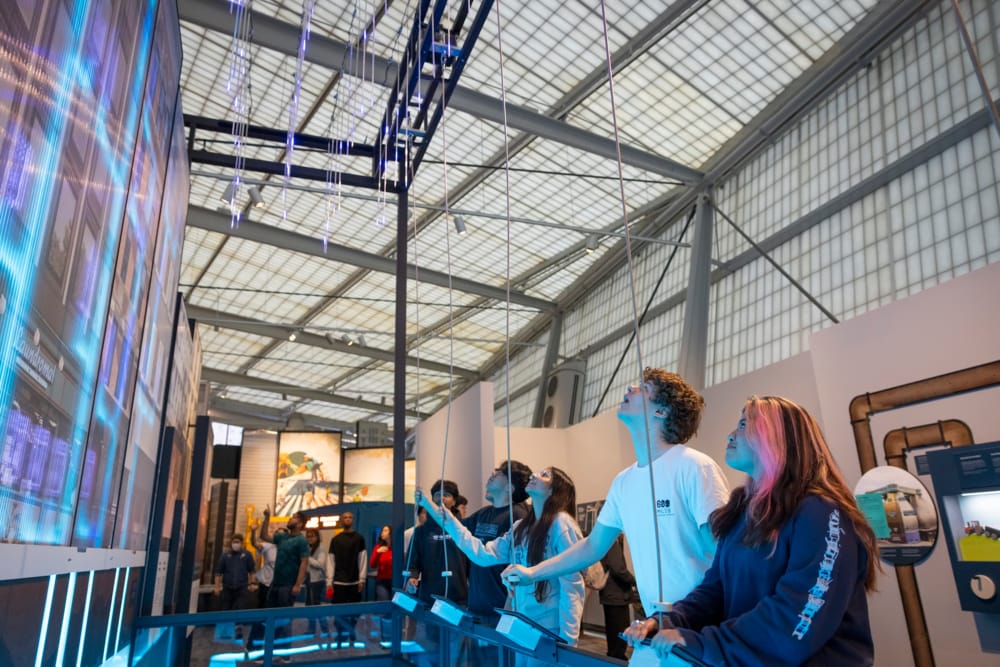
Moving into the section on Water & Wastewater, guests can discover where our water comes from, how it's treated, and how we might handle future challenges. The museum directly experienced our sewer system's shortcomings after Hurricane Ida, when a sewer overflow event flooded exhibit spaces and forced the museum to close for over a year. In this exhibit, by pulling cords and activating various water systems, visitors can watch glowing blue lights demonstrate why sewer overflow events occur.
Think you have what it takes to be New York's strongest? Try to pick up a garbage bag and haul it into the back of a dump truck in the Sanitation section. Here, you can view a display of items actually pulled from the trash, learn how workers sort our waste, where it goes, and what waste management might look like in the future.


Photos Courtesy of NYSCI
In the Construction & Urban Development section, visitors can see how natural geology shapes our built environment—and vice versa. "Building has different challenges in different areas, if it's marshy, if it's granite, if it's landfill. You know in your head that the profile [of the city] is different in different places, but people may never have thought about why," says Culp. This part of the exhibit reveals what lies below the surface, from bedrock samples you can touch to a virtual elevator ride deep beneath the streets, past the World's Fair time capsule and the decommissioned City Hall Station.
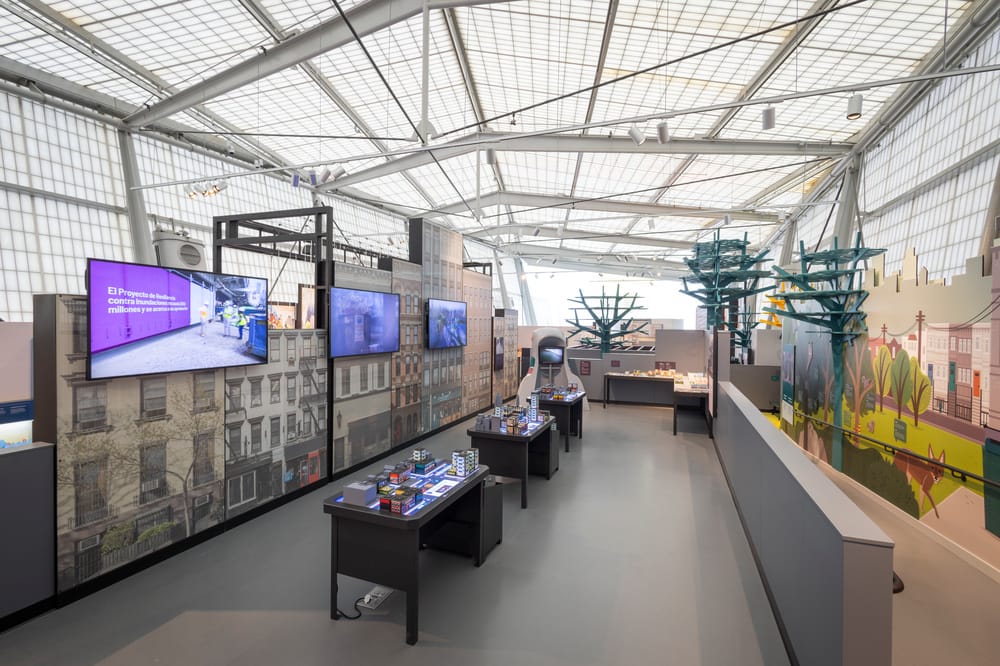
Finally, at Integrated Systems, you get to build your own neighborhood. In this part of the exhibit, there are three tables that each represent a different neighborhood. As the city planner, you must manage waste, traffic density, and flood risk. The blocks, which represent commercial buildings, schools, parks, and apartment buildings, have algorithms built in that use digital twin technology and real NYC data drawn from open data sources. How you arrange the blocks directly affects other systems and the overall quality of life in your fictional town.
"Infrastructure changes over time, and you can only build on what you have," says Culp, "Cities are always in a moment." Likewise, CityWorks is built to evolve and respond to changes in the urban environment.
Culp says she hopes people have a great time at the exhibit, and that they "come out with fresh eyes for what they see in the city around them. With so many things in this space, we try to give people opportunities to get more insight into things they may take for granted and find new questions they can take with them when they leave."
Access to CityWorks is included with admission to NYSCI. You can book in person or online.
Subscribe to our newsletter