


5 Never-Built Plans for Penn Station in NYC
Explore unbuilt Penn Station redesigns, from a futuristic burial ground to a re-imagining of the original Beaux-Arts structure.

Ever since the original Penn Station was demolished in the 1960s, New Yorkers have longed a station that recaptures the beauty and grandeur that was lost. The latest plans from Penn Transformation Partners (PTP), a joint venture between master developers Halmar and Skanska, seek to deliver on those ideals with a revitalized station designed by Practice for Architecture and Urbanism (PAU). Backed by the U.S. Department of Transportation and Special Advisor to the Amtrak Board Andy Byford, this plan promises to make the "station safer, more spacious, and better connected, while elevating it into a modern civic landmark." But it isn't the first proposal to make such promises.
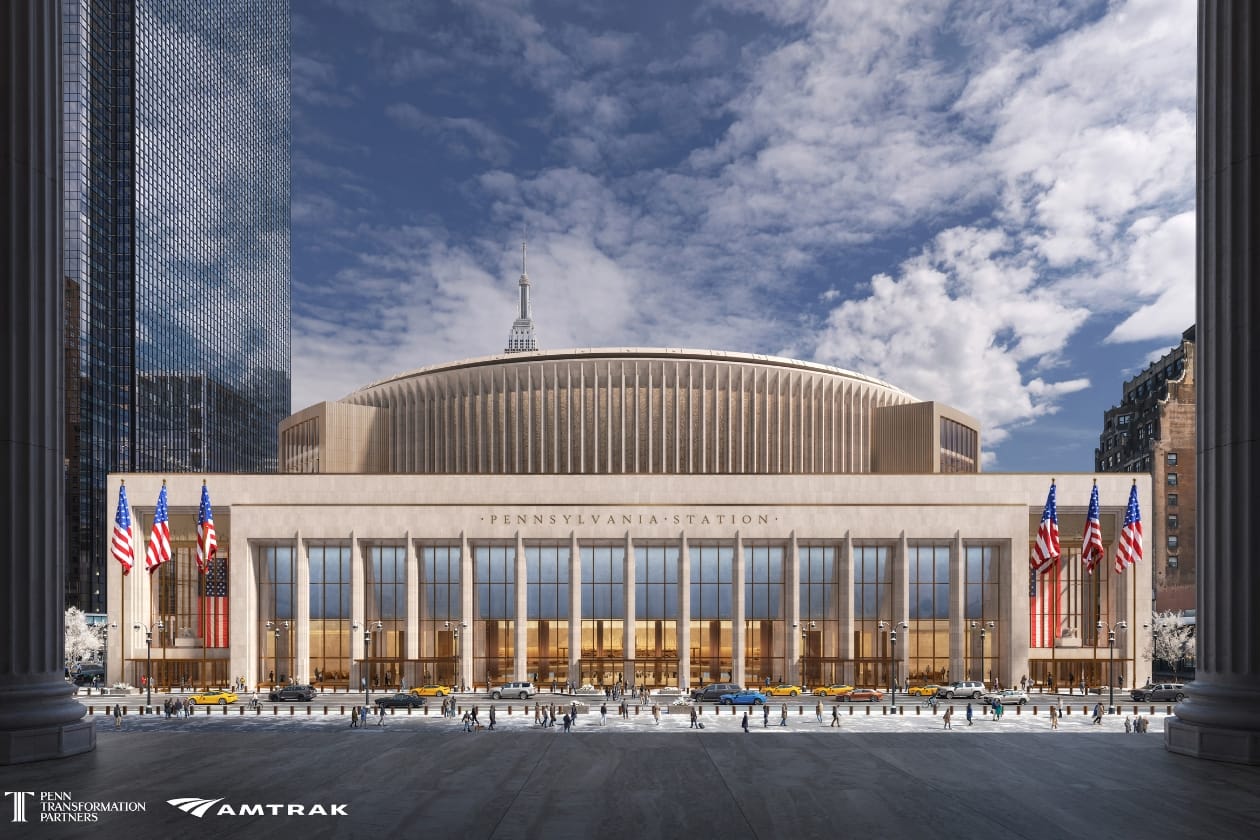
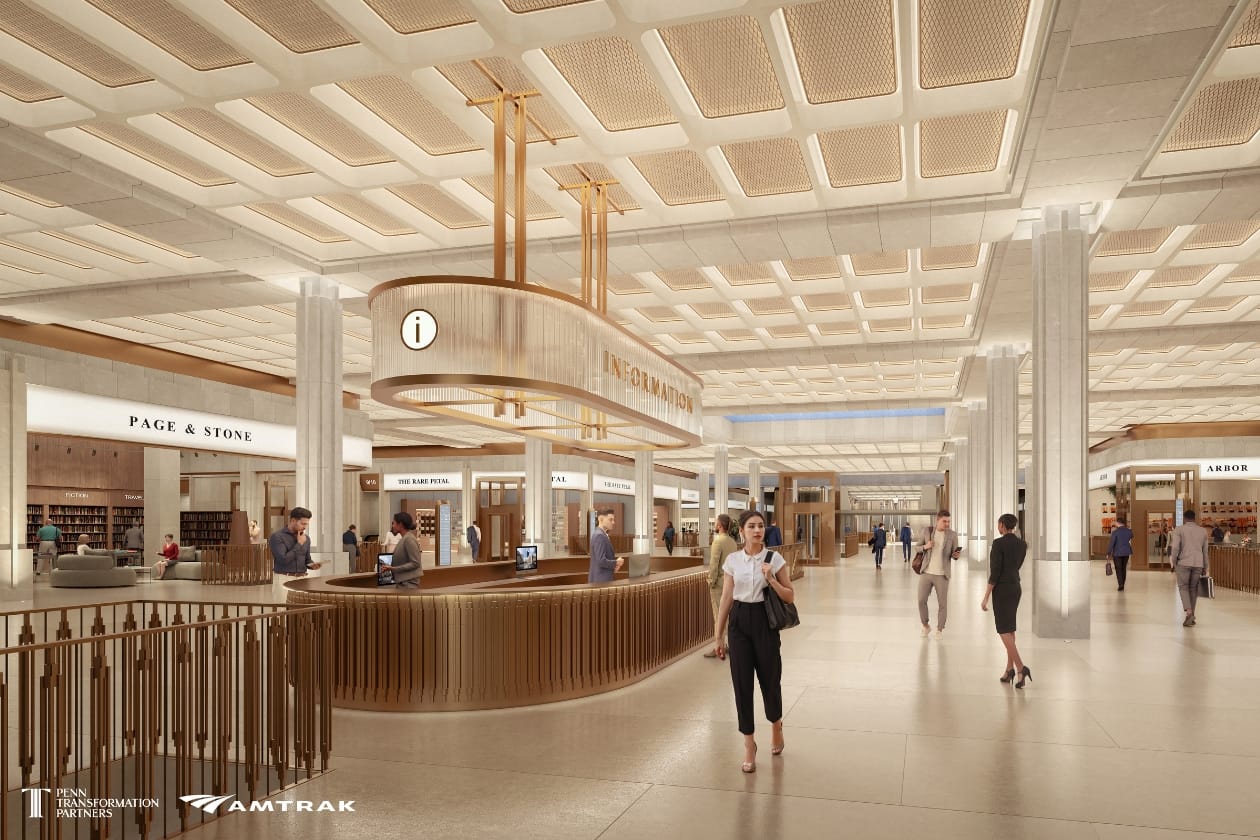
Rendering Courtesy of Practice for Architecture and Urbanism (PAU)
We've been following the revitalization and renovations of Penn Station for more than ten years, ever since Madison Square Garden's permit expired in 2013 and ideas for what could possibly take its place began to swirl. As we contemplate the most recent renderings of what Penn Station may become, let's take a look back at proposals that never came to fruition, from a re-imagined version of McKim, Mead & White's design and a futuristic burial ground to an above-ground station that uses the bones of Madison Square Garden.
A Futuristic Cemetery
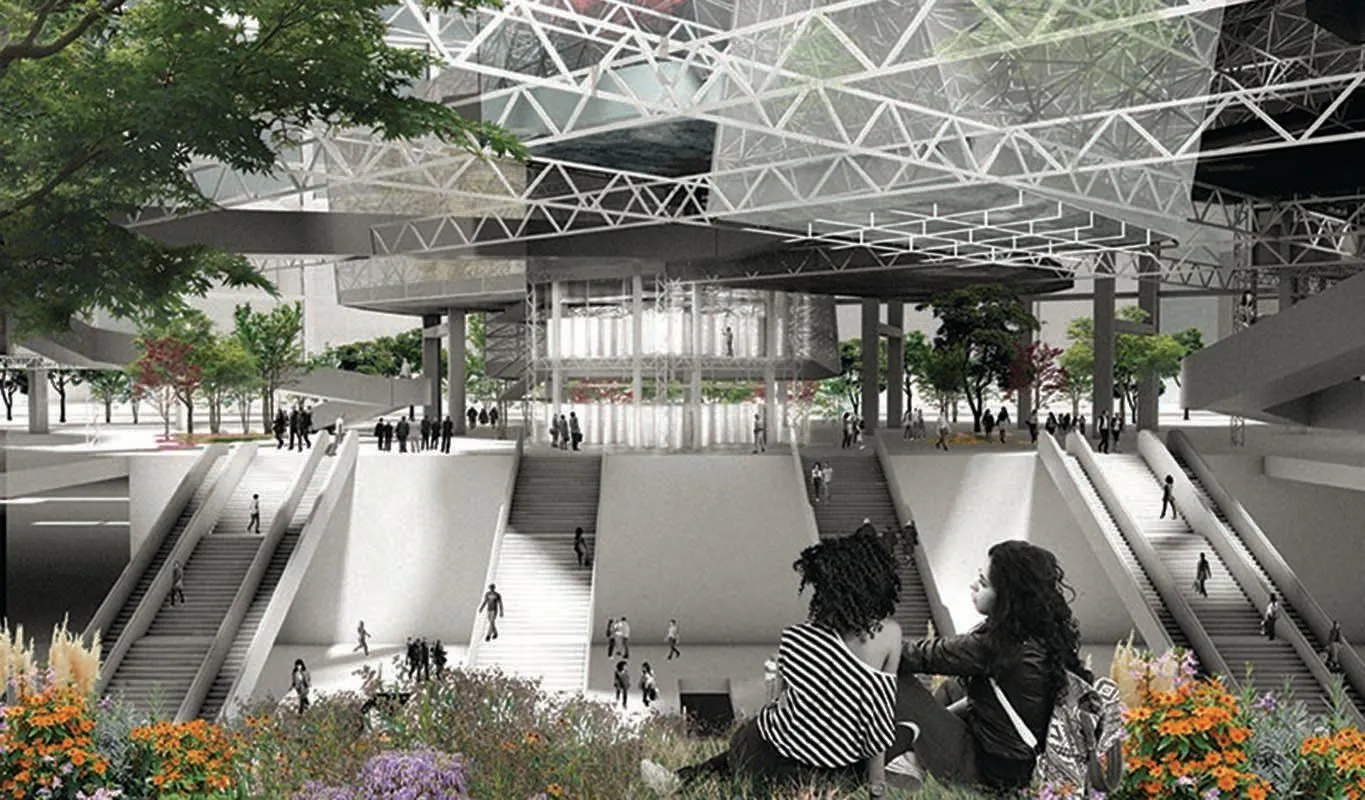
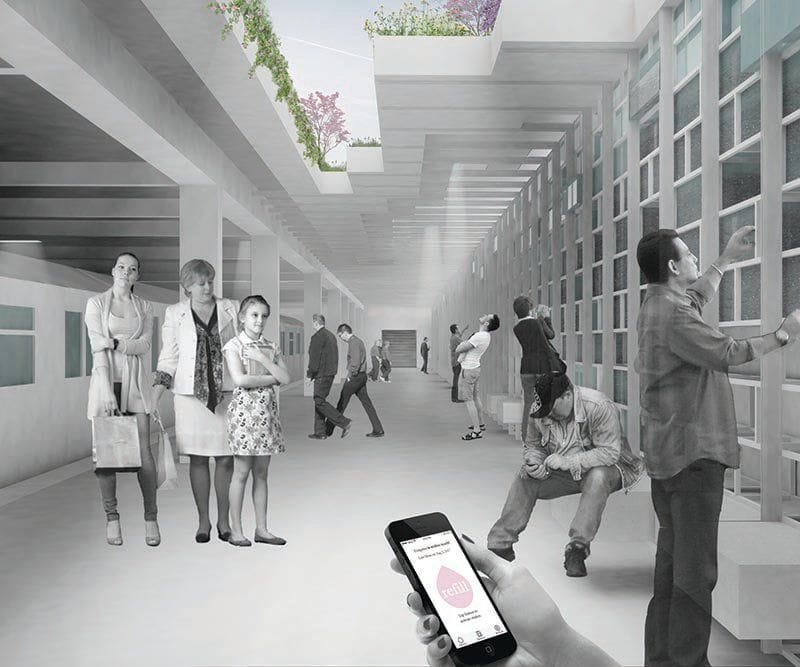
Madison Square Garden, reimagined as a cemetery and public space. All renderings by Mai Abusalih, Eric Giragosian, Min He.
One of the most unique takes on the future of Penn Station came from Columbia University's Graduate School of Architecture, Planning and Preservation and the University's DeathLAB. Envisioned by students Mai Abusalih, Eric Giragosian, and Min He in the summer of 2017, plans for #RIP: Encoding Memory envisioned an unconventional green space that would replace Madison Square Garden. This park-like setting would serve as a burial ground for both human remains and digital memories. The bodies of lost loved ones would go through promession, a form of “green cremation" and be used as fertilizer for garden spaces enjoyed by the living. Data servers spread throughout would help to control the garden climate and hold digital memories.
A Re-imagining of the Original Penn Station
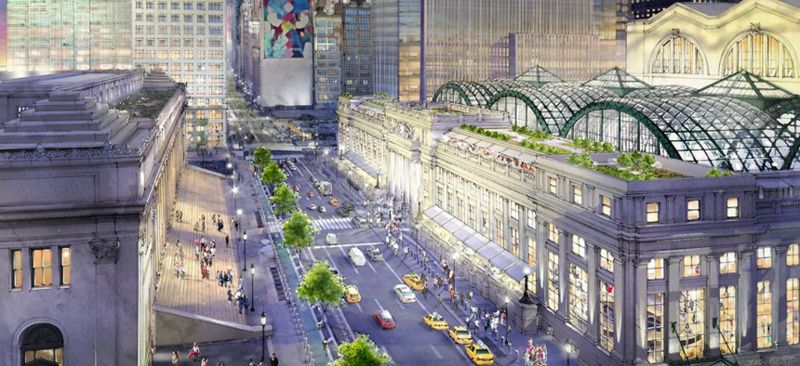
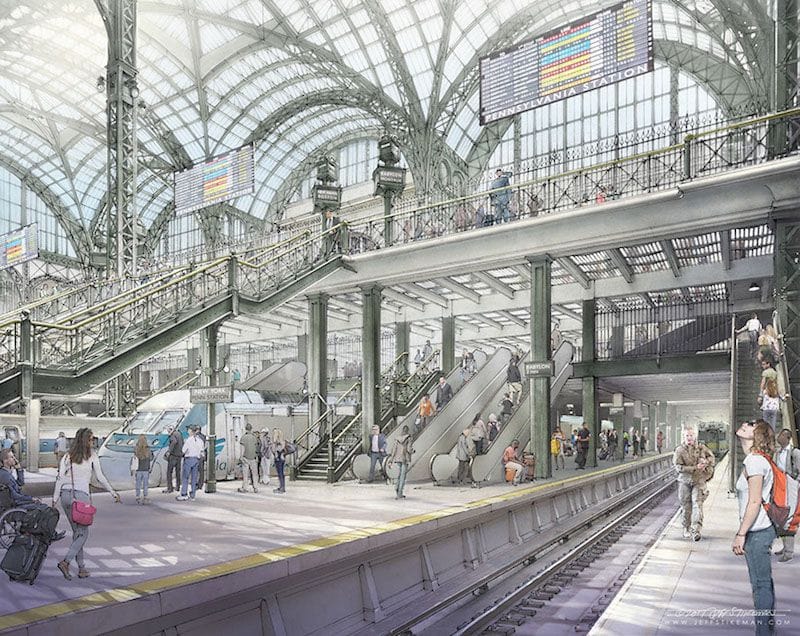
Rendering by Jeff Stikeman, Penn Design Modifications by Richard Cameron
In 2017, Rebuild Penn Station, a project of the National Civic Art Society, a 501(c)(3) nonprofit organization, launched an ad campaign advocating for the reconstruction of McKim, Mead & White's original 1910 design. The stunning renderings that were part of the campaign show modern commuters and trains within the Beaux-Arts marble hall and light-filled concourse of the early 20th-century station. The organization estimated that it would take $3 billion to $3.5 billion to bring this vision to life and of course, Madison Square Garden would have to relocate, something that is not unprecedented in the venue's history.
A Glass Ghost of Madison Square Garden
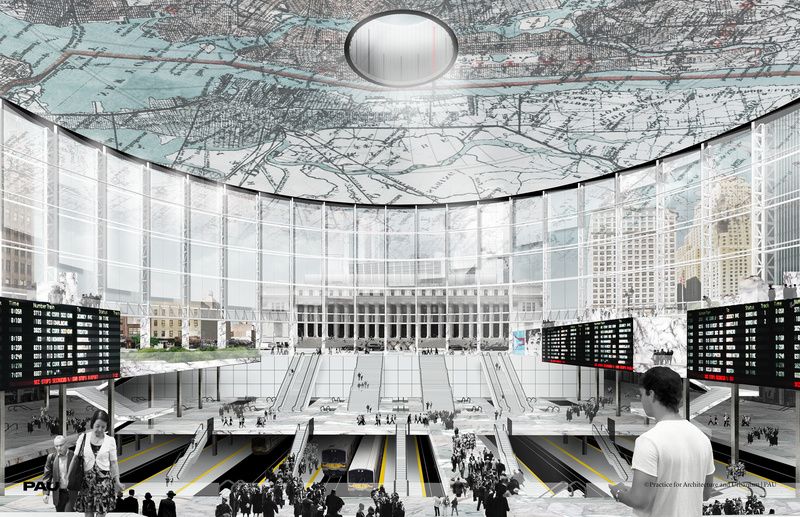
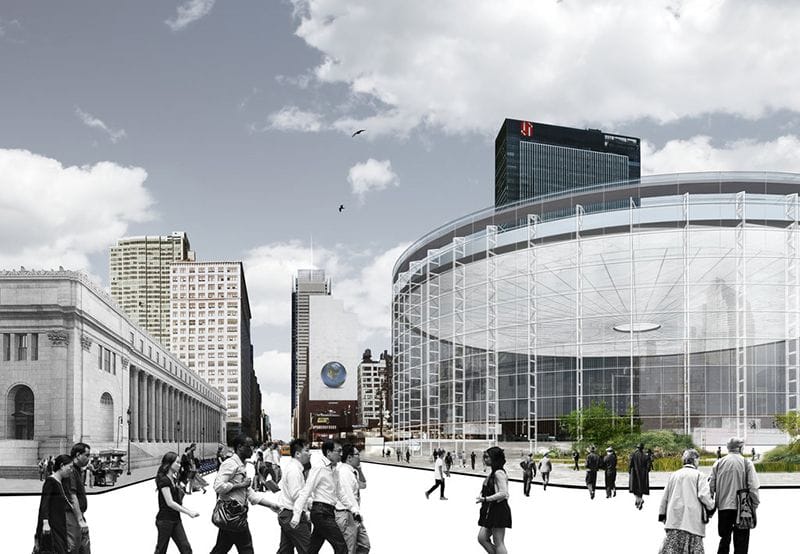
Rendering by Vishaan Chakrabarti/PAU Studios
Before Practice for Architecture and Urbanism (PAU) came up with the current design for Penn Station's next chapter, founder Vishaan Chakrabarti unveiled a different vision. Shared with the New York Times in 2016, this initial idea included repurposing the steel skeleton of Madison Square Garden to create a glass atrium. By replacing the venue's concrete cladding with glass, light would fill the station, all the way down to the exposed tracks. The see-through facade would also unlock a view of the Farley Post Office Building across 8th Avenue. In Chakrabarti's design, a few pieces of the original station, including original staircases, could be preserved.
A Circular Public Park

In 2013, the Municipal Art Society of New York (MAS) challenged four preeminent New York City architecture firms to re-imagine Penn Station. Diller Scofidio + Renfro, H3 Hardy Collaboration Architecture, SHoP Architects, and Skidmore, Owings & Merrill (SOM) all created unique proposals.
The futuristic rendering above shows SOM's design. This plan would have expanded Penn Station’s footprint by two additional blocks to accommodate high-speed rail lines and more local commuter service. Madison Square Garden would move next door to the station, and in its place would be a central glass enclosed atrium, surrounded by a circular public park four times the size of Bryant Park. The comprehensive plan also included also "a commercial development the size of Rockefeller Center, a city of Culture larger than Lincoln Center, and a residential neighborhood the size of Tudor City," according to the press release.
The Governors' Plans
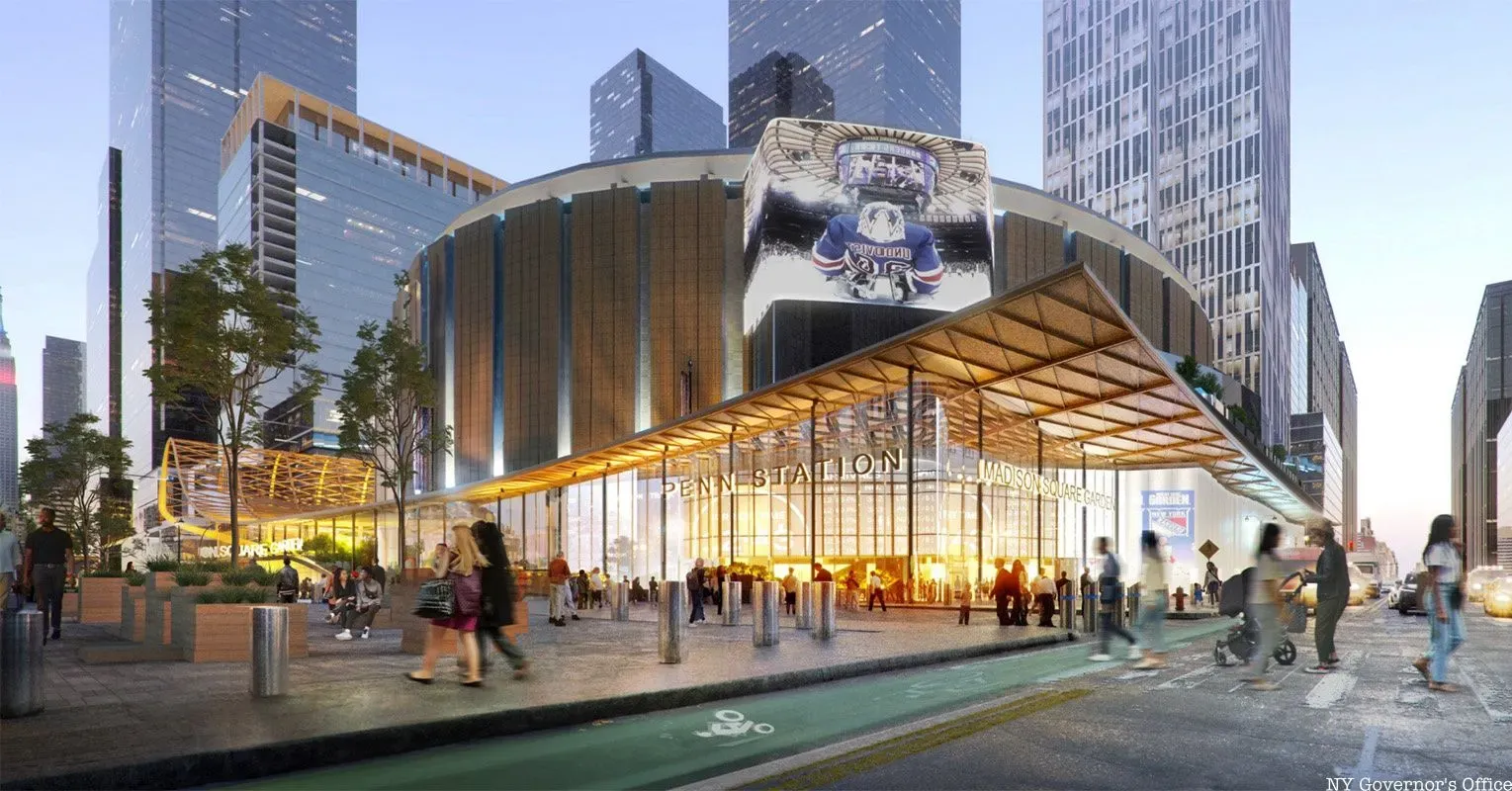
Before the U.S. Department of Transportation took control of Penn Station's revitalization in 2025, multiple proposals were put forward by New York State under both Governor Cuomo and Governor Hochul. Along with changes to the train station, these plans often included development plans for the surrounding neighborhood. Untapped New York took up the charge of advocating for multiple landmark-worthy structures, including the original Penn Station power house, that could have been at risk of demolition under Cuomo's Empire Station Complex proposal. These development plans were largely cut under Governor Hochul.
Parts of Cuomo's plan that did come to fruition include the conversion of the Farley Post Office building into Moynihan Train Hall in 2021, the new entrances along 7th Avenue, and the renovated LIRR concourse, which Untapped New York Insiders got to tour with architects from SOM.
Uncover remnants of the original Penn Station and see the changes that have been made so far when you join our tour of the Secrets of Penn Station and Moynihan Train Hall!

Secrets of Penn Station & Moynihan Train Hall Tour
Discover hidden remnants of old Penn Station and explore a new train hall inside a historic Post Office building!
⭐ FREE for Insiders & Explorers - Learn more.
What changes would you make to Penn Station? Let us know in the comments!
