

Secrets of NYC
✉️ The Lost Pneumatic Tube System at the NYSE
Long before fiber optics and wireless networks, bursts of compressed air kept Wall Street moving.
Long before fiber optics and wireless networks, bursts of compressed air kept Wall Street moving.

A new exhibit explores the unrealized, extant, and lost projects of this prolific NYC artist!


Snow blowers, throwers, plows, and more specialized equipment help keep NYC moving in the snow!


Ever wonder how the New York City subway and the regional train lines like Long Island Railroad and Metro-North prepare for storms, clear the tracks from snow, and keep the system going? The answer includes a fleet of specialized equipment designed for fighting snow, including snow blowers, throwers, and plows, along with traditional shoveling.
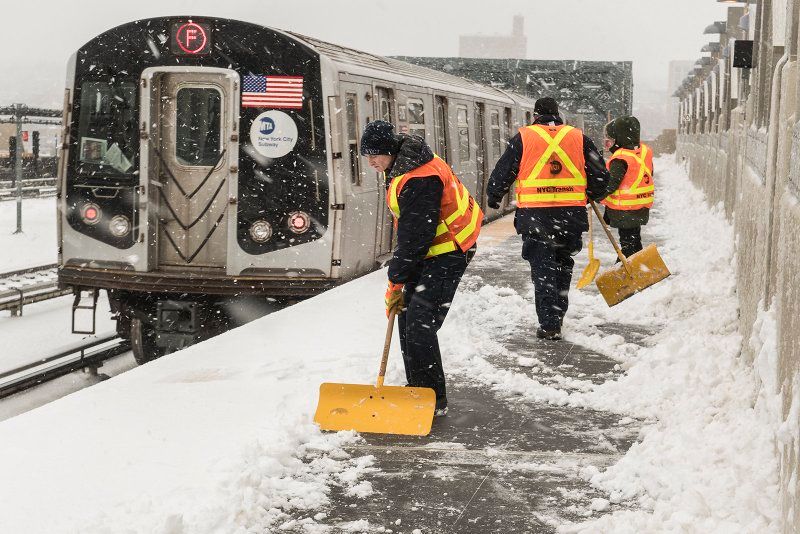
The goal, in any storm, is to keep the system operating. In a press conference before the January 2026 snowstorm, Janno Lieber, CEO and Chair of the MTA, emphasized, "We know how to prepare for these events, how to get our equipment in place, and how to get our people in place. We're going to be ready...Whether it's 7 inches, 13 inches, or whatever, we're going to be ready," Leiber stated.
What exactly does the MTA do to prepare?
Rob Free, President of the Long Island Rail Road, stated at the same press conference, "We start planning for winter in the summer. We have operating plans, checklists that we go through, all of these things. We're as ready as we possibly could be."
In the fleet of snow and ice prep vehicles, there are snow throwers, snow blowers, and other de-icing equipment at locations citywide. Each transit line has equipment specific to its needs, although some pieces of equipment are shared between them. Subway cars and equipment get relocated out of outdoor train yards in advance of a storm so they don’t get stuck.
New York City’s subway system runs in a lot of extreme weather conditions, and its subway cars are designed to withstand high and freezing temperatures, snow, sleet, and rain.
While underground subway tracks are protected from the worst of the snow, the city's 220 miles of outdoor tracks are vulnerable. Areas of south Brooklyn, the Rockaways, and the north Bronx on the Rockaway A S, Sea Beach N, Flushing 7, Brighton B Q, and Dyre Av 5 lines are most at risk. However, efforts have been made to shore up those areas since a major snowstorm back in December 2010, when 400 passengers got stuck on the A train at Aqueduct Racetrack for more than 7 hours.
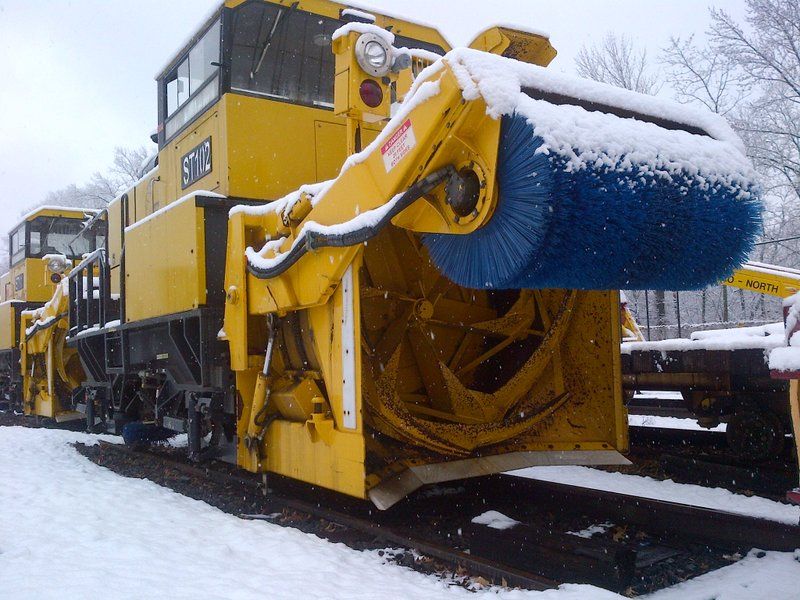
Hundreds of 3rd rail heaters and snow melting devices at switches, nearly 3,000 ice scraper shoes that help break up ice on the tracks, and more than 2oo blowers/snow melters vehicles powered by jet engines are ready to be called into action. Additionally, MTA has portable snowblowers/snow throwers, chain saws, emergency response vehicles or road service trucks, forklifts, torches, dump trucks, front loaders, excavators, debris clearing trains, and backhoe loaders.
The diesel-powered snow thrower (above) has a 6-foot cylindrical blue brush that pulls snow into a tube and can blast it up to 200 feet away. The snow throwers can remove up to 3,000 tons of snow per hour. The snow throwers get positioned in advance of a storm on exposed, open-cut subway lines. Jet-engine snow blowers also do additional clearing, often in rail yards.
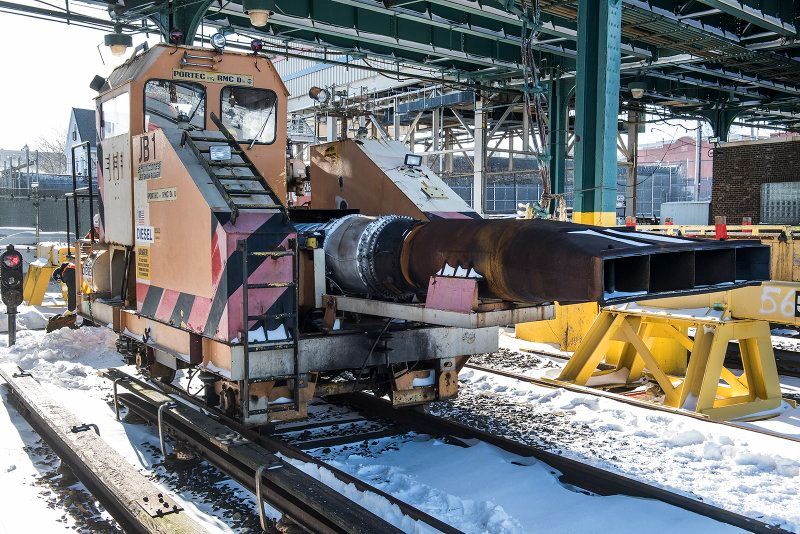
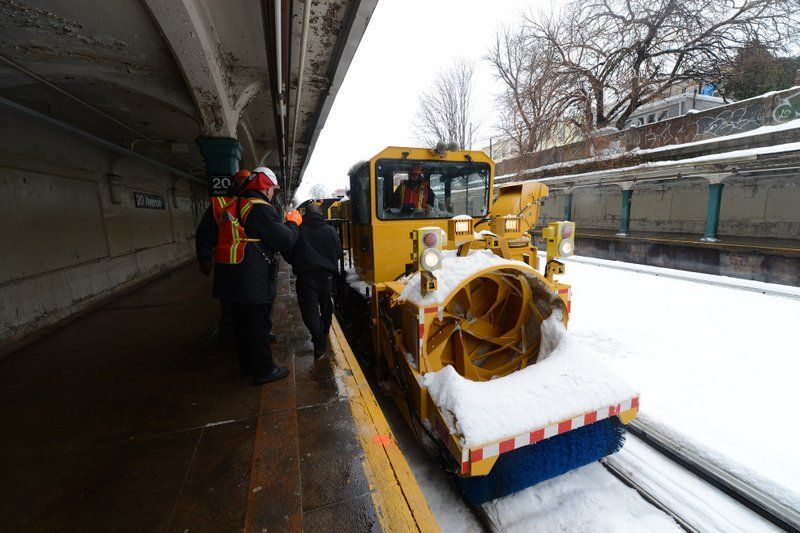
In addition, the third-rail heaters, heating elements are placed at specific track locations and switch locations known to be prone to icing. De-icer cars and trains are equipped with tanks that spray de-icing fluid on the third rail and have “scraper shoes” that can remove ice. These cars are repurposed RD340 models, more popularly known as the "Redbirds," which were in service as passenger trains from the 1950s through the early 2000s.
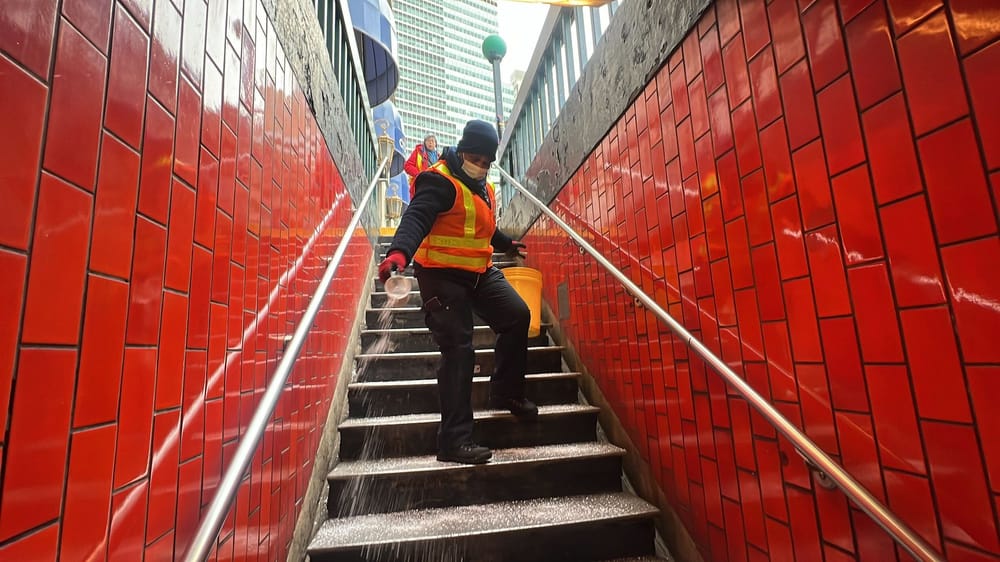
Beyond equipment, old-fashioned shoveling and salt spreading are done on tracks, platforms, and stairs.
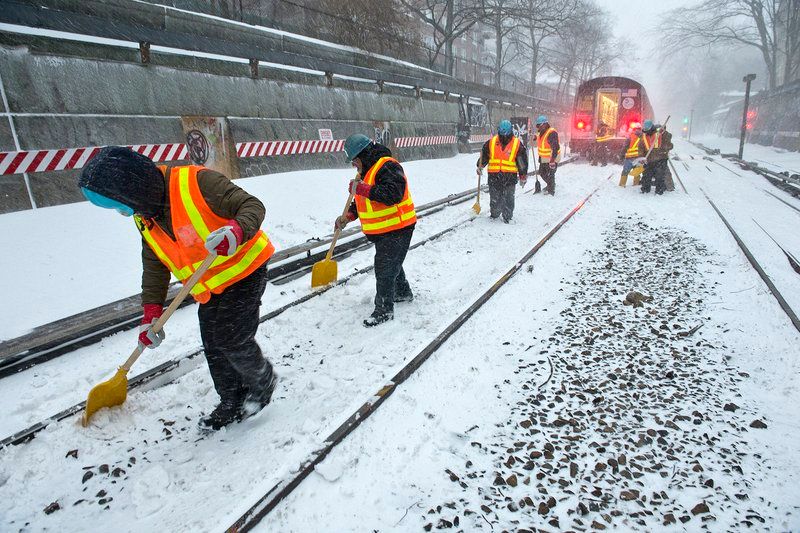
Free noted that among the LIRR's preparations for this storm, approximately 1,800 employees will be on duty, and 1.1 million pounds of salt have been delivered. As of 2011, the Long Island Railroad had GPS trackers on its snow-fighting equipment and its service trucks, which assist in efficient resource deployment.
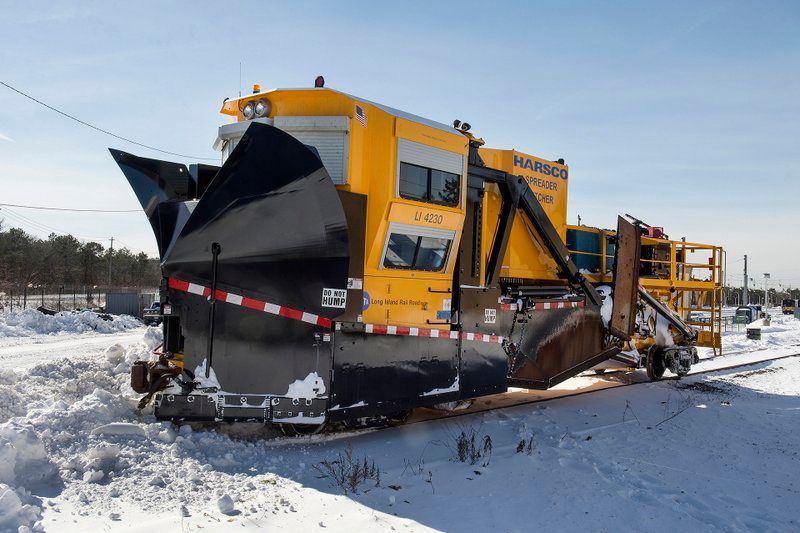
In 2018, when the Long Island Forward Plan was announced, the railroad installed 100 snow switch covers, insulated 38 switches, installed more than 3000 doorway threshold plates, and replaced more than 300 utility poles along the tracks. One of the spreader-ditcher plows has been nicknamed “Darth Vader” for its shape (above).
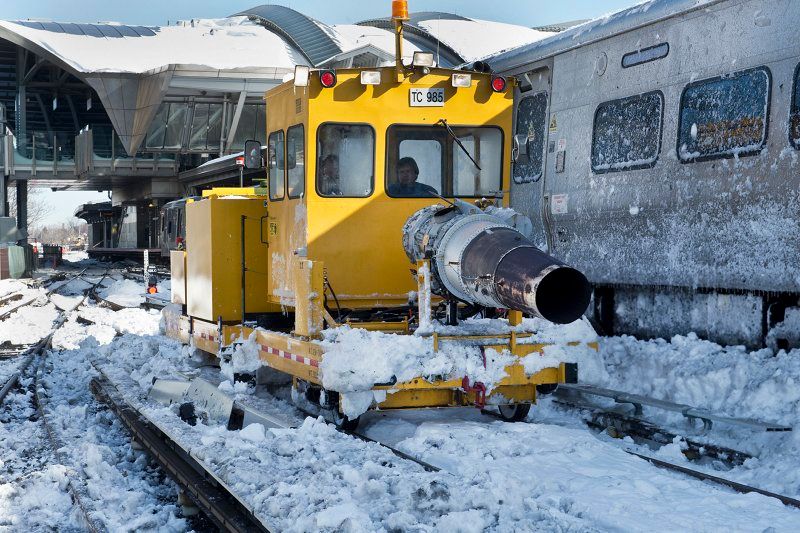
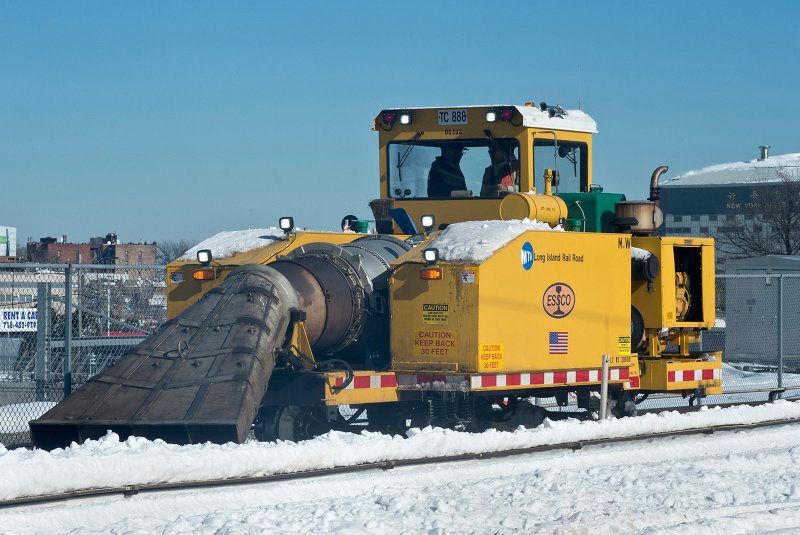
Metro-North has a similar roster of equipment with portable snowblowers, truck-mountable snow plows/salt spreaders, and track-switch heaters, along with third rail snow shoes, portable generators, chainsaws, front loaders, backhoes, excavators, dump trucks, cold-air rail snow blowers/throwers, emergency response trailers, and rail-bound snow brooms.
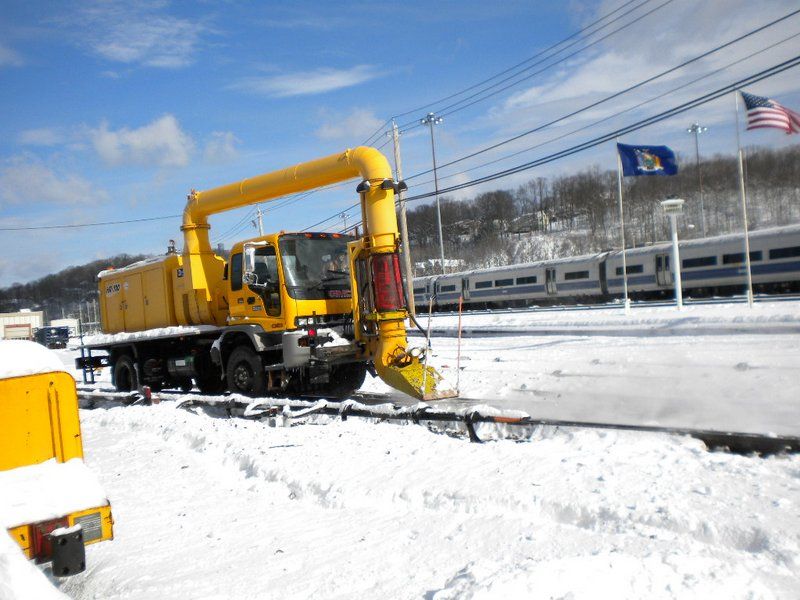
But even all the specialized vehicles can get piled upon with snow, and when that happens, transit workers pull out their shovels and manually remove it. Inside the stations, the platforms get covered with salt, and the platforms and stairs are cleared of snow. But sometimes the rate of snowfall overwhelms the stations, and massive snowdrifts start to pile up.
The effectiveness of snow removal depends on many factors, including on-going capital investments, agency coordination, pre-deployment of equipment and labor, communication to customers, and other factors.
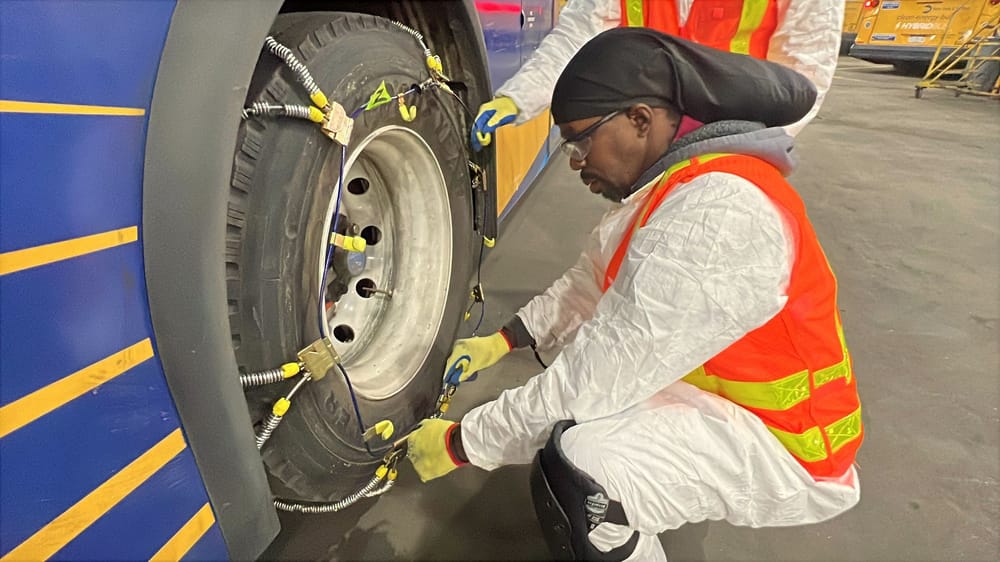
It's not just the city's rail services that need to prepare for snow; the buses also need to be ready. In preparation for the storm coming this weekend, articulated buses have been taken out of service and replaced by 40-foot standard buses. NYC Transit employs 35 snow-fighting vehicles, and all buses are fit with snow chains on the tires.
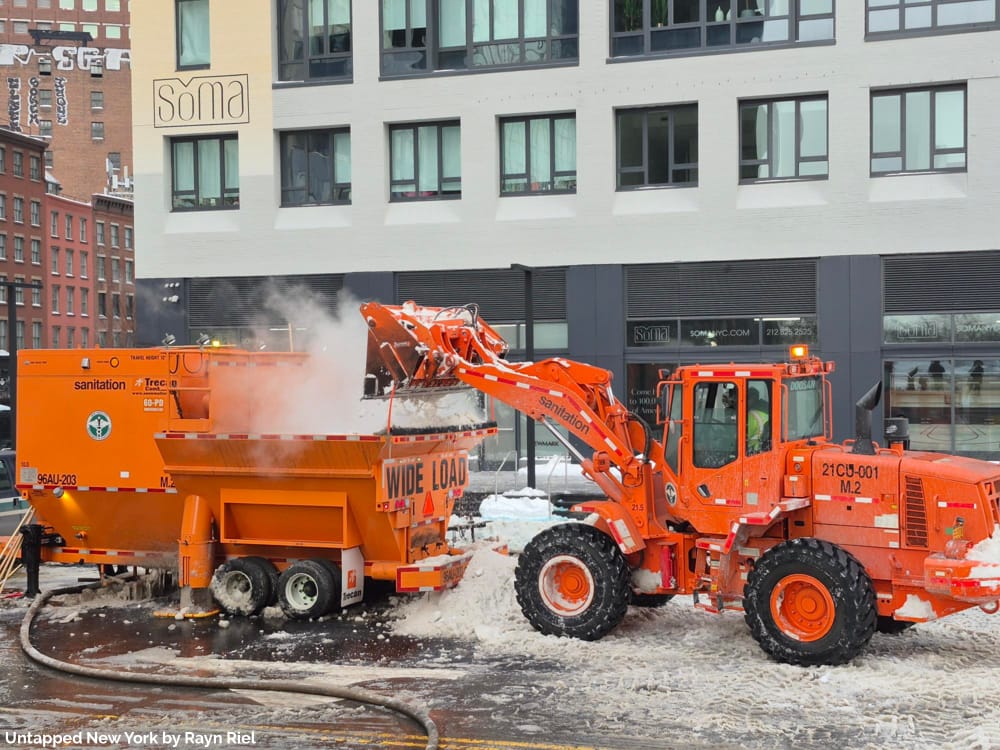
During the first snowstorm of 2026, New Yorkers may have spotted a snow removal vehicle that hadn't been deployed since 2021, the snow melter, which some have called snow hot tubs. There are eight snow melters in total, spread across the Department of Sanitation's seven zones: 2 in Queens, 2 in Brooklyn, 1 in Staten Island, 1 in the Bronx, and 2 in Manhattan. Each can melt up to 60 to 120 tons of snow per hour, half a ton at a time. The melted snow is then discharged into the sewer. Though the melting snow appears hot and steamy, the temperature is only 38 degrees Fahrenheit.
If you must travel during the storm, you can get the latest updates on public transit by:
💻 Checking for alerts on mta.info
📱 Downloading the MTA and TrainTime apps
📧 Signing up for service alert emails
☎️ Calling 511
Stay warm and safe out there!
Originally published by Michelle Young, December 2020
Additional reporting by Nicole Saraniero, updated January 2026
Subscribe to our newsletter