The Museum of the City of New York’s "Raise Your Voice" exhibit traces 250 years of NYC protest, from the Stamp Act Riot to the Young Lords’ Garbage Offensive.
Design a Protest Poster at the Museum of the City of New York's New Exhibit
The Museum of the City of New York’s "Raise Your Voice" exhibit traces 250 years of NYC protest, from the Stamp Act Riot to the Young Lords’ Garbage Offensive.
For as long as there has been a New York City, its citizens and residents have been protesting. We are a rebellious, pugnacious lot. Rights. Wrongs. War. Peace. Justice. Injustice. We have opinions, and we express them.
The Museum of the City of New York's new exhibit, Raise Your Voice, traces more than 250 years of New Yorkers "organizing, demonstrating, and making art to advocate for a better city," said Stephanie Hill Wilchfort, the Ronay Menschel Director and President of MCNY at the opening. "We encourage visitors to see themselves on a continuum of history, one where people have come before."
Divided into four activist methods–Demonstrations, Organizing, Art & Media, and Direct Action–the exhibit seeks to create as multi-faceted a presentation as possible, says its curator, Sarah Seidman. And it succeeds. Along with historical artifacts, visitors can also engage with video, music, and an interactive poster design station. You can even register to vote.
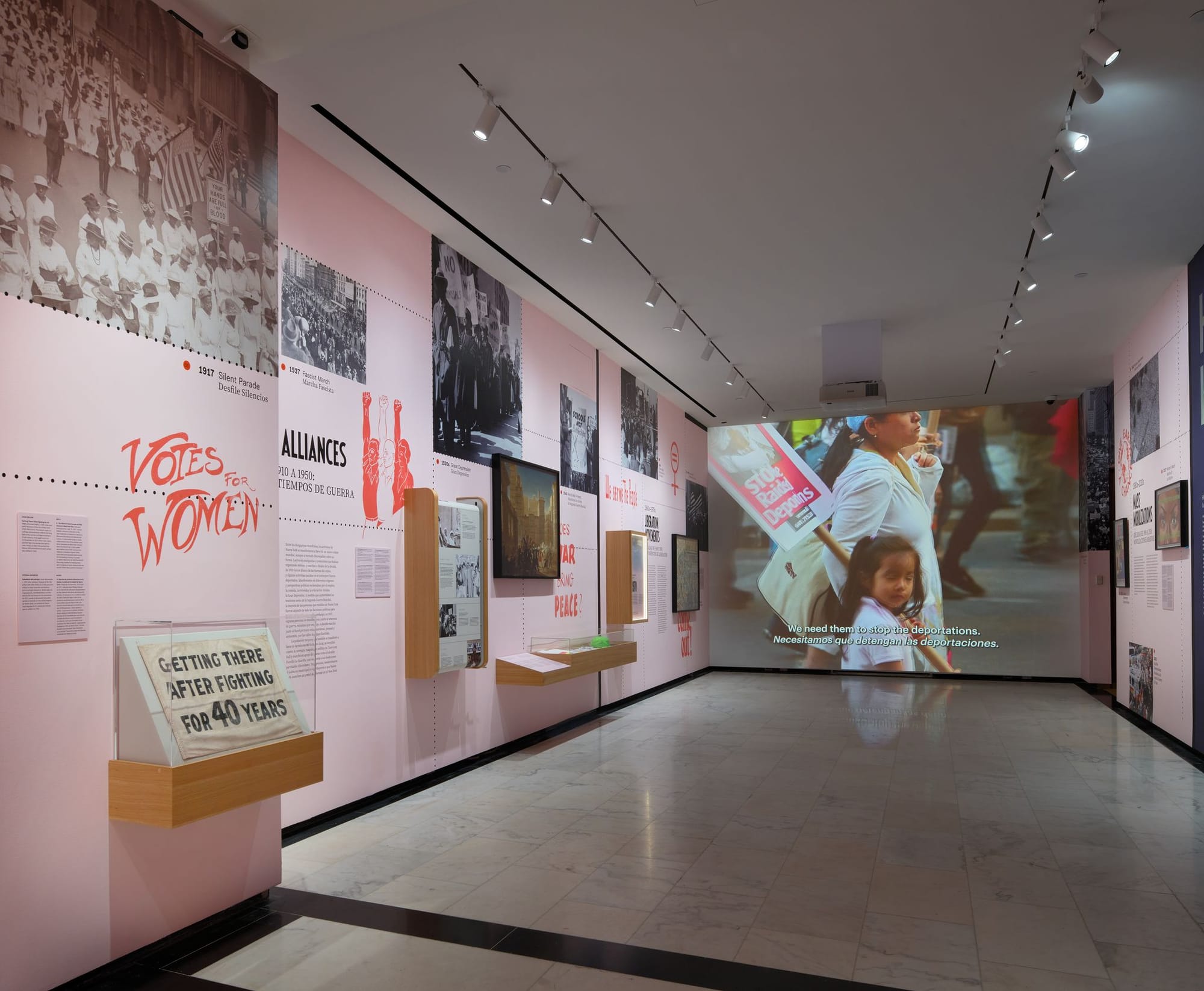
City of Movement on far wall. Photo: Brad Farwell for MCNY
As you enter you see a video, City of Movement, in the distance, flanked by a chronological timeline of over 20 New York demonstrations on the adjacent walls. Directed and edited by Robin Blotnick and playing on infinite loop, City of Movement is a ten-minute archival collage of 100+ years of New York City social movements, says its creator. It highlights the city's role as a media, finance, and arts capital, which has shaped its public expressions of protest. Despite New York City's immense financial and cultural importance, the video vividly shows poverty, injustice, anger, desperation, garbage—along with a belief that things can get better.
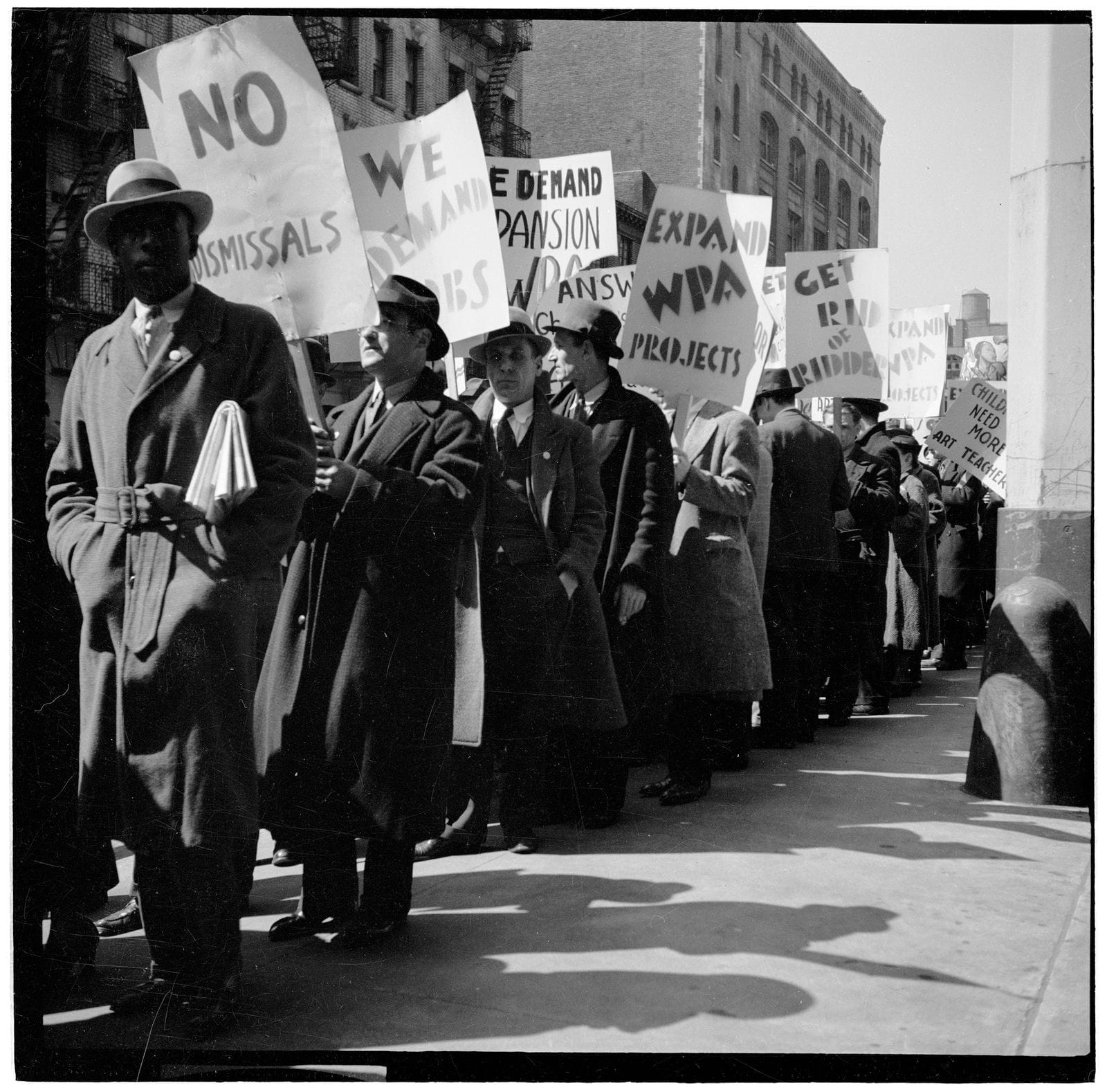
Men protesting, Chelsea, 8th Avenue. Photo: Alexander Alland, ca. 1940, MCNY
And that, in a way, is the essence of Raise Your Voice: raise your voice because in doing so you can improve your world. The walls are covered with vivid slogans: "March on Washington for Jobs & Freedom!" "Organize the Unorganized!" "Act Up for a Cure!" "Be Proud of Your Neighborhood."
At the same time there are questions: "Does War Bring Peace?"
And there are also paradoxes. The 19th-century slogan, "Native Americans. Beware of Foreign Influence," is a warning to American-born citizens that an influx of German and Irish immigrants will undermine American democracy. The year is 1844, midway in the 1820-1880 first great wave of mass immigration. Today we see the words "Native Americans" and we think of Navajos, Cherokees, and the Lunaapeew (Lenape), whose culture is explored in an adjacent exhibit, Halumii Ktapihna: Lenape Legacies and Futures.
Demonstrations
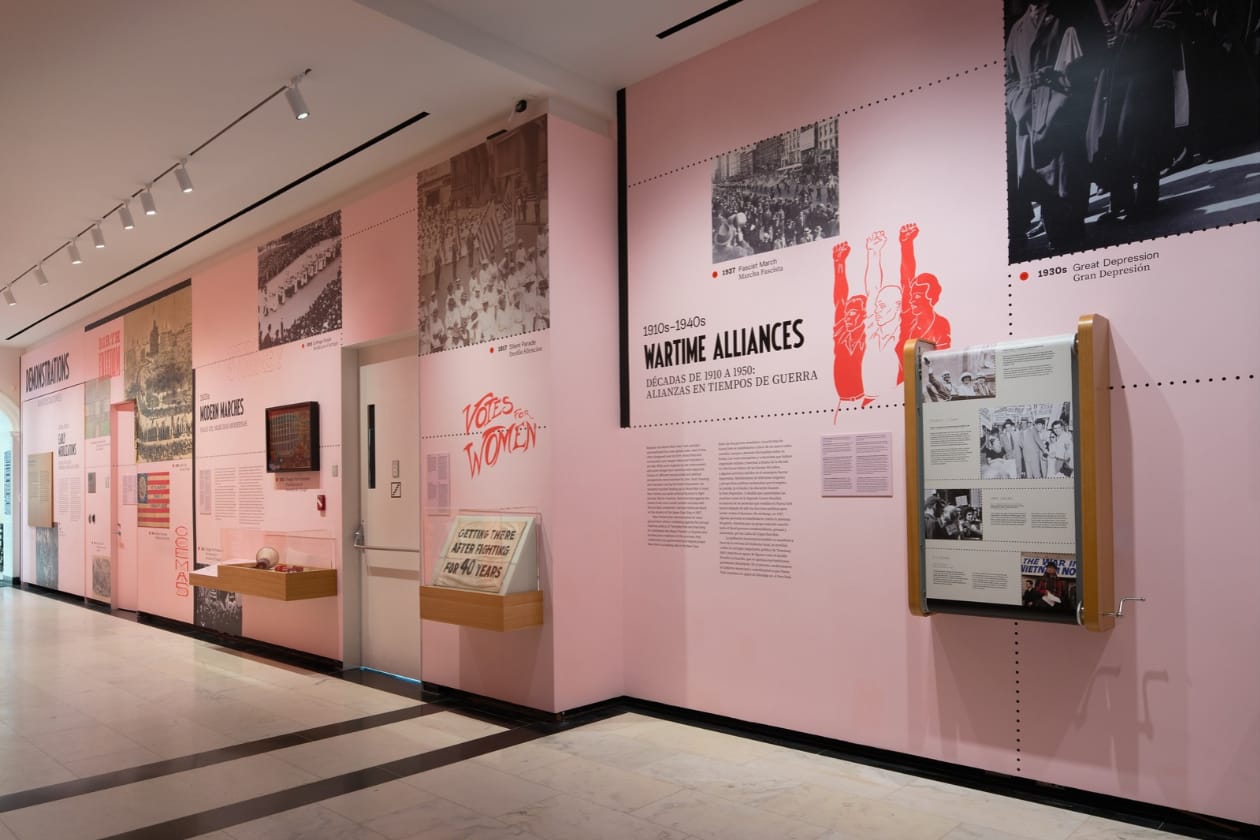
From the Stamp Act Riot to Black Lives Matter, demonstrations live. Photo: Brad Farwell
From its earliest days, New York's density has helped make it a center of activism. All the protesters you could want are right here. The anteroom hallway of the exhibit is divided into five eras, from colonial times to the new millennium, with a special focus on the 20th century. Many colonial-era demonstrations, such as the Stamp Act Riot, remain famous while some mid-19th-century demonstrations, such as the Anti-Abolitionist Riot, are notorious. In their midst are two sets of demonstrations that profoundly affected history: the anti-slavery protests and the women's suffrage movement.
On the left, under the slogan "Votes for Women," is a quiet sign that reads, "Getting There After Fighting for 40 Years."
"New York is the battleground of the whole nation,” activist Carrie Chapman Catt said in 1909. Women's suffrage was defeated on the New York State ballot in 1915, but was approved by male voters in 1917. The long and bitter fight culminated in the 19th Amendment passed by Congress in 1919, and ratified by three-fourths of the states in 1920.
Yet insofar as the fight over women's suffrage was a fight over women's rights, it's not over. New York continues to be a battleground, as the Guerrilla Girls remind us.
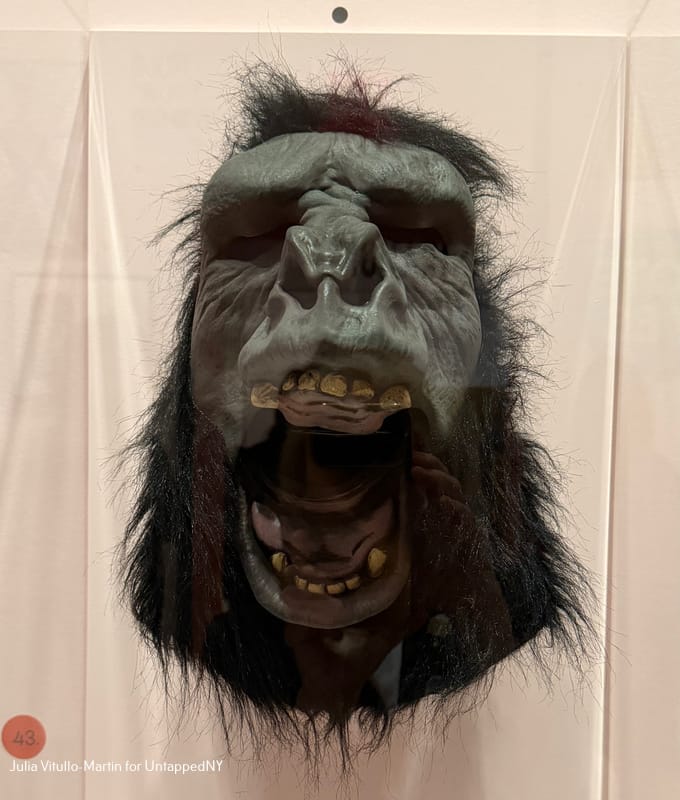
Gorilla mask, Zagone Studios, 2024, Courtesy of the Guerrilla Girls
Founded in Lower Manhattan in 1985 to protest discrimination in the art world, the Guerrilla Girls are anonymous. They wear gorilla masks in public and use the names of renowned female artists, such as Käthe Kollwitz and Frida Kahlo, as pseudonyms to protect their identities. They maintain an online presence, and use the tactics of performance art to draw attention to the art world's inequities. They ask humorous, but serious questions: "Do women have to be naked to get into the Met Museum?," noting that fewer than 3% of the artists in the modern art sections of the Met are women, while 85% of the nudes are female.
Art & Media
Photo: Brad Farwell for MCNY
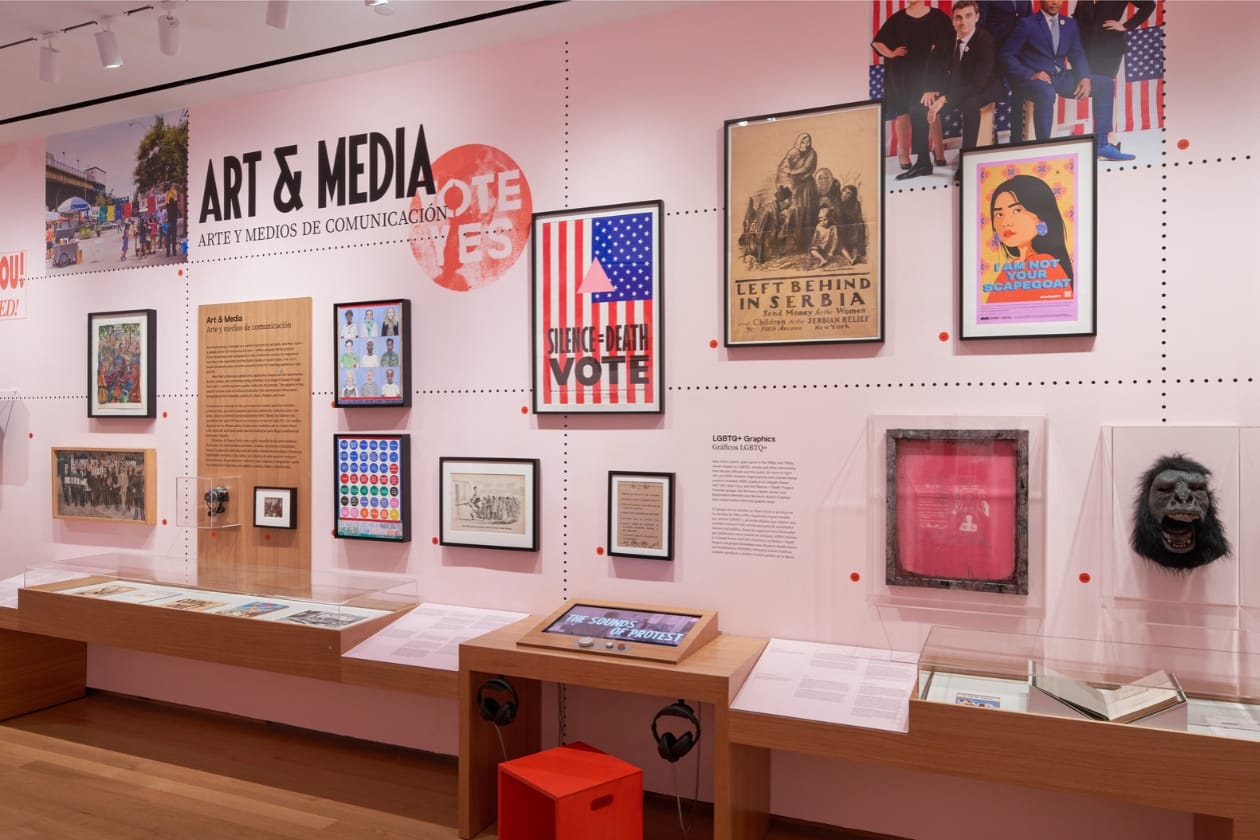
While the Guerrilla Girls directly protest the art world, the art world itself is an important ally in protest. New York's position as a global center for both media and art gives activists ready access to powerful audiences. This has been true from the start. As Bloomberg Connect notes, "From 19th-century broadsides and newspapers to 20th-century magazines and film and today’s digital platforms, New Yorkers have used changing media to spread ideas near and far."
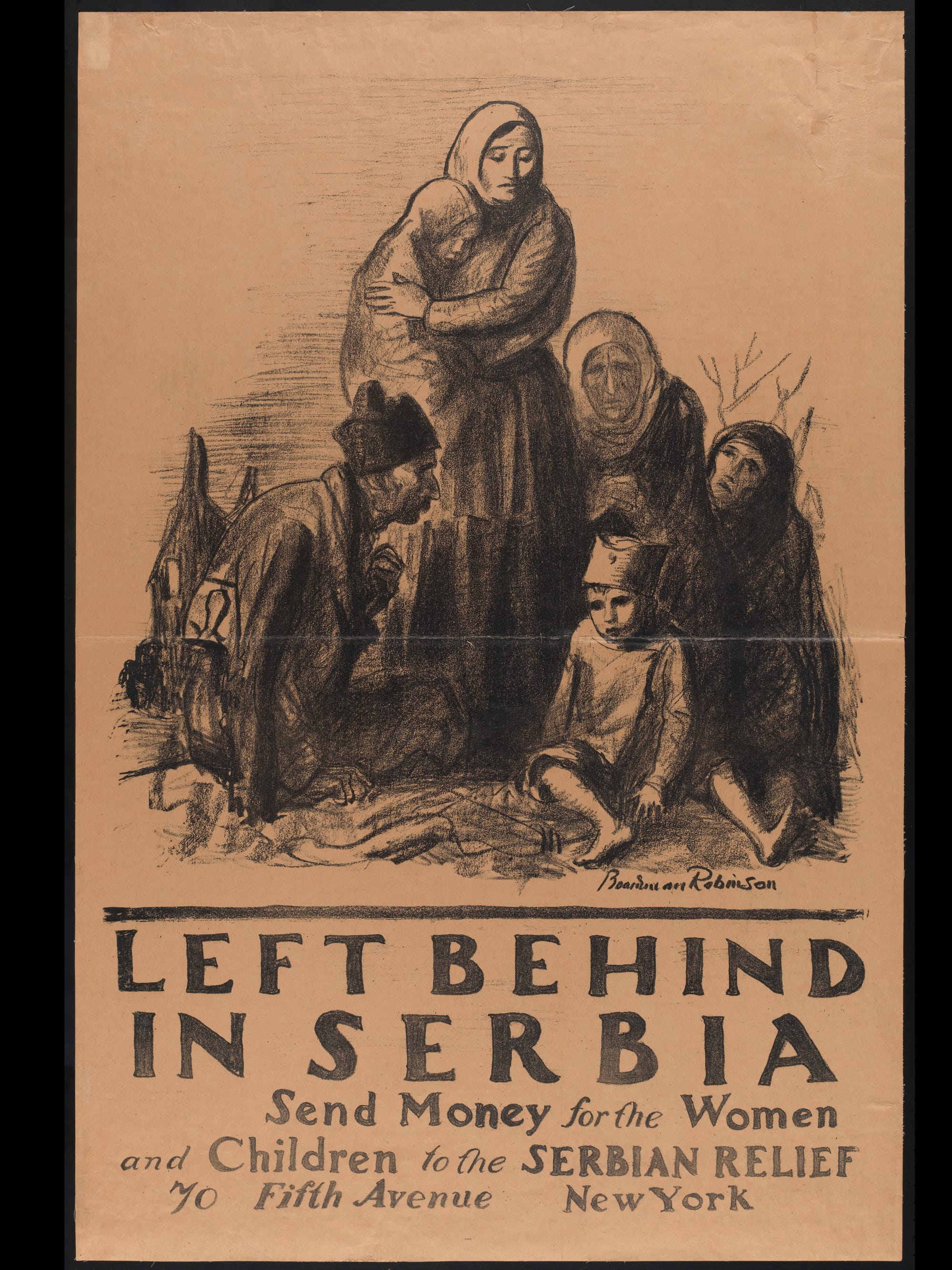
Some art is deeply sympathetic, such as the "Left Behind in Serbia" poster, meant to evoke strong reactions—and also attract needed money. Serbia suffered the highest proportional population loss of any country in World War I. Between 750,000 and 1.25 million people died, resulting in an estimated loss of between 16% and 25% of Serbia's total population. And while Chicago has long been a Serbian-American stronghold, New York became the center of Serbian relief efforts.
Left Behind in Serbia, Boardman Robinson, ca. 1917, Museum of the City of New York
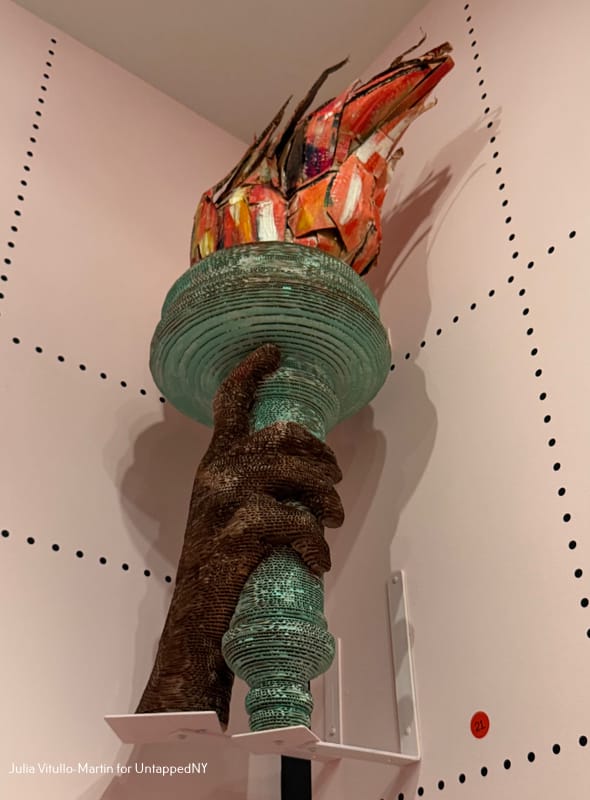
Some art evokes sympathy ironically. The very beautiful acrylic-on-cardboard Statue of Liberty Torch is the work of an artists' collective, We Make America. The collective's name responds to President Trump's "Make America Great Again."
“We Make America is about diversity; it is about all of America,” founder Maria de Los Angeles, a graduate of Yale’s MFA program, toldHyperallergic art magazine. “We are makers, and we can have a voice, and what we do in life can have an impact socially."
Statue of Liberty Torch created by We Make America
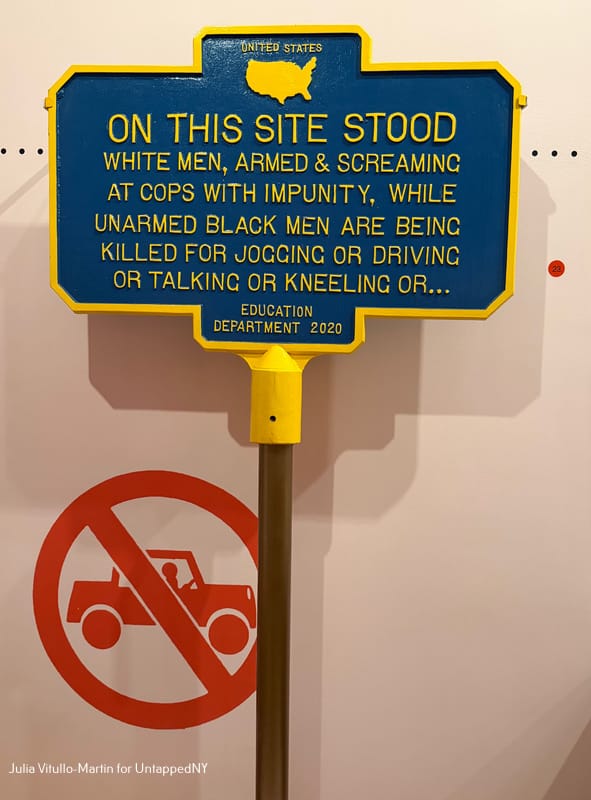
Some art is meant to shock, and Norm Magnusson's 2020 sign certainly does. Mocking New York State's historic preservation signs, his "Unarmed Black Men" subverts the dignified format through precise language and design.
Unarmed Black Men, Norm Magnusson, 2020
Direct Action
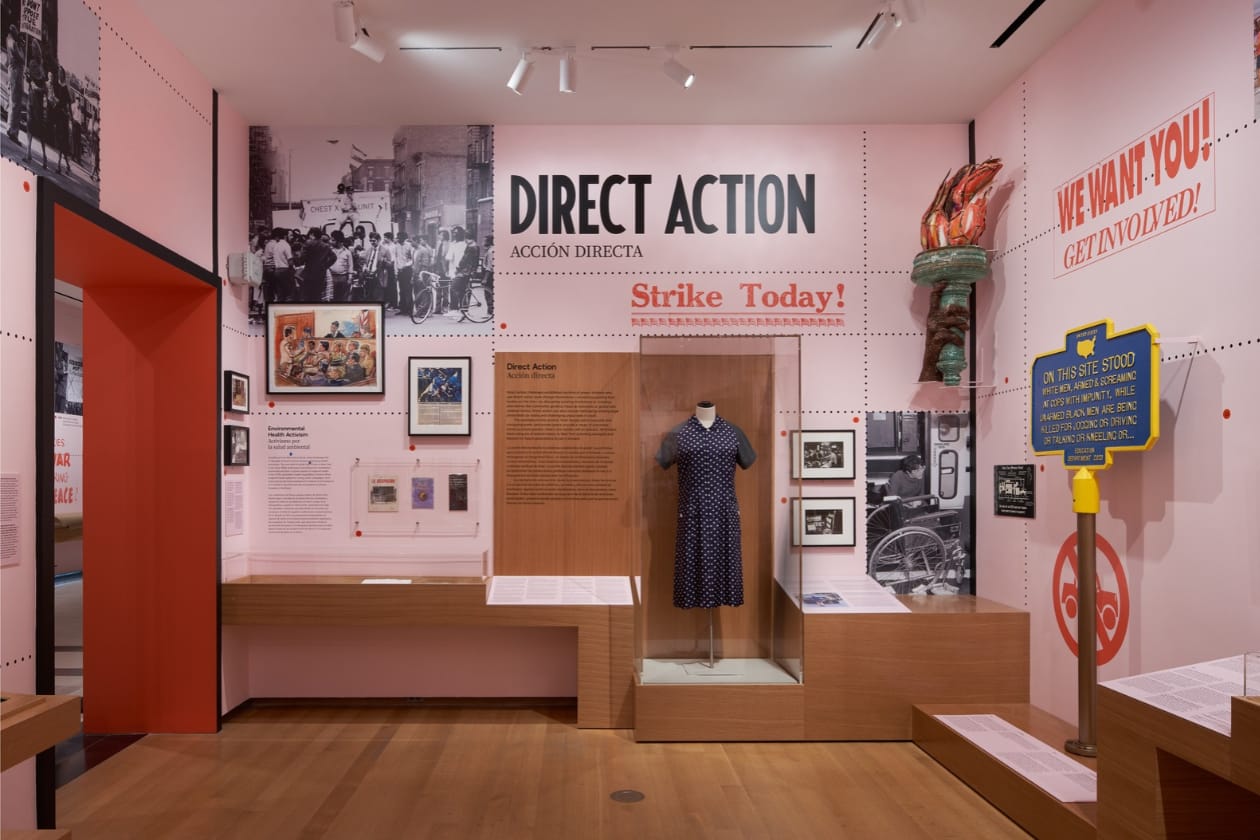
Young Lords to polka-dot dress. Photo: Brad Farwell for MCNY
Direct action may be where the real glamor lies. From the Young Lords to the Comme des Garçons silk polka-dot dress worn by a woman during the 2025 anti-ICE protests, Direct Action needs memorable symbols and tactics. Boycotts, confrontations, seemingly spontaneous eruptions, occupations of contested space–all tactics working outside official systems. When successful these tactics can result in new housing, community gardens, better schools, community medical clinics, and clean streets. Challenging established systems of power, activists do what they can to disrupt the powers that be, whether corporate chieftains or government bureaucrats. Who constitutes the establishment changes. For the 19th-century women's suffrage movement, the establishment often consisted of their husbands and fathers—even their sons. For the Young Lords, probably the most glamorous group in the exhibit, the establishment was the wealthy, white world discriminating against Puerto Ricans.
“The Young Lords have a special place in my heart,” says Sarah Seidman, the exhibit's curator. "They were local, very New York, and had a natural ability to use the media to present their ideas." They applied direct action to concrete issues, devising clear names for their efforts, such as the Garbage Offensive and the Lincoln Hospital Occupation. Like the Black Panthers, whom they admired, they wore berets and dressed with style.
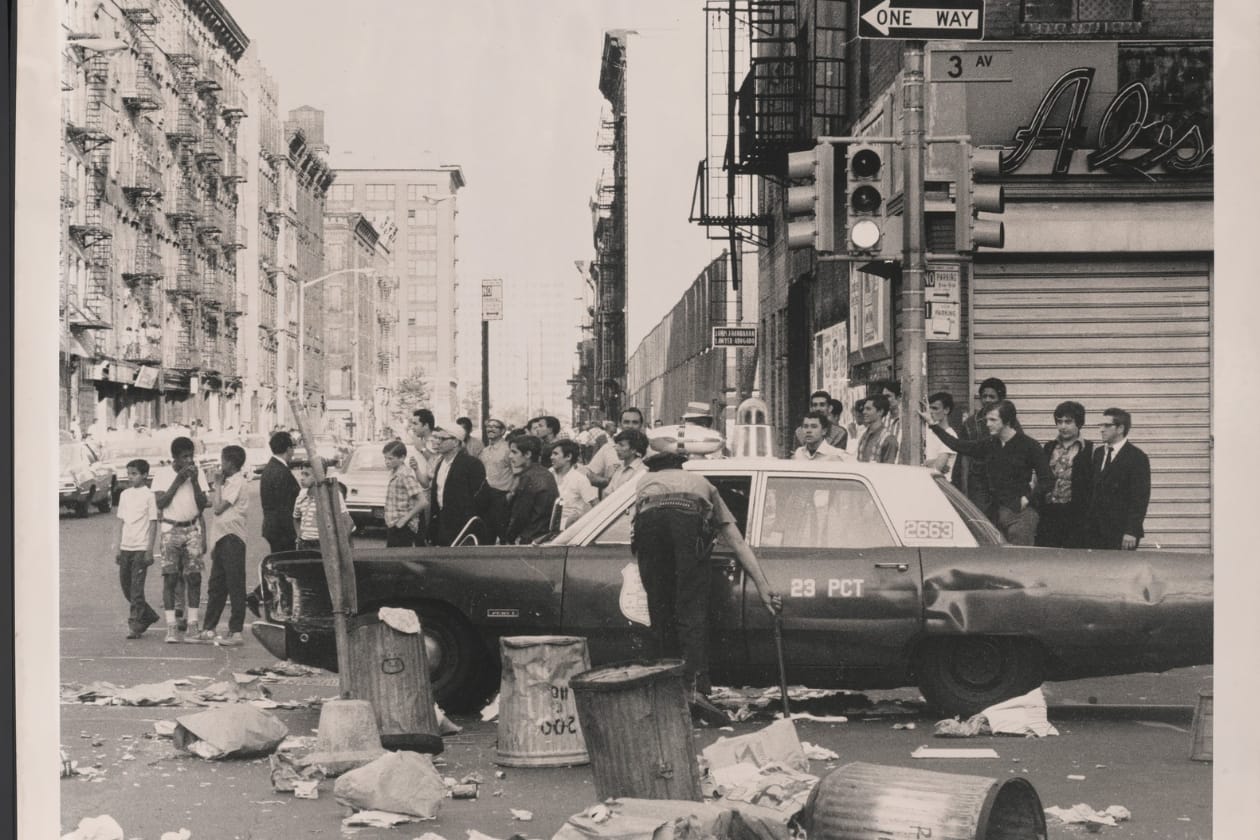
Their most famous effort was the Garbage Offensive of 1969. After repeatedly asking the city to clean up the uncollected garbage in Spanish Harlem, the Young Lords piled up the trash in the middle of Third Avenue, and set it on fire. Mayor Lindsay's Sanitation Department cleaned up the streets, giving the Young Lords a huge win.
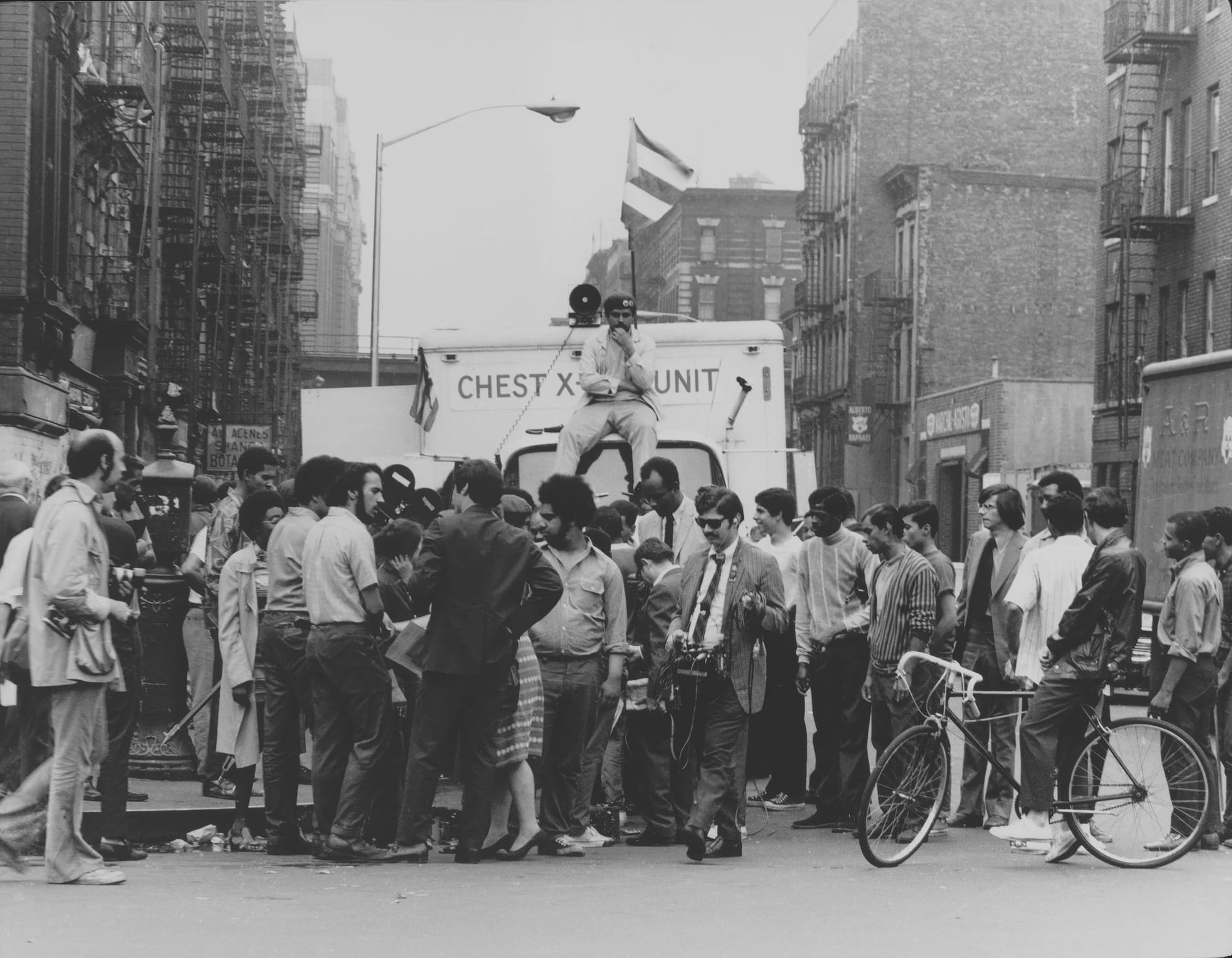
Their health efforts were less specific and, perhaps as a result, less successful. They occupied Lincoln Hospital in the nearby South Bronx to demand comprehensive health care, and deployed mobile X-ray units to test for tuberculosis.
Young Lords take over NYC-owned mobile TB van, 1970. Photo: Hiram Maristany. MCNY
Organizing
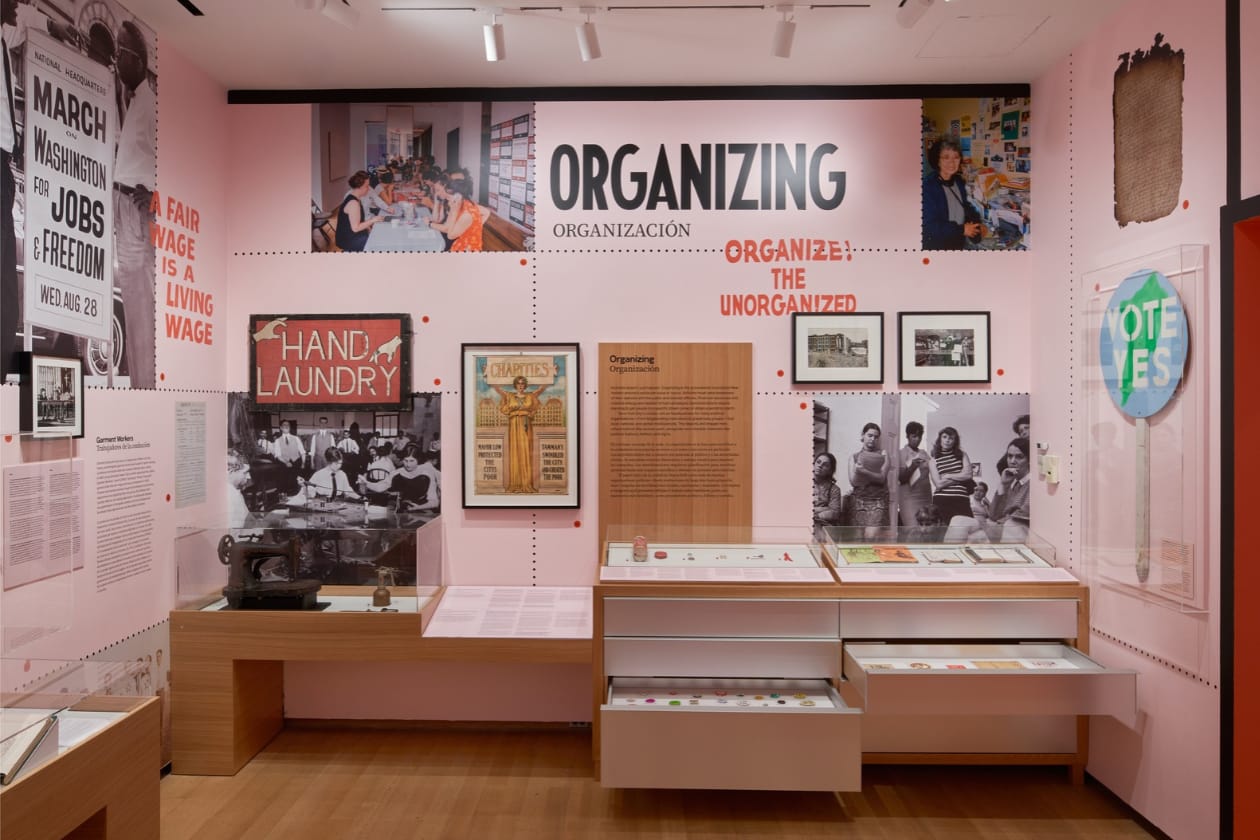
From Chinese hand laundries to aristocratic reformers. Photo: Brad Farwell
"I'm interested in behind the scenes," says Sarah Seidman, gesturing toward all the women (are there only women?) doing the hard work of thinking, planning, strategizing, calling, printing posters and appeals seeking support, raising money. Who's organizing the unorganized? Women. This is the groundwork that converts a social cause into a movement.
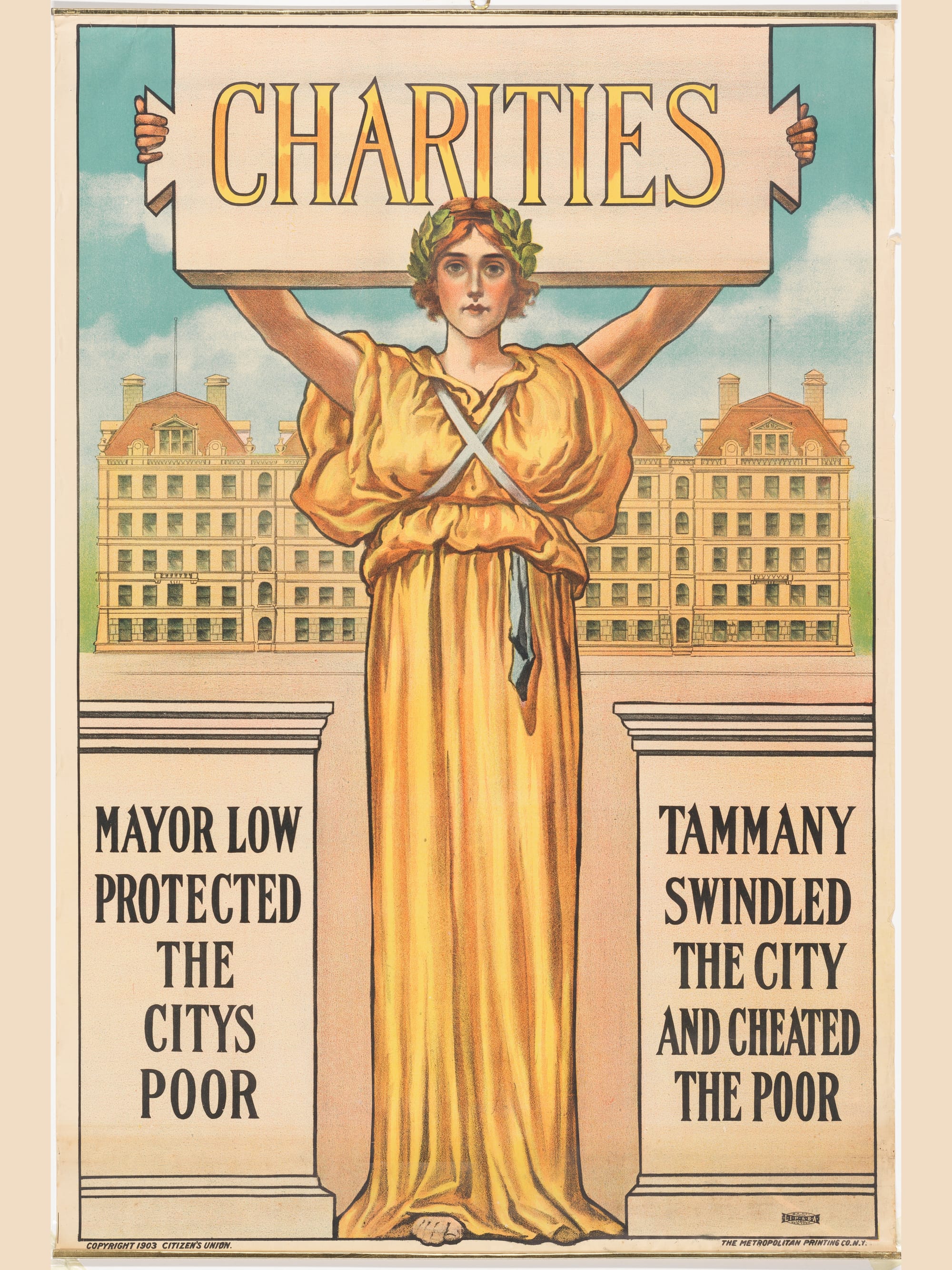
Seidman especially admires Citizen's Union's beautiful Charities poster holding two campaign slogans: "Mayor Low protected the City's Poor" and "Tammany Swindled the City and Cheated the Poor." A reform politician who served first as mayor of Brooklyn and then New York, Low is said to have presided over a "Golden Age" of clean Government. He introduced the Civil Service Code and eliminated patronage jobs in City Hall—two important reform ideas. His tenure in City Hall was brief, but he also served as president of Columbia University.
Charities, Citizens Union, 1903, Museum of the City of New York
"We’re telling the stories of all New Yorkers," says Seidman, "and we hope they will all come to the exhibit."
Raise Your Voice is an exhibit funded by the Puffin Foundation Center for New York City Activism at the Museum of the City of New York, 1220 Fifth Avenue at 103rd Street.
Open: Mon-Fri 10-5 | Sat-Sun 10-6 | Open Late Wednesdays until 9 pm