
Architecture
Paul Goldberger Talks New York & "The Imperfect City"
The Pulitzer Prize-winning architectural critic joins Michelle Young on Untapped New York podcast!
The Pulitzer Prize-winning architectural critic joins Michelle Young on Untapped New York podcast!


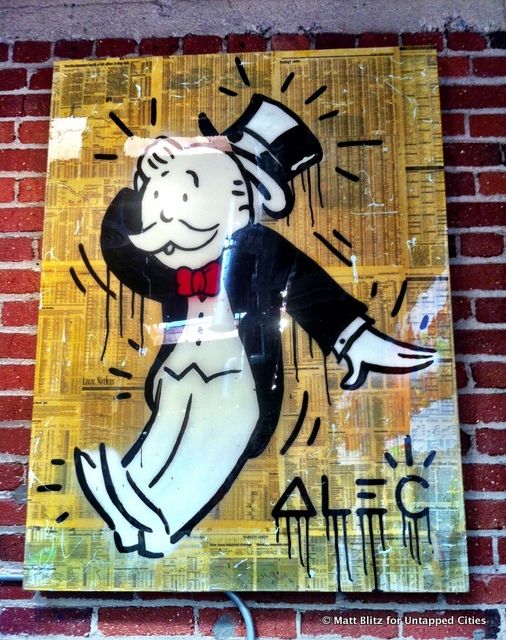
To many, the Monopoly Man is a monocle-wearing, top-hat-styling, mustache-wielding spokes-character for a beloved board game. To Alec Monopoly, the Monopoly Man is art.
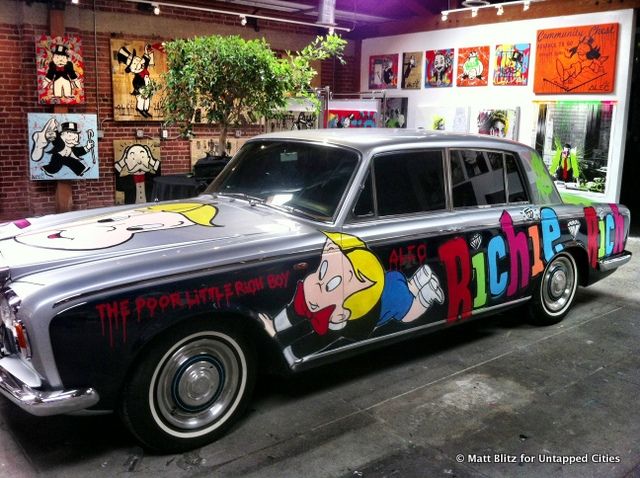
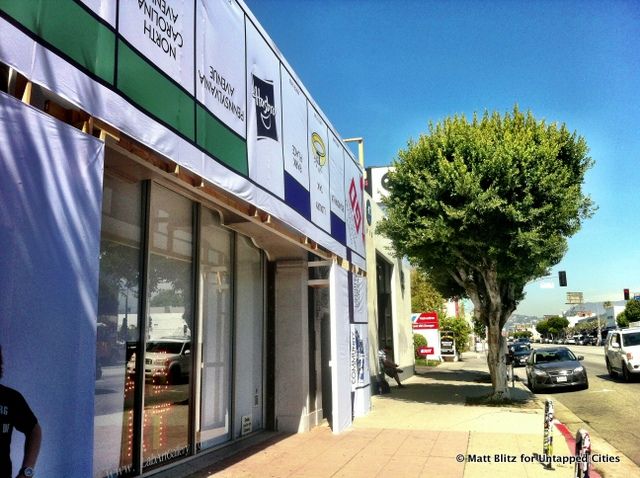
Alec Monopoly is an unidentified street artist who has become famous in New York and Los Angeles for his use of the Monopoly Man to represent capitalism, economic access, and American consumer culture. He does his work under the guise of night and he remains a mystery to many. His art can be seen in urban centers carefully painted on sides of buildings, meticulously drawn on sidewalks, plastered on lamp posts, and now, in Lab Art – a street art gallery on La Brea Ave in Los Angeles.
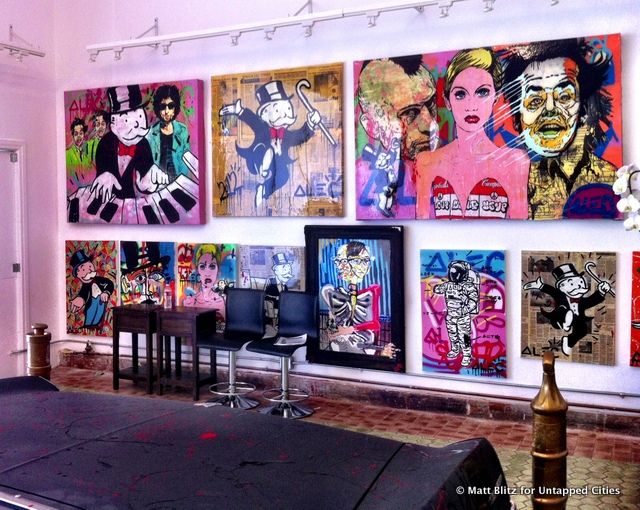
Lab Art is the largest gallery dedicated to street art in the country. Established in 2011 (their two year anniversary party is in May), their mission is to make this form of urban art available all in one place. Iskander Lemseffer and Rachel Joelson are not only co-curators of Lab Art, but brother and sister.
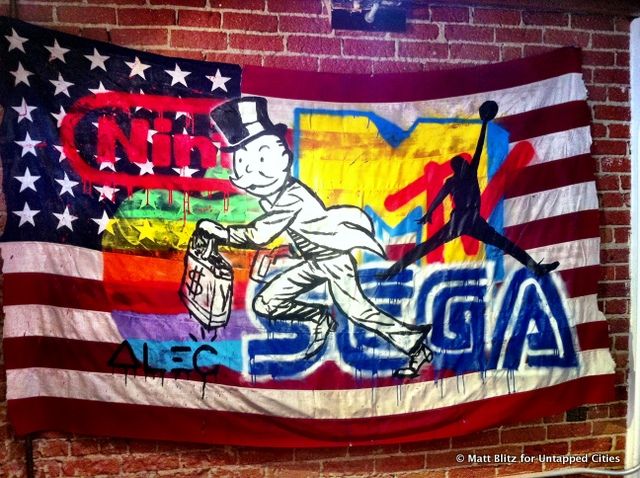
They started Lab Art because, as Rachel says, street art is the evolution of art. “Art, in general, had this lull and (street art) is the new evolution of art. Like now they say that Banksy is the new Marcel Duchamp. When we look back, we are going to read about this period of art in the history books.” Plus, they wanted a place to showcase the art of Angelenos: “Ninety-five percent of the artists in this gallery are local,” says Iskander, “We want to show the world that this what LA street art is about.”
Bringing Alec’s work, among other prominent street artists, from the streets into a gallery may seem counterintuitive at first. As Iskander explained, street art, by its nature, is temporary; it’s meant to exist for a finite amount of time, while gallery art is permanent. “[Gallery art] is a medium that is meant to last over the years. Street art is ephemeral, but that doesn’t mean it shouldn’t be appreciated for years to come.”
Rachel thinks Alec’s work perfectly fits into the fabric and DNA of Los Angeles because LA is a driving city. “If you are at that stoplight, you notice that Alec (painting) above you on that billboard. I feel that way about street art in general. If you are in a taxi in New York, someone else is driving. You are not as aware of your surroundings. LA, you have to be.”
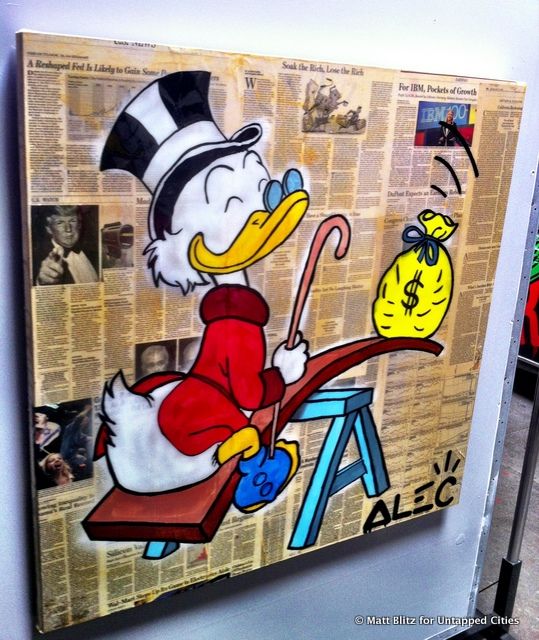
Everyone interprets Alec’s work differently, some see it as railing against the economic infrastructure of America, while others see it as a trip down memory lane. Cory Allen, head of his own public relations agency for contemporary artists and working with Lab Art on the Alec Monopoly show, says that’s exactly the point of Alec’s art; to generate conversation. “Alec’s art sparks conversations and emotions, and that’s what art is supposed to do. We’ve all been affected by this ailing economy and Alec’s use of Rich ‘Uncle’ Pennybags in the streets provides a more diversified commentary versus a one-sided and skewed viewpoint.”
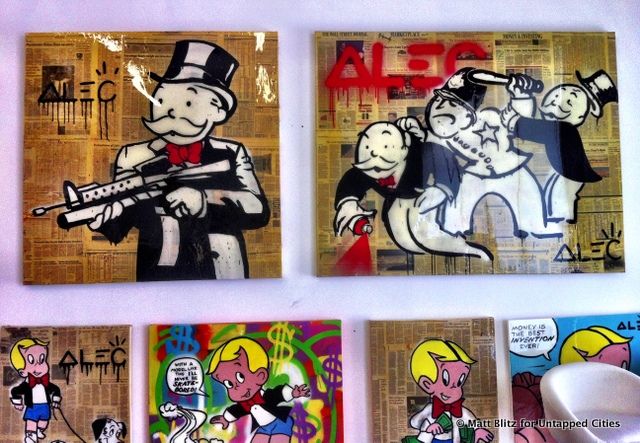
“Park Place” featuring Alec Monopoly at Lab Art opened its doors to the public on Thursday, March 14th. The show lasts 30 days and every single piece displayed is for sale, but don’t expect any of it be available for long. Iskander made the distinction that Lab Art isn’t selling street art. They are selling “the fine art of street art,” and he expects every piece to be sold within a few days of the gallery opening with prices ranging from $1,500 to $500,000.
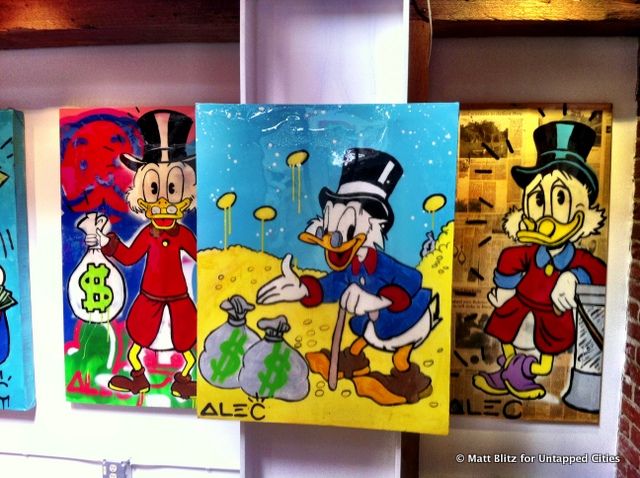
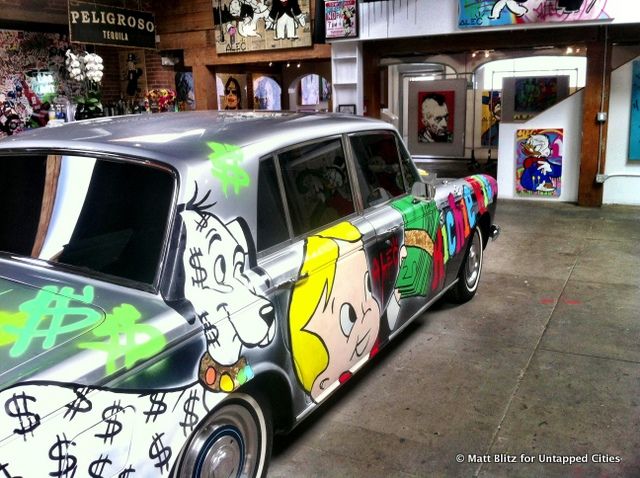
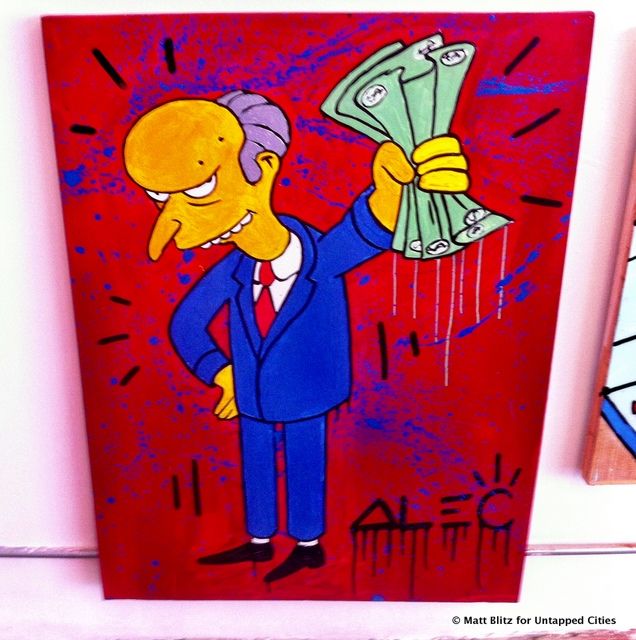
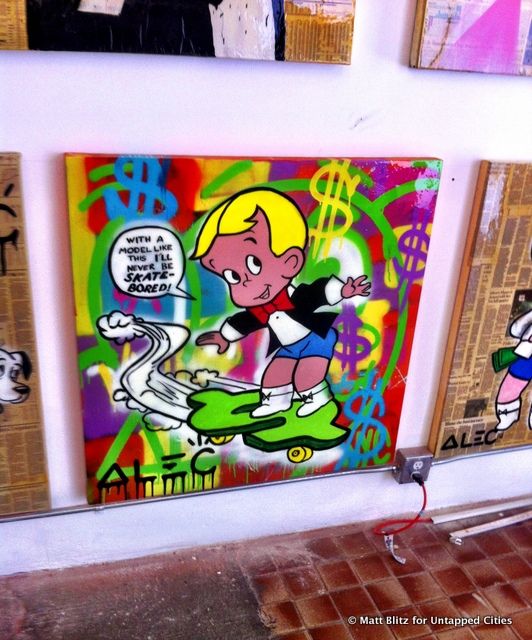
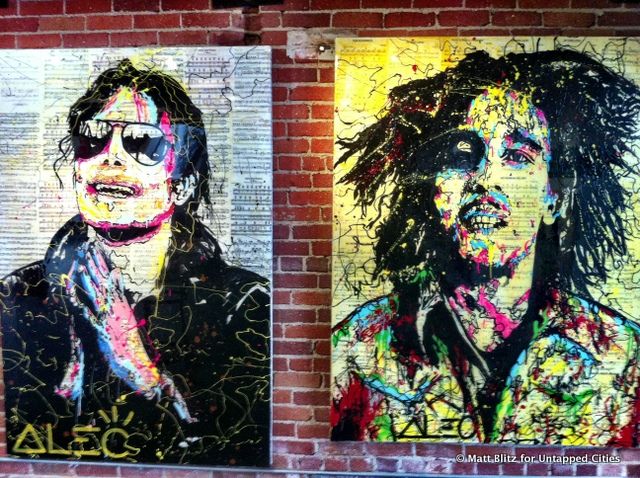
Not every piece is of the Monopoly Man, in fact other famous “rich” cartoon characters populate the art, including Scrooge McDuck, Richie Rich, and Mr. Burns. Other highlights include a portrait of Michael Jackson titled Heal the World, a caricature of Jack Nicholson titled You Don’t Know Jack, a skeleton sharing two heads titled Father & Son, and a 1964 Pontiac Catalina, bought by Oscar winning actor Adrian Brody and donated to Alec Monopoly to be a canvas for his art.
Matt Blitz is the field agent for Obscura Society LA. The Obscura Society goes on adventures in cities across the world. Their purpose is to encourage people to get out in their community and explore the unknown. If you are interested in joining the Society, sign up for the mailing list!
