Every month, Untapped New York will release a new essay from Jo Holmes about the life and work of the late architect Richard Roth, Jr. of Emery Roth & Sons. Each essay explores a different building or developer from Richard’s career, intertwined with stories of his personal life and snippets of exclusive interviews conducted by Holmes and Untapped New York's Justin Rivers (which can be viewed in our on-demand video archive). Check out the whole series here!
A Blockbuster on Park Avenue
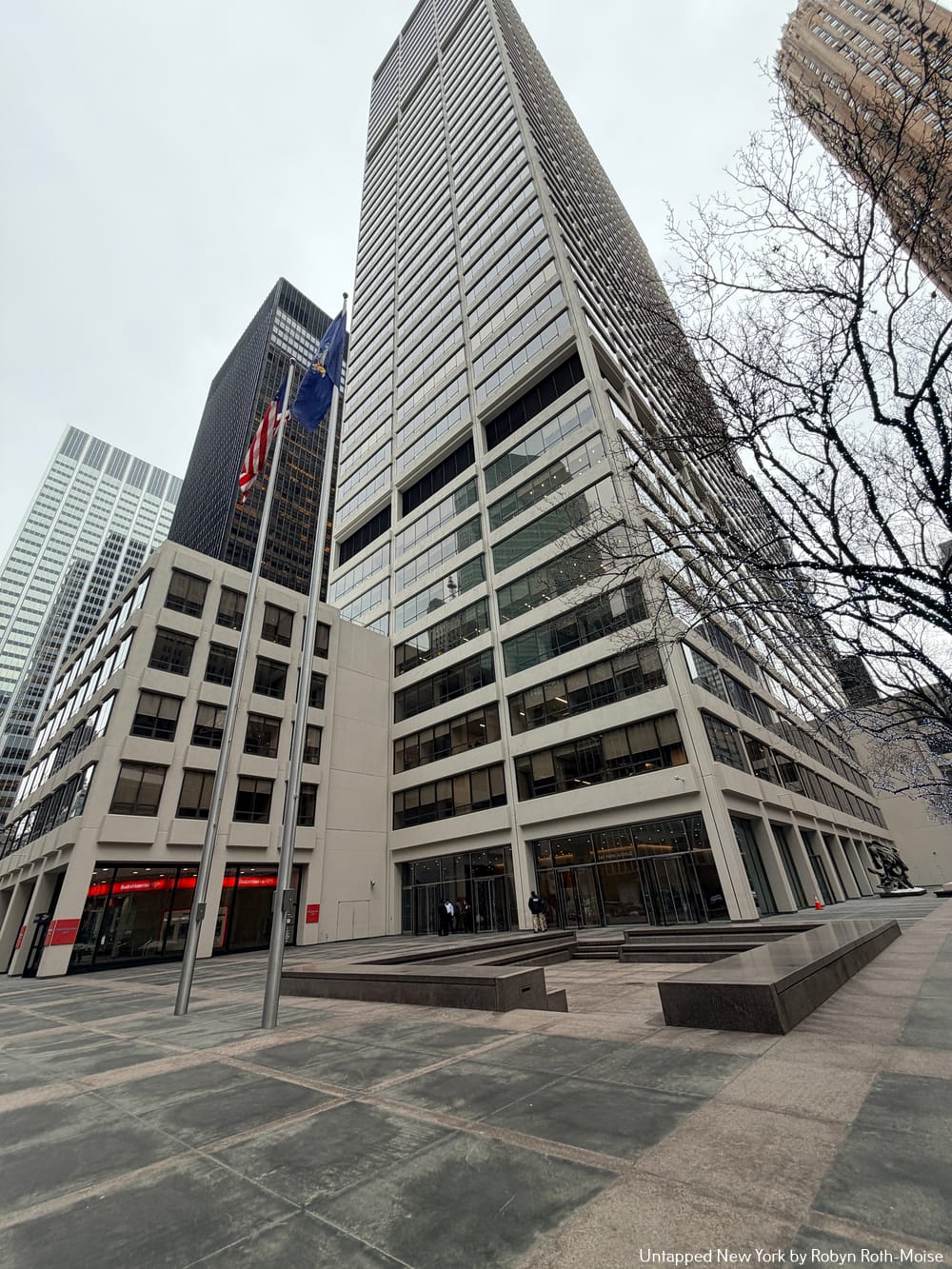
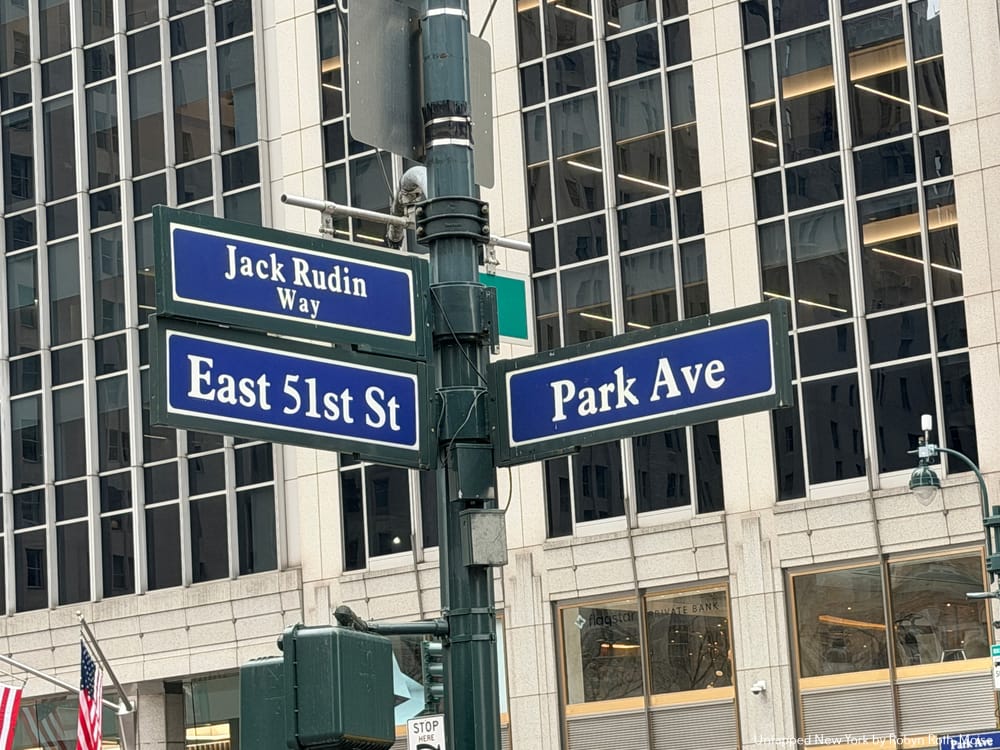
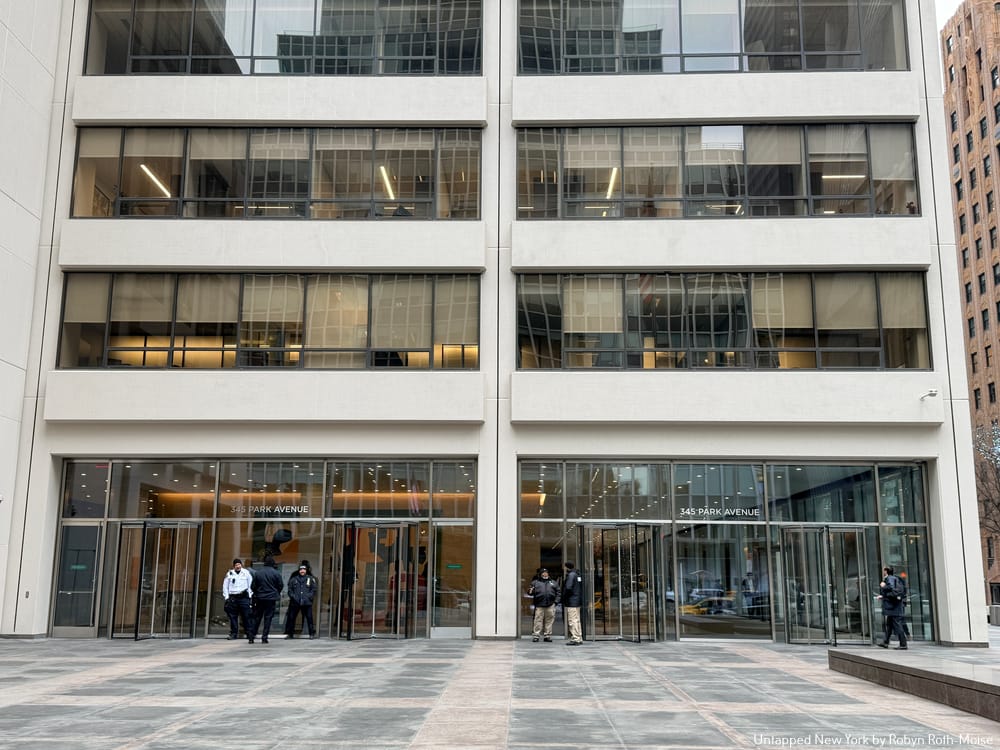
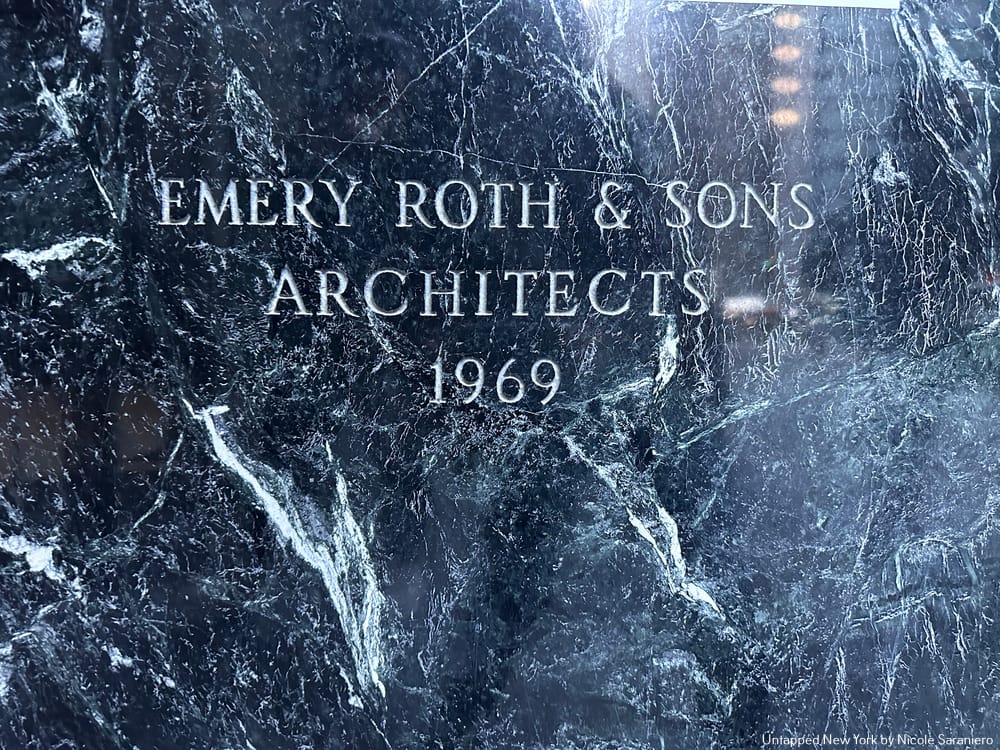
Taking up an entire block, 345 Park Avenue is large enough to have its own zip code. The building's site is bordered by Park and Lexington Avenues and 51st and 52nd Streets. Richard Roth Jr. designed the blockbuster building, which was completed in 1969, for one of New York’s most prolific real estate dynasties, the Rudins.
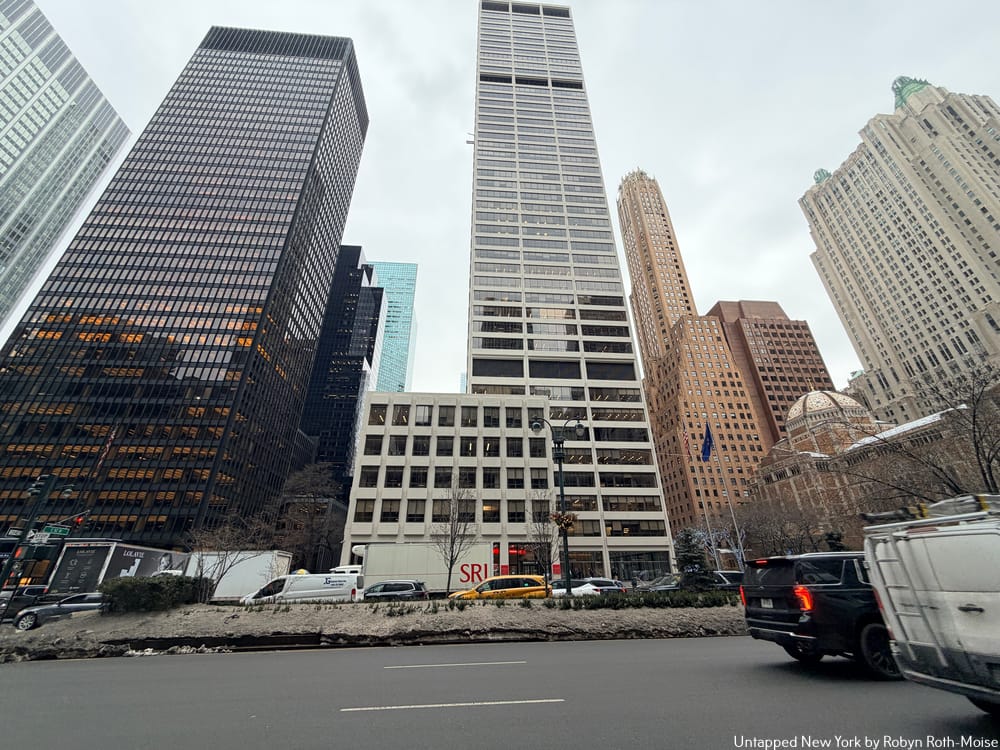
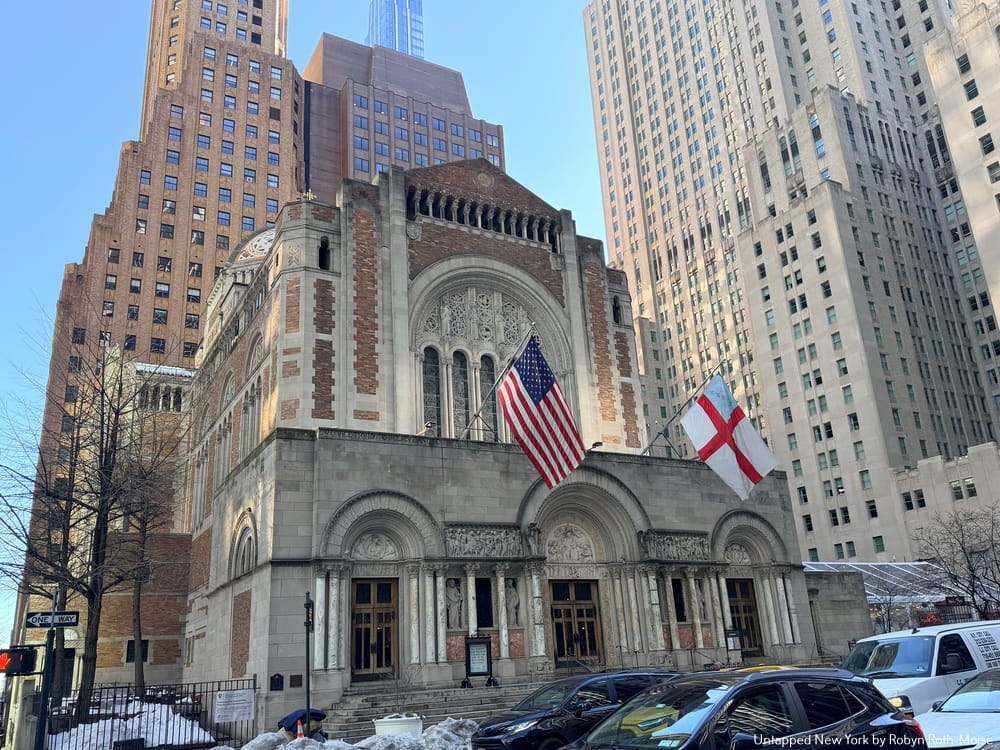
Richard saw this project as a significant challenge, and perhaps something of a poisoned chalice, not just because of the size of the site but also because of the location. It sits between two of the city’s most distinctive—but contrasting—structures: Mies Van der Rohe’s International Style Seagram Building, and the Byzantine Revival St. Bartholomew’s Episcopal Church (St. Bart’s).
This was an era when Emery Roth & Sons' designs were in great demand—in fact, the term ‘Rothscraper’ was coined to describe the many tall office buildings the firm worked on. While the style may have changed from Emery’s day, the firm’s ‘modus operandi’ stayed the same for nearly 100 years of its existence. Its structure and processes were a little different from rival architectural firms, andRichard believed those differences often gave the firm an edge.
A Tricky Project
In the late 1960s, developer Rudin Management acquired the Park Avenue site of the Ambassador’s Hotel (demolished in 1966) and the surrounding parcels of land. They commissioned Richard to design the largest office building permissible at the site.
The Seagram Building, 345 Park Ave, and St. Bart's
The site had two high-profile neighbors that couldn’t be more different from each other. To the north is the Seagram Building, completed in 1958. Designed by starchitects of the day, Mies Van Der Rohe and Philip Johnson, the 157-meter skyscraper won many awards and made history with its use of materials and structure.
To the south is the Episcopal church of St. Bart’s, built between 1916 and 1917. “St. Bart’s is a copy of a much, much older building in the south of France, outside of Avignon. I visited it some years later because I wanted to see it. And it had the same façade. There it sat in this little town. And St. Bart’s is a beautiful building,” Richard observed. He was anxious to make sure his new building wouldn’t cramp the style of either landmark.
“I said to the Rudins, you know this is a site that deserves something that is not going to look like an elephant between two magnificent buildings. And to tell you the truth, it's the roughest design problem I’ve ever had,” Richard admitted.
St. Bartholomew’s Episcopal Church (St. Bart’s)
To an extent, Richard and the Rudins were on the same page. “They wanted a building ‘as of right.’” In other words, the plans should comply strictly with all zoning rules and not need special permits or ‘variances.’ “They didn’t want to build a building that would mean going to the Planning Commission, Landmarks, and local Community Boards. They wanted to stay as far away from that as possible. I agreed because I knew it would get negative. No matter what I did there, it would have gotten a negative response,” Richard explained.
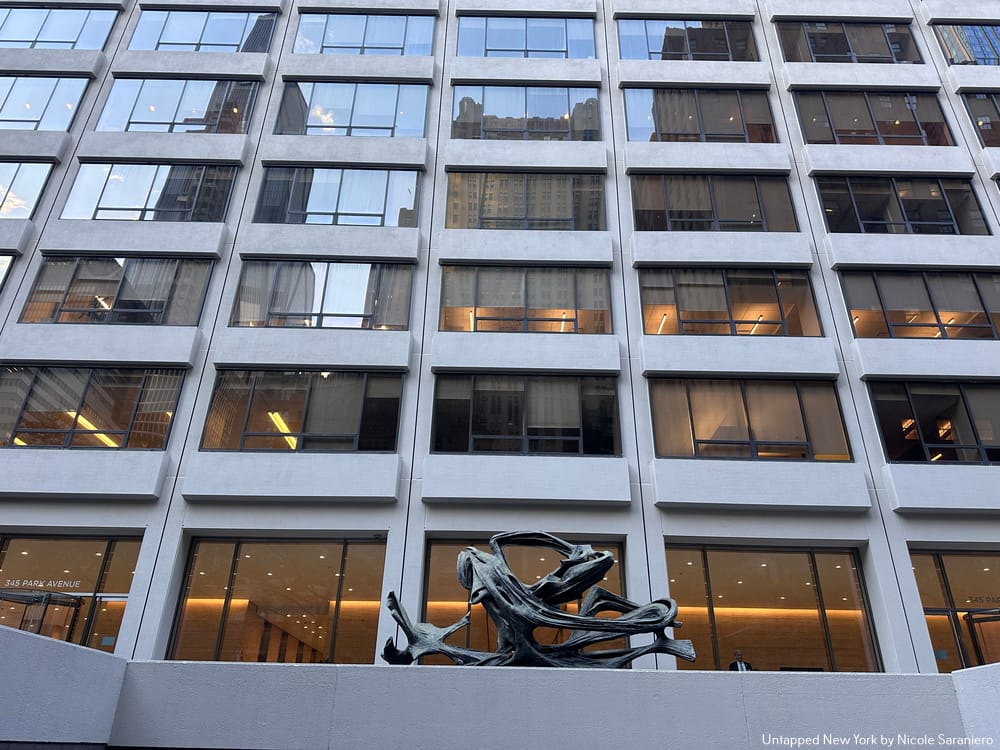
But there were also disagreements, some of which Richard won, others he lost. “The color kind of got me, and I said we don't want to put another black building on Park Avenue. I said the building should be light in color, which will make it disappear a little bit more. Though it's difficult to make a 50-story building disappear…” The Rudins agreed to a taller version of an existing design Richard had done for the New Britain Bank & Trust. (That building was seven stories high. This one ended up 193 meters tall with 44 floors.)
“It’s a background color that doesn't hit you in the face. It’s different from the church, and it should be, because it could overwhelm the church if it was the same. It’s lighter and therefore kind of blends in and is less noticeable—and I had done enough black buildings!” Richard said.
A Dubious Decision
Richard wanted to try and ‘co-ordinate’ with the Seagram Building but lost that battle. “I said the lobby should be the same height as the Seagram’s lobby. I said you got a huge building here, and what you're asking me to do is a 15-foot lobby.”
Richard was arguing for a double-height lobby. “It would relate to the Seagram’s building very well, but Jack Rudin absolutely put his foot down and said no.” To Richard, that made no sense, as having a two-story lobby wouldn’t lose them rentable space—they could simply add another floor. “That lobby is much too low for the size of the building.”
This was a project where Richard took the lead on the design. That was always his favorite part of the job. But he would say that some of the firm’s biggest projects and most notable buildings were where they were ‘associate architects.’ Emery Roth & Sons had a reputation for bringing things in on, or under, budget and on time, or early. So that side of the business was attractive to clients.
An Alternative Approach
Richard explained that many architecture firms were organised into teams that were comprised of people with a range of skills and expertise usually required on a building project. Those teams would be dedicated to specific projects. “Other offices did teamwork—and they’d form a team of all these people, and the team would carry the project from start to finish with the partner in charge,” explained Richard.
Emery Roth & Sons had a different approach. They had various distinct departments, including design, design development, production, and construction. Each department was usually involved in every project. (They would use external structural and mechanical engineering firms.) Among other benefits, Richard felt this allowed them to work well when other firms were collaborating on a project. “This way of doing a job allowed us to be the construction document architect for a design architect...we would just slide them in and ‘eliminate’ the design development part of our office. They’d know nothing about the project. It also worked the other way – where we were the design architect, and we would produce the drawings in the design and design development departments, and it would never get to our production department.”
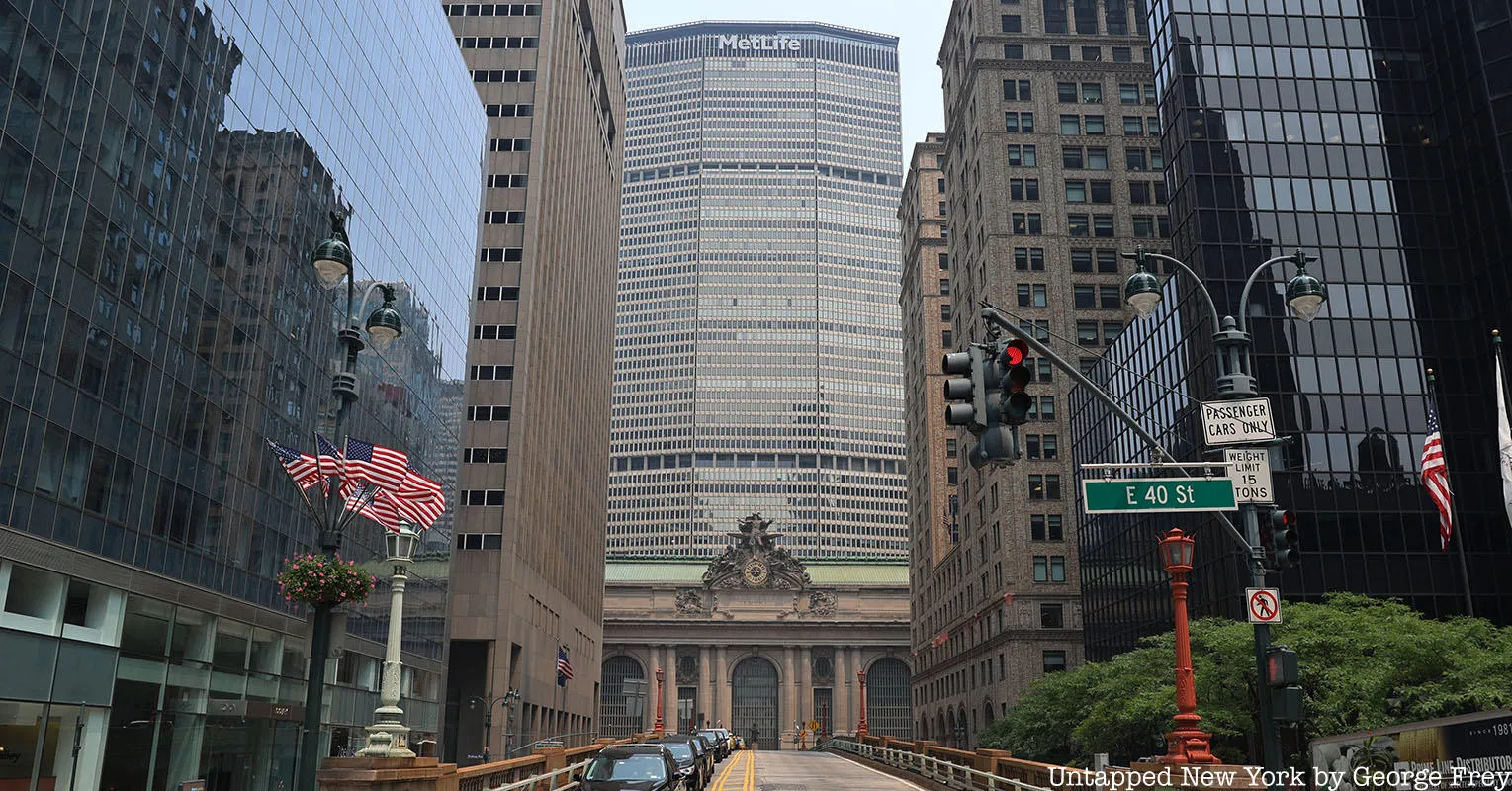
For example, when Walter Gropius took on the Pan Am Building, his firm slotted in as the design department. And Minoru Yamasaki led the design for the World Trade Center, while Emery Roth & Sons were appointed ‘associate architects,’ picking up the design and taking it through to construction.
MetLife (formerly PanAm) Building above Grand Central Terminal
When Richard was interviewed by architectural historian Annice Alt in 2018, he explained how the firm was asked to do the construction documents for the World Trade Center because they’d done more office buildings in New York than any other architects. What’s more, the firm had recently completed the very complex and complicated Pan Am Building.
“It started with Yamasaki designing a series of buildings…probably 100 different designs, as it was a huge site. The team from New York—my uncle, my father, Irving Gershon, who was Head of Design, and myself, who was Director of Architecture—went out to Detroit to look at the models. After a couple of hours of looking, talking, and discussing, it was very obvious that the twin tower scheme was the best scheme…The minute the design was approved by the Port Authority, it transferred to our office, where we probably had at one time almost 100 people working on the project.”
A Mysterious Miscalculation
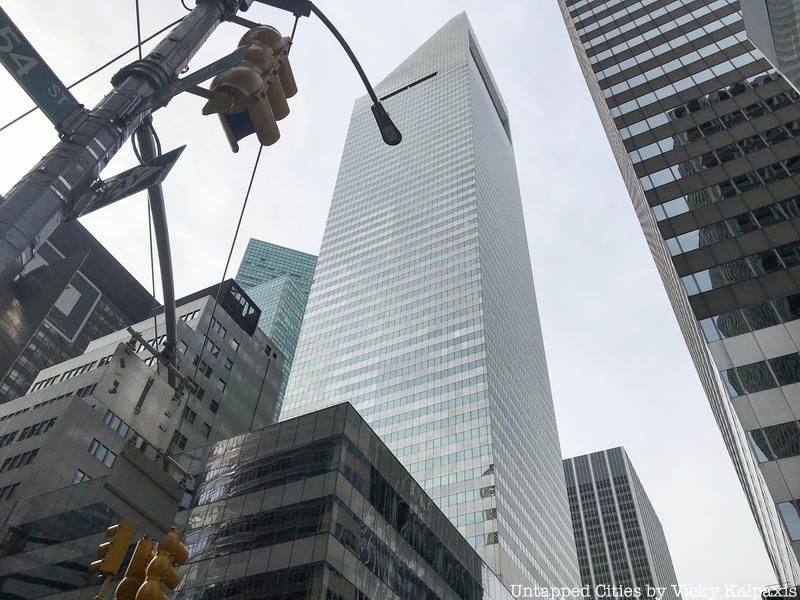
Emery Roth & Sons were associate architects on another significant Manhattan skyscraper, the Citicorp Center (now the Citigroup Center). With a distinctive sloping roof, it is 915 feet tall and has 1.3 million square feet of office space across 59 floors, at 601 Lexington Avenue. Renowned Harvard-trained architect Hugh Stubbins designed the building (which now has a food court on the ground floor called ‘The Hugh’). The building is notable, not just for its striking appearance, but also because of drama that unfolded behind the scenes as it was nearing completion.
“The structural engineer, Bill Le Messurier, came to see me in distress as he’d come to realize the building might collapse if there were winds of a certain speed hitting the corners,” said Richard. It transpired later that two architecture students, unbeknownst to each other, had been studying the plans and queried some calculations. One of them had contacted Le Messurier. To remedy the situation, extra cross-bracing was installed and a mass damper was constructed at the top of the building. “It was one of those rare things where an engineer made mistakes that nobody ever thought of…” Richard said. The story came to light in an article in The New Yorker in 1995, and historian Michael M. Greenberg explores the controversy in his 2025 book, ‘The Great Miscalculation.’
Citicorp Center
Despite the problems involved, Richard looked back fondly at the building. “I think the Citicorp building is a marvellous building. Stubbins did a superb job. It was the first building that used double-decker elevators in order to make the core smaller so that we would have more rentable space. I also thought the design of the shopping area was terrific. It was a very pleasant place to be, and we spent a lot of time there because it was very close to our office.”
As Richard explained, there were other projects where they only did the design. “For example, we did two buildings in Detroit, where we were the design architects. One was the Detroit Edison building…and the other was the Detroit Bank & Trust Building...I designed both buildings.” (Both these buildings have been renamed: DTE Plaza and 211 West Fort Street, respectively.)
A Satisfactory Outcome
Now almost 60 years old, Richard’s design of 345 Park Avenue stands the test of time. To this day, Rudin Management has offices there. Richard enjoyed going to free outdoor jazz concerts offered in the plaza during the summer at lunchtime. He did have reservations about the building. “I would have rather had a smaller building,” he explained. But in trying to complement the buildings on either side while giving the clients what they wanted, he wasn’t unhappy with the result. “With the restrictions that were put on me, I don't think I could have created anything better.”
This post contains affiliate links, which means Untapped New York earns a commission. There is no extra cost to you and the commissions earned help support our mission of independent journalism!