


Isamu Noguchi: The New York Sculptor Who Built His Own Museum in Queens
After being rejected by Robert Moses and leaving his mark in cities around the world, Noguchi secured his own legacy in NYC. A new exhibit celebrates it.

"I traveled around the world six times over like a homeless waif. New York is the center from which ideas radiate all over the world," renowned sculptor Isamu Noguchi told The Village Voice in 1959. Like Robert Rauschenberg's New York uptown at the Museum of the City of New York, the Noguchi Museum exhibit, Noguchi's New York, compresses the work of a great and productive artist into his obsession with his home city. And it's a delight, well worth the trip to Long Island City.
The far-from-easy to find Noguchi Museum in an industrial area of Queens—facing a Costco Wholesale store on one side and decrepit manufacturing buildings on another—was sited, designed, and built by Noguchi himself. Opened in 1985, it was the first museum in the United States founded by a living artist to show the artist's work.
It has one of the most unconventional entrances of any museum in New York.
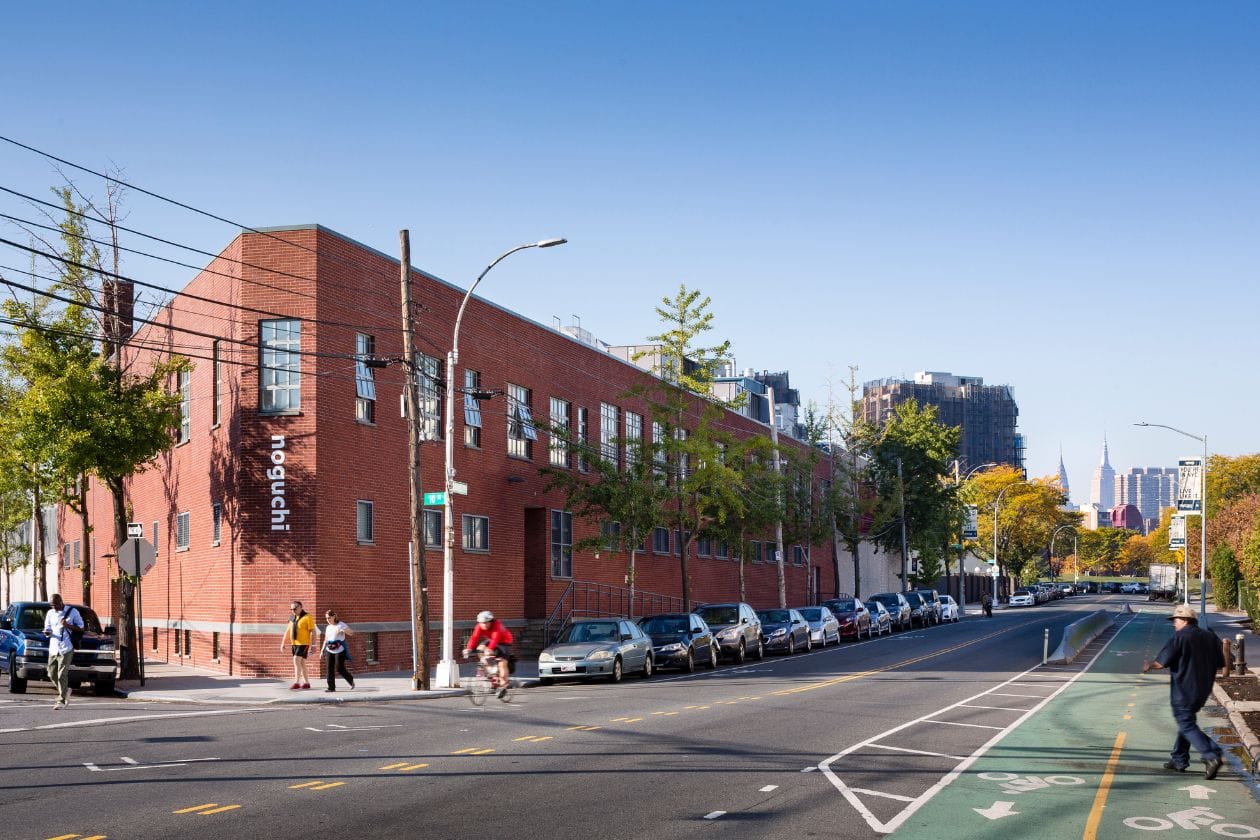
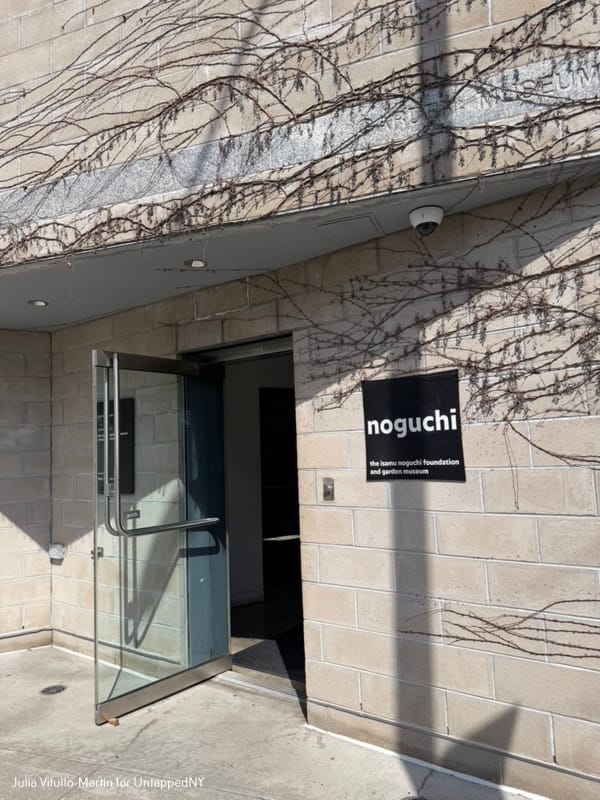
(Left) Photo by Nicholas Knight
You enter through a small-ish Alice-in-Wonderland type door on 133rd Road, and are immediately greeted by museum employees, who gesture towards a second door that takes you to an outdoor space full of Noguchi sculptures—some bold, some modest, some intimidating, all engrossing. Explanations are few. The art work stands on its own. As you walk through the sculptures you'll see the garden, still austere from winter and wonderfully Noguchi-like. He liked pebbles.
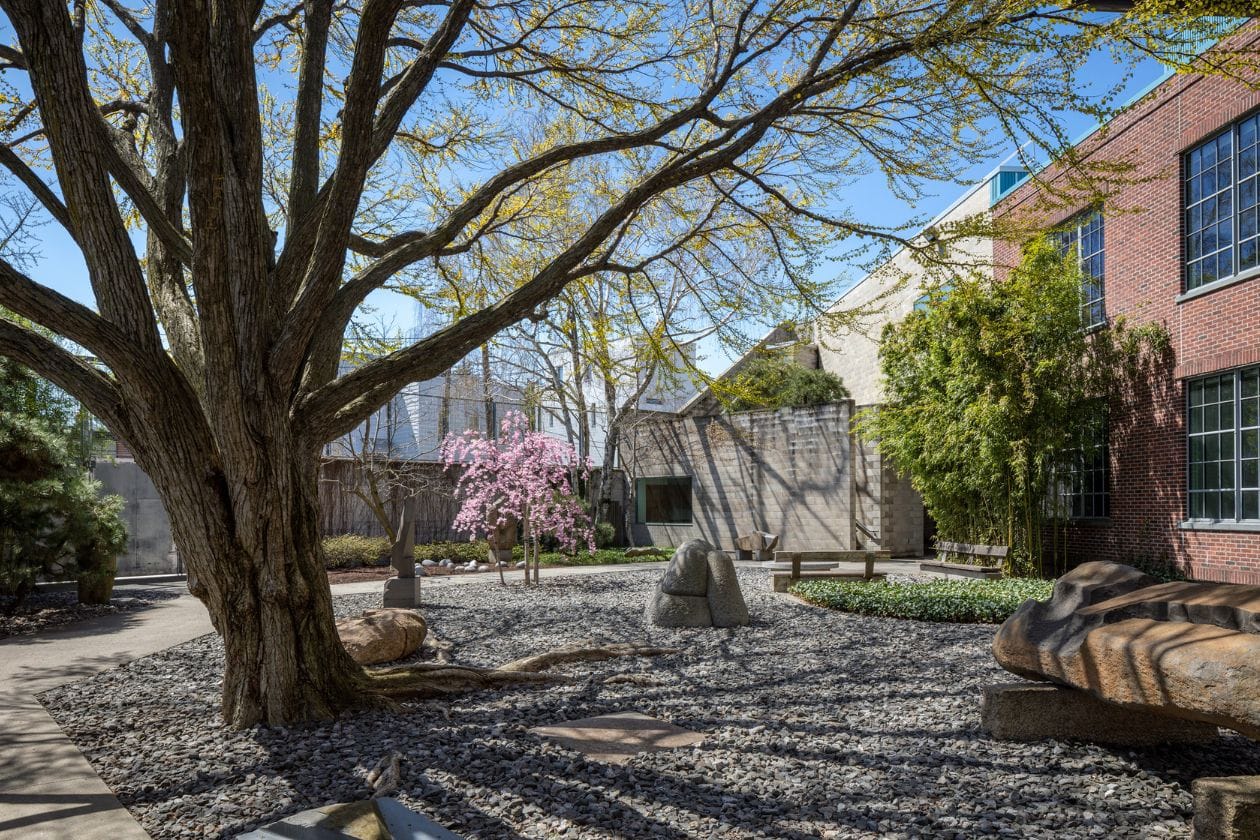
Noguchi converted the original prefab factory building into an expansive museum to showcase his work, placing many of his sculptures in front of windows looking into the garden.
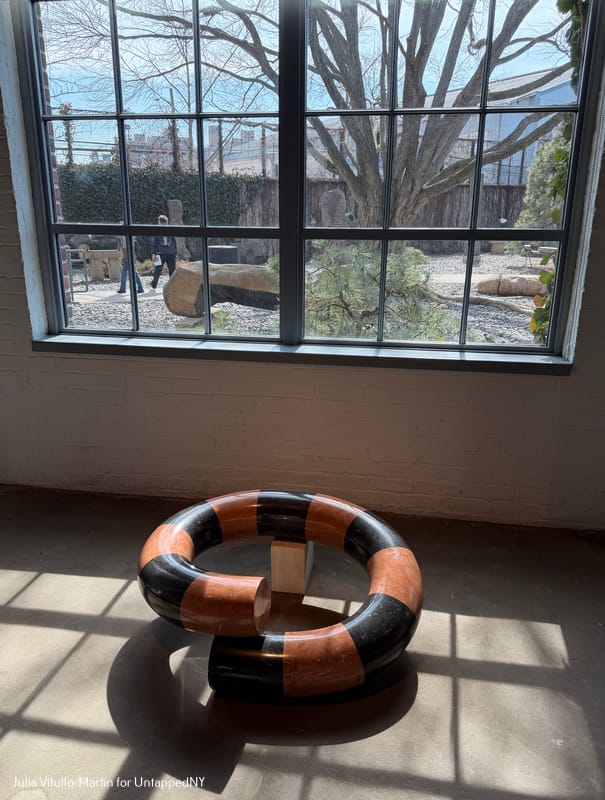
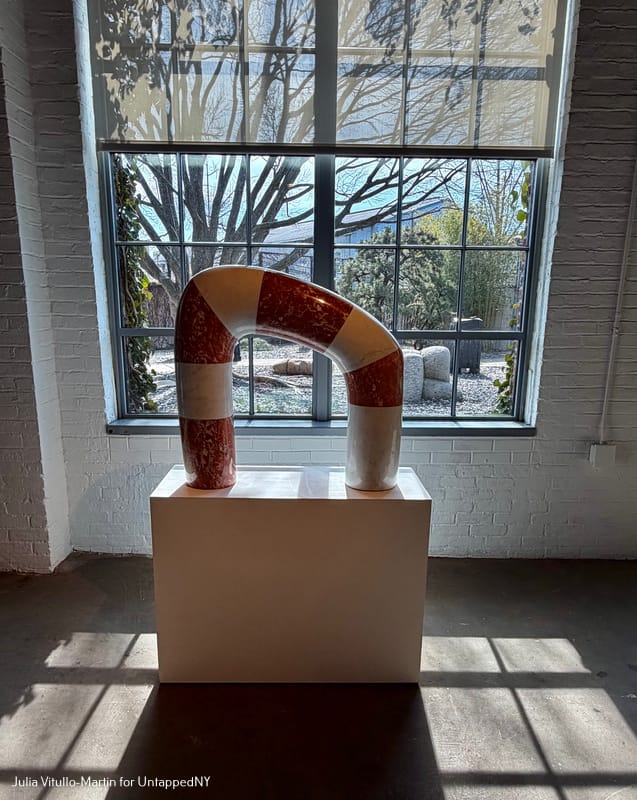
(Left) "Downward Pulling #2" (1972) is made of Spanish Alicante marble and Marquina marble. (Right) "The Opening" (1970) is made of French rose marble and Italian white marble.
Surviving Projects in New York
“I’m really a New Yorker. Not Japanese, not a citizen of the world, just a New Yorker who goes wandering around like many New Yorkers,” said Noguchi late in life. He had moved to New York at age seventeen in 1922, and lived here between travels around the world. Hoping to make his city a better place, he proposed thirty known projects over the years, from monumental earthworks and playgrounds to plazas and gardens. Most were never realized, according to the Noguchi Museum.
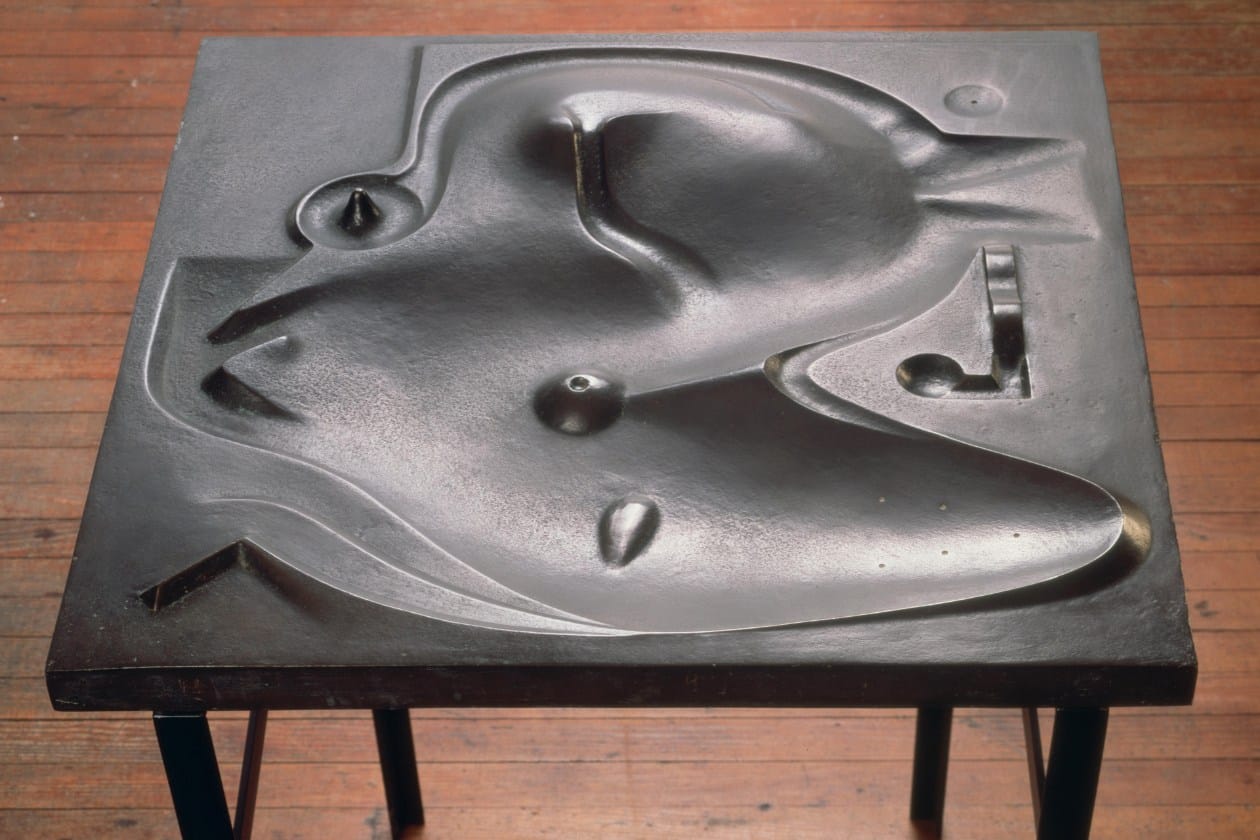
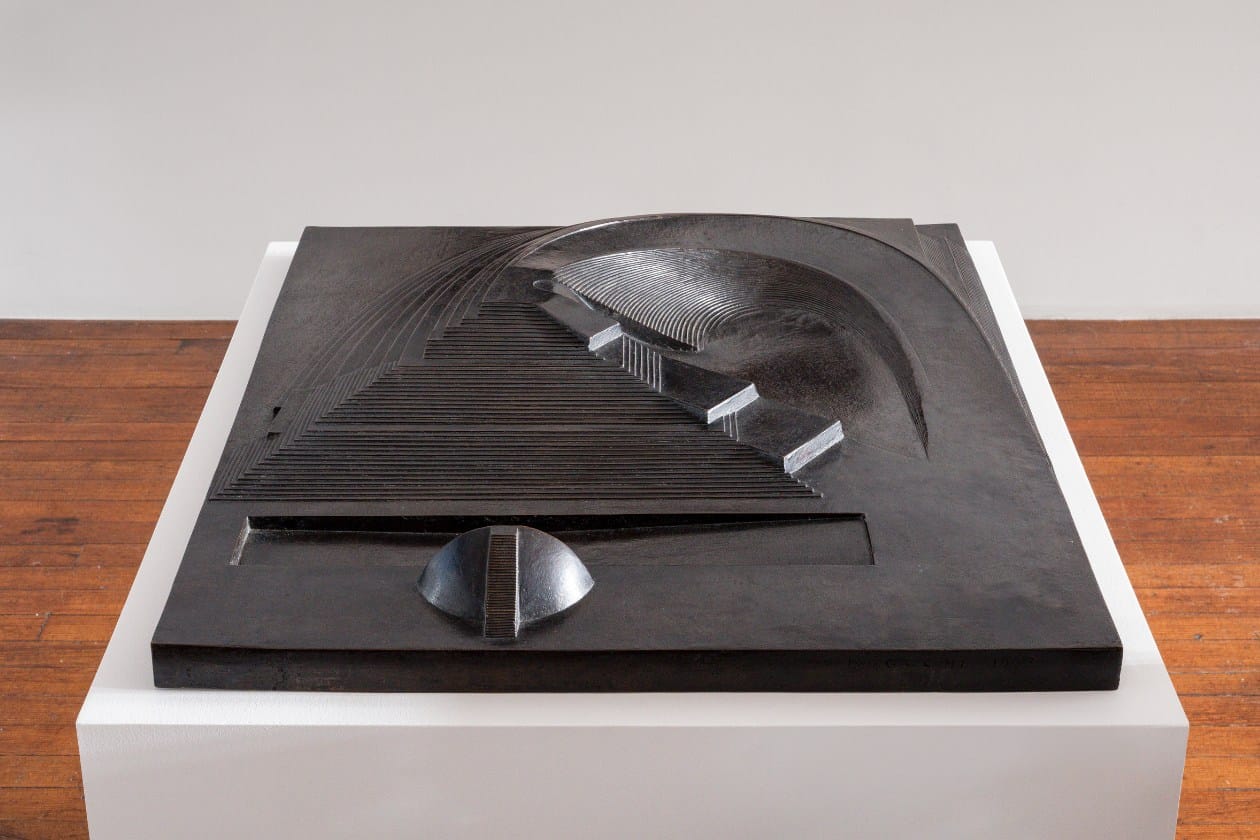
(Left) Isamu Noguchi, Contoured Playground , 1941 (cast 1963). Bronze. Photo: Bill Taylor. (Right) Play Mountain, 1933 (cast 1977), Bronze. Photo:Nicholas Knight © The Isamu Noguchi Foundation and Garden Museum, New York / Artists Rights Society (ARS)
A New Yorker today might well gaze at the Play Mountain (above) and think: Seriously? A two-story high playground to be built in Central Park? Unlikely! Indeed, along with other Noguchi ideas it was vehemently rejected by then-parks-commissioner Robert Moses.
Five of Noguchi's projects for New York were not only realized, they are still extant. My favorite is the huge stainless steel relief in Rockefeller Center, honoring freedom of the press. Noguchi's first public work in the United States, it speaks to the dynamism and strength that Noguchi attributes to journalists.
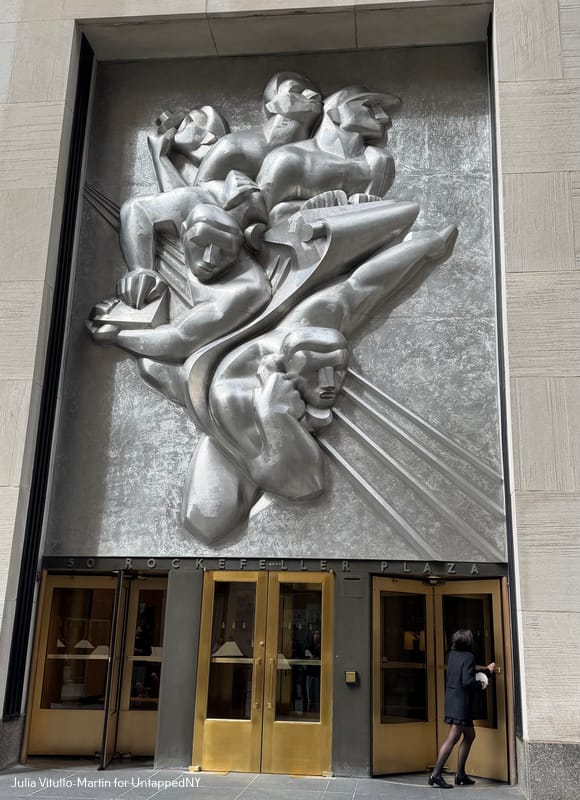
AP had run an international contest to select the best design for this important space in midtown Manhattan. Noguchi, who won, was described in 1940 by Time Magazine as a "muscular, California-born, Japanese-Irish sculptor, who submitted a small-scale plaster model depicting five symbolic figures (editor, reporter, photographer, teletype and telephoto operators) straining eyes and ears for news."
Noguchi spent a year sculpting a full-scale plaster model (17 by 22 feet), which took up his entire studio from floor to roof. He shipped the model in five pieces to Boston's General Alloys Co. to be cast into stainless steel. William H. Eisenman, secretary of the American Society for Metals, concluded, “It is easily the outstanding achievement of the decade in American foundry practice, probably an all-time high.”
In its guide to the art in its complex of buildings, Rockefeller Center says, "Soaring above the entrance to 50 Rockefeller Plaza, this dynamic plaque symbolizes the business of the building’s former tenant, the Associated Press. One of the major Art Deco works in the Center, it depicts five journalists focused on getting a scoop. AP’s worldwide network is symbolized by diagonal radiating lines extending across the plaque. Intense angles and smooth planes create the fast-paced rhythm and energy of a newsroom. News is the first heroic-sized sculpture ever cast in stainless steel and the only time Noguchi employed stainless steel as an artistic medium."
A second sculpture still standing is Red Cube, an immense steel rhomboid punctured by a distinctive hole and standing in front of the Marine Midland Bank at 140 Broadway.
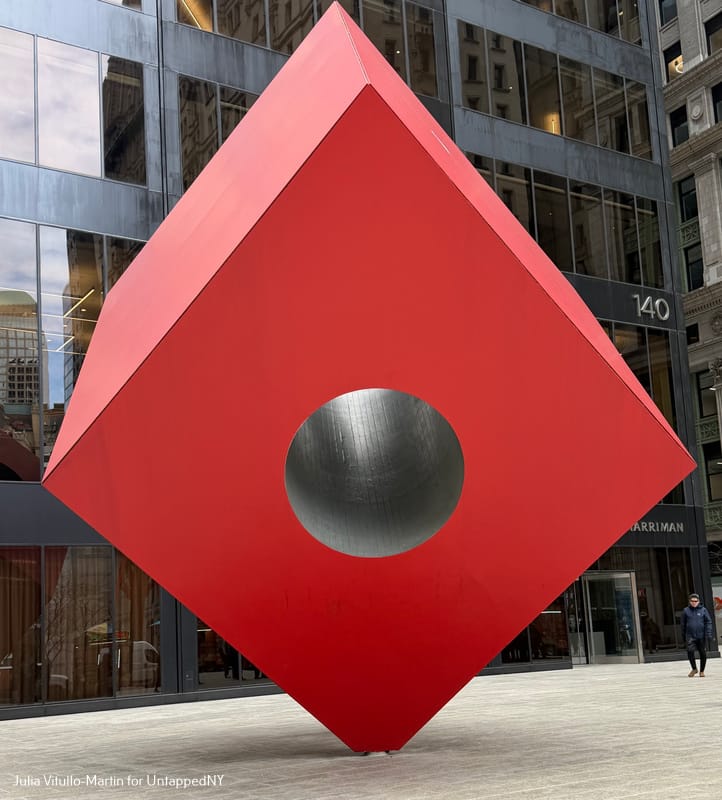
The Noguchi Museum notes that, "What initially seems to be a fairly straightforward design, this commission from Skidmore, Owings & Merrill is a carefully articulated response to both the surrounding towers of the Financial District and open plaza spaces nearby. Noguchi’s elongated rhomboid mass in painted red steel offers its viewer a subliminal tool to harmonize the man-made canyon surroundings." The gleaming aperture has an effect similar to a Nikon camera: you look through and up to the building captured in the lens.
The other three surviving works are the Sunken Garden at Chase Manhattan Bank Plaza, the Unidentified Object now in front of the Met Museum on Fifth Avenue, and the museum itself.
Noguchi's Friends and Colleagues in New York and Abroad
Noguchi did not belong to any particular movement, says the museum, but he collaborated with artists working in a range of disciplines and schools. One of his most dramatic collaborations was with Diego Rivera and Frieda Kahlo in Mexico City. His first public commission came from the Mexican government in 1936.
With post-revolutionary fervor in the 1920s the government had urged artists to inspire the nation with nationalist pride and visions of historical achievement. A dramatic result was Mexican muralism, virtually its own school of painting.
History Mexico is not only Noguchi's first realized public artwork, four years before his Rockefeller Center sculpture, it is still extant and magnificent. Located on the second floor of the Mercado Abelardo L. Rodriguez in Mexico City's historic center, it remains astonishingly vivid and dominant, its composition of concrete and pigmented cement as alive today as in 1936.
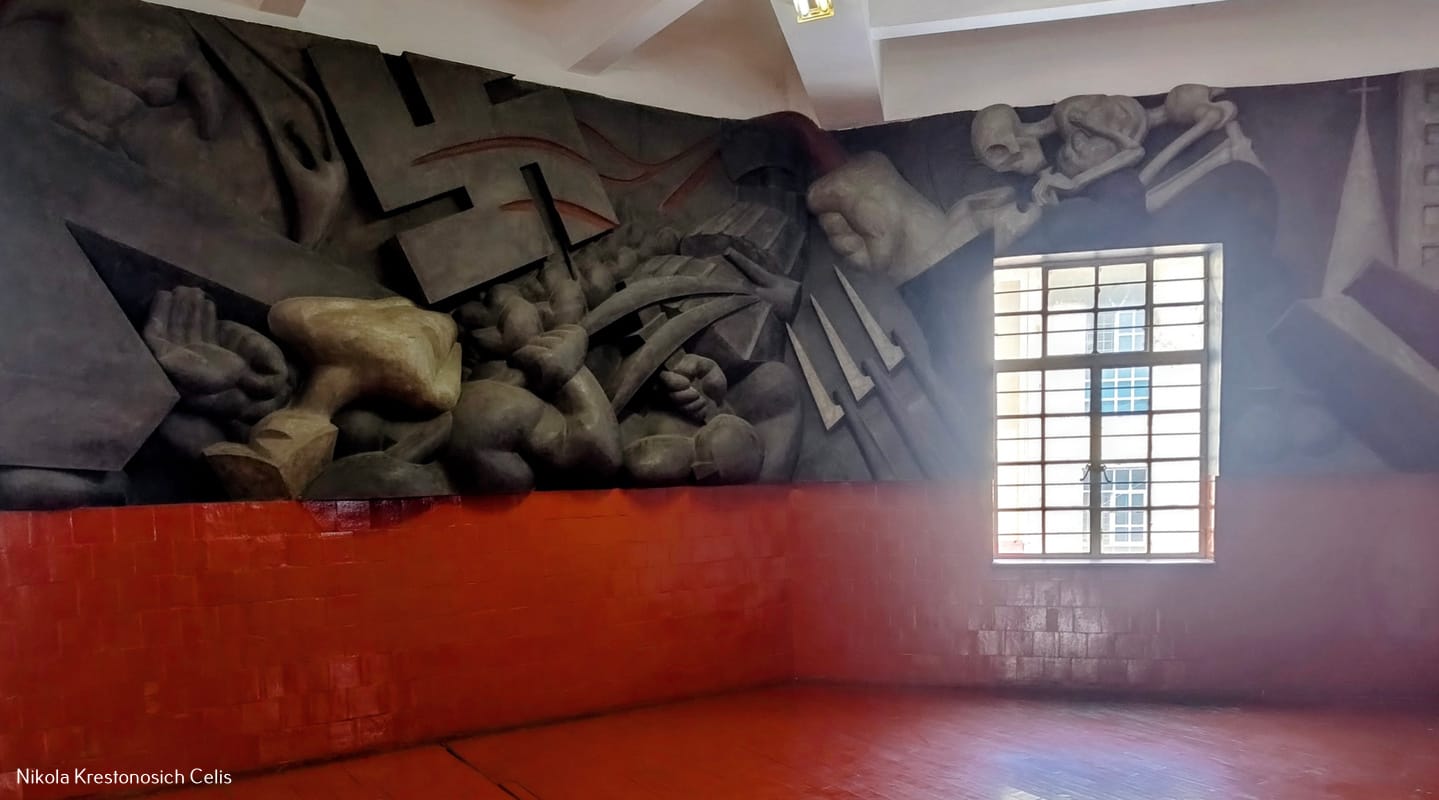
Alex Ross, Managing Editor of The Isamu Noguchi Catalogue Raisonné, calls History Mexico "one of the great anti-fascist works of the last century."
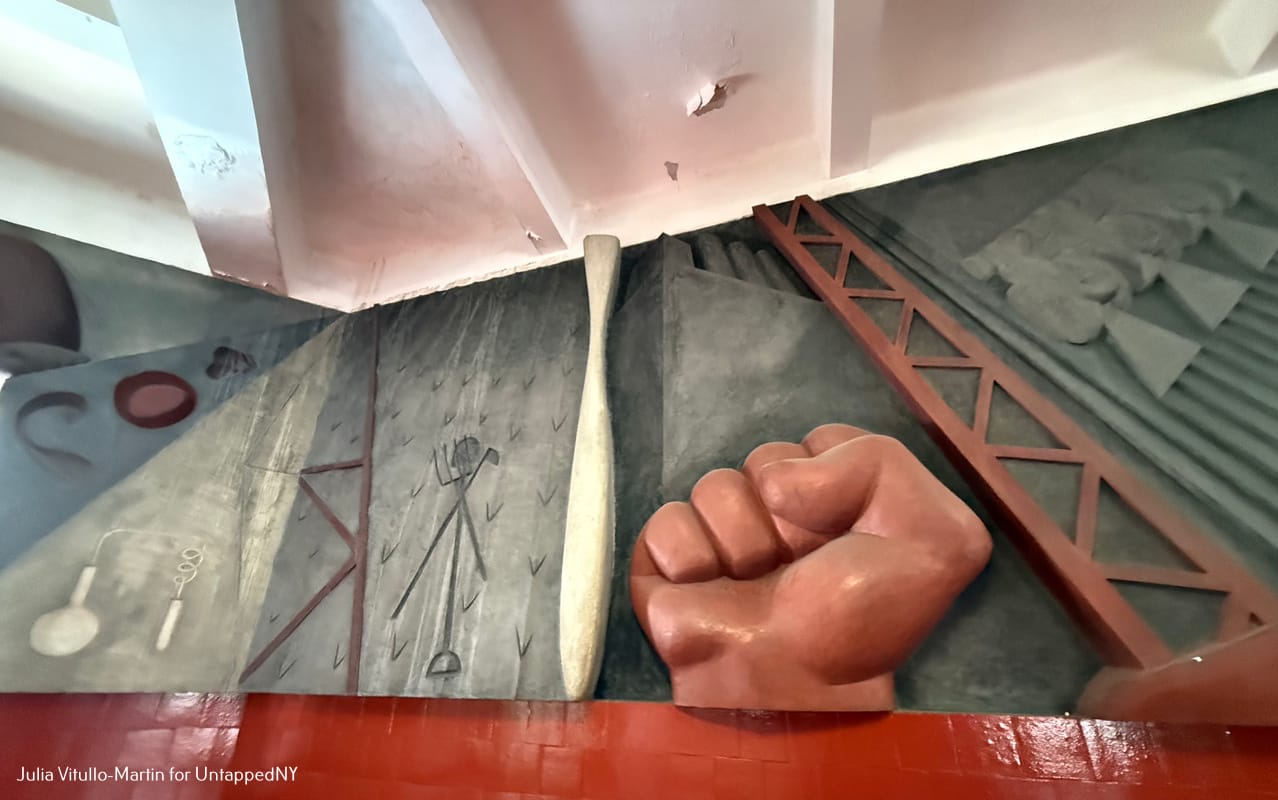
Despite his profound sympathy for the struggles of the working classes, Noguchi himself became uncomfortable with his use of obvious symbolism, for example the huge red fist of labor in the center. But in an interview at the time with the publication, New Masses, he said aspirationally, "Capitalism everywhere struggles with inevitable death—all the machinery of war, coercion, and bigotry are as smoke from the fire. Labor awakens with the red flag. And youth, through education, will see the world creatively more abundant, with equal opportunity for all."
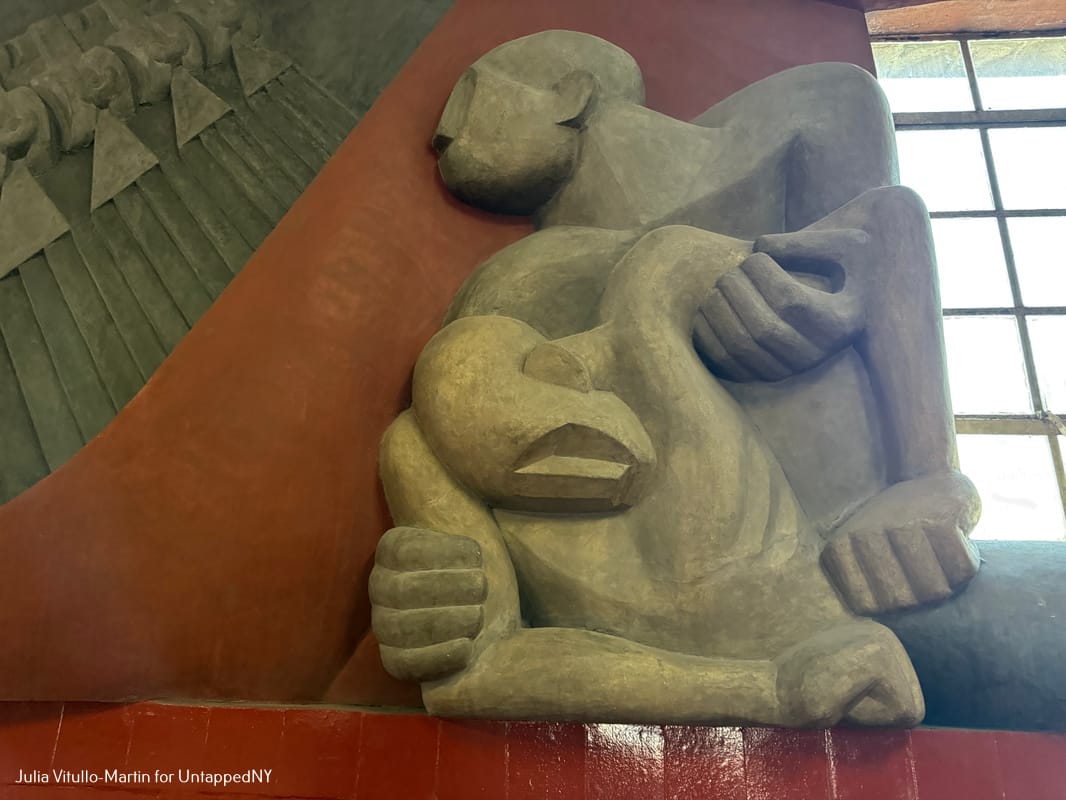
Later, in 1979, he wrote that his art in Mexico had been inspired by love and "the affection that surrounded me" (an affair with Frida Kahlo), and that "Diego chased me twice with a gun, but fortunately did not shoot."
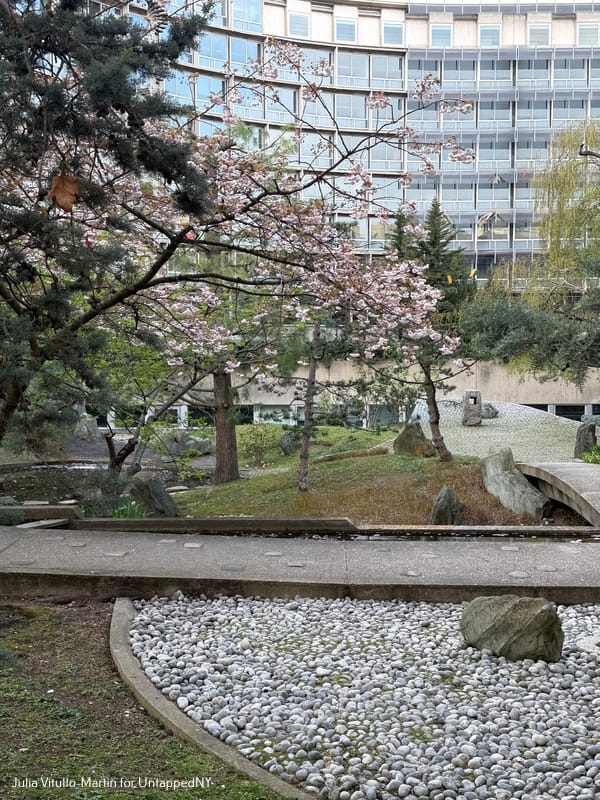
A very different public commission came from UNESCO, which commissioned Noguchi in the mid-1950s to plan a garden in Paris outside its main building that had been designed by architects Marcel Breuer, Pier Luigi Nervi, and Bernard Zehrfuss. Rock formations collected from different sites in Japan along with ponds and plantings form the core of the garden, which he called "The Peace Garden."
Back in New York
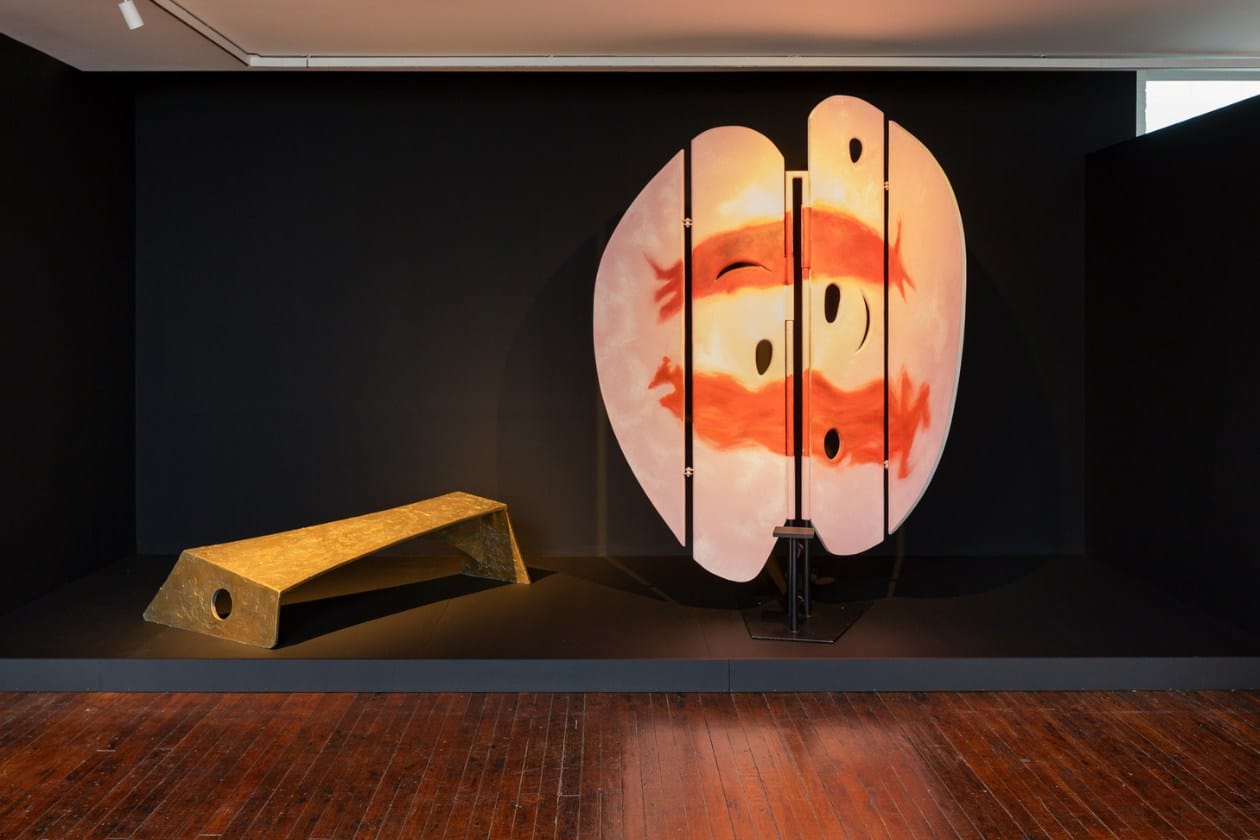
Noguchi had created stage sets as early as 1935 for Martha Graham, as well as for Merce Cunningham, composer John Cage, and choreographers Erick Hawkins and George Balanchine.
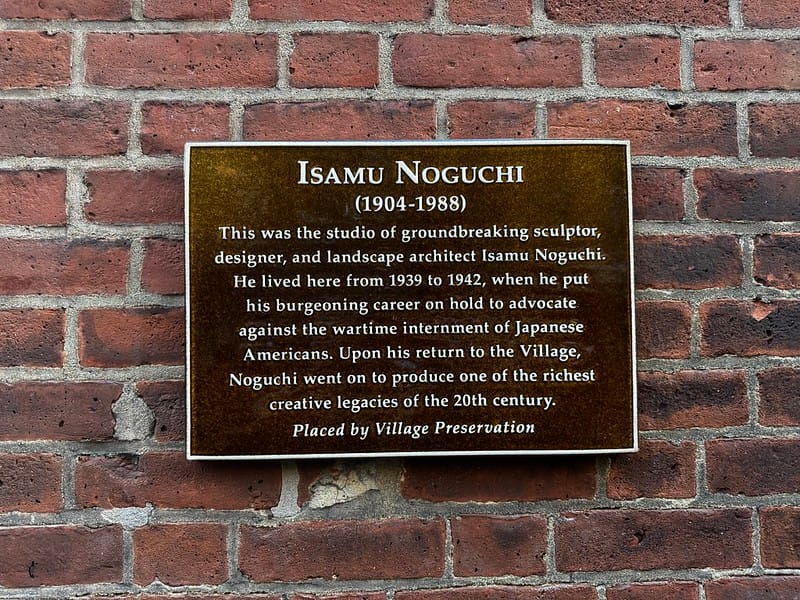
After his travels Noguchi had hoped to return to Greenwich Village, where he had lived from 1942 to 1949. His biographer, Hayden Herrera, wrote that on MacDougal Alley in the Village Noguchi "had two brick buildings that once closed off the alley's end. Number 33 included not only his studio, but also a garden with a large tree and a flagstone path flanked by shrubbery and even a small fishpond."
A plaque honoring Noguchi's residence was installed by Village Preservation on the facade of 52 West 10th Street and unveiled in a special ceremony this week.
Masayo Duus, another biographer, wrote in Journey without Borders that during a brief affair with Noguchi the French-American diarist Anaïs Nin had written in her diary, "Noguchi's studio in MacDougal Alley, is one of the loveliest places in New York. The houses are small, the streets are of cobblestones, there are gas lanterns. It is an echo of English or French streets. At the closed end is a wall with trees behind. The houses and streets are each different in shape and decoration. It is intimate and mysterious."
Such real estate riches would be astonishing today. He called his haven a "sign of providence." He was surrounded by artists, including Europeans who had fled the war.
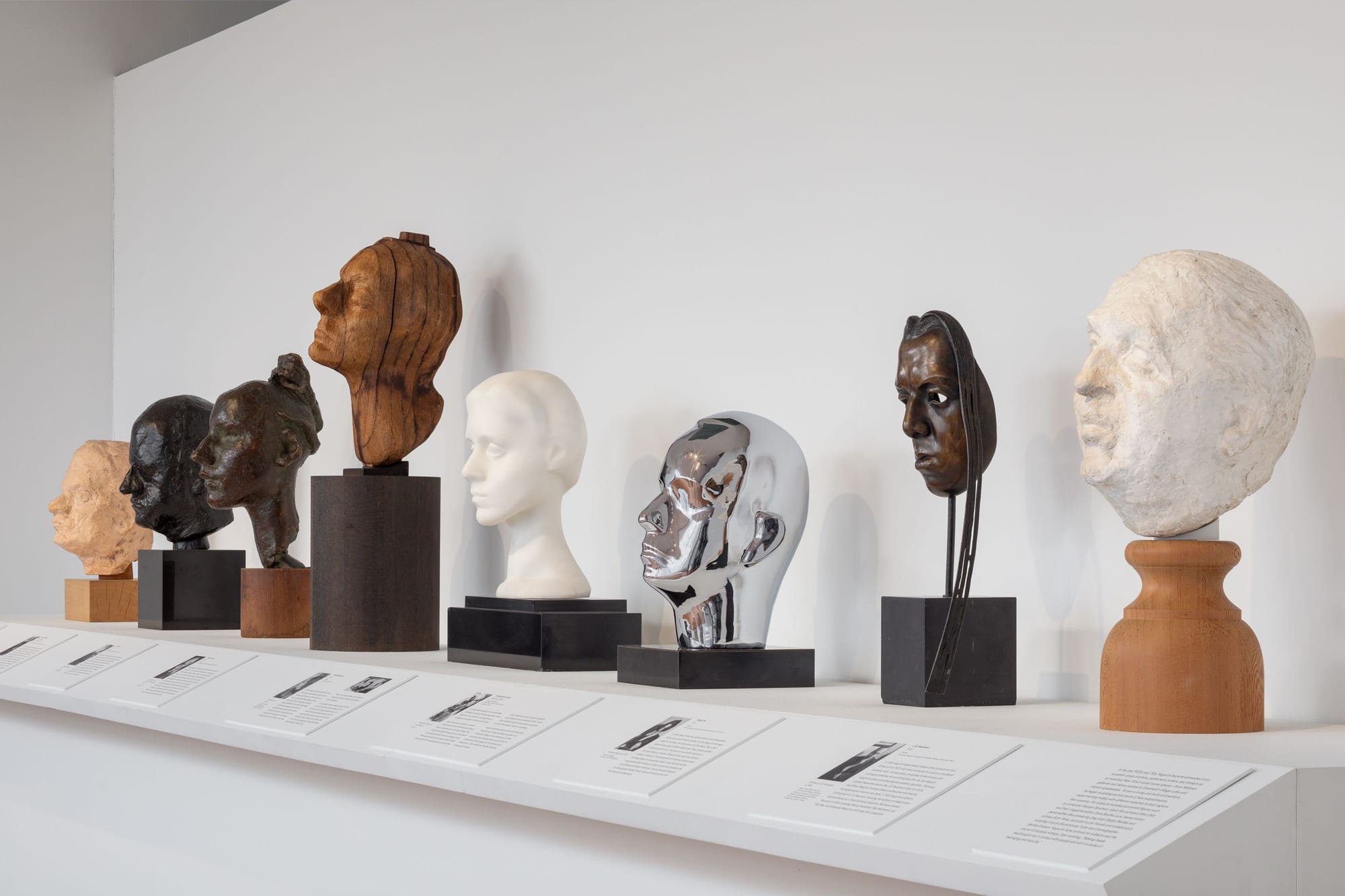
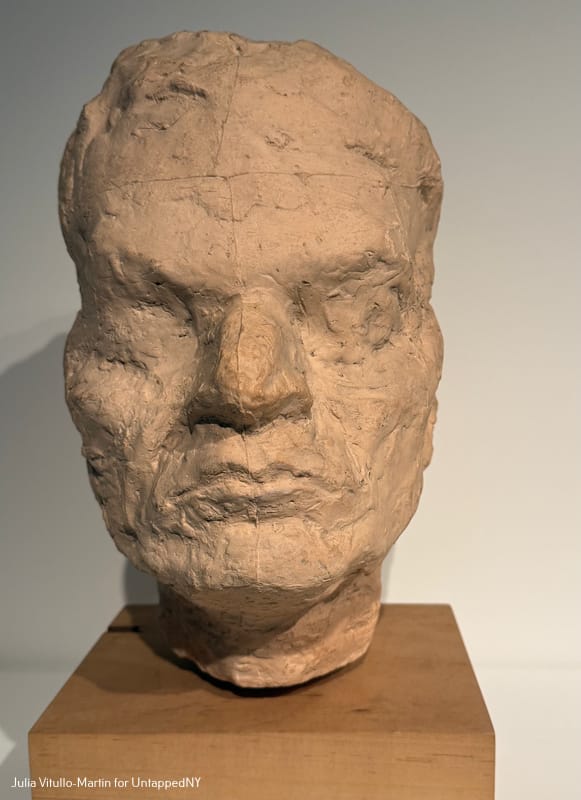
(left) Busts of (left to right) José Clemente Orozco, Murdock Pemberton, Ruth Parks, Suzanne Ziegler, Clare Boothe Luce, R. Buckminster Fuller, Michio Ito, and J. B. Neumann. Photo: Nicholas Knight. © The Isamu Noguchi Foundation and Garden Museum, New York / Artists Rights Society (ARS) (Right) Noguchi's bust of eminent Mexican sculptor, José Clemente Orozco
Yet when he returned to New York a decade later he found himself priced out of the Village, and started thinking about moving to the far cheaper waterfront area of Queens. In 1961, he relocated to a 3,200-square-foot warehouse in Long Island City.
And that, Dear Reader, is why we have the sublime Noguchi Museum in Queens.
Noguchi's New York
On the way to the stairs leading to the second floor, you'll see this wonderful quote of Noguchi's:
Like a lot of New Yorkers, I was one of those bitten by some kind of an idealism … New Yorkers after all felt a special relationship to the world. They were on this island looking out on the whole damn world, which they had to do something about. My way was not the way of words, but the way of doing things, making something which might sort of approach that which one felt the world could be. Little spots here and there, so that instead of going to the moon, you bring the moon to you. - Isamu Noguchi, 1980
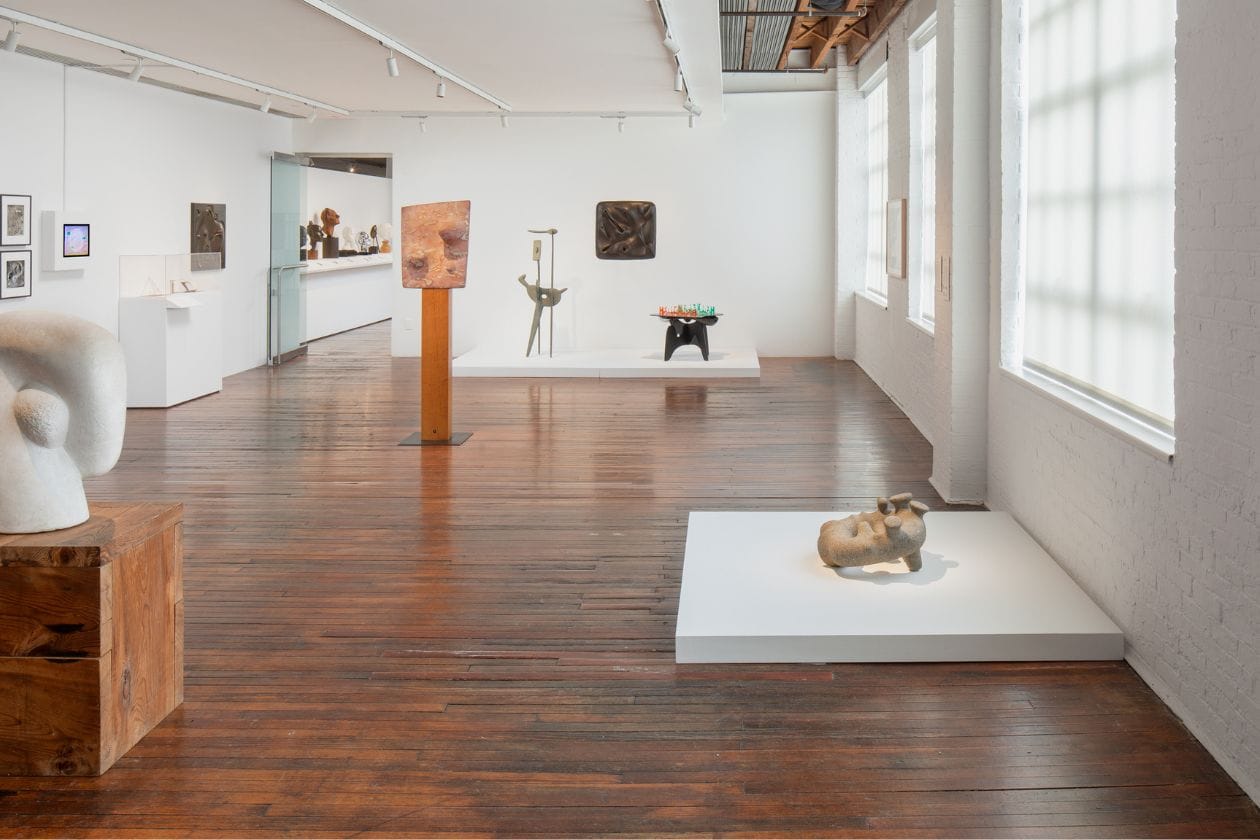
Four decades later, the Museum remains one of Noguchi’s greatest sculpted environments. It also embodies his decades-long effort to sculpt the urban landscape of New York into a more humane, natural space for connection and creativity. For an artist whose civic ambitions were often blocked by the formidable New York city planner Robert Moses—who scorned Noguchi’s unconventional plans—the Museum’s opening represented a triumph over city politics.
Asked how he felt about the achievement, Noguchi replied, “I feel I’ve outsmarted Mr. Moses, is what I feel.”
Next, check out a A Never-Built World's Fair Sculpture by Noguchi!
