After a multiyear renovation of the Frick mansion that involved moving its magnificent collection up to the Met Breuer Building on Madison Avenue, the collection has returned to its magnificent home. Order is restored to the universe!
Frick furnished his 61-room house with Rococo and Renaissance furniture, and accumulated superb decorative arts, including Limoges enamels, Meissen porcelain, and Italian bronzes. He and later his daughter chose paintings by Bellini, Titian, Holbein, Fragonard, El Greco, Goya, Ingres, Manet, Rembrandt, and Vermeer.
The elegant text in the new book is written by Xavier F. Salomon, former Deputy Director and Peter Jay Sharp Chief Curator at The Frick Collection and currently Director of the Calouste Gulbenkian Museum in Lisbon. While at the Frick, Salomon oversaw the mansion's restoration. He endeared himself to New Yorkers during Covid by presenting his innovative Cocktails with a Curator series on YouTube, pairing interesting drinks with works of art. The book's wondrous photos are by Miguel Flores-Vianna, a London-based writer, editor, and photographer. The photos are so precise and detailed, they offer the next best experience to being there.
Here are a few of the rooms featured:
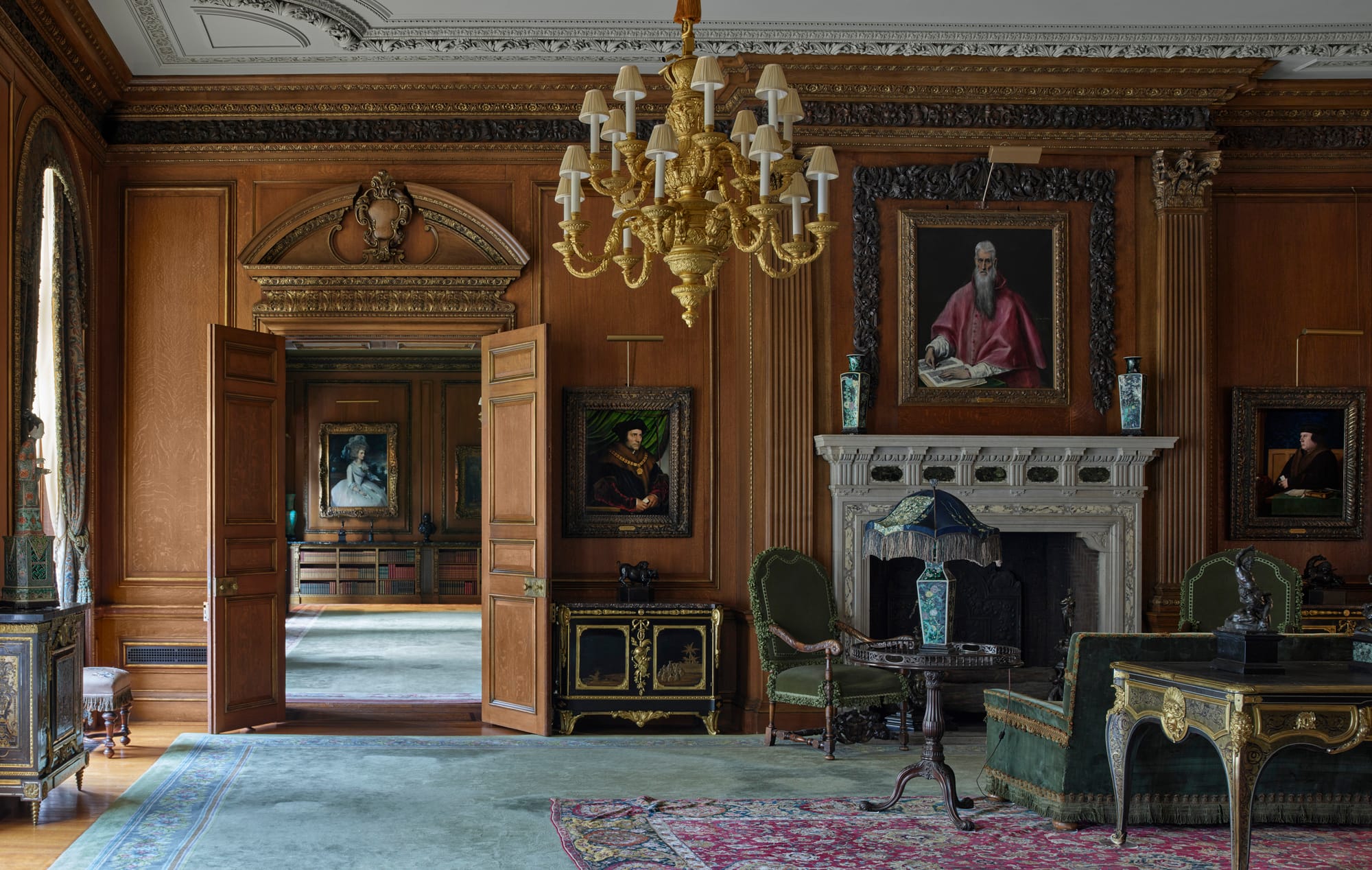
The Living Hall
Photo by Miguel Flores-Vianna
Henry Clay Frick’s friend, the painter Charles Ricketts, summarized the scene in the Living Hall in 1919: “Imagine Sir Thomas More, the beautiful saint, and [Thomas] Cromwell, the monster, united in history, art, and tragedy, now facing each other, united by Holbein and time and chance.”
Thomas More, to the left of El Greco's St. Jerome over the mantelpiece, stares towards his enemy, Thomas Cromwell, looking to his right in More's direction. Both portraits are by Hans Holbein the Younger. Holbein’s More is considered the superior painting of the two, probably the greatest Holbein in America, says Salomon.
In the new book, Salomon notes that Frick "liked to reunite portraits when he could or juxtapose them to create dialogues; here, he opposed two political rivals from Tudor England. Cromwell was instrumental in More's death sentence in 1535, and Cromwell himself fell to King Henry VIII's axman five years later."
And what would St. Jerome make of the positioning of his portrait between these two bitter enemies? We'll never know, but the portrait itself arrived in controversy. Salomon writes, "In its sheer expressive intensity and daring unconventionality, the portrait of the saint, with his wizened face and brilliant red robe, was unlike anything Frick had previously purchased." The sale of such a renowned painting to an American was immensely contentious in Spain. Vociferous protests led to a radical reform in the law for the exportation of works of art from Spain.
The most important pieces of furniture in the room are the pair of cabinets flanking the fireplace. Seen beneath Thomas More, the cabinet is veneered with ebony, tulipwood, amaranth, and padouk, and incorporates eight panels of black-and-gold Japanese lacquer.
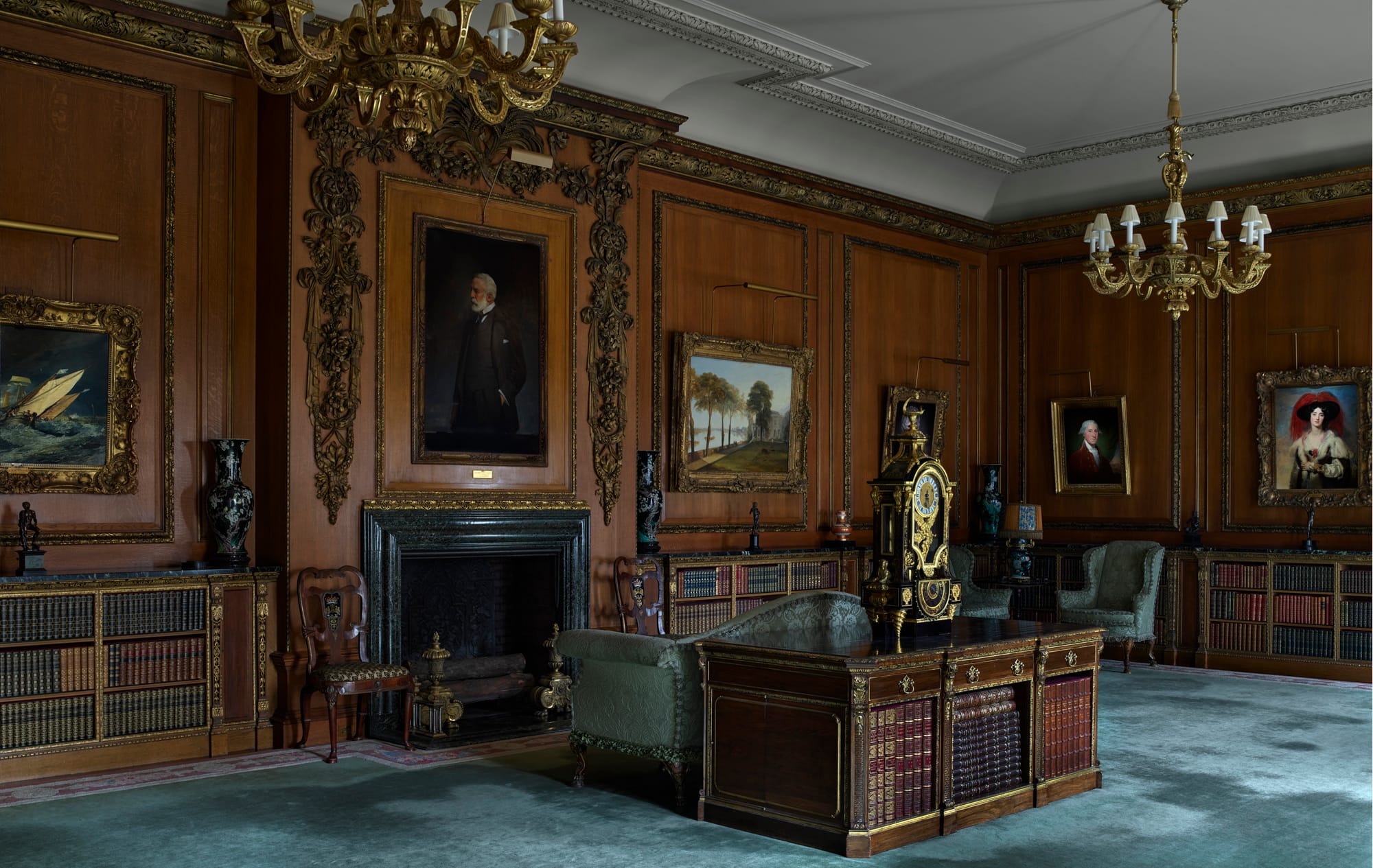
The Library Gallery
Photo by Miguel Flores-Vianna
As in the Living Hall, the Library is based on the interiors of great English country houses. The walls are oak-paneled and the chimneypiece is decorated with floral garlands in lime wood, carved by Abraham Miller.
The posthumous portrait of Frick above the fireplace replaces William Hogarth's Miss Mary Edwards, which Frick had hung. After the museum opened to the public, Helen Clay Frick commissioned and then donated her father's portrait, which now commands the room.
When the family lived in the house, only British paintings–Gainsborough, Reynolds, Constable, Turner–hung on the walls. The portrait of George Washington by Gilbert Stuart on the far wall is one of the few paintings by an American artist in the collection.
The books, bound in tooled leather, are Frick's personal library. His bookplate reads, "Those who do not read are going back instead of progressing."
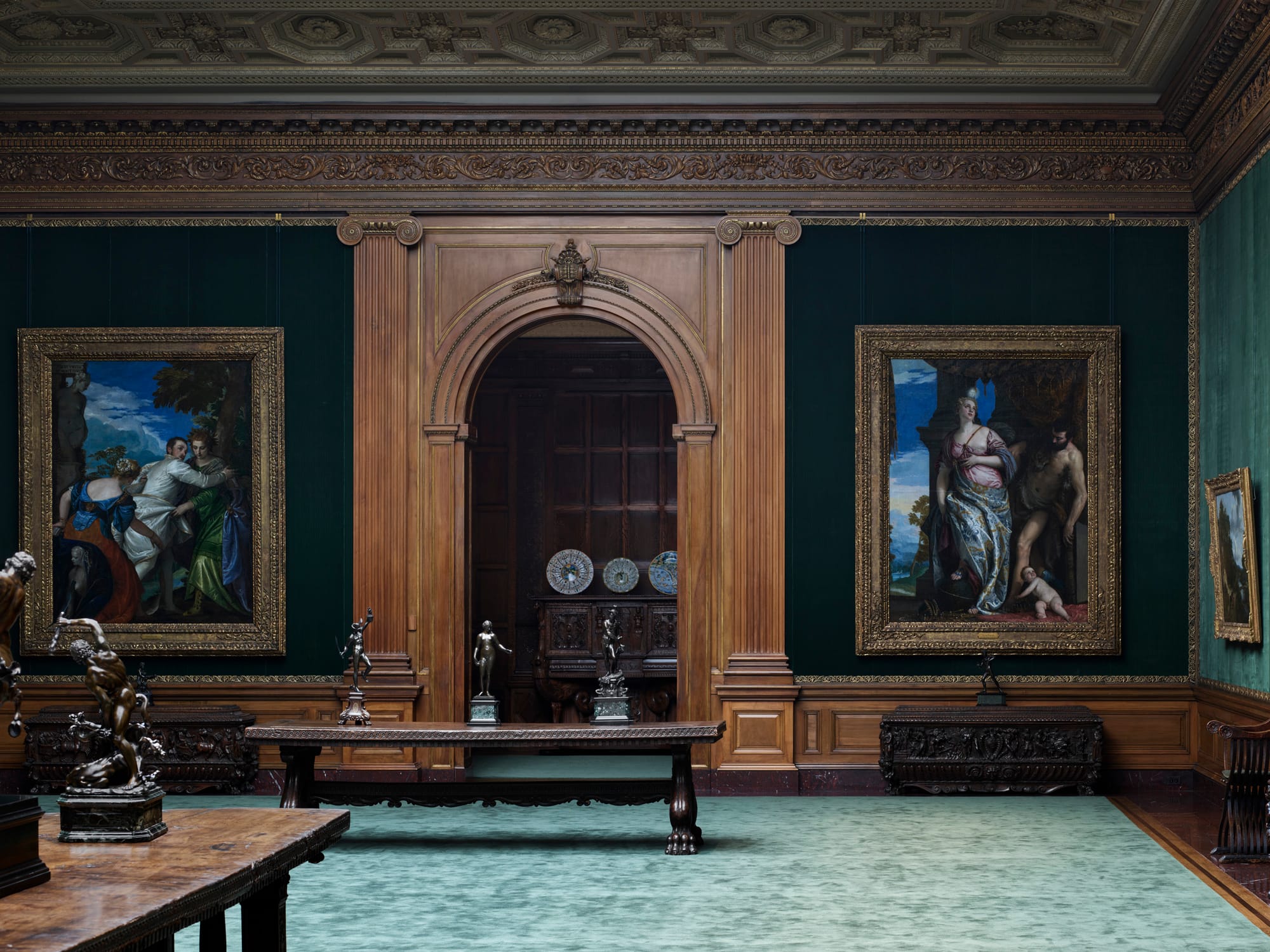
The West Gallery
Photo by Miguel Flores-Vianna
Inspired by the Wallace Collection in London, Frick added a gallery to house his growing collection. Salomon calls The West Gallery–35 feet wide, 25 feet high, and an astonishing 100 feet long–the grandest space at 1 East 70th Street.
Once he knew he would have an impressive gallery to accommodate huge paintings he started he started buying works that would not have fit in ordinary residential spaces. His magnificent paintings by Paolo Veronese–The Choice between Virtue and Vice and Wisdom and Strength–had belonged to European royalty. Veronese sought to educate his viewers of the dangers of a misled life, says Salomon. These sumptuous depictions of virtue and vice can indeed give one pause.
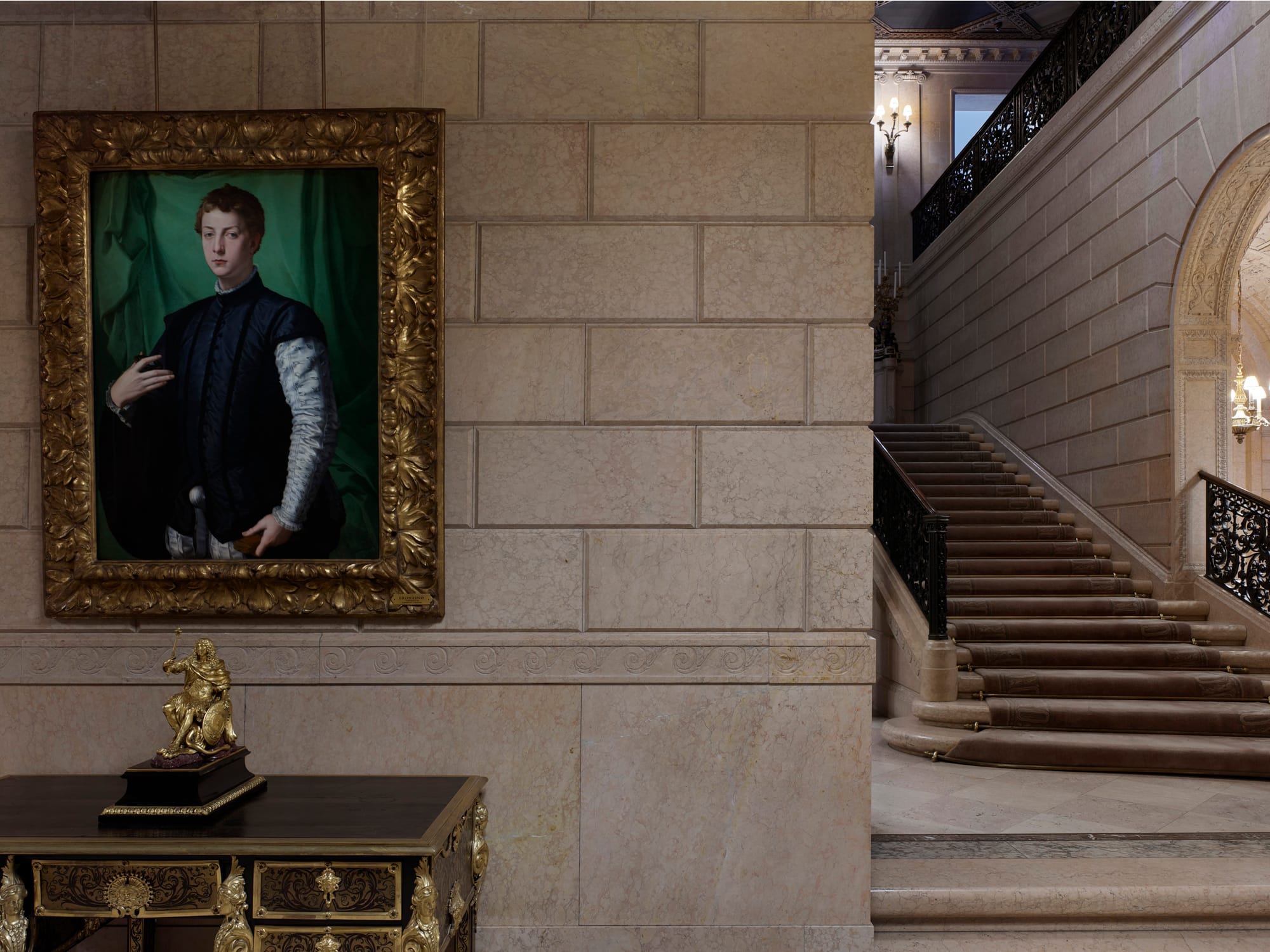
The South Hall
Photo by Miguel Flores-Vianna
The South Hall, clad in Botticino Rosato marble, holds the Grand Staircase, and displays what Salomon calls "Agnolo Bronzino's hypnotic portrait of Ludovico Capponi." For most of his career Bronzino was associated with the Medici court in Florence. Capponi is thought to have been a page at the court.
One of the many benefits of the mansion's renovation is that the Grand Staircase is now open to the public. And a what a great staircase it is!
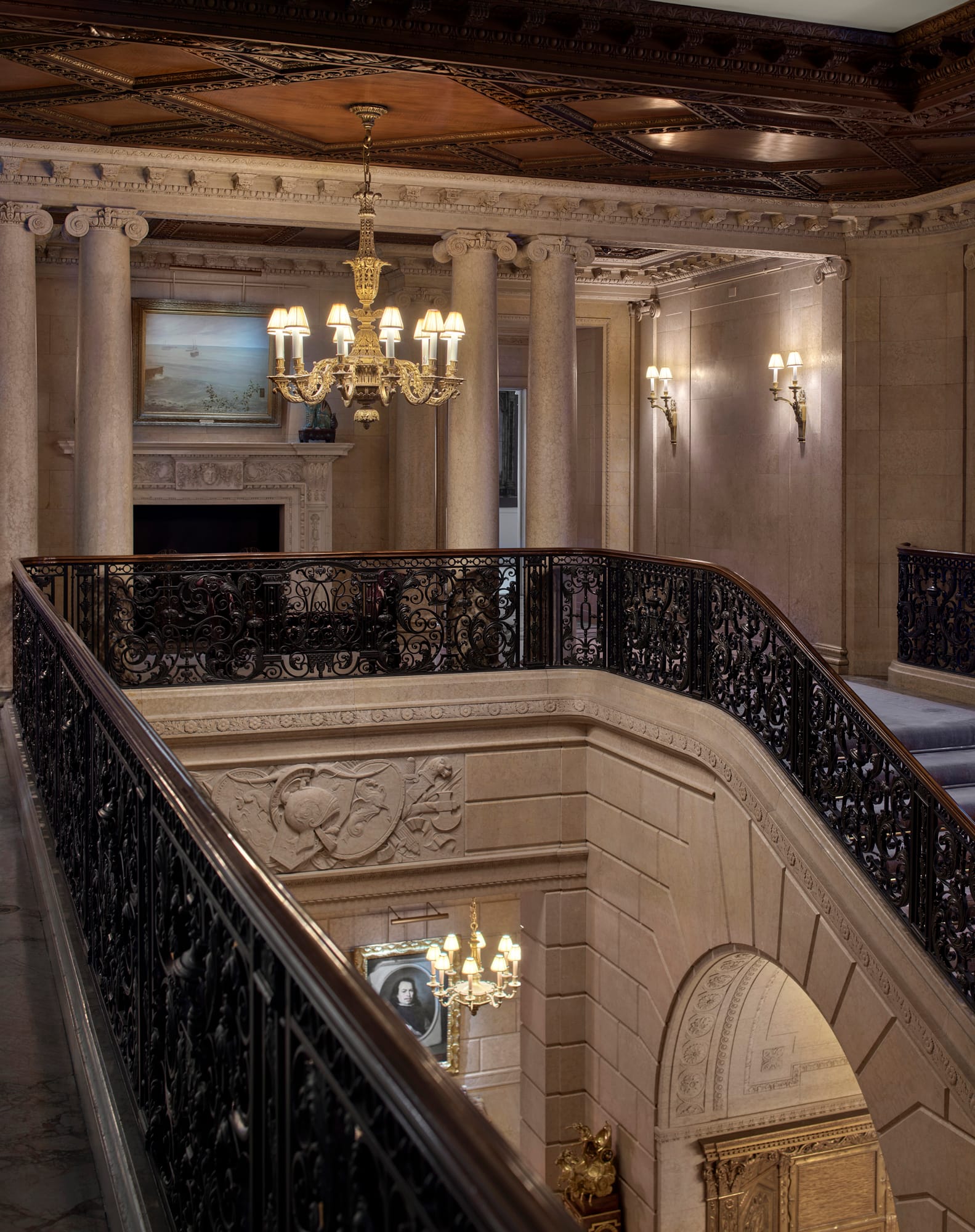
Second Floor Landing
Photo by Miguel Flores-Vianna
Walk up to the second floor via the Grand Staircase and savor the opulence of the materials and workmanship. Below you can spot one of the Frick's most intriguing self-portraits, that of Bartolomé Esteban Murillo. One of the most celebrated painters of the Spanish Golden Age, says the Frick, Murillo worked primarily in Seville, where he was born in December 1617, until his death in 1682.
This post contains affiliate links, which means Untapped New York earns a commission. There is no extra cost to you and the commissions earned help support our mission of independent journalism!