Is pinball a game of chance or skill? Players and politicians disagreed. While pinball fans saw the game as cheap, harmless fun, city officials saw it as vice that "breeds graft and corruption and incites children to steal to get the money to play the machines." Pinball was banned in New York City on January 21, 1942 and remained an illegal pastime until one player, Roger Sharpe, proved it took skill to win in the 1970s.
The origins of pinball can be traced back to 16th century European lawn games where people would roll balls into holes in the ground, but the most direct predecessor of pinball is a game developed in 18th century France called bagatelle. Bagatelle is a tabletop game where a ball is rolled onto the board with the objective of getting to holes guarded by wooden pins.
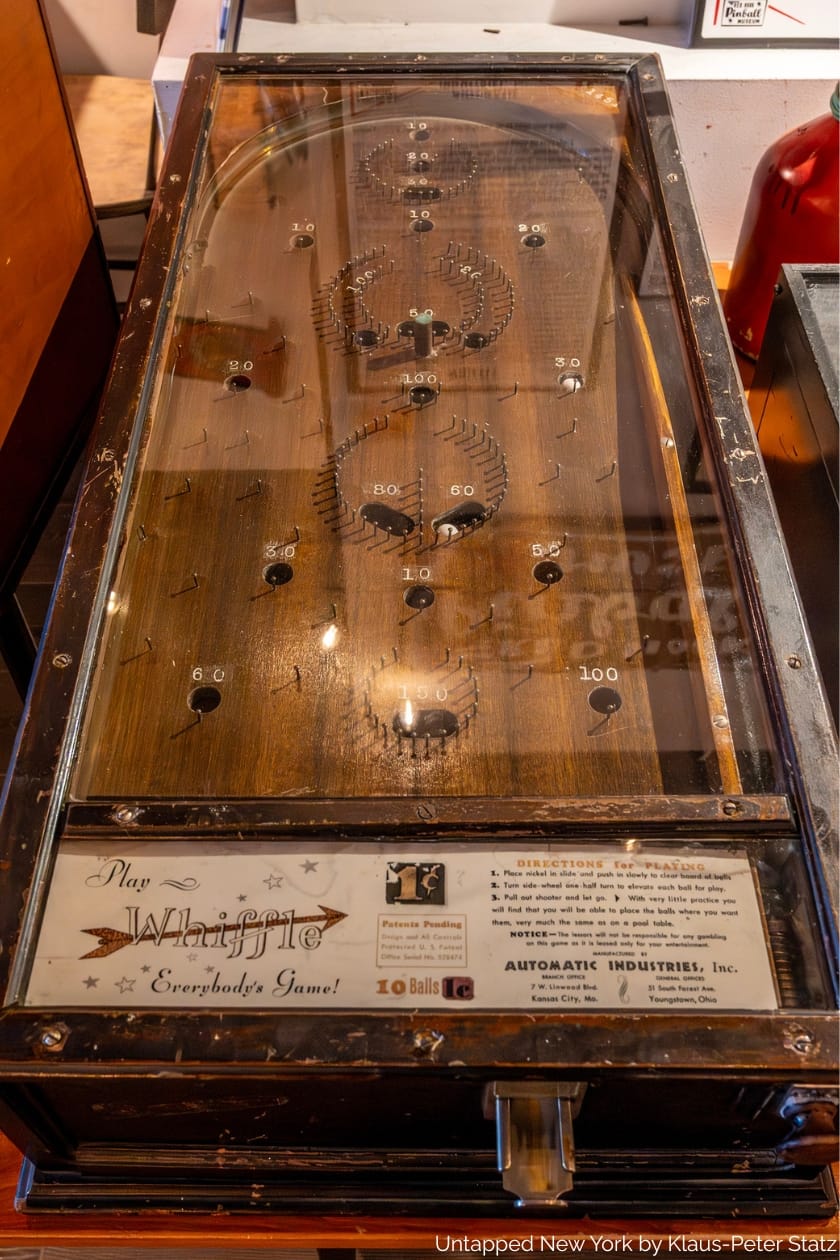
Whiffle is largely recognized as the first version of pinball as we know it today, though it is still quite different than the dinging, flashing, colorful games you might imagine. Created in 1931 by Automatic Industries Inc., this game was coin-operated and had a spring-loaded plunger.
A game of "Whiffle," widely considered the first pinball game, at the Red Hook Pinball Museum
Pinball and LaGuardia's Anti-Gambling Crusade
Pinball was an accessible and cheap form of entertainment which grew in popularity with both children and adults throughout the Great Depression. The game made its way into bars, arcades, and shops across the city. By 1941 there were estimated to be more than 11,000 machines in New York.
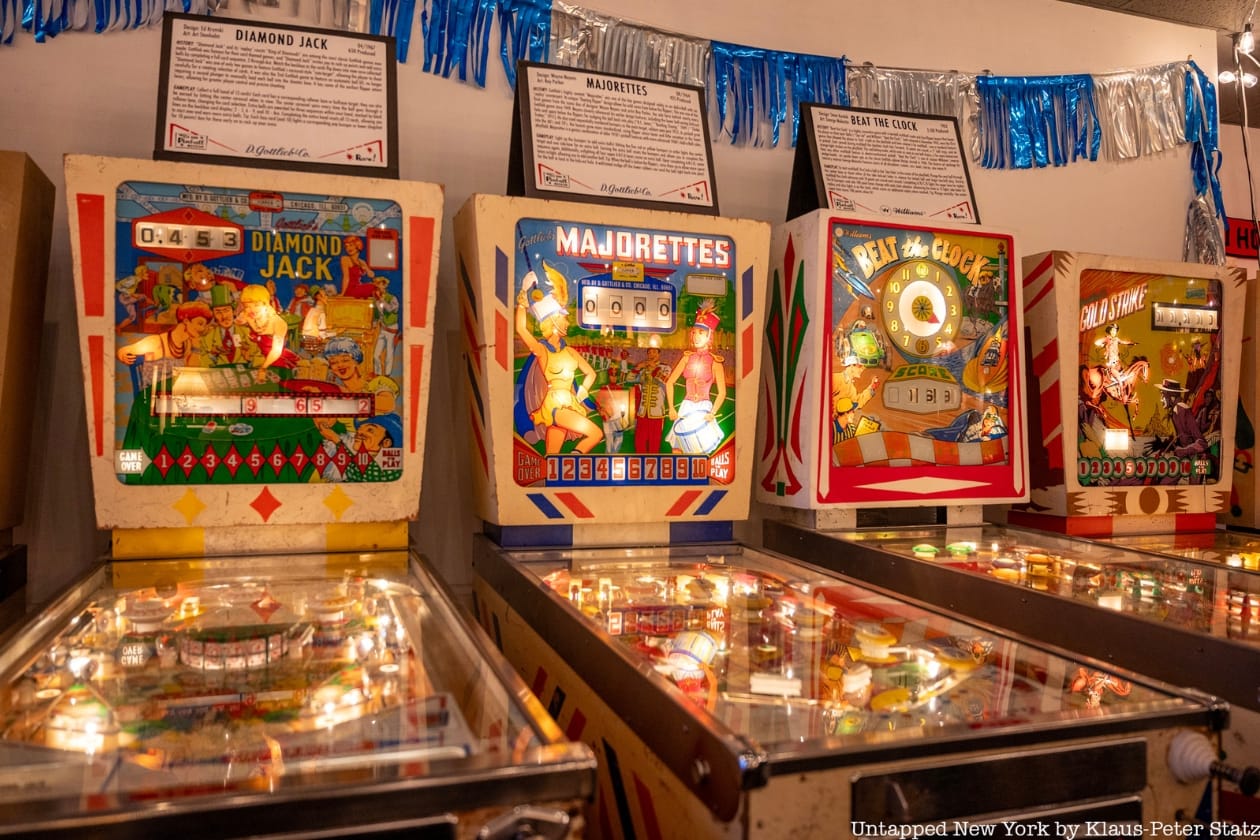
Early pinball machines didn't have flippers, so after pulling the plunger and setting the ball free, it was nearly impossible to control the ball's movements as it bounced between obstacles on the board (though a slight tilt could help). Players would release the ball onto the board in hopes of getting a high score rewarded with small prizes like cigars, gum, cash, or replays (which, in turn, could be cashed in with the bartender or clerk).
This haphazard gameplay, and the prizes associated with it, led New York officials, including Mayor Fiorello LaGuardia, to view pinball as a form of gambling and therefore a gateway to a life of immorality.
Red Hook Pinball Museum
When LaGuardia came into office, he was on a crusade to root out corruption. Gambling was on his hit list and he saw pinball as just another form of that vice. A New York Times article from 1942 quotes the mayor calling pinball games "larceny machines," and the companies that manufacture them, "slimy crews of tinhorns...living in luxury on penny thievery."
Pinball was perceived by LaGuardia and other officials as "an evil and a menace" that would corrupt the youth by fostering an urge for gambling and stealing coins in order to play. Officials also claimed pinball was tied to organized crime.
These moral objections to the game were amplified by the need for materials for the war effort. In 1942, 3,000 pounds of steel balls were donated from pinball machines confiscated by the NYPD.
The NYC Pinball Ban
On January 21, 1942, a New York City court ruled that all pinball machines were gambling devices and police were sent out across all five boroughs to confiscate them. Photos in the Brooklyn Public Library archives show Police Commissioner William P. O'Brien taking a sledgehammer to confiscated machines and other gambling devices. Despite appeals and protest from pinball proponents, the ban held for more than 30 years.
The ban was finally overturned in 1976 when journalist Roger Sharpe proved the game required skill. In a dramatic demonstration recreated in the film Pinball: The Man Who Saved the Game, Sharpe channeled Babe Ruth and pointed out exactly where the ball was going to roll. Using the flippers (which started to appear on pinball machines in the late 1940s), he skillfully maneuvered the ball right to the predestined spot, proving players needed more than just luck to reach a high score.
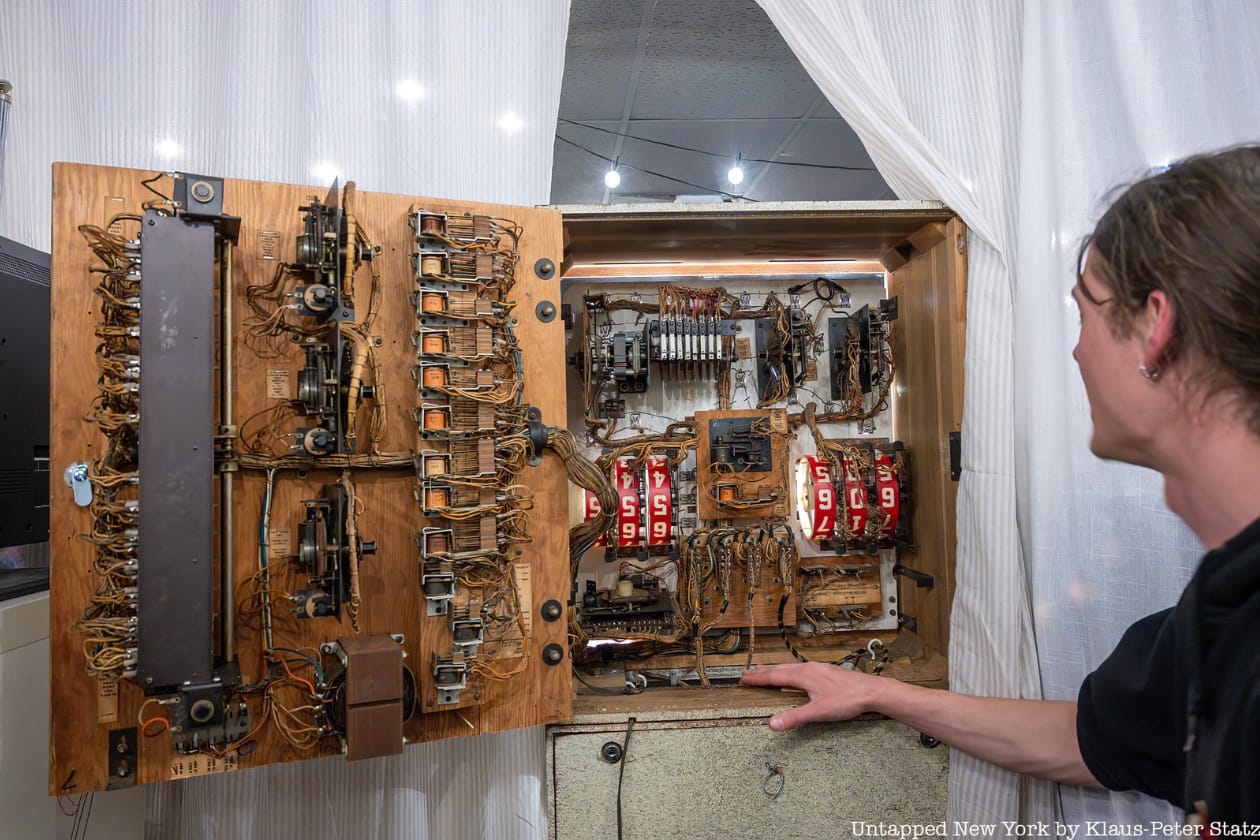
Insiders playing and getting a look at the guts inside a pinball machine at the Red Hook Pinball Museum
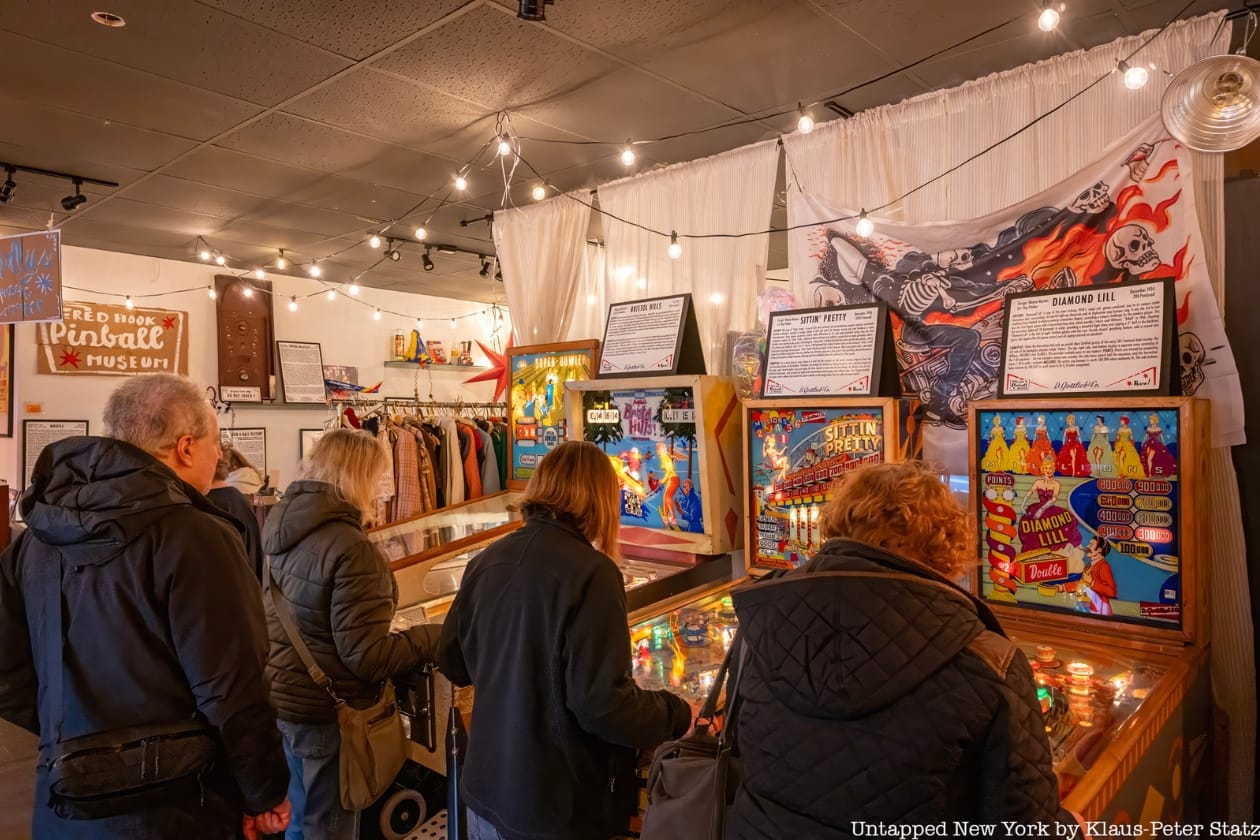
The Red Hook Pinball Museum
Fifty years ago, the Manhattan City Council overturned the pinball ban which had lasted nearly four decades. Now, New Yorkers can play pinball to their heart's content without any fear of breaking the law.
Untapped New York Insiders got a literal inside look at pinball on our visit to the Red Hook Pinball Museum in Brooklyn. The museum is open for free play (with a suggested donation) every Friday, Saturday, and Sunday from 1 pm until 10 pm. All ages are welcome and it's the perfect place for a private party.Join our waitlist to be notified of our next behind-the-scenes visit.
This post contains affiliate links, which means Untapped New York earns a commission. There is no extra cost to you and the commissions earned help support our mission of independent journalism.