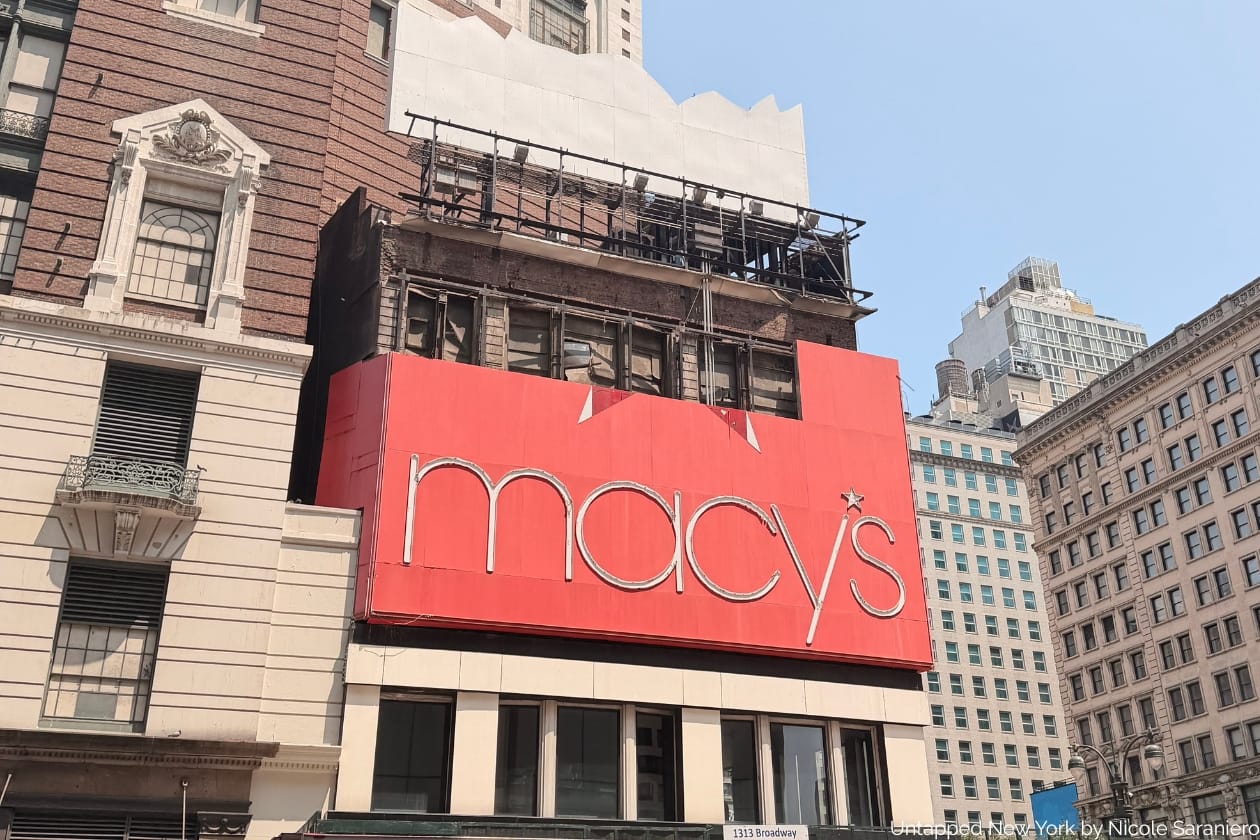
The big, red shopping bag-shaped billboard next to Macy’s in Herald Square is a familiar site for most New Yorkers. It is so familiar that most probably didn't know that the billboard hid an entirely separate building, a property that Macy’s has never even owned. Now that the iconic bag has been removed, it's clear to see the building beneath, for the first time in decades.
On the Untapped New York Podcast, Michelle Young and Justin Rivers discuss the origin story of Macy's, how this tiny holdout building forced the retail giant to change its construction plans, and what's going to replace the iconic shopping bag sign. Watch below or listen here!
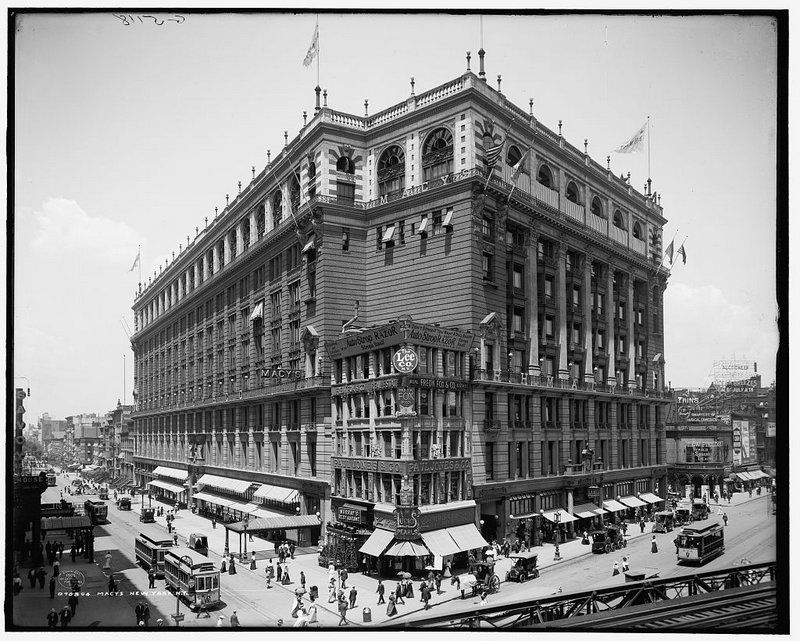
It all started in the 1890s when Macy’s planned to move from its store on 14th Street and 6th Avenue to 34th Street and Broadway. The owners, brothers Isidor and Nathan Straus, started buying up properties on the desired block for the anticipated move. The Straus brothers had an informal deal with Alfred Duane Pell to but his 1,154 square foot lot on the corner for $250,000
The building as seen on Saturday, July 25, 2026
📺 Watch a virtual presentation about Nathan Straus, by his biographer, in our video archive.
When an agent of Henry Siegel, a partner of the Siegel-Cooper Dry Goods Store, found out about the tentative deal, they made Pell an offer of $375,000. Pell accepted.
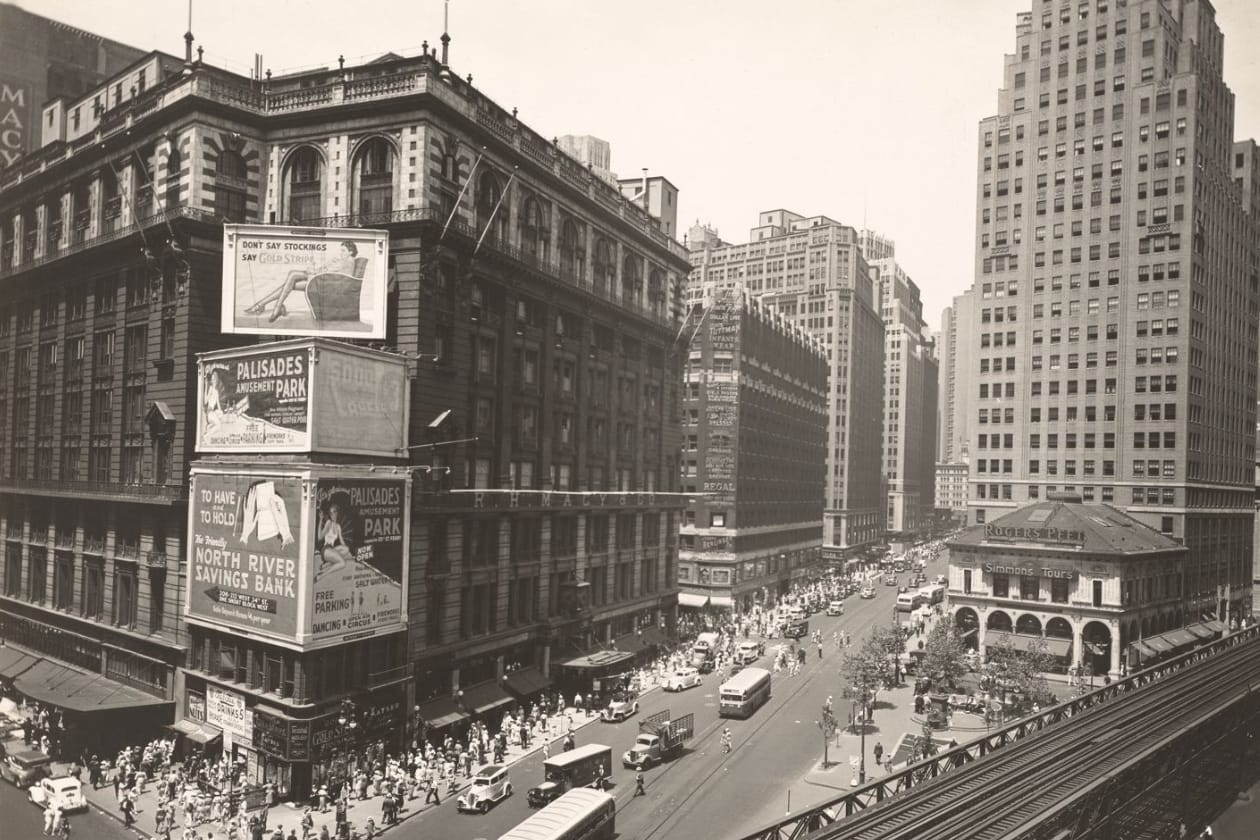
Surprisingly, Siegel didn’t purchase the land with the intention of putting up a billboard for his own rival store. One documented plan is that Siegel was going to build a 12-story building devoted to the sale of women’s clothing. This wasn’t viable because the plot was too small to hold such a tall building. The realistic plan is that Siegel intended to purchase Macy’s old location on 14th Street and 6th Ave. He suggested giving up his corner plot to Macy’s if the Straus brothers would relinquished their lease on the old store. Unfazed by Siegel’s deal, the brothers declined his offer and simply built their 1.6 million square foot store around the existing corner building.
In 1903, a year after the huge Macy’s store opened, Siegel razed the original corner building and replaced it with a five-story structure that he leased to the United Cigar Store Company for $40,000 per year. It wasn’t until around 1945 that Macy’s began advertising on the facade.
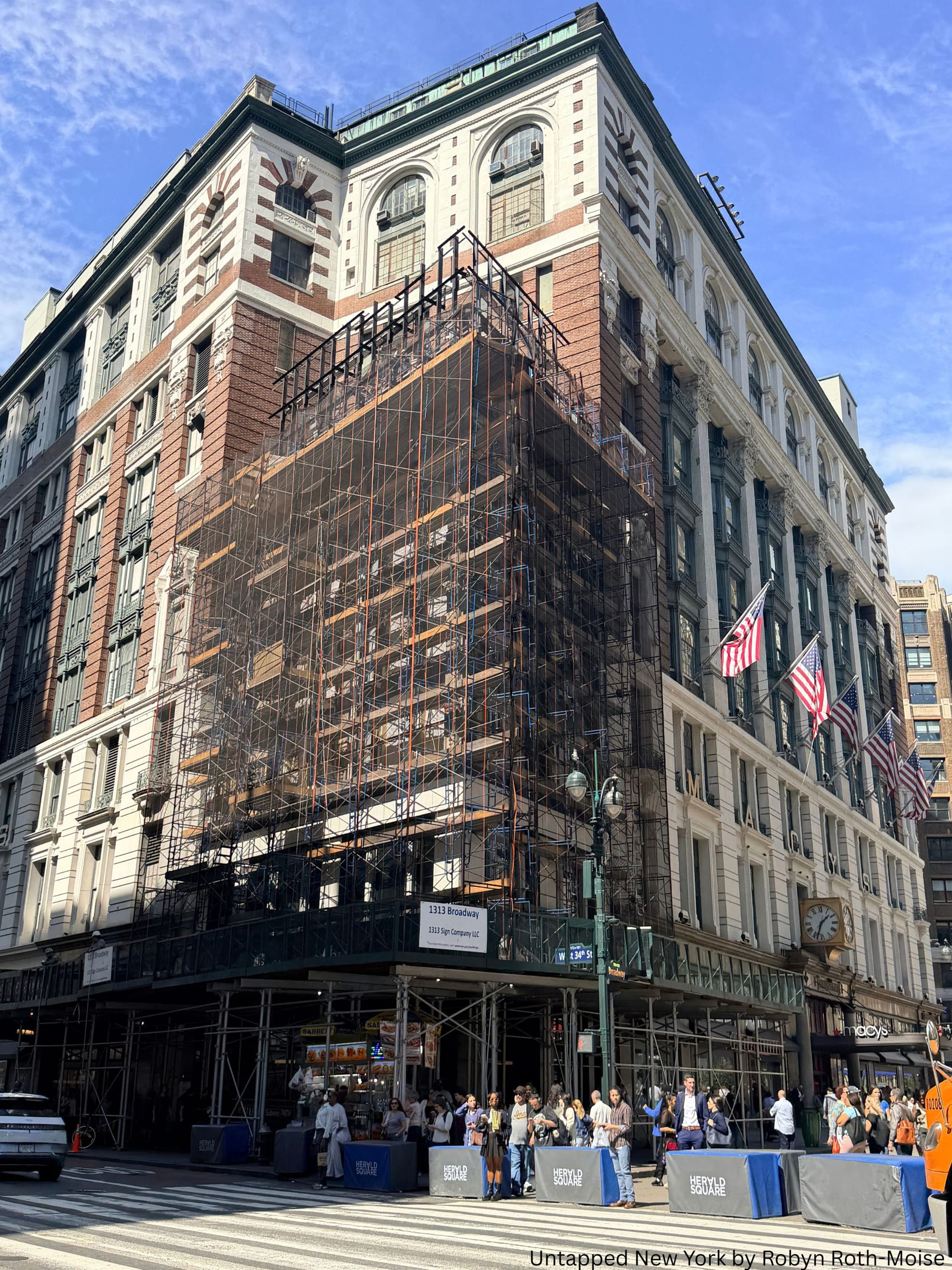
As of September 16, 2026, the corner building is now covered in scaffolding as seen in the photo below. Gothamist reports that the shopping bag will be replaced by two LED signs. What do you want to see happen to the building?