
New Hidden Histories Partnership with Apple Podcasts
Apple Podcasts's new Hidden Histories guides focus on "surfacing little known histories tied to those places."
Apple Podcasts's new Hidden Histories guides focus on "surfacing little known histories tied to those places."

Archtober, NYC’s architecture and design month and an annual festival of architecture activities, programs and exhibitions, starts soon!
Explore a different building in NYC nearly every day of October on special architect-led tours!

Once the largest office building in the world, this Lower Manhattan tower even has its own zip code!

Every month, Untapped New York will release a new essay from Jo Holmes about the life and work of the late architect Richard Roth, Jr. of Emery Roth & Sons. Each essay explores a different building or developer from Richard’s career, intertwined with stories of his personal life and snippets of exclusive interviews conducted by Holmes and Untapped New York's Justin Rivers (which can be viewed in our on-demand video archive). Check out the whole series here!
Not that many buildings in Manhattan have their own zip code, but probably more than you’d think. Global event venue company Convene, says there are 42. Emery Roth & Sons had a hand in designing ten of those. Chief among them, in terms of size, is 55 Water Street in Lower Manhattan.
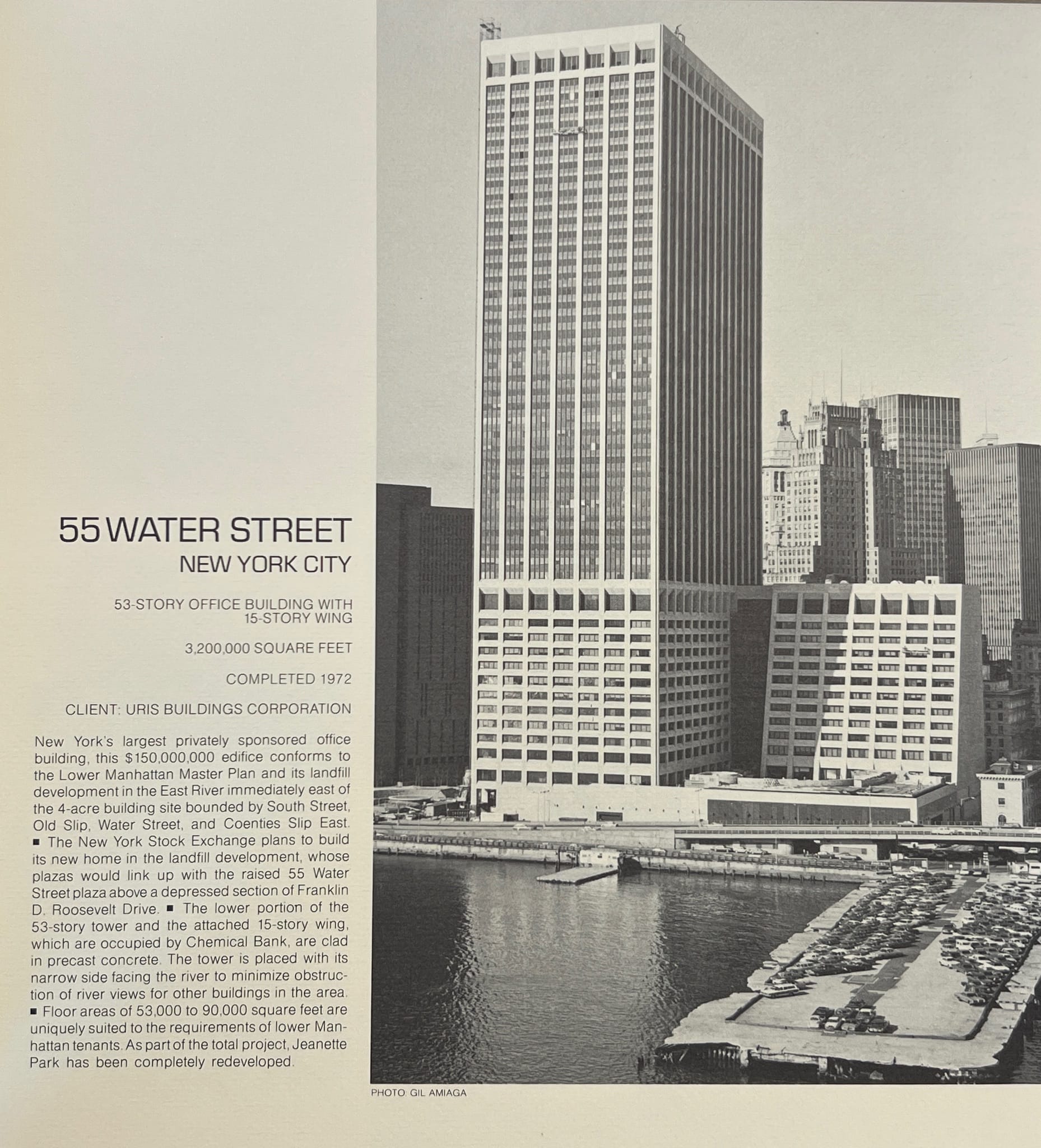
Completed in 1972, it was the largest privately-owned office building in the world at the time. (Only the government-owned Pentagon and Merchandise Mart in Chicago were bigger. It's title was taken by the original World Trade Center opened in 1973.) Richard Roth, Jr. found it a fascinating project for a number of reasons, not least because he was tasked with incorporating a subway connection for the Second Avenue Line. As most New Yorkers know, some 50 years later, the line is only partially complete. Back then, Richard was on the board of the Fund for Better Subway Stations – one of many arts and restoration organizations he supported outside from his day job.
In the late 1960s and early 1970s, developer Percy Uris recognized Manhattan’s economy was changing. In Skyscraper Dreams, Tom Schachtman explains, "Manufacturing jobs were being drained out of the city at a rate of 50,000 per year, but service jobs were on the increase…" So, ahead of the curve, the Uris Buildings Corporation was investing in office space, and 55 Water Street was a major part of that investment.
Schachtman writes that in 1971 the building "would bring the company’s total to 13 million square feet of office space developed in New York since 1946, more than all the office space built during that same era in Boston or Philadelphia." Richard was excited to be part of this. “We had done a lot of buildings for the Urises. They were very good clients. But this was fascinating.”
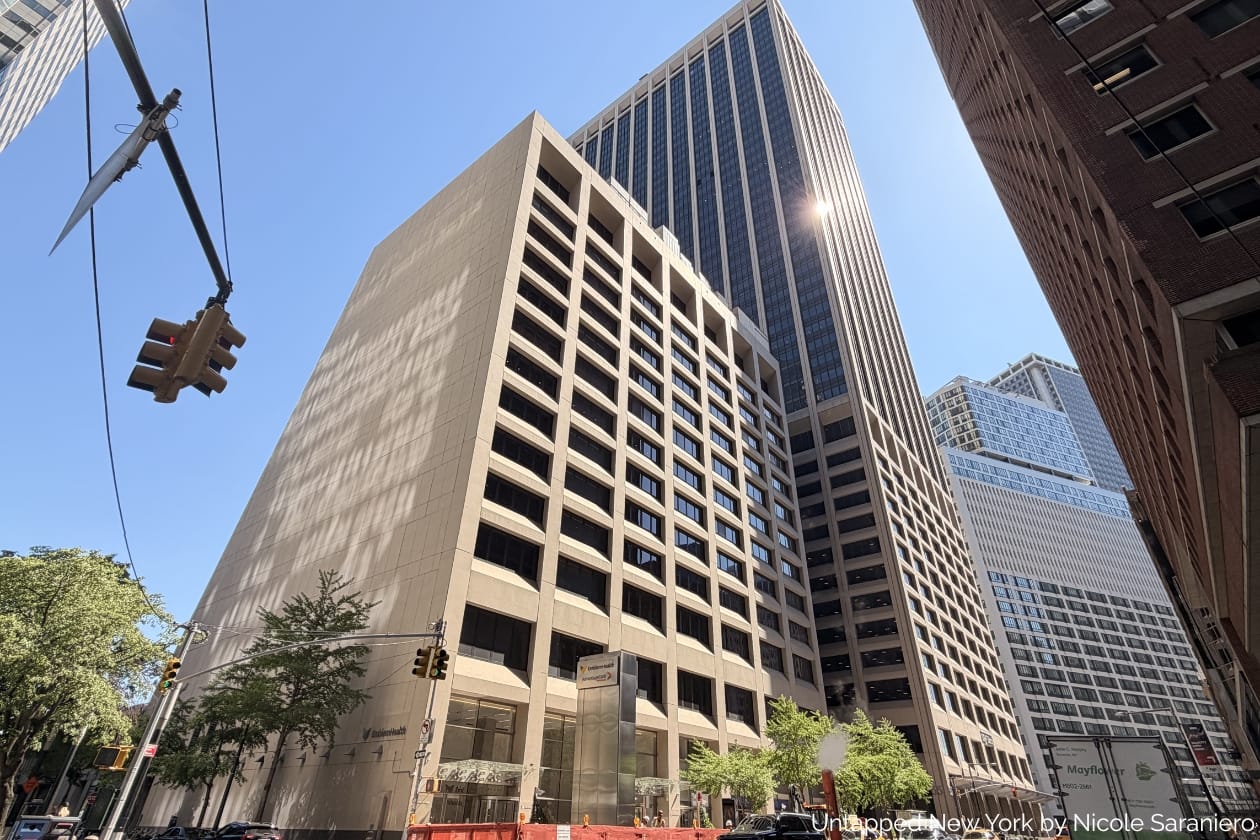
55 Water Street consists of a 209-meter tall 53-story tower with a 15-story wing. Both components are built in matching stonework and glass, but the tower is rectangular while the lower wing has sloped walls. Richard explained that the Urises took some convincing to put the smaller building next to the tower, but he felt it made for an interesting design.
There is a raised plaza in front of the smaller building. This is now a ‘privately-owned public space’ (POPS) known as the Elevated Acre. It’s accessible via escalators from Water Street and is a tranquil green space looking over the Hudson River and the Brooklyn Bridge. There’s a second plaza to the south. “We had all this landscaping, I mean a huge amount of landscaping,” said Richard. “I suggested to Harry Uris that he hire Larry Halprin from San Francisco.”
Harvard-educated Halprin had become well-known for urban landscape redevelopment projects. “Now, if you've seen any of Halprin’s landscape work, you’ll know he builds mountains…he builds rocks you climb over. He doesn't build grass areas you sit in. And he built a rock formation in the plaza to the south.” That was a problem. “Uris took one look at it and immediately fired Larry Halprin, because, he said: ‘I don't have enough insurance to cover the liability on this plaza!’ So that ended Halprin’s first job in New York,” Richard said. He then recruited Paul Friedberg to take on the job. Friedberg was well-known for designing the (now demolished) community-focused Riis Park Plaza on the Lower East Side.
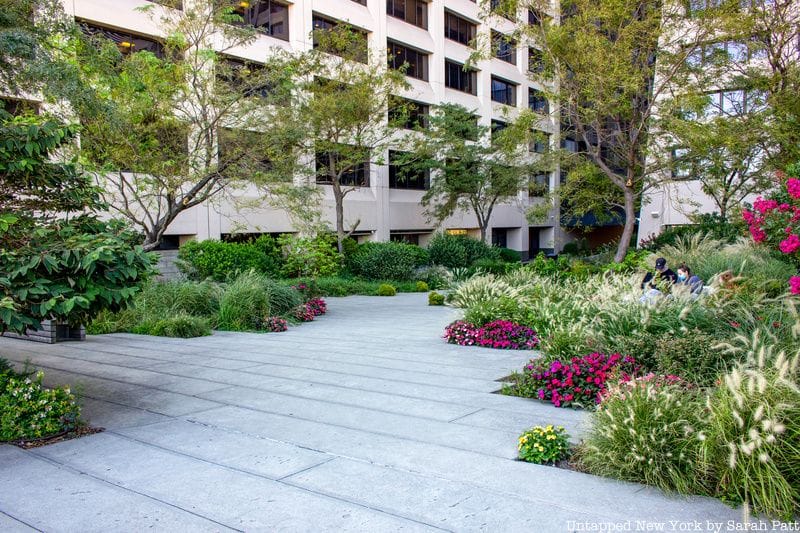
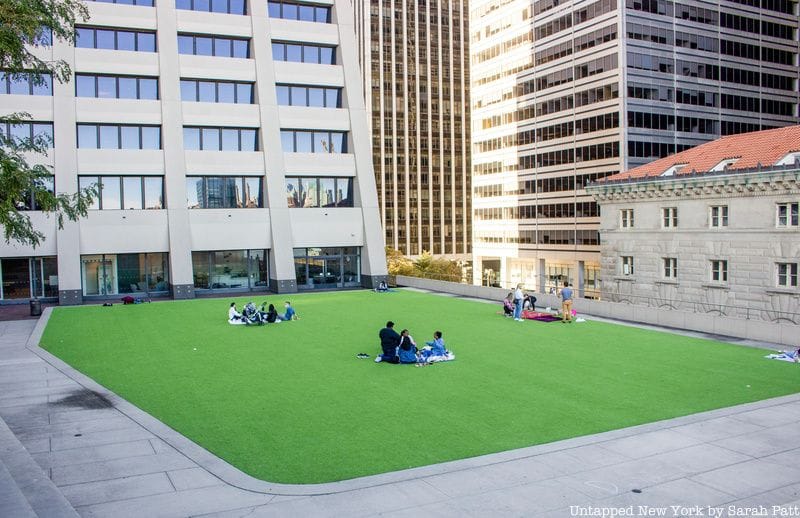
The Elevated Acre
Another major design challenge was the need for a subway connection within the site. “Underneath the plaza we have a subway connection to the Second Avenue subway,” explained Richard. “It’s only about seven miles away from the next stop,” he quipped. It was part of a major redevelopment plan.
The ‘Lower Manhattan Plan’ drawn up in 1966 proposed reclaiming land from both the East and Hudson rivers. As we know, Battery Park City eventually came into being to the east, but ‘Manhattan Landing’, as the area reclaimed from the Hudson River was to be known, has not. Plans included a bridge to a new residential district across the FDR Highway from 55 Water Street’s main plaza (now the Elevated Acre). “The Planning Commission had a design group, and the design group were pretty good architects, and I knew them all. In fact, I had gone to school with a couple of them and I had great fun working with them. And part of what they wanted was a subway connection…so you got it. Goes no place but you got it.”
The never-ending/never-starting saga of the Second Avenue subway line goes on. Public transit campaigner Gene Russianhoff told the New York Times in 2005, "It's the most famous thing that's never been built in New York City…It's much promised and never delivered." In August 2025, the New York Times reported the MTA had finally agreed on a contract to build the uptown extension in East Harlem, with a finish date of 2032. There was no word on the downtown section…
Around the time 55 Water Street was in development, Richard was on the board of the private non-profit Fund for Better Subway Stations, Inc. Among other projects, they hoped to get the MTA cover half of the $1.1‐million cost of a ‘colorful, modernization job on the IRT station at 51st Street and Lexington Avenue.’
Serving on the board of this organization was a typical feature of Richard’s life. Despite confessing he was “not a joiner," he was involved with a wide variety of causes and official bodies, (acknowledging that at times it was because there was some benefit to himself).
“I never joined a country club; I never joined a fraternity – I was very anti-fraternity at college. But I felt working for my professional organization was important.” Richard held various posts at the national, state and city level of the American Institute of Architects (AIA). “It was a two-way street because what I did helped me too. Of course, it did take time and effort. I was very active in the AIA on different committees. I ran the Overseas Practice Committee for the national association out of Washington for five years all by myself – because I got more done working on my own, than with a big committee! Then the state association (AIANYS) was located in Albany, so I had to go up there. As Treasurer I had to meet with them quite regularly…I was also Treasurer for the New York City chapter. But I never ran for national positions because it was too political, and I hated politics.”
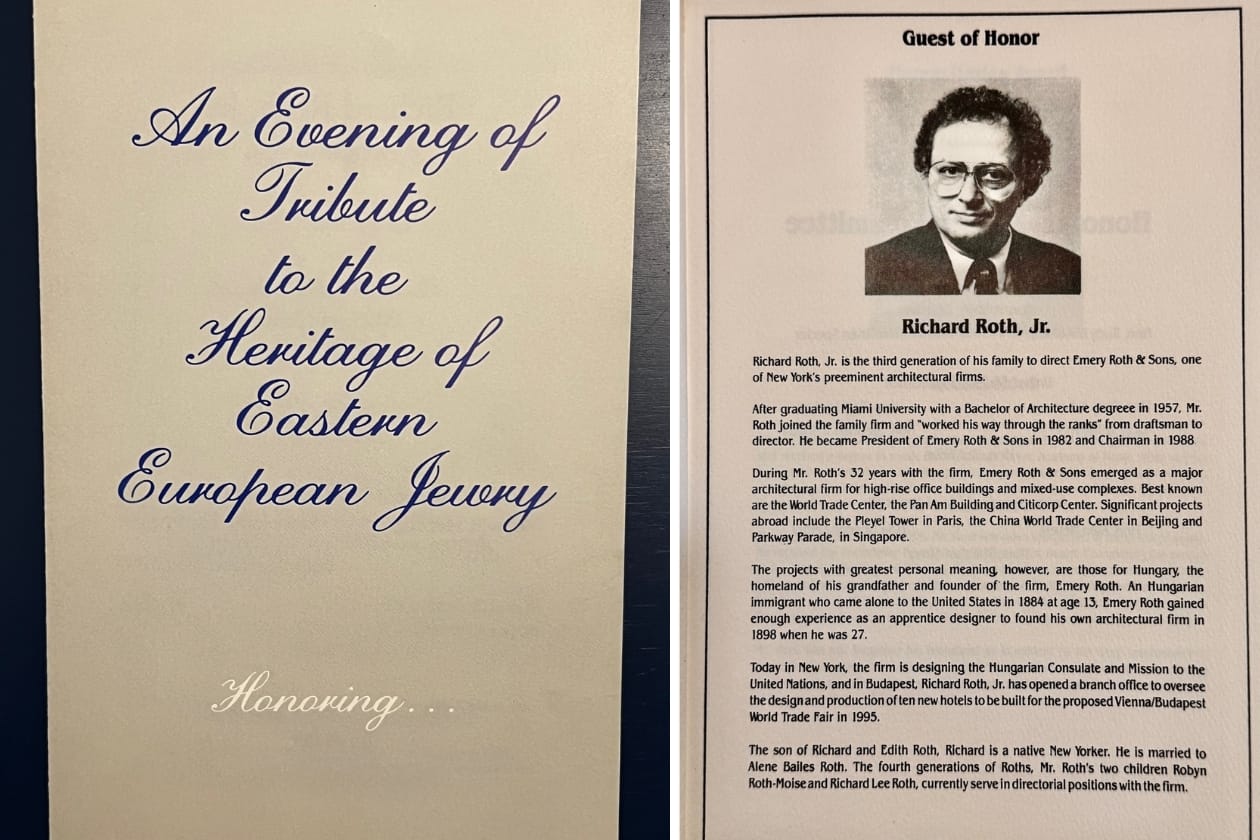
With typical modesty, Richard mentioned that when he retired in 1993 the AIANYS gave him “what turned out to be the gold medal.” (He had also been made a Fellow of the AIA – one of the highest honors an architect can receive – in 1983.)
Photos Courtesy of the Roth Family Archives
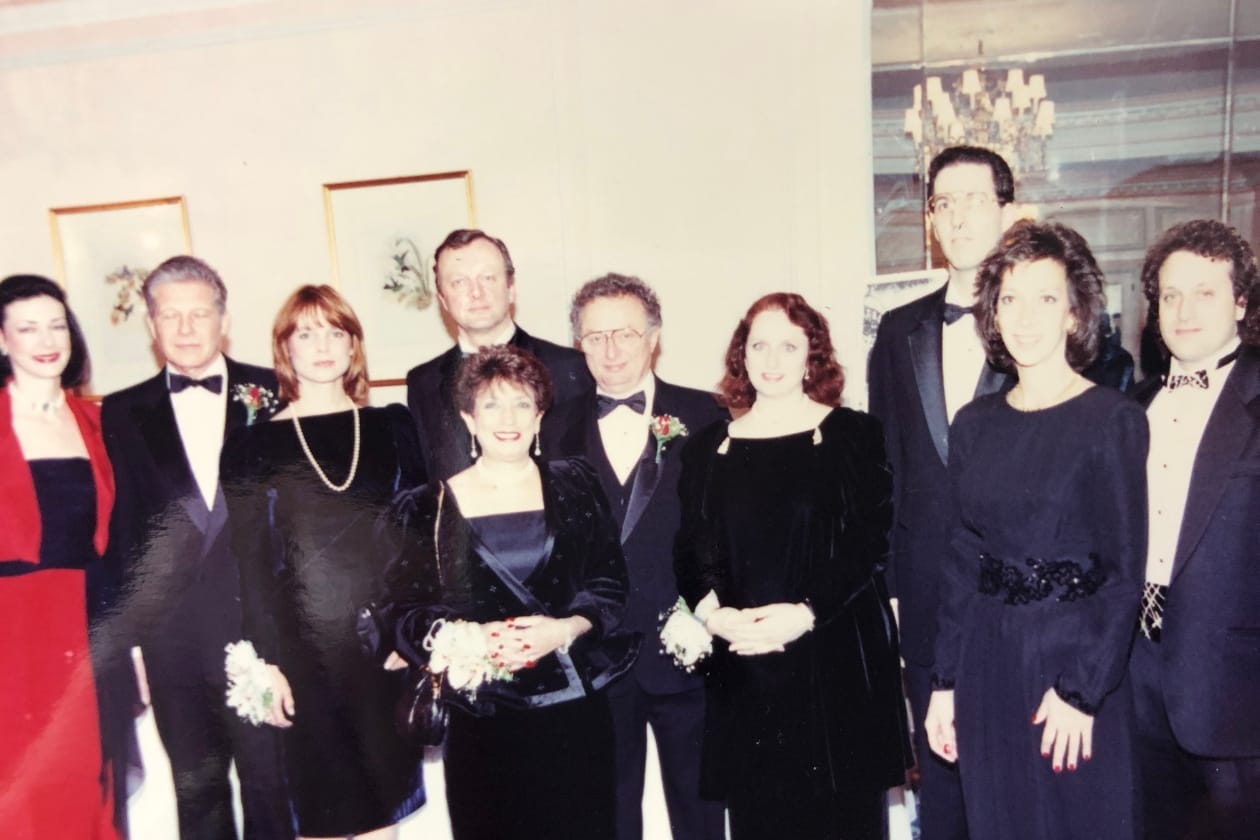
Richard was also honored by the Emanuel Foundation for Hungarian Culture and the World Federation of Hungarian Jews. This was in light of him lending technical expertise to the restoration of the Dohány Synagogue in Budapest as well as financial support. Hollywood star Tony Curtis established The Foundation in 1987, naming it after his father, Emanuel Schwartz. The organization continues to focus on preserving and restoring sites of Jewish interest in Hungary, particularly those related to the Holocaust. Richard was guest of honor at a dinner at the prestigious Pierre Hotel on 5th Avenue on January 31st, 1990. It was attended by senators, congressmen and several New York state assemblymen as well as the ambassador György Bánlaki. Richard was presented with a framed certificate.
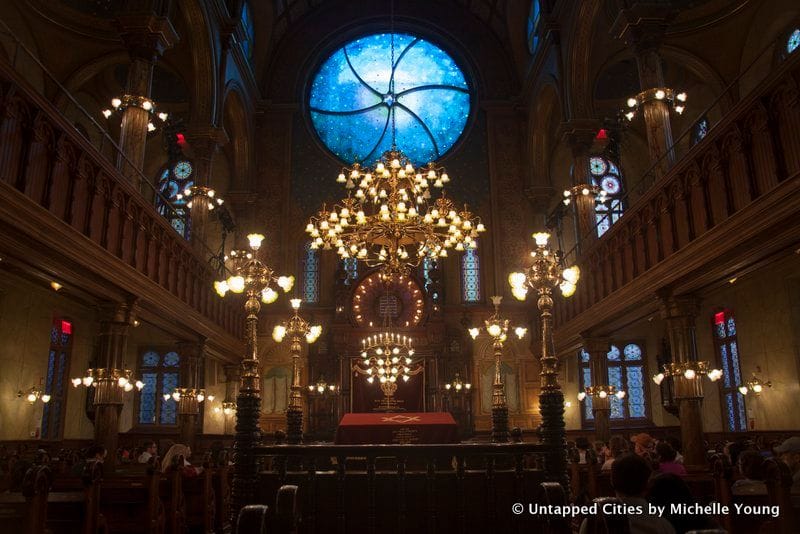
Richard was also involved in the restoration of the Eldridge Street Synagogue in the Lower East Side of Manhattan. “I was on the board of directors with Roberta Gratz who I was very friendly with. She would drag me into all of these things, and I spent a lot of time working on Eldridge. It took an awful lot of work. But if it hadn’t been for Roberta, it never would have happened. For somebody who never went to synagogue and who had zero education as a Jew, ironically, I was on the boards of two synagogues!” laughed Richard.
Perhaps it wasn’t that surprising as Richard acknowledged he tended to agree to helping people out. “I was also on the board of something called the ‘Off Off Broadway Theater Alliance. ‘Off Broadway’ had real theaters. ‘Off Off Broadway’ were in storefronts, and their shows were written by people who had no understanding of the English language,” joked Richard. “And I had to attend and go to all these performances of these terrible things. And Alene used to come... until she said, ‘I can't stand another one of these!’” (The Alliance was the forerunner of the Alliance of Resident Theatres/New York.) Richard’s role was to get the venues legalized. “We had to deal with exit requirements and things like that. There was a lawyer in the building I lived in who was very active in the theater association and he asked me if I would do this. I said yes. I had a habit of saying yes.”
That habit and his interest in challenging architectural projects led Richard to welcome the chance to design a record-breaking building for the Urises. Even as taller and bulkier buildings have gone up around it, 55 Water Street is hard to miss. Its distinctive design and riverside position make it stand out to this day.
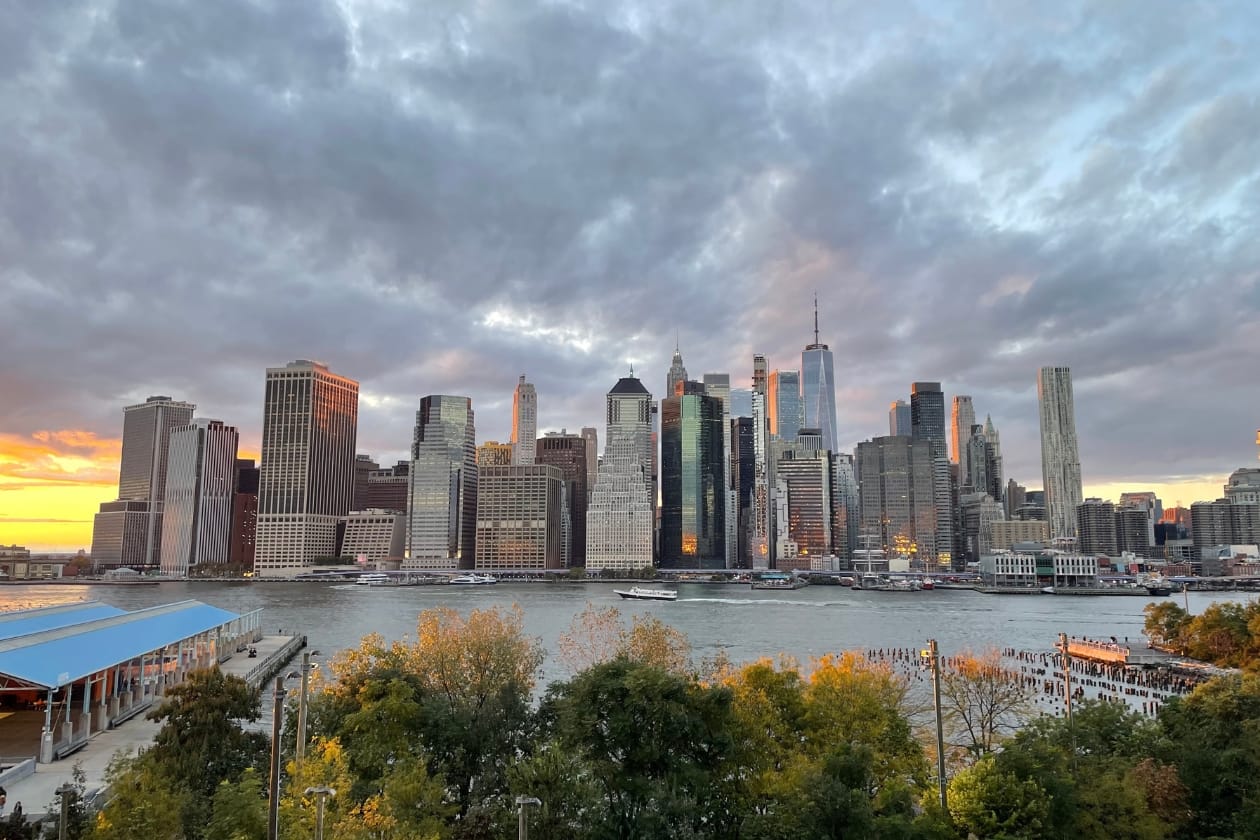
While primarily an office building as always intended, with various financial services tenants in the main, at one time it housed a satellite of the Whitney Museum. And Richard was very proud of the building, “It was an interesting design problem. And I designed it. It was all my design.”
Subscribe to our free newsletters
Free Newsletters
Get the best stories and things to do sent straight to your inbox.