

Secrets of NYC
✉️ The Lost Pneumatic Tube System at the NYSE
Long before fiber optics and wireless networks, bursts of compressed air kept Wall Street moving.
Long before fiber optics and wireless networks, bursts of compressed air kept Wall Street moving.

A new exhibit explores the unrealized, extant, and lost projects of this prolific NYC artist!


Buell Hall is the only reminder of the lost Bloomingdale Asylum and the battle between real estate and mental health in Morningside Heights.

Asylums have long captivated historians and urban explorers, serving as haunting reminders of the problematic origins of mental health care. Much like cemeteries, these institutions were used to segregate what cities like New York found dark, disturbing, and difficult to confront. They became warehouses for the unwanted, built to shield the broader population from the perceived "threat" of mental illness.
Yet New York's efforts to suppress mental illness have backfired—the harder the city pushed, the more forcefully it resurfaced.
The Bloomingdale Insane Asylum in Morningside Heights embodied many of the stereotypes associated with psychiatric institutions: underground tunnels, locked wards, and stories of disturbed patients. But this folklore overshadows the legitimate care this institution once provided. Unlike many asylums left to decay—such as the abandoned Kings Park Psychiatric Center on Long Island—the Bloomingdale Insane Asylum suffered a different fate. Instead of succumbing to neglect, it became the foundation for one of the world’s leading universities—Columbia University.
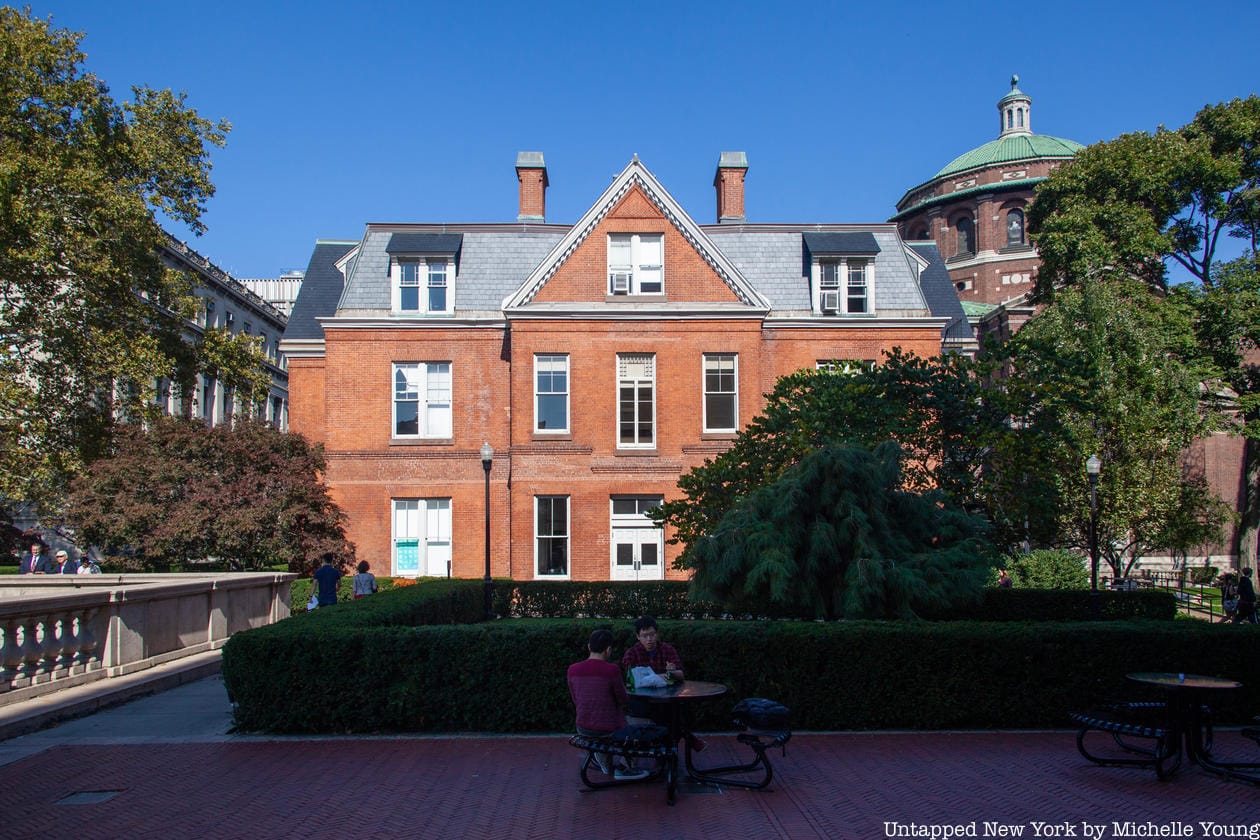
Buell Hall is the only surviving link between the past and present, the Asylum’s only remaining building. Nestled awkwardly on a patch of lawn, its modest, almost claustrophobic design clashes with the Neoclassical buildings that define Morningside Heights. Flanked by St. Paul’s Chapel and Philosophy Hall—both listed on the National Register of Historic Places—Buell Hall is Columbia’s oldest remaining structure.Yet, strangely, it doesn’t share the same historic recognition.
It’s inconceivable that this peculiar building—once part of the Bloomingdale Insane Asylum—set the foundation for the university’s campus. It feels like an incongruous piece in a jigsaw puzzle, a remnant of an era that the university absorbed—or more fittingly, eclipsed.
The Hospital on the Hill
Buell Hall’s design begins to make sense when you consider its original purpose: it wasn’t meant for graduate seminars or academic offices; it was built for psychiatric care. In 1816, The New York State Hospital acquired rights to land in Bloomingdale, consolidating parcels along Bloomingdale Road (present-day Broadway) to build an asylum. Visitors approaching the Asylum via “Asylum Lane” (today’s intersection of 111th Street and Riverside Drive) would find a sprawling campus that included men’s and women’s lodges, segregated by “noisy” and “quiet” patient wards. The angular road that was Asylum Lane still leaves an indelible imprint on parcels today.
The Asylum expanded to include a chapel, a bowling alley, and the stately Macy Villa, designed by architect Ralph Townsend. Macy Villa catered to the asylum’s wealthiest patients, such as Cornelius Jeremiah Vanderbilt—the son of the famous railroad tycoon known as the “Commodore”—who was committed against his will in 1854 on grounds of “confusion” and “loose habits.”
These buildings, set amidst pastures and orchards, featured brownstone facades and meticulously cultivated gardens. By 1824, the hospital was serving 124 patients, most of whom struggled with a range of diagnoses like delirium tremens (alcohol withdrawal) and other forms of addiction.
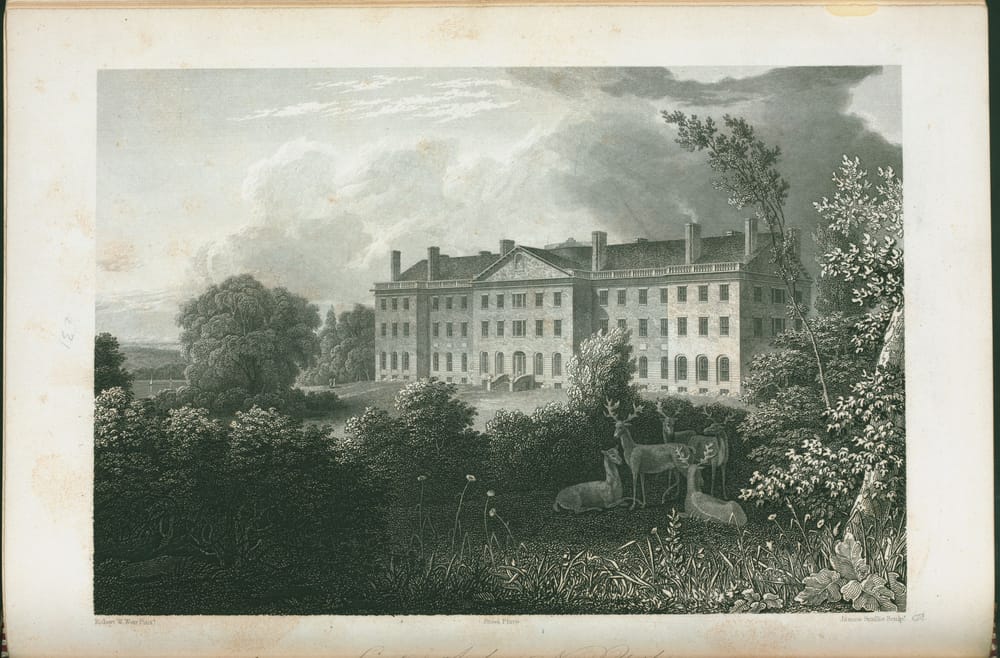
The Asylum was a self-sustaining community, insulated from the stressors that plagued New York during the Industrial Revolution. Unlike development in Lower Manhattan, which razed original landscapes, the asylum capitalized on Bloomingdale’s unique topography; elevation was an asset, creating a secluded, pastoral oasis conducive to treatment.
Initially, the hospital was egalitarian, providing care for both wealthy and low-income residents. As a state-chartered institution, it offered subsidized treatment for patients who couldn’t afford to pay. But this approach began to falter in the 1840s – the hospital struggled to meet the growing demand spurred by an influx of poorer immigrants. The Hospital established a satellite campus on what is now Roosevelt Island, which effectively became an Ellis Island for the mentally ill—warehousing the hospital’s poorest patients.
While the hospital was rudimentary in its diagnostic capabilities, it was remarkably forward-thinking in its holistic approach to care. According to annual reports from the governors of the state hospital, treatment involved manual labor, recreational exercise, cooking classes, educational instruction, religious worship, and various forms of amusement, similar to therapies seen today in many mental health areas facilities. Patients engaged in games like “football” and “batball,” along with dancing and music, which fostered a sense of community and normalcy. A report conducted in 1854 noted a significant increase in patient numbers–nearly double from the previous year–primarily native New Yorkers between the ages of twenty to thirty. Most patients were discharged as "cured," although it is worth noting that thirteen patients died in care during 1854.
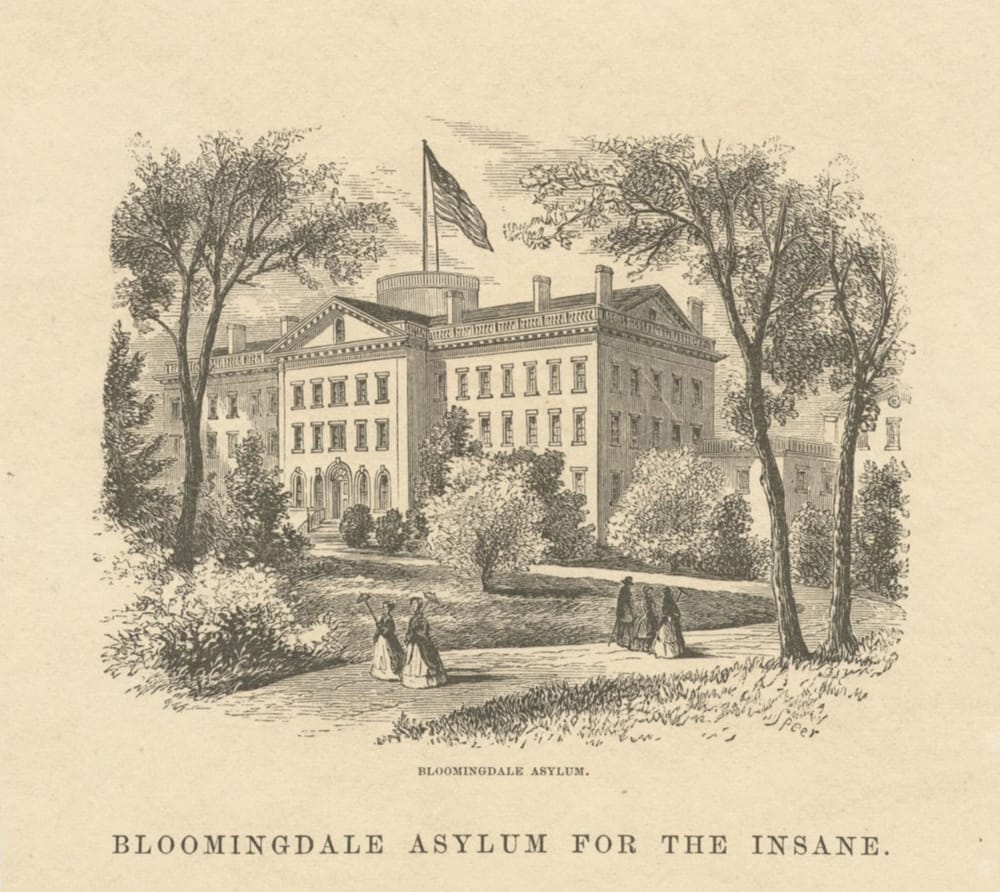
The Asylum was guided by the Quaker principle of a “retreat”: the idea that a tranquil setting could restore patients to their “rational selves.” This approach emerged during the Industrial Revolution, which sparked the proliferation of state-sponsored psychiatric facilities like Bloomingdale. In 1854, the architect Thomas Kirkbride wrote the pioneering book On the Construction, Organization, and General Arrangements of Hospitals for the Insane. The Kirkbride Plan became the blueprint for psychiatric facilities across the country, like the Buffalo State Hospital in New York. Kirkbride both directly and indirectly influenced the design of institutions across the United States; he collaborated with Frederick Law Olmsted in building the Hudson River State Hospital in Poughkeepsie.
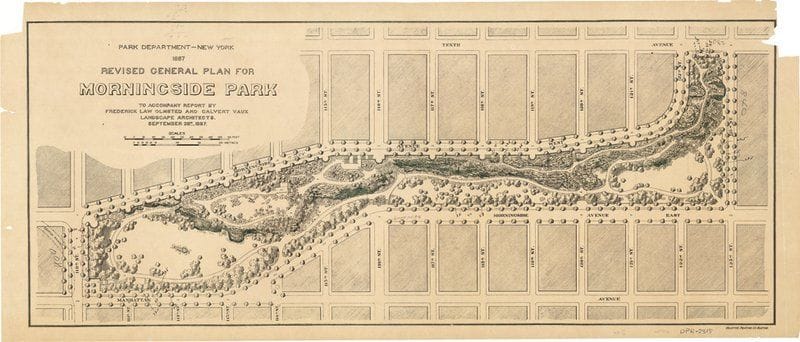
But while these facilities were celebrated by architects and psychiatrists alike, they were not as well received by the communities in which they were built. In the early nineteenth century, development in Morningside Heights was constrained by the Croton Aqueduct, which slashed through the neighborhood with above-ground pipes, funneling water from the Croton River. But the extension of the Ninth Avenue El to Harlem in 1879 opened the floodgates to latent real estate demand. While Frederick Law Olmstead’s 1873 designs for Morningside Park were intended to preserve the neighborhood’s original topography, they ultimately spurred more development, changing the neighborhood’s character; Morningside Heights became a burgeoning real estate market.
In addition to grants from the state, land ownership became integral to the hospital’s operations. In 1866, the Hospital’s revenue from rent on its properties was only $60 a year; by 1886, over a third of the Hospital’s income came from rent, including lucrative parcels the Hospital rented out at Broadway and Church and a parcel at Ninth Avenue and Twenty-ninth. All in all, the hospital’s land holdings amounted to $5.5 million, the majority of which was rented out to unaffiliated commercial tenants.
While real estate bolstered the Hospital’s endowment on paper, it also eventually led to the Hospital’s displacement. The Hospital’s financial success became a point of contention in legal battles; how could it be eligible for public financing if its revenues weren’t serving the public good?
In 1886, State Assemblyman John McManus introduced a bill to revoke the Asylum’s tax exemption; he argued that the asylum’s stratification of patients by income disqualified it as a public institution. He proposed that the hospital relinquish its tax benefits and auction its real estate to the private market. The bill also called for opening new streets between 114th and 120th, severing the Asylum’s campus and demolishing some of its buildings.
While the 1886 bill was vetoed by the New York State Senate, it was immediately revived by the Morningside Park Association, a contingent of developers who filed another lawsuit. During the investigation, with the help of its allies in the media, the Morningside Park Association portrayed the Asylum as an “incubus,” and a "blight on the west side.’” Publications like the New York World and the New York Herald were particularly relentless in their defamation. Their articles targeted both the Governors of the Asylum–portraying them as greedy, aristocratic landowners–and the patients– characterizing them as degenerate and threatening to the community. The press largely discounted the testimonies of those in favor of the Asylum, disproportionately advocating for the plaintiffs. The trials became tangential to the public media campaign that the lawsuits incited.
Julius Chambers, an editor for the New York Tribune, feigned mental illness to gain admission to the hospital and expose the unethical treatment of inmates, much like how journalist Nellie Bly infiltrated the Women's Lunatic Asylum on Roosevelt Island. Chambers wrote an exposé that further damaged the hospital’s reputation. While the State Senate ruled in favor of the defendants–the Governors of the New York Hospital–the pendulum swung in the court of public opinion.
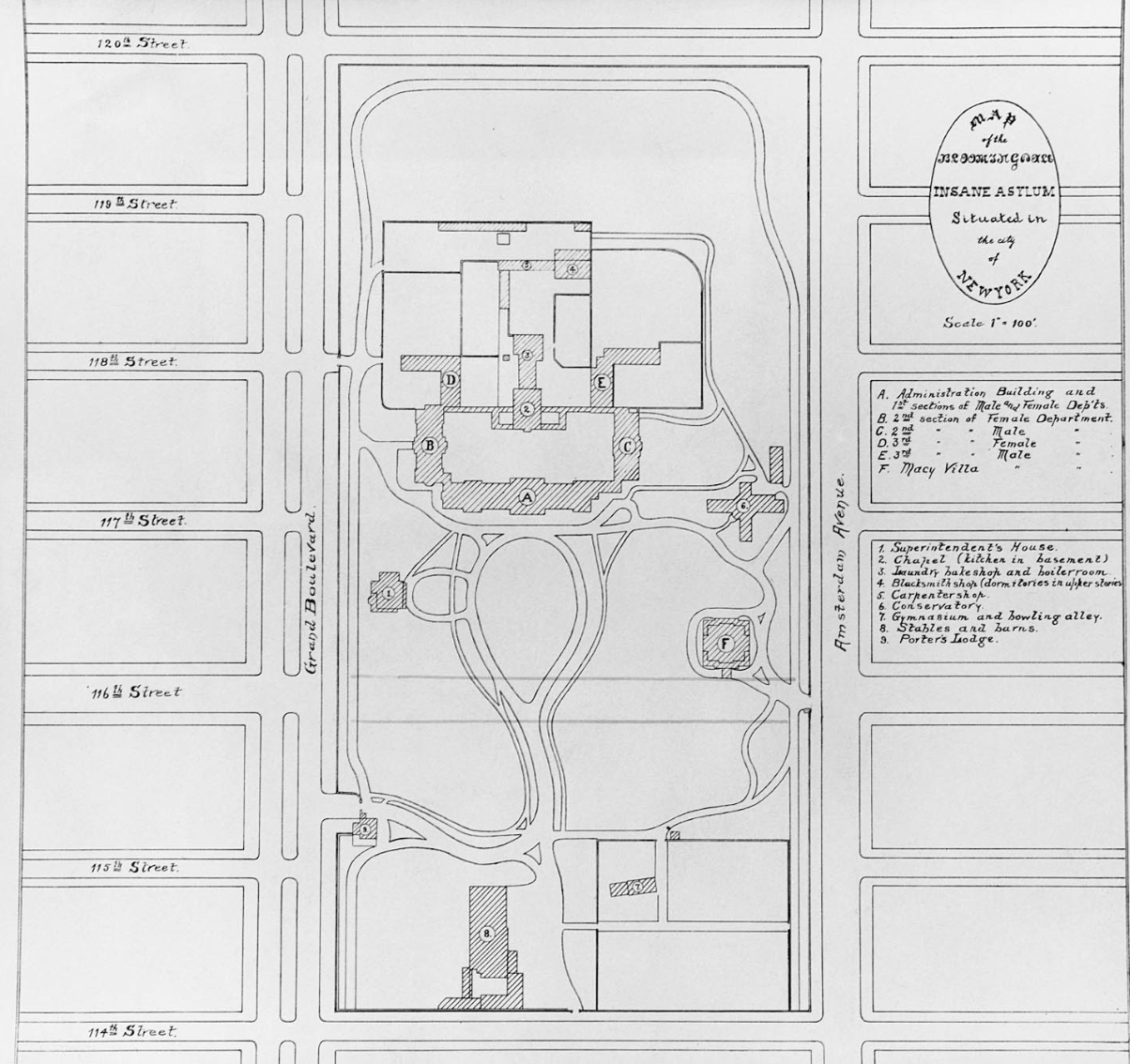
There was some validity that the Asylum was an impediment to the neighborhood’s growth. Unlike Columbia’s modern campus—with subway access to the west—the Asylum-era elevated rail stop was located to the east. Residents west of Broadway were forced to circumvent the Asylum to reach transit on Ninth Avenue (now Columbus Avenue). Meanwhile, the 12th Ward, where the Asylum stood, was rapidly transforming into a densely populated immigrant enclave.
According to David Rosner, who studied the neighborhood’s changing demographics, the 12th Ward, where the Asylum was located, was quickly attracting large numbers of German, Jewish, and Irish immigrants. Drawn to the neighborhood’s tenements, by the late nineteenth century over 85% of the population consisted of immigrants. On the eastern side of the ward, towards Harlem, there were 185 residents per acre of land. On the western side, however–which was predominantly owned by the Hospital–there were only 17 residents per acre of land. Overcrowding on the east side had serious impacts on public health. The death rate on the east side was over three times higher than it was on the west, due to cholera outbreaks and other infectious diseases.
The Hospital was not purely altruistic. In fact, the Governors feared that the influx of immigrants would threaten the neighborhood’s Protestant majority. They were adamantly opposed to projects that increased density. In 1897, when a trolley company inquired about land on Amsterdam adjacent to the Asylum, the Governors rejected the project, financing a campaign to veto the transaction.
The Governors also crafted restrictive covenants delineating permissible land use of some of its parcels. They stipulated that the plots should only be used for “first-class private dwelling houses,” excluding the development of “railroad depots, carpenter shops, and manufacturing of any kind.” Even on the brink of displacement, the Governors still wanted to preserve the neighborhood’s bucolic charm and religious homogeneity.

Although the Hospital hadn’t specifically considered Columbia when drafting its covenants, the university turned out to be a perfect fit. In post-industrial New York, higher education was seen as a pathway to building a true meritocracy. While the Asylum was stigmatized for its paternalistic, aristocratic roots, academic institutions were gaining social legitimacy.
By the late 19th century, Columbia was at a crossroads. Burdened by a conservative curriculum and cramped facilities, it was falling behind elite peers. New York University—then known as the University of the City of New York—was positioning itself as the city’s leading academic institution. Columbia was operating out of its campus on the west side of Fifth Avenue between 47th and 51st (now part of Rockefeller Center). But Seth Lowe, the university’s president and former mayor of Brooklyn, anticipated the path of Manhattan’s real estate. He envisioned Columbia becoming the “next great metropolitan university.” By anchoring the university in Morningside Heights, he believed the university’s campus would be its main asset in attracting students from rival institutions.
After a gauntlet of investigations that nearly bankrupted the hospital, the Governors began to sell chunks of their land. In 1897 the Hospital sold 96 of its lots to fund the Protestant Episcopal Cathedral, now known as St. John the Divine, for $502,000. In 1891, the Hospital sold the remainder of its lots, from 116th to 120th between Broadway and Amsterdam, to Columbia for $2 million. The Hospital then relocated to White Plains.
Morningside Heights became a “neighborhood of institutions,” with Columbia joining academic institutions like Barnard and the Teacher’s College, along with religious institutions like St. John the Divine and the Episcopal-affiliated St. Luke’s Hospital. Together, these institutions catered to what they described as the “three fold nature of man”– the mind, the body, and the spirit.
The Aftermath
Public sentiment demanded the Asylum’s removal, but the transfer of the land to Columbia provoked mixed reactions. Real estate speculators and publications like the Real Estate Record and Builders Guide opposed the transaction, arguing that the land should be auctioned off in parcels rather than transferred over in bulk to another institution.
Once Columbia secured the land, the university had no plans of preserving the Asylum. Only one of the Asylum’s buildings, Macy Villa, was preserved. In 1905, it was physically lifted and moved a short distance and is now Columbia University’s Buell Hall, which hosts classes from the Graduate School of Architecture, Planning, and Preservation (GSAPP), Maison Française, and staff offices
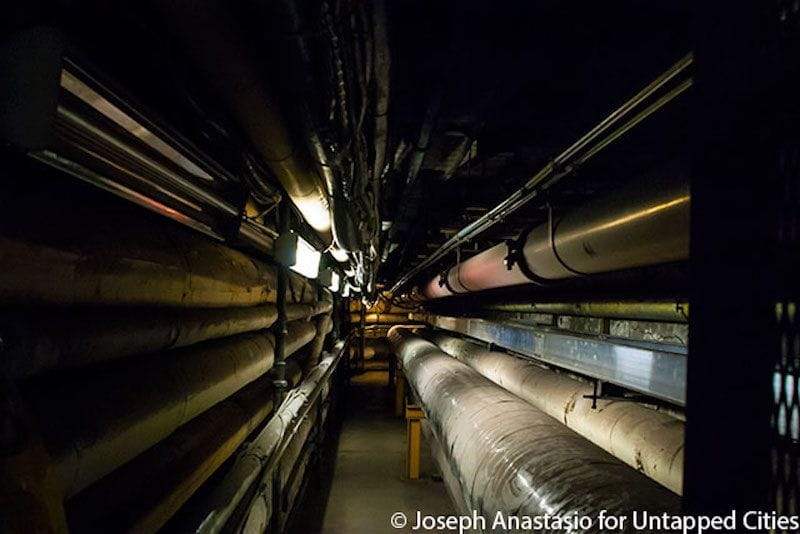
Columbia’s preservation of Macy Villa was unintentional. When architect Charles Follen McKim conceived Columbia’s Master Plan, he intended to demolish every remaining building from the Asylum, but demolition fell to the wayside during the construction of the university’s new buildings. In addition to Buell Hall, there are still underground tunnels beneath Columbia’s campus that are part of the Asylum’s legacy.
While the university didn’t orchestrate the Asylum’s displacement, it ultimately benefited from it. If the Morningside Park Association had not threatened the Asylum with a barrage of lawsuits, the Governors might have retained their rights to the land. The courts consistently ruled in their favor, upholding the Asylum’s tax-exempt status and protecting their campus from street openings.
While the $2 million from the sale to Columbia comfortably offset relocation costs, the Asylum was never able to rekindle the therapeutic space in White Plains that they had cultivated in Morningside Heights.
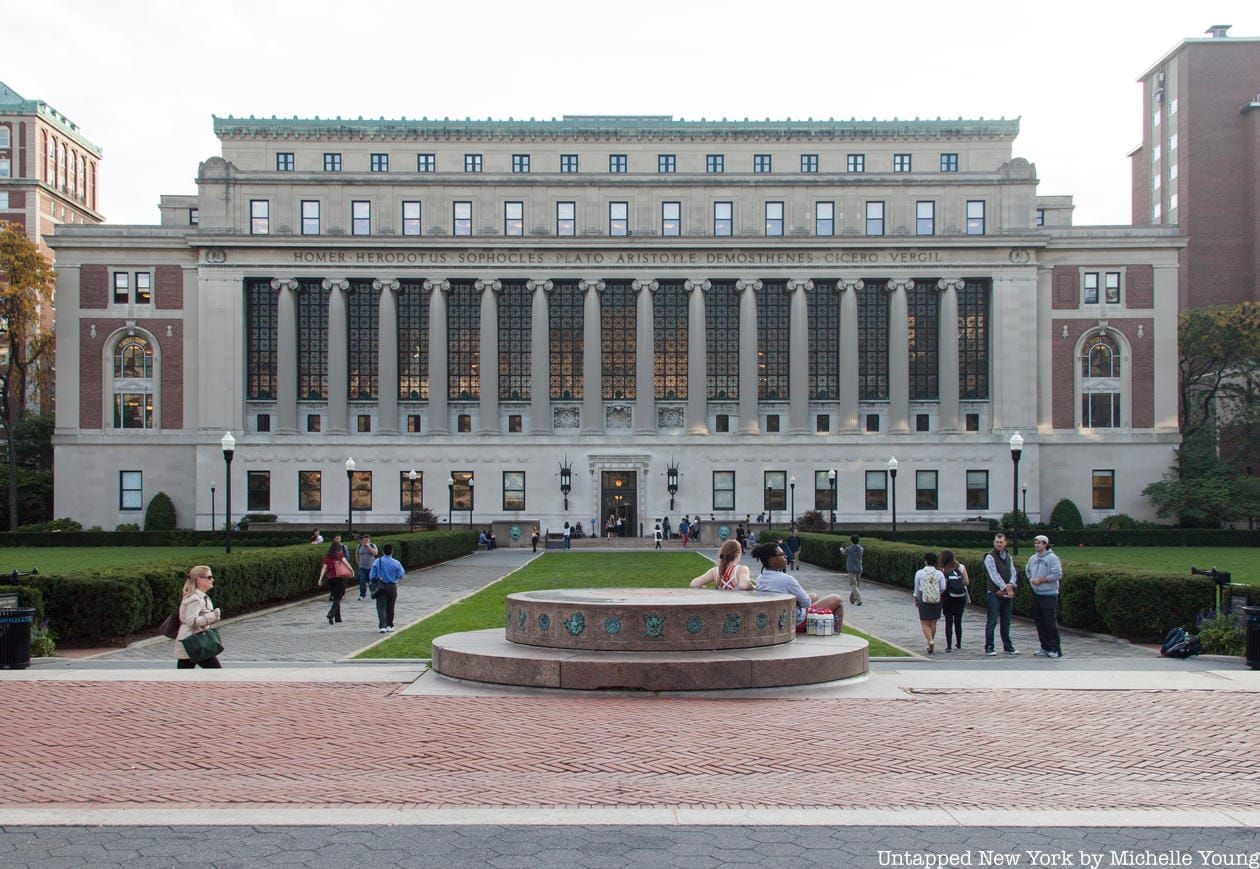
Columbia University eventually became one of the city’s largest landowners. Anchored in Morningside Heights, Columbia acquired more properties in Morningside Heights and Harlem. This expansion sparked friction with surrounding communities, as seen in the “Gym Crow” protests over Columbia’s controversial plan to build a gym in Morningside Park. The university’s expansion has persisted to this day, acquiring land through eminent domain to build its Manhattanville business school in West Harlem.
Despite the Asylum’s departure, Morningside Heights remained a gathering place for mentally ill residents, drawn to the area’s affordable housing options. Single Room Occupancy dwellings (SROs)—while not originally intended to house people with mental illness—became de facto residences for this population. These low-cost units, offering shared amenities, provided a safety net for many struggling with mental health challenges in the absence of institutional care.
As Columbia expanded, the university gradually absorbed much of the neighborhood’s affordable housing stock, including SROs. In 1961, Morningside Heights had 33 SROs with a total of 5,487 units. By 1967, only 13 SROs remained, with 2,146 units left. Today, Columbia and Barnard collectively own 24 of the 33 SROs that existed in 1961.
The Ninth Avenue Elevated Railroad, which ran along present-day Columbus Avenue before curving toward Harlem at 110th Street, earned the grim nickname “suicide curve” due to the alarming number of suicides along this stretch. In 1927, The New York Times reported that the frequent suicides were “bad for business,” prompting complaints from local merchants.
While Morningside Heights hoped to distance itself from the asylum’s legacy, it was as if the asylum’s shadow remained deeply rooted in the neighborhood, refusing to be erased. Psychiatric institutions like Bloomingdale were portrayed as blighted and were scapegoated for impeding the city’s growth and economic interests. While state legislatures affirmed their right to the land, real estate speculators and their allies in the media mounted a campaign to delegitimize the Asylum, undermining its century-long legacy in less than a decade. The land was eventually sold to Columbia, not the real estate developers who called for its removal. But the Asylum’s omission in the university’s Master Plan underscores its exclusion in Columbia’s vision for the neighborhood. The Master Plan also paved the way for development in the surrounding neighborhood.
The legacies of institutions like Bloomingdale reflect how mental illness has been shaped by New York’s urban landscape. In the Asylum’s era, mental illness was treated as an epidemic to be contained, with patients confined to remote, isolated facilities.The introduction of community-based care through John F. Kennedy’s Community Mental Health Act of 1963 marked a paradigm shift: care would now be embedded in the residential communities in which they served. Community based care was an easier sell to developers and policy-makers – it fit more seamlessly into private real estate markets. Unlike the prescriptive designs of the Kirkbride Plan, these facilities could be repurposed or relocated to accommodate shifting real estate trends.
While this model was widely regarded as more humane, granting more autonomy for patients, it fragmented care across a network of convoluted providers. This decentralization made it easier for patients to slip through the cracks. The evolution from asylums to community-based care illustrates not just a shift in mental health treatment but also how deeply mental health care is influenced—and often constrained—by the forces of urban development. The displacement of the Bloomingdale Insane Asylum exemplifies how mental health facilities struggled, and continue to struggle, in New York’s competitive real estate market.
This post contains affiliate links, which means Untapped New York earns a commission. There is no extra cost to you and the commissions earned help us support our mission of independent journalism!
Subscribe to our newsletter