

Secrets of NYC
✉️ The Lost Pneumatic Tube System at the NYSE
Long before fiber optics and wireless networks, bursts of compressed air kept Wall Street moving.
Long before fiber optics and wireless networks, bursts of compressed air kept Wall Street moving.

A new exhibit explores the unrealized, extant, and lost projects of this prolific NYC artist!


Dive into one of our favorite "Untapped" secrets: the hidden vaults under NYC's famous Brooklyn Bridge!


Completed in 1883, the majestic Brooklyn Bridge looms over the East River, serving as a link between Manhattan and Brooklyn. As an iconic New York City fixture, it’s frequented by tourists all year-round — but the span offers much more than just stunning views. With a history dating back to the late 1880s, it holds a slew of surprising secrets, which we previously highlighted in a post.
In the latest episode of The Untapped New York Podcast, we take a deeper dive into one of our favorite “Untapped” secrets from the list: vaults under the Brooklyn Bridge that formerly housed private wine cellars!
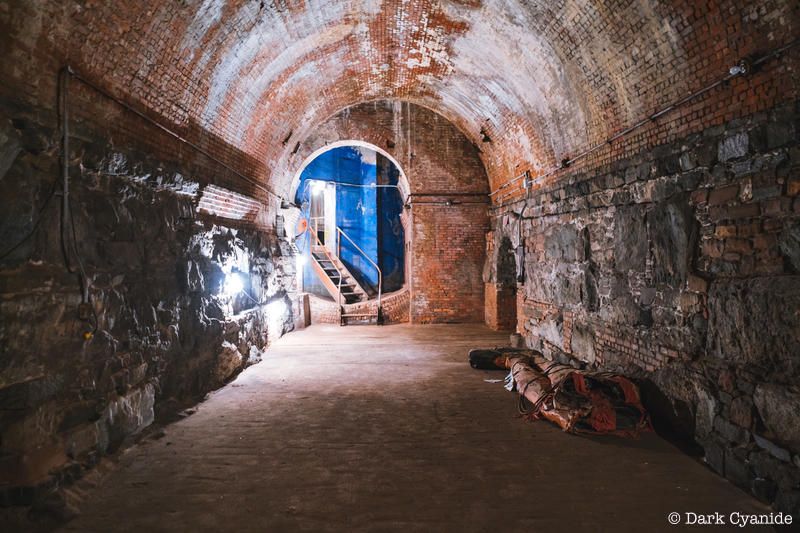
Today, the Brooklyn Bridge is crossed by more than 103,051 vehicles, 28,845 pedestrians, and 5,504 cyclists on a daily basis (according to DOT stats from 2024). Yet, few people are aware of the presence of the wine cellars, which are located below the ramps that lead up to the anchorages on both sides of the bridge. While they no longer hold booze, they continue to serve as storage space — and possibly, even a home to some. According to Edible Geography, a homeless person was once found living in one of the vaults, only to be discovered during a promotional visit for the film The Taking of Pelham 123 (but that’s a story for later).


Apparently, the real estate is highly sought after, too. As Maria Smith, a spokesperson for the D.O.T., noted in 1999: “People call up sometimes and say they’d like to live there.”
The Brooklyn Bridge itself was built with a series of passageways and compartments in its anchorages, which were rented out in order to fund the $15 million project (or $325 million, when adjusted for inflation). Given their dim and cavernous interior, the vaults may not have been the ideal location to throw down some plush sofas and a dining room table — however, those conditions were perfect for storing wine, champagne, and liqueurs. Near-complete-darkness and a consistently cool temperature of 60 degrees provided the perfect environment for liquid stashes.

The vaults—which reportedly had a shortage capacity of one million gallons—were first constructed in 1876, likely to appease spirits distributors like Luyties & Co. and Rackey’s Wine Company, whose storage facilities were demolished to make room for the bridge. Over the span of four decades, several liquor vendors utilized the vaults, and they were eventually named after French streets (Avenue Les Deux Oefs, Avenue Des Chateux Haut Brion); illustrations of Europe, in addition to designs of grapes and leaves, soon decorated the chamber walls.
As for rent, city records specifically make mention of the Luyties Brothers, who paid $5,000 annually for a vault on the Manhattan side (located at 204 Williams St.). On the other end, the Brooklyn vault was occupied from 1901 to 1909 by A. Smith & Company for $500 per year.

During World War I and in light of the Prohibition, the vaults were closed and re-purposed for non-alcoholic storage. They lay dormant for almost two decades until 1934, when the city turned the keys over its newest tenant following the repeal of the Prohibition act. Upon occupying the space, the new alcohol distributor, Anthony Oechs & Co., immediately threw a party inside. According to a Pittsburgh Post Gazette article, published on July 12, 1934, “musicians played Viennese waltzes, champagne corks popped and nobody remembered that above the trolleys and the elevators, the automobiles and the rushing pedestrians still hurried back and forth.”
Such “exclusive sipping parties” were held in the vaults for a brief period of time. However, the city eventually took over the chambers after World War II. They have since been closed off to the public, and are now used to store maintenance equipment. If you’re lucky enough to venture inside, keep an eye out for fading evidence of the former wine cellars. Apparently scrawled on a crumbling wall is a quotation, dating back to the 1930’s: “Legend of Oechs Cellars: These cellars were built in 1876, about seven years prior to the official opening of the Brooklyn Bridge in 1883. From their inception, they housed the choicest wines in New York City.”
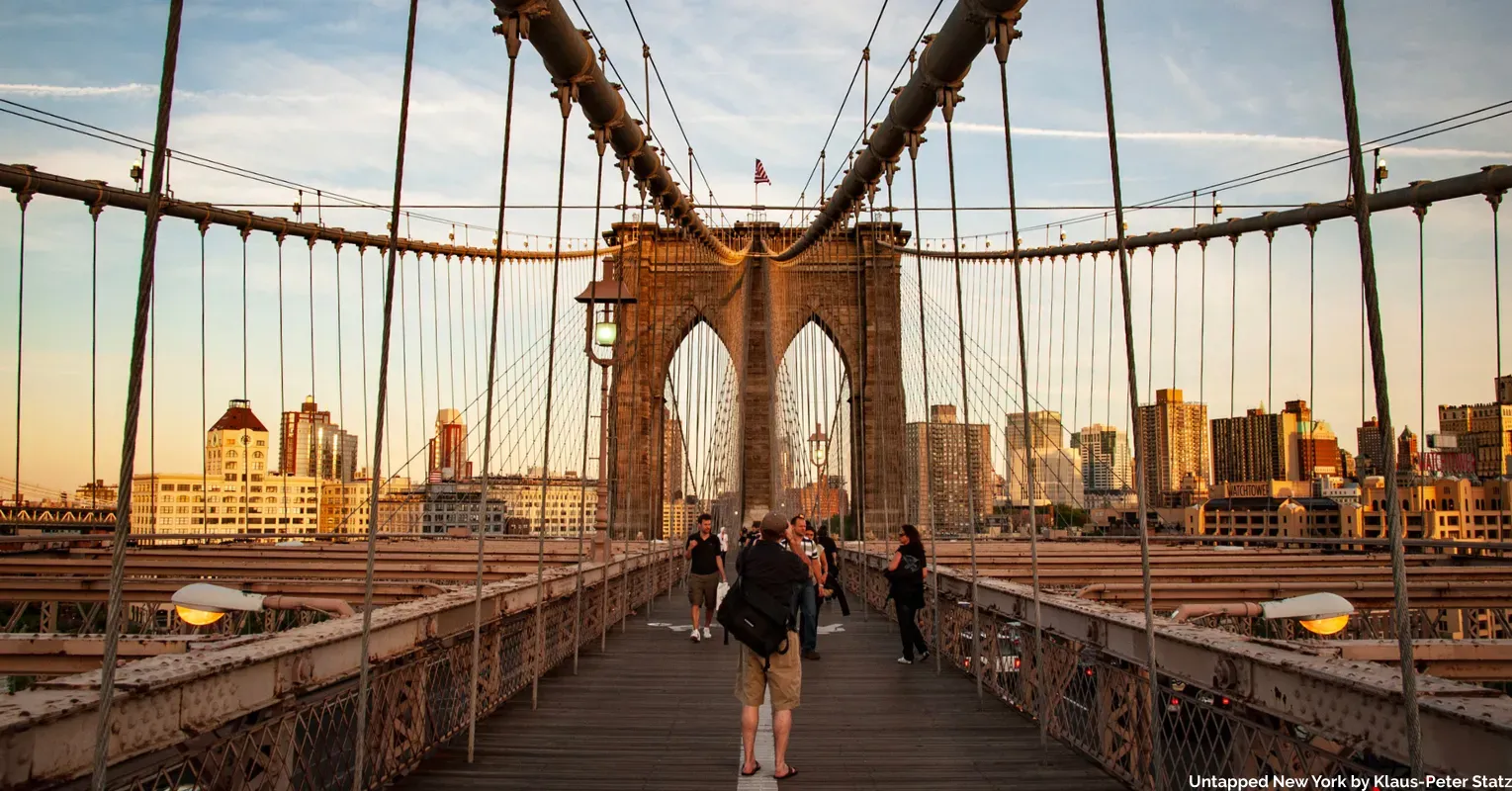
Journey from the historic streets of Brooklyn Heights to the soaring towers of the Brooklyn Bridge, ending at the spectacular Emily Roebling Plaza in DUMBO. Along the way, uncover hidden stories of the Roebling family, marvel at sweeping skyline views, and see the bridge illuminated in its nighttime glory!
⭐ Untapped New York Members at the Insider tier and higher get 50% off!
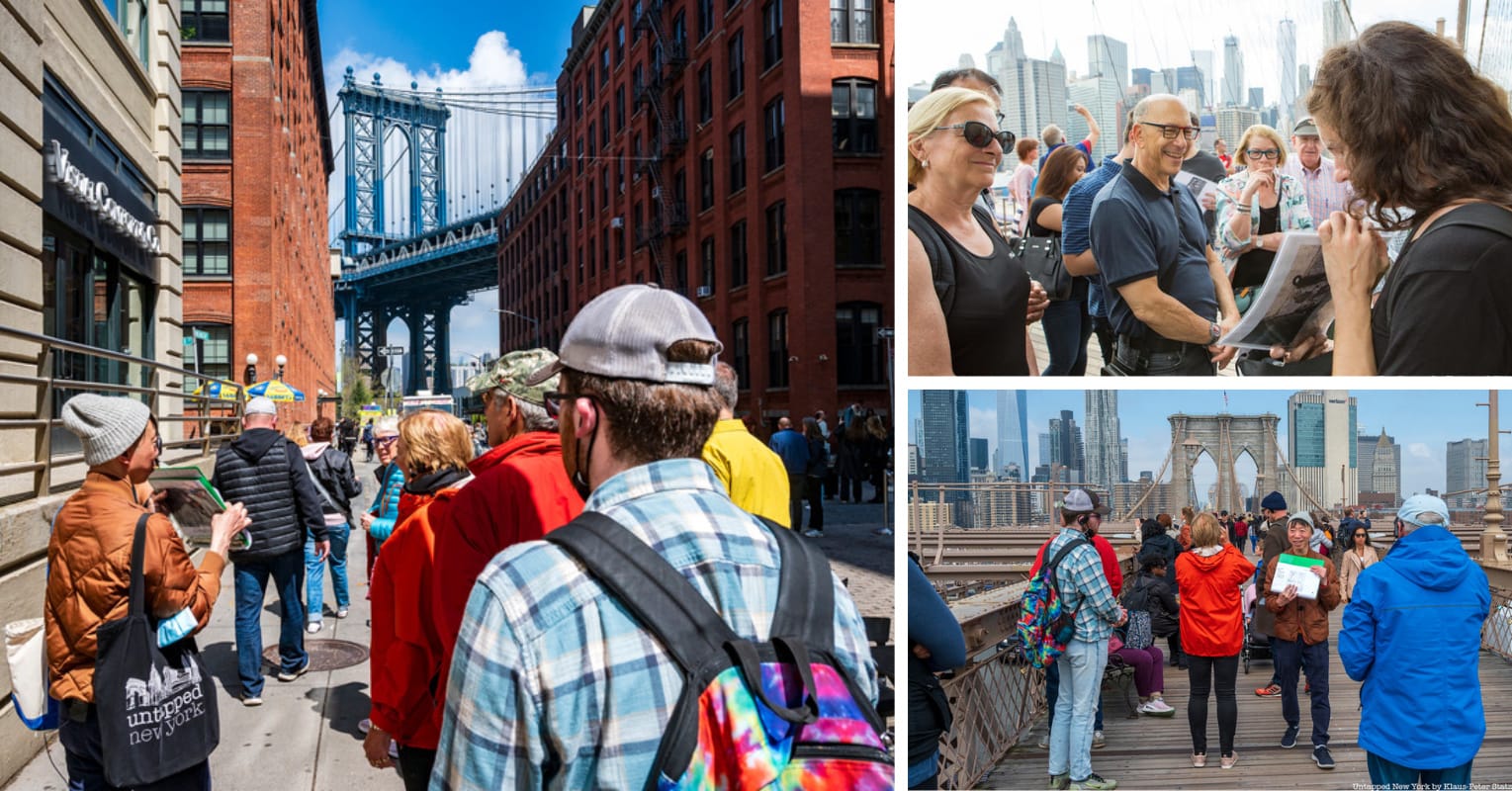
Walk NYC's iconic span and explore the formerly industrial waterfront neighborhood that is now one of the most visited (and Instragrammed) sites in all of New York!
⭐ Untapped New York Members at the Insider tier and higher get 50% off!
Please note: while this tour will cover the history of the vaults and Cold War shelter, we will not go inside the vaults.
Next, check out The Top 10 Secrets of the Brooklyn Bridge and There Was A Cold War Nuclear Bomb Shelter in the Brooklyn Bridge.
Originally published June 15, 2017
Subscribe to our newsletter