
Secrets of NYC
A Mobster in Cement Shoes Surfaces at The Battery
A mysterious memorial to victims found in a mob dumping ground has popped up in NYC!
A mysterious memorial to victims found in a mob dumping ground has popped up in NYC!

Like most holdout buildings in NYC, the story of this corner structure reveals a heated rivalry!


Follow in the footsteps of Jazz legends as you visit the NYC sites where they lived and performed!


You can even see fossils embedded in the stone!

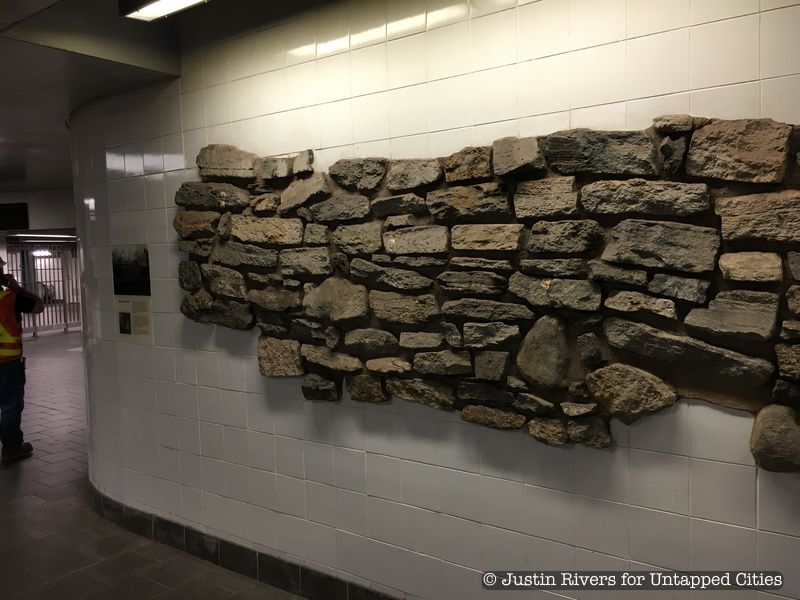
Aside from its main role as a transit hub, the New York City subway system often serves as an unexpected repository for artifacts. From marine-themed terra cotta murals inside the Fulton Street Station to ornaments of demolished buildings at the Eastern Parkway-Brooklyn Museum stop, there are plenty of unlikely treasures embedded into station walls or presented along transit corridors. Yet, the come-and-go nature of the subway makes it difficult for commuters to take in what’s openly displayed to the public. The South Ferry station — serviced by the 1, R, N, W and 2 trains — is particularly noteworthy, as it harbors an 18th-century stone wall, one of four fragments discovered 10 feet below the eastern portion of Battery Park.
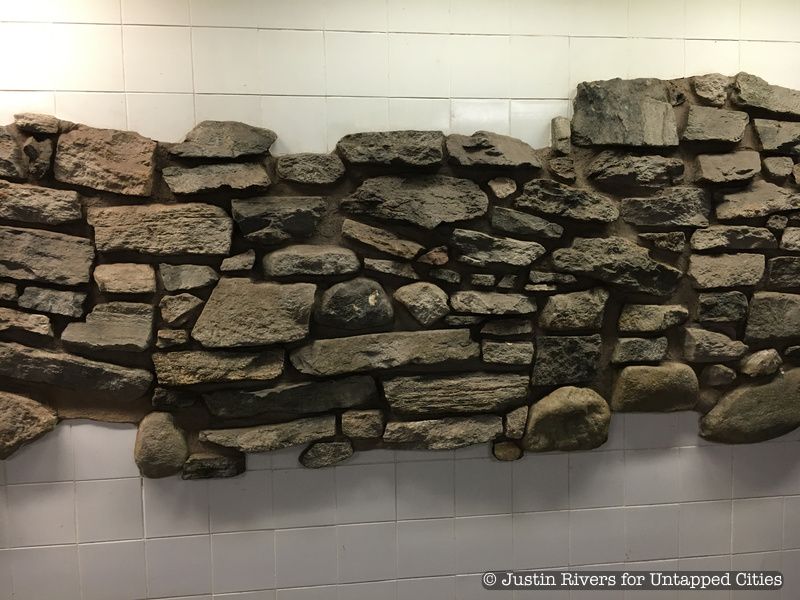
The four excavated segments — measuring roughly eight-feet thick, and varying in length and height — were uncovered in December 2005, when the Museum of the City of New York's archaeological team started excavating for the South Ferry Terminal Project, a $530 million endeavor to reconstruct the subway station and address “physical and operating deficiencies.”
Those excavations have yielded tens of thousands of individual artifacts that provided insight into Colonial New York — from seeds to ceramic dishes, coin fragments, a wine bone of the Passenger Pigeon (a now-extinct species of bird), a medal bestowed to Admiral Boscawen by King George III, and a glass bottle seal belonging to Benjamin Fletcher who served as the British colonial governor of New York from 1692 to 1697.
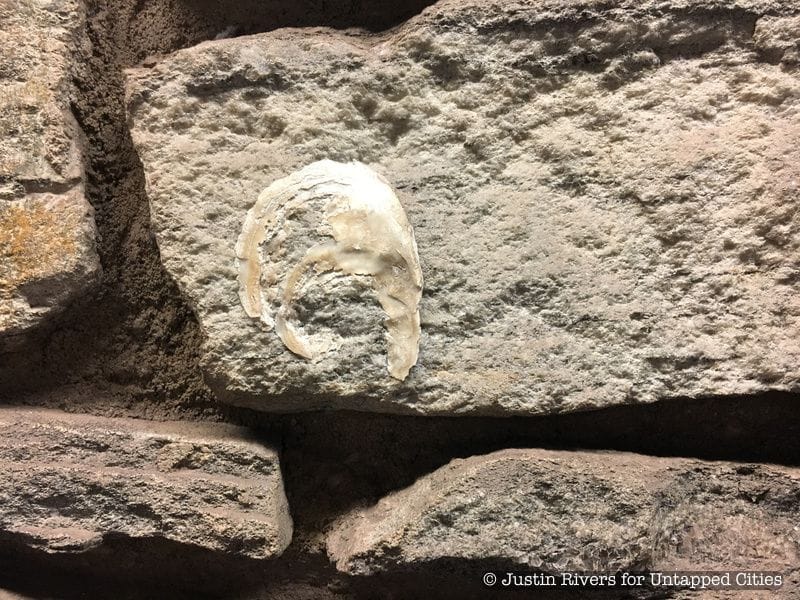
One of the oldest man-made structures still in place in Manhattan, the Battery Wall was built as a fortification on the Southwestern tip of Manhattan around the 1740s and 1750s. Not only was it a defense against enemies, it also provided a barrier against the rough waves and relentless wind that slammed into New York Harbor. In the late 18th century, the wall became buried under landfill, and was subsequently lost when colonial fortifications were demolished and Battery Park was built in the early 19th century. According to Robert Tierney, the chairman of the New York City Landmarks Preservation Commission, the wall gave rise to the park’s modern name.
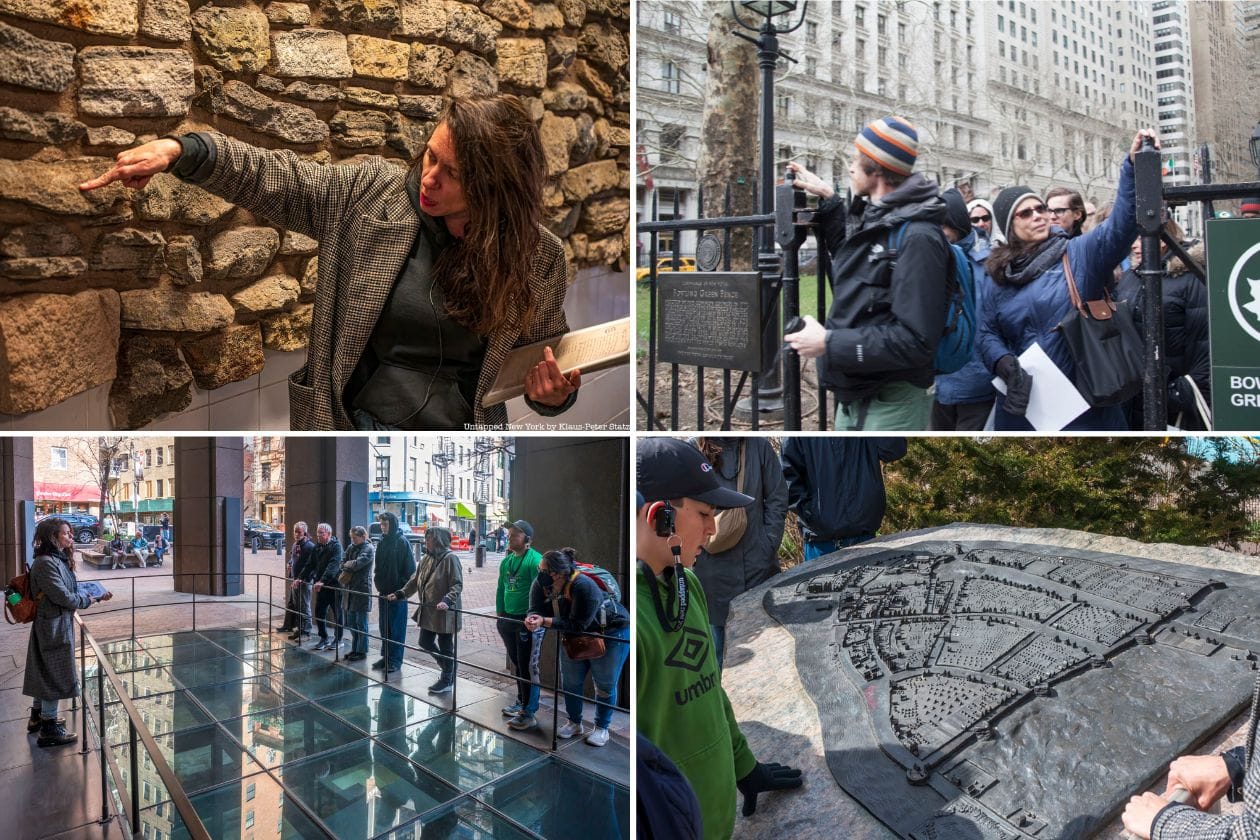
Uncover more of NYC's tangible Dutch history as you trace the original street grid of Manhattan and learn about life in the island's first European settlement.
⭐ FREE for Untapped New York Insiders & Explorers. Members book here.
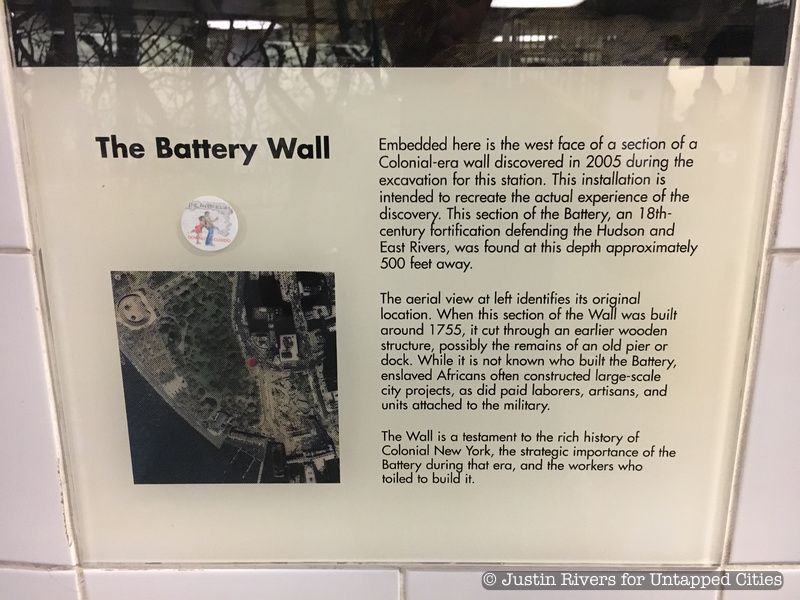
So, next time you head to the South Ferry Station, make sure to keep an eye out for this major segment of The Battery Wall, which is embedded into the tiled wall at the station’s entrance. Another L-shaped bastion segment is also on display at Castle Clinton in Battery Park.
Originally published August 9, 2017
Subscribe to our free newsletters
Free Newsletters
Get the best stories and things to do sent straight to your inbox.