
New Hidden Histories Partnership with Apple Podcasts
Apple Podcasts's new Hidden Histories guides focus on "surfacing little known histories tied to those places."
Apple Podcasts's new Hidden Histories guides focus on "surfacing little known histories tied to those places."

Archtober, NYC’s architecture and design month and an annual festival of architecture activities, programs and exhibitions, starts soon!
Explore a different building in NYC nearly every day of October on special architect-led tours!

Explore the seven years of NYC history when the city was occupied, brutalized, and eventually, liberated.


"You might not have bet on New York on November 25, 1783," said Stephanie Hill Wilchfort, Ronay Menschel Director and President of the Museum of the City of New York, in introducing MCNY's new exhibit on the Revolution. On Evacuation Day British troops left, ending their harsh seven-year long occupation, but New York City was in ruins.
“Its economy had collapsed," said Wilchfort, "its people were exhausted, and its future was deeply uncertain. And yet, within a decade, New York emerged as the nation’s economic engine—a position it continues to hold. This transformation reflects a larger truth about our city: out of devastation and loss have come creativity, reinvention, and growth."
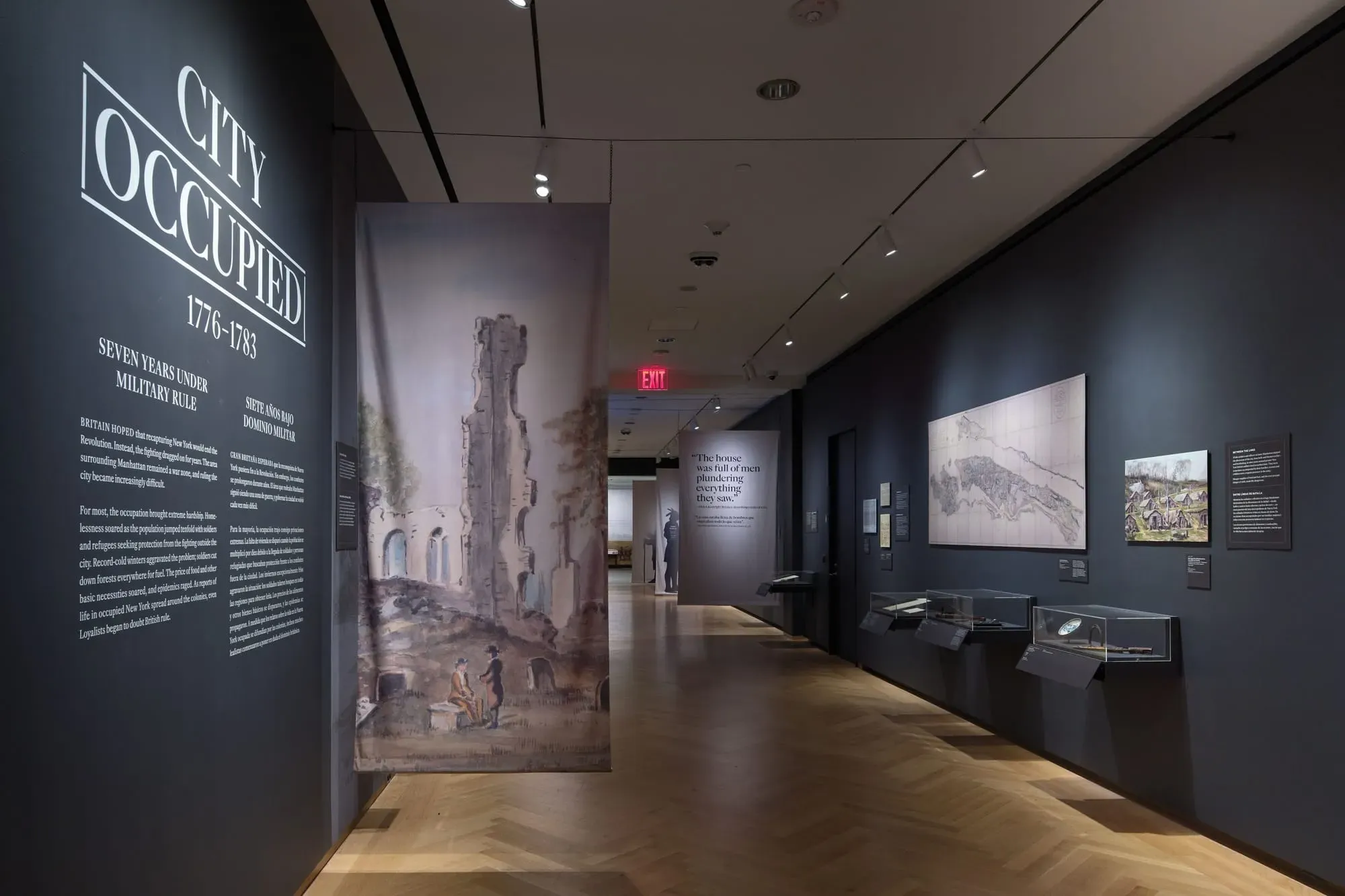
MCNY's remarkable new exhibit, The Occupied City: New York and the American Revolution, will help New Yorkers understand that theirs—not Boston or Philadelphia—is the city at the heart of the American Revolution.
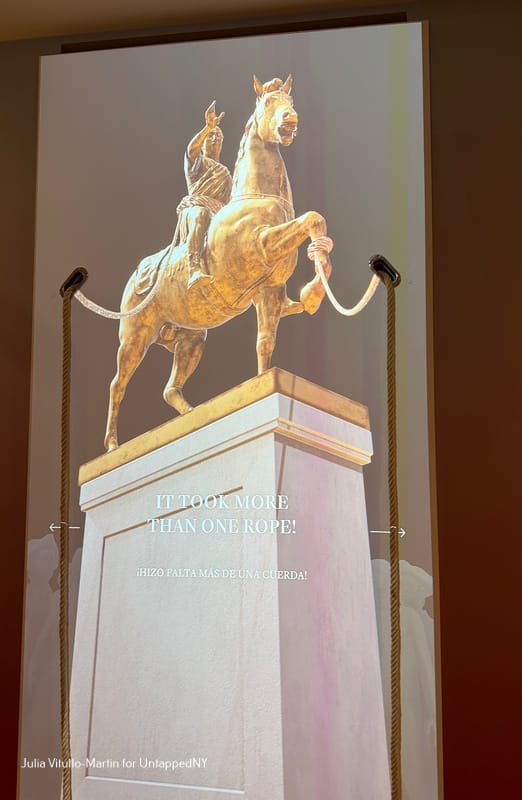
A good revolution topples kings, and ours was no exception, at least in gesture. On July 9, 1776, after hearing the Declaration of Independence read aloud for the first time, forty American soldiers and sailors crept into a dark alley near Bowling Green in Lower Manhattan. They climbed the statue of King George III, lashed ropes to its body and legs, and pulled hard until the reviled statue lay in pieces at their feet. The statue's 4,000 pounds of lead were soon made into some 42,000 musket balls. Its gold gilding was taken elsewhere.
The Smithsonian noted in 2022 that the sculpture of King George dressed as an ancient Roman emperor offended many local sensibilities, but its placement made it even worse. The statue faced Fort George, the British garrison named for the king. As a result, the horse's hindquarters greeted those walking along Broadway to Bowling Green.
The statue had a short life. Installed in 1770 to honor Britain's success in the French and Indian War, it also symbolized the huge amount of money Britain had spent to protect its American colonies—money it would shortly demand back in taxes. A fatal error, as things turned out.
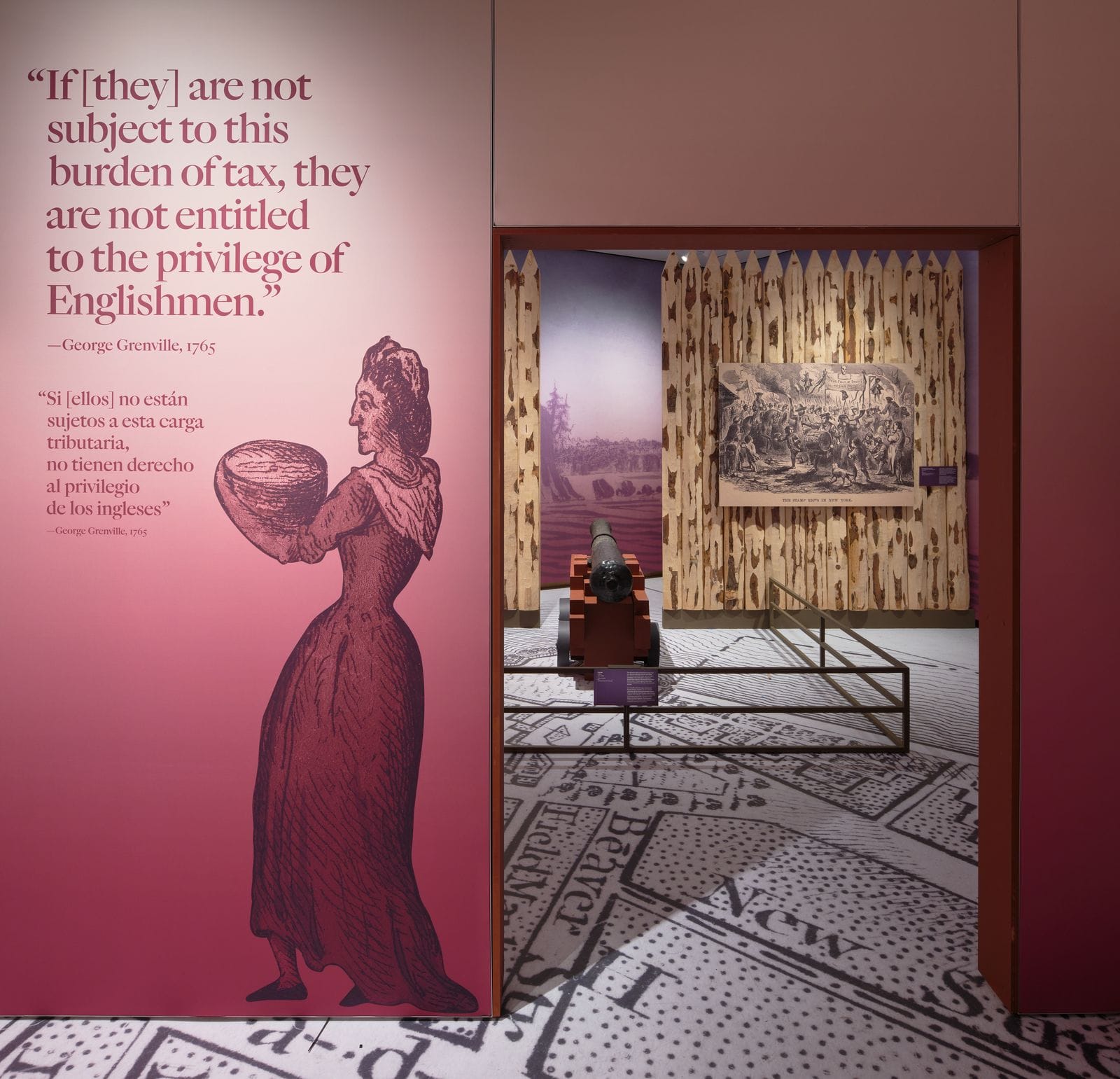
Meanwhile, New York exploded, says Occupied City: "Crowds stole muskets and bayonets from the arsenal at City Hall. British soldiers hid in the barracks. Armed revolutionaries patrolled the streets. Rebels assembled committees to enforce boycotts of British goods and punish dissenters. Armed mobs tormented Loyalists, seizing their property and driving them into hiding in woods and swamps. They destroyed printshops and violently threatened Anglican ministers, permitting no dissent. "
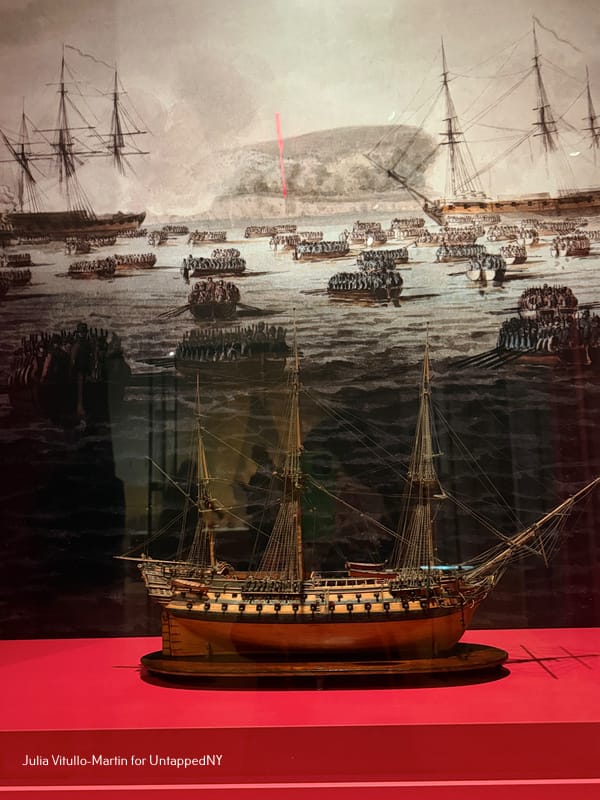
The Battle for New York was the American Revolution's largest and most important battle, says historian and Occupied City co-director Peter-Christian Aigner. The British invasion of the city occurred from the sea. This was predictable both because the 315-mile-long Hudson River made New York strategically crucial, and because the five boroughs' hundreds of miles of shoreline meant that the Continental Army could not easily defend the city. The British deployed 421 ships to New York's harbor in the summer of 1776. This was the largest amphibious invasion until World War II, says Aigner.
The far superior, far better-manned British Army shattered George Washington's smaller and inexperienced Continental Army. The decisiveness of this battle could well have stopped the American Revolution in its tracks. Instead, Occupied City shows, "With the aid of skilled white, Black, and Native mariners and the cover of a heavy fog, General Washington escaped with his depleted forces across the East River to Manhattan." Or, as journalist Russell Shorto wrote, "Washington executed one of the most brilliant maneuvers of the war, using fog and the cover of darkness to get 9,000 soldiers safely across the East River to Manhattan."
After multiple defeats in the fall of 1776, the Continental Army escaped to New Jersey, leaving New York City under British control that would last seven years.
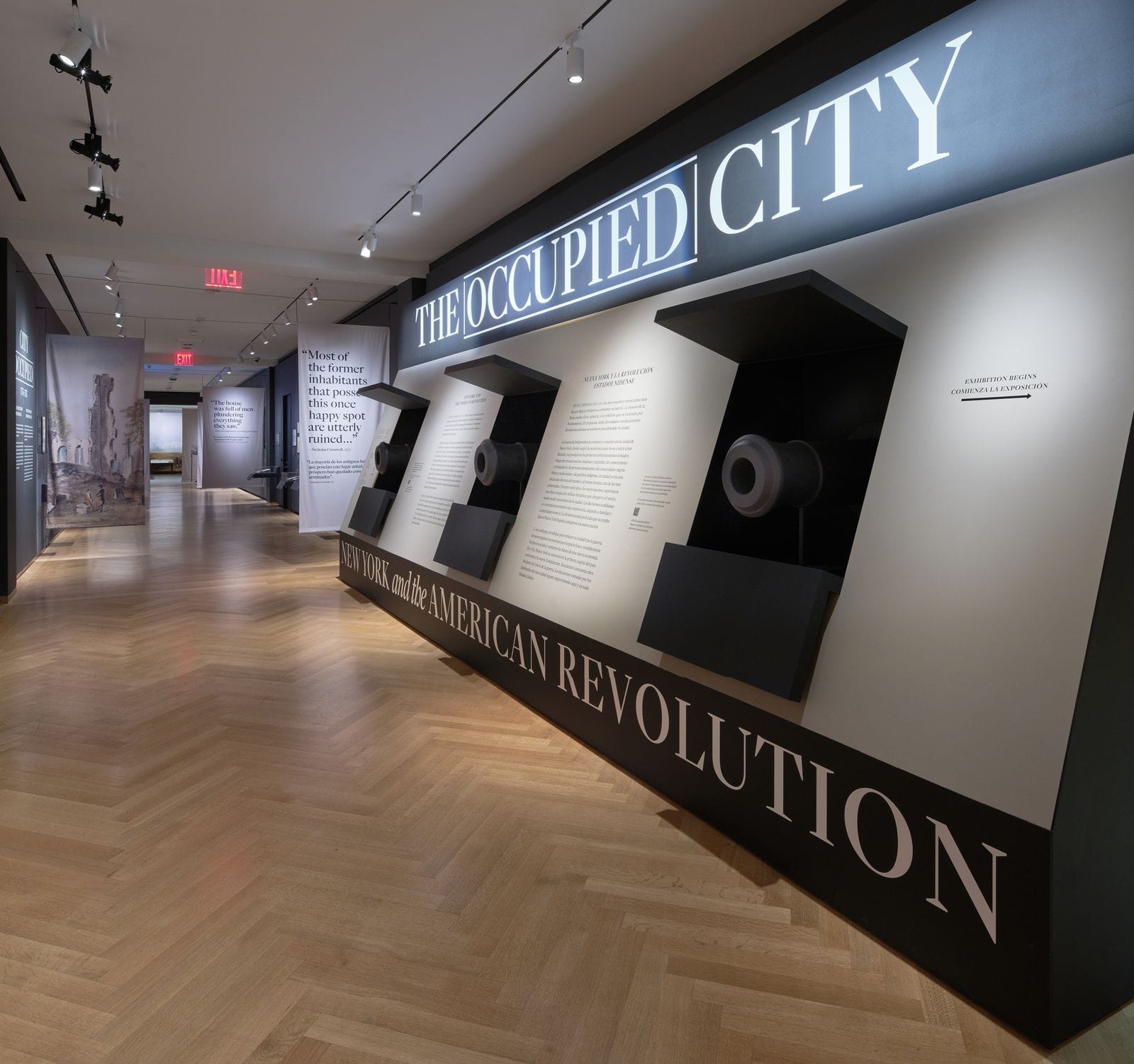
The British had hoped that seizing New York City and routing the Continental Army would end the American Revolution. After all, New York had been the king’s favorite colony, “exceedingly necessary…to our kingdom,” George II had said in 1730.
Close to the sugar islands that were the most profitable part of the British Empire, New York's port had flourished for decades and its people had become extremely wealthy. The French and Indian War (1754-63), which many scholars regard as the first global war, had provided limitless opportunities for manufacturing and commerce. New Yorkers sold the military textiles, weapons, horses, food, and drink, and, according to the NYC Revolutionary Trail, life was good. But while New York had many Loyalist residents, especially among the elite, revolutionary fervor prevailed, even at the cost of great suffering.
"Most of the former inhabitants that possessed this once happy spot are utterly ruined," said English diarist Nicholas Cresswell in 1777, quoted in the banner above. "Homelessness soared as the population jumped tenfold with soldiers and refugees seeking protection from the fighting outside the city," the exhibit illustrates. "Record-cold winters aggravated the problem; soldiers cut down forests everywhere for fuel. The price of food and other basic necessities soared, and epidemics raged. As reports of life in occupied New York spread around the colonies, even Loyalists began to doubt British rule."
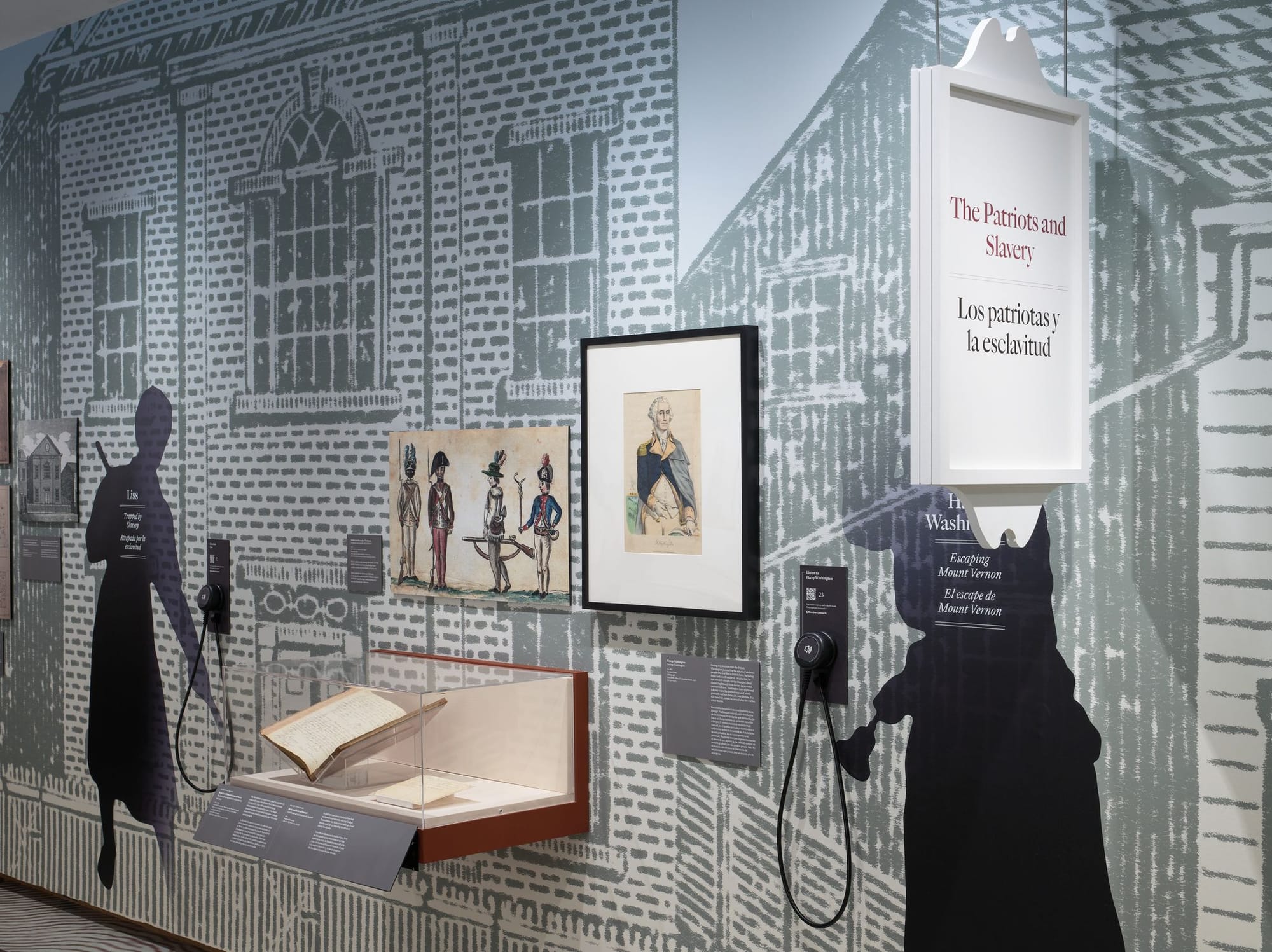
George Washington, himself a slave-holder who in his lifetime owned over 300 slaves, negotiated a peace treaty with Britain that required that refugees and runaway slaves be returned to owners. New York had more slaves than any other American city, says Aigner. One in four New Yorkers was enslaved.
Yet despite the British empire’s significant role in the African slave trade, Commander-in-Chief Sir Guy Carleton refused to return slaves, offering freedom to Black Loyalists who could prove their wartime service. The British granted over 3,000 "passports," or certificates of freedom, that allowed Black Loyalists to leave for other parts of the empire.
This was the largest emancipation before the American Civil War in American history. Important as the emancipation was, as many as two-thirds of Black New Yorkers remained enslaved after the Revolution. The Revolution freed New York City, but not its enslaved residents.
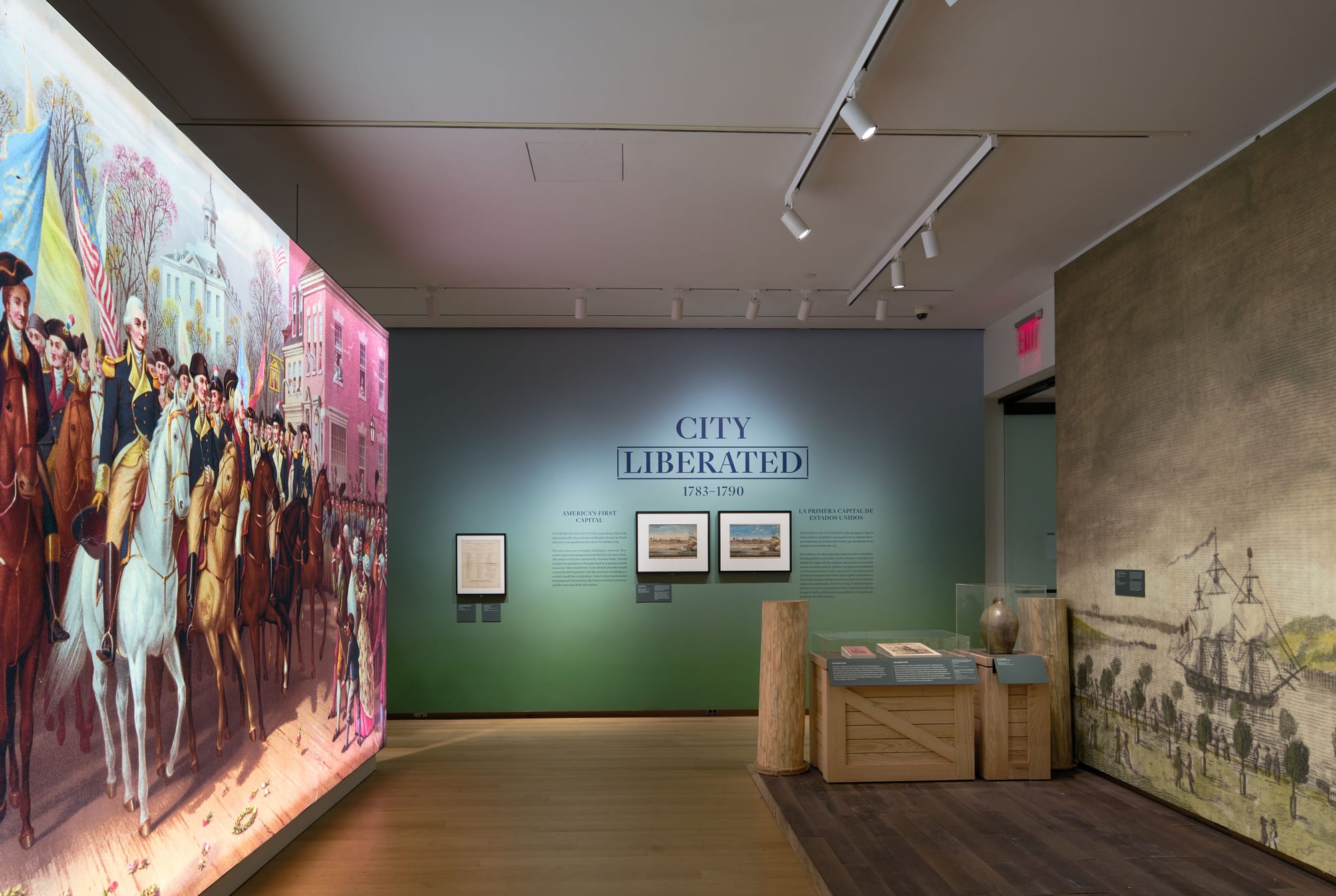
The British army finally evacuated in November 1783, but conflicts and anger over the occupation did not end. Instead, New York became a bitterly divided city. With the exit of the British, the economic decline that had set in with the war worsened. What should be the fate of those Loyalists who had opposed the Revolution? Should they be allowed to return to their former lives and former privileges? And who would rule New York and guide its development?
Meanwhile, the country itself was rudderless as the former colonies fought over replacing the Articles of Confederation with the new Constitution. That would not happen until June 21, 1788.
The Occupied City: New York and the American Revolution is ongoing. The museum will host a series of events in conjunction with the exhibit, including: A Divided City: Revolutionary-Era New York and the Politics of Polarization on Friday, May 15, featuring MS NOW journalist Antonia Hylton, Peter-Christian Aigner, Christina Greer, professor at Fordham University, and Mike Duncan, creator and host of Revolutions Podcast, for a discussion exploring how allegiance was shaped not only by political principle, but also by social class, commerce, rivalry, ethnicity, and the demands of survival.
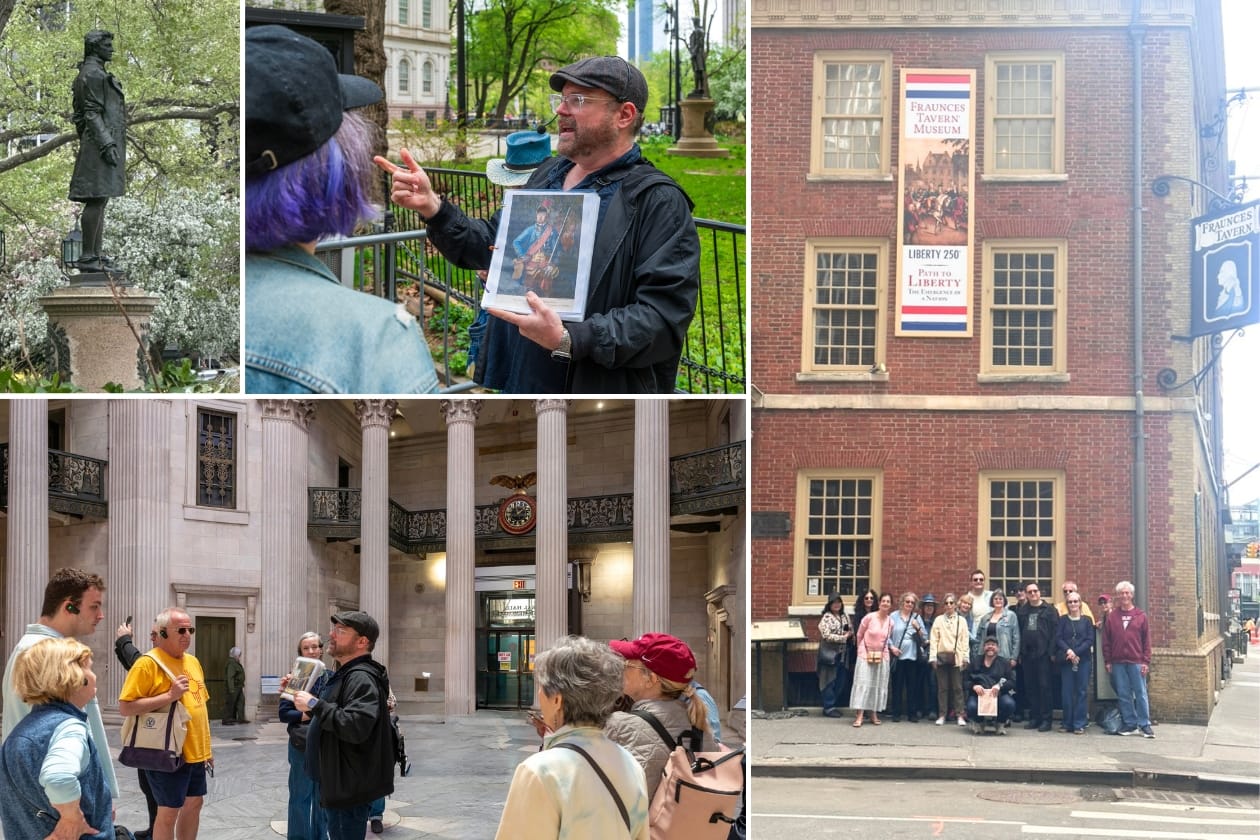
Multiple Dates: Walk in the footsteps of the Washington's spy ring, visit the site of his inauguration, and step inside the tavern where he bid farewell to his troops.
🎟️ Includes admission to the Fraunces Tavern Museum
⭐ FREE for Untapped New York Insiders. Members book here.
Subscribe to our free newsletters
Free Newsletters
Get the best stories and things to do sent straight to your inbox.