Advertisement

The Top 10 Oldest Churches in NYC

The Top 10 Oldest Churches in NYC
Become a paid member to listen to this article

With some of the oldest New York City churches dating back to the 1700s, they have been host to George Washington, runaway slaves, Boss Tweed, and 9/11 workers. New York City churches have also adapted to the changing neighborhoods and communities around them, serving as hospitals, meetinghouses, comfort stations, museums, and even synagogues. However, the buildings themselves remain largely unchanged from when they were built, complete with secret rooms and passageways that are all but forgotten today. Below, discover the ten oldest churches still standing in New York City, starting with the most recent.

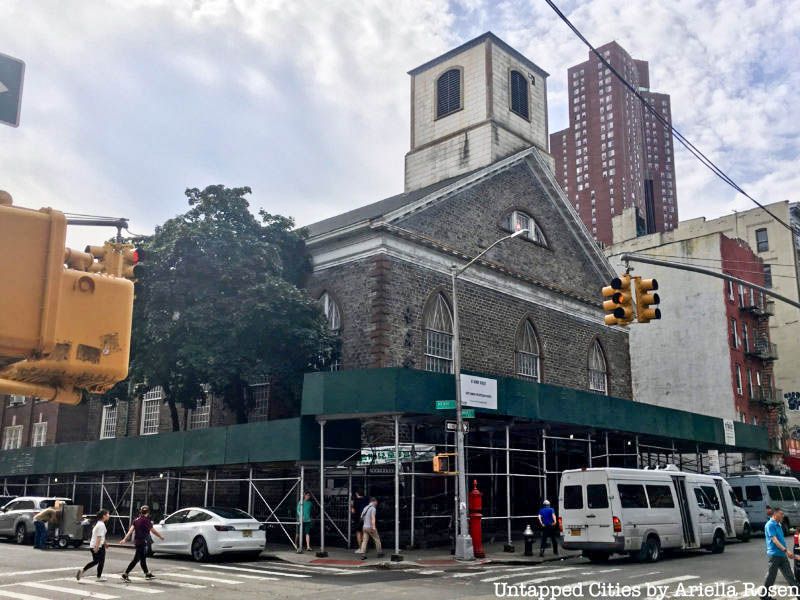
10. St. Augustine’s Episcopal Church (1829)

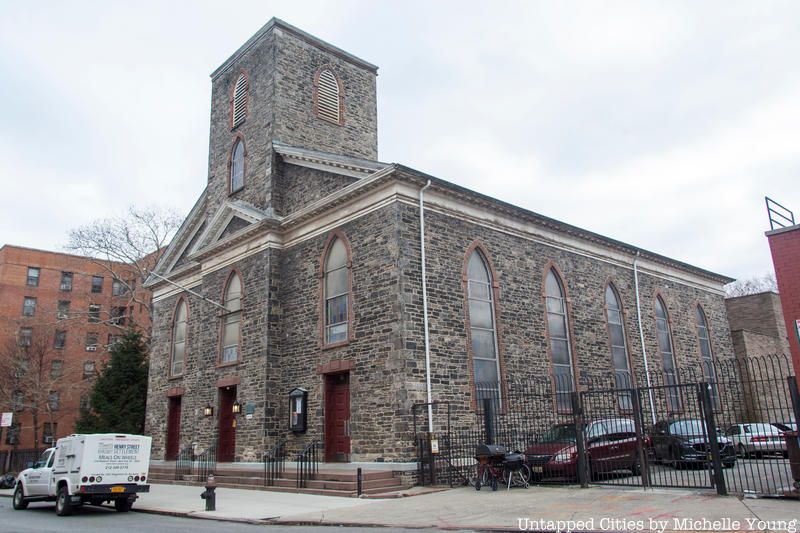
 St. Augustine Episcopal Church on 290 Henry Street, built 1828-29.

St. Augustine’s Episcopal Church was built on Henry Street in 1829 using stone that was quarried at Mount Pitt. Even though the church was not finished until 1829, it was consecrated by the third bishop of New York in 1828. The wooden belfry that used to be on top of the church’s tower was removed in the early 1960s, but the bell that it housed used to serve as the local fire alarm.

One notable feature of the church is the hidden slave galleries. There were two of these cramped, dark rooms, one on either side of the organ on the balcony at the back of the church. Slavery in New York State became illegal in 1827—the end of a gradual emancipation process that started in 1799—but New York continued to recognize the slave status of those who came with their masters from other states. When Eliza Magear Tweed died in 1876, Boss Tweed, who was a fugitive at the time, hid in one of these slave galleries so he could see his mother’s funeral, which was held at St. Augustine’s. Later, these rooms were used as a place to hold Sunday school for children. While most churches have covered up or gotten rid of their slave galleries, St. Augustine’s calls attention to theirs with art exhibits and tours that honor the memory of those who once sat in them.

9. New Utrecht Reformed Church (1828)

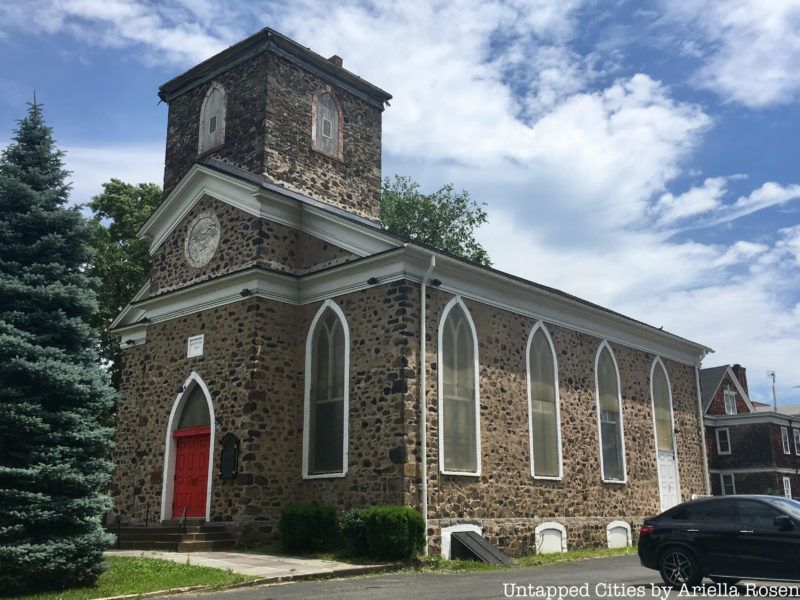
New Utrecht Dutch Reformed Church on 1827 84th Street in Brooklyn, built in 1828.

The New Utrecht Dutch Reformed Church was built on the site of the old New Utrecht schoolhouse, near the place where the original church (built in 1700) once existed. During the Revolutionary War, the 18th-century church was used by the British as a hospital, a prison, and then a riding school. The British troops also held target practice in the church’s cemetery, which led to the destruction of many of the tombstones.

The church moved to its current location in 1828. The original church from 1700 was dismantled and the church’s stones were used to construct the new one. In front of the church, a 100-foot Liberty Pole is planted on the lawn to mark the place of the first American flag in New Utrecht. This is the sixth Liberty Pole that New Utrecht has erected. The original was placed there in 1738.

8. Bialystoker Synagogue (formerly Willett Street Episcopal Church) (1826)

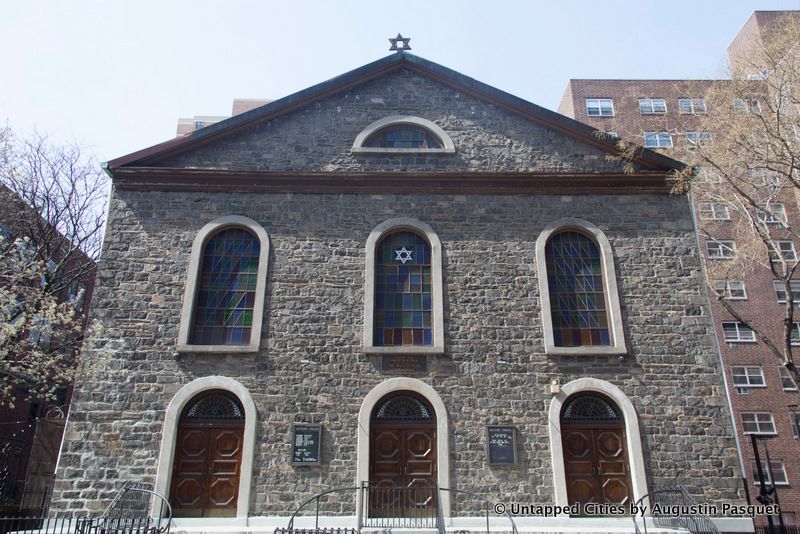
Bialystoker Synagogue (formerly Willett Street Episcopal Church) on 7 Bialystoker Place, built 1826.

Forty years before the Bialystoker Synagogue made its home at 7 Willett Street (now Bialystoker Place) in 1905, the building was home to the Willet Street Episcopal Church. Built in 1826, the Federal-style church was made of Manhattan schist, which had been quarried on Pitt Street. There are only three other buildings in Lower Manhattan from the Federal period that are made out of fieldstone.

There is no written record confirming this but oral tradition maintains that the synagogue was a stop on the Underground Railroad. A hidden door in the corner of the women’s gallery leads to a ladder going up to an attic. It is believed that this concealed room was a place for runaway slaves to take refuge.

7. New Lots Community Church (1824)

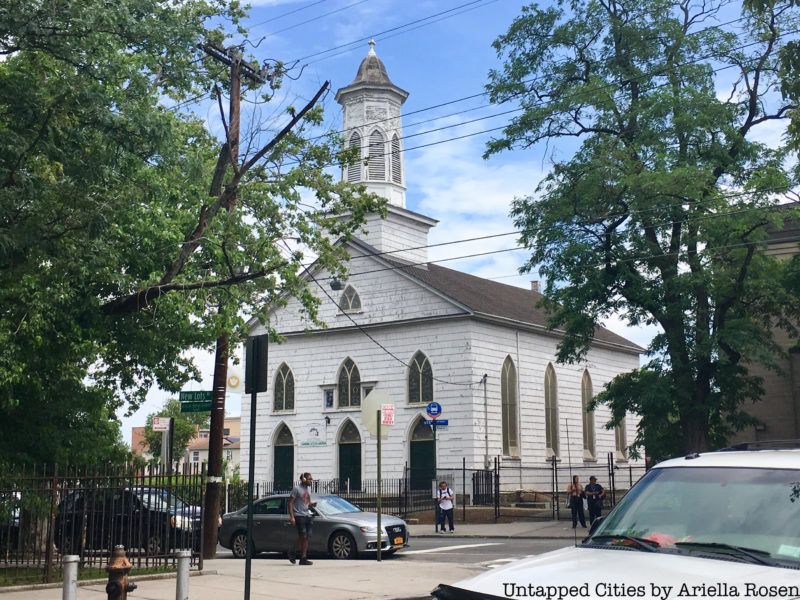
New Lots Community Church (formerly New Lots Dutch Reform Church) on 630 New Lots Ave, built 1824.

An offshoot of the Flatbush Church, the farmers of New Lots obtained permission in 1823 to build their own local church since the other one was too far away. The farmers lacked the money to buy materials or hire builders, so they collected timber from the woods near their property. This process was aided by the fact that a hurricane had taken down many mighty oak trees in the area two years prior. The community saw these fallen trees as a gift from God, which they accepted gratefully.

When the church’s frame was complete, the townsfolk gathered for the “roof raising.” With the exception of the plasterwork, every part of the church was made by the local community that it was to serve. It is a very plain structure with little ornament beyond the gothic style arched windows. Completed in 1824, the original wooden building still stands today, which is a testament to the sturdy craftsmanship of the settlers.

6. First Chinese Presbyterian Church (1817-19)

First Chinese Presbyterian Church (formerly Market Street Reformed Church) on 61 Henry St., built 1817-19.

The building that currently stands at 61 Henry Street first opened its doors in 1819 as the Market Street (Dutch) Reformed Church. Predating the trend of Gothic Revival Style churches by nearly two decades, the building’s pointed Gothic windows and doors are among the earliest in Manhattan. The Dutch Reformed Church disbanded in 1864. In 1866, the church entered its second phase of existence as a Presbyterian house of worship when the Church of the Sea and Land moved in.

Established in the previous year, the Church of the Sea and Land was a Presbyterian congregation for sailors, former sailors, and their friends and families. The Church of the Sea and Land dissolved in 1972, but they passed the torch to the First Chinese Presbyterian Church, with whom they had shared the space since 1951.

5. Old St. Patrick’s Cathedral (1809-15)

Advertisement

Great! You’ve successfully signed up.

Welcome back! You've successfully signed in.

You've successfully subscribed to Untapped New York.

Success! Check your email for magic link to sign-in.

Success! Your billing info has been updated.

Your billing was not updated.