

Secrets of NYC
✉️ The Lost Pneumatic Tube System at the NYSE
Long before fiber optics and wireless networks, bursts of compressed air kept Wall Street moving.
Long before fiber optics and wireless networks, bursts of compressed air kept Wall Street moving.

A new exhibit explores the unrealized, extant, and lost projects of this prolific NYC artist!


Discover NYC's feathered celebrities — from Central Park’s 'Hot Duck' to Brooklyn’s noisy Monk Parrots!


Aside from the pervasive pigeon, New York City is home to a diverse array of birds! According to the New York City Audubon, more than 200 different species frequent the New York City metropolitan area every year, and over 400 species have been recorded here. New York City’s location along the Atlantic Flyway bird migration route and the various habitats the city offers make it a hospitable stop for all kinds of birds, from waterbirds and raptors to songbirds and more.
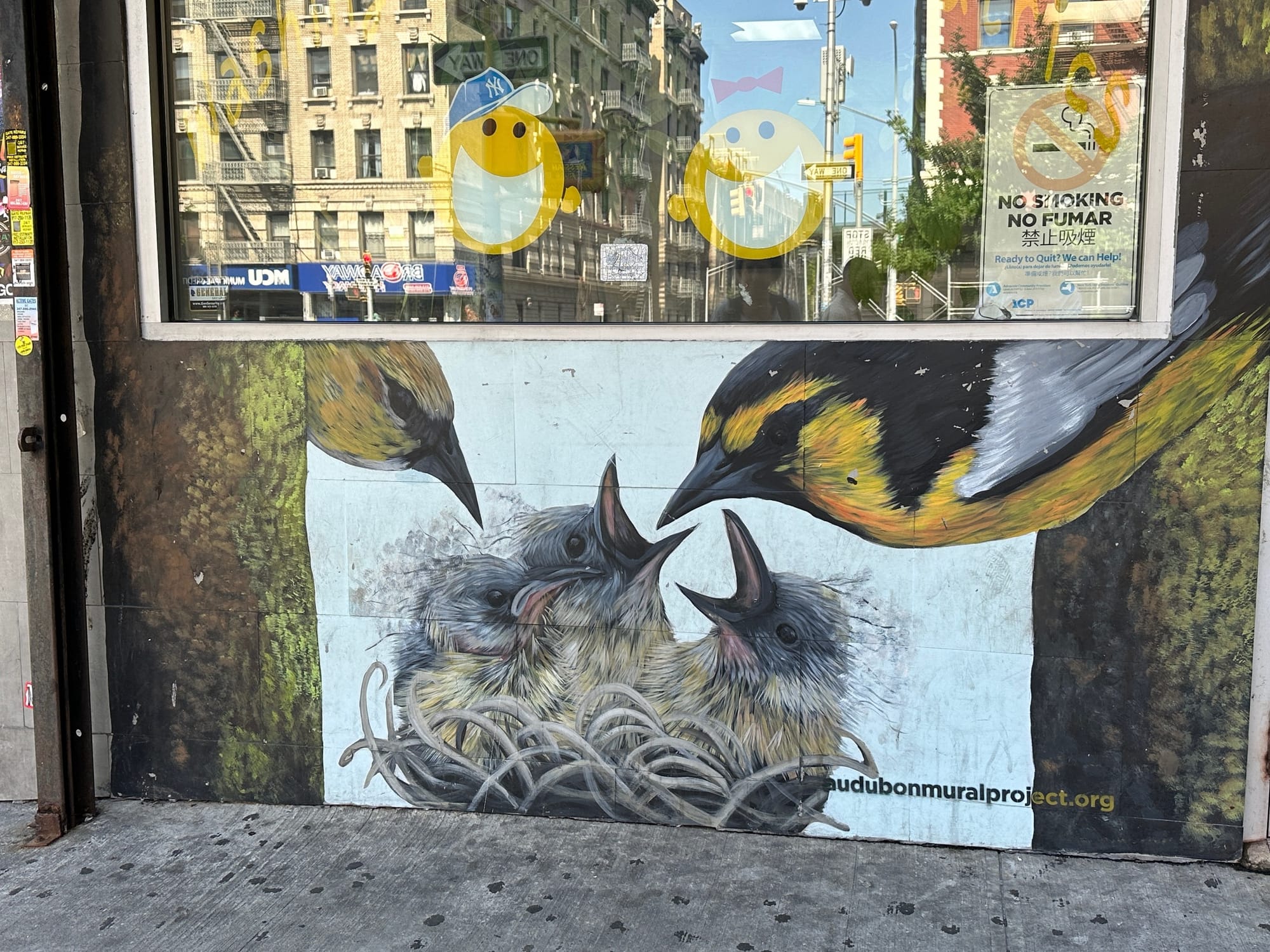
Discover a diverse array of vibrant bird murals in surprising locations around Upper Manhattan, with insight from an experienced birdwatcher!
⭐ Get 50% off as an Untapped New York member at the Insider tier or higher!
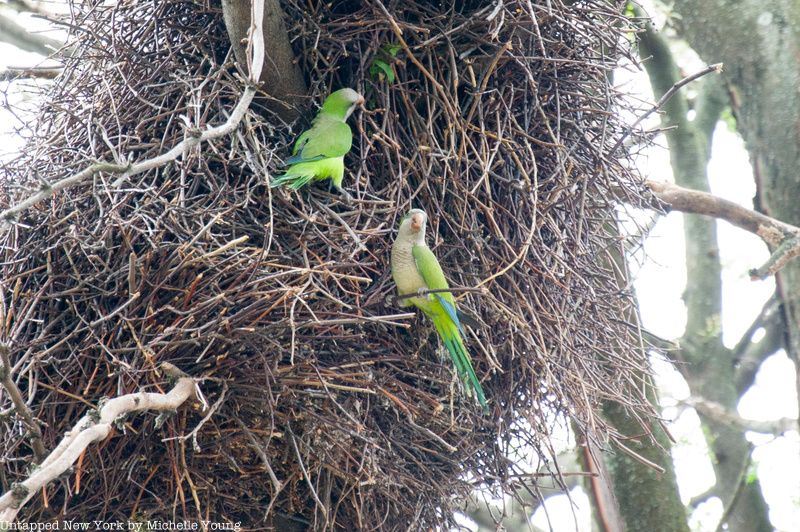
In certain parts of Brooklyn, you may catch a flash of green against a tangled nest of twigs and branches. The brightly colored birds who make these massive communal homes are Monk Parrots. The grey hoods that color their foreheads inspired their name. Native to Bolivia, Brazil, Paraguay and Uruguay, they have been famously spotted in the spires of Green-Wood Cemetery and at Brooklyn College. New Yorkers have also seen the parrots in Brooklyn neighborhoods like Red Hook, Bay Ridge, Manhattan Beach, and Canarsie and in some parts of Queens and the Bronx.
According to Stephen Baldwin, an enthusiast who runs the site BrooklynParrots.com, tens of thousands of Monk Parrots were sent to the United States from Argentina in the 1960s. Argentina had an overabundance of these birds and they were ruining crops. It’s unclear however how exactly the parrots came to be “in the wild.” The most popular story is that they arrived in an unmarked crate at New York’s JFK Airport in 1967 and were accidentally released by a curious airport employee. Another theory states that the birds are released pets, set free by buyers who regretted their talkative purchases. A final version of the origin story is that they all flew away from a shuttered pet shop on Flatbush Avenue in Brooklyn. As of 2020, Baldwin estimates there are about 40 birds at Brooklyn College, 60 at Green-Wood Cemetery, and perhaps another 50 in all of South Brooklyn (including Bay Ridge, Bensonhurst, Bath Beach, Manhattan Beach, and Canarsie).
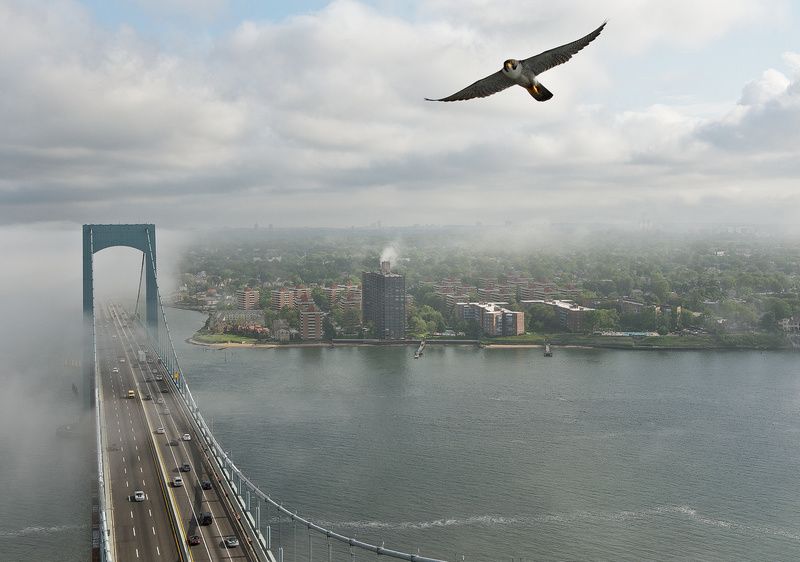
The high bridges and skyscrapers of New York City make the perfect home for a population of Peregrine Falcons. These predatory birds, native to the East Coast, can be found nesting on the Brooklyn Bridge, Verrazano Bridge, Throgs Neck Bridge, George Washington Bridge, Metropolitan Life Building, Bank of New York, St. Regis Hotel, and Riverside Church. The high perches of New York City’s architecture and infrastructure offer the falcons a great vantage point for hunting their prey. From their lookouts, they can swoop down at speeds of 200 miles per hour!
New York City’s falcons were among the first animals to receive aid from the Endangered Species Act of 1973. According to the NYC Parks Department, over 145 falcons have been successfully hatched and banded by biologists since 1983. Now, according to the New York State Department of Environmental Protection, while Peregrine Falcons are listed as an endangered species in New York State, New York City has the largest urban population of them.
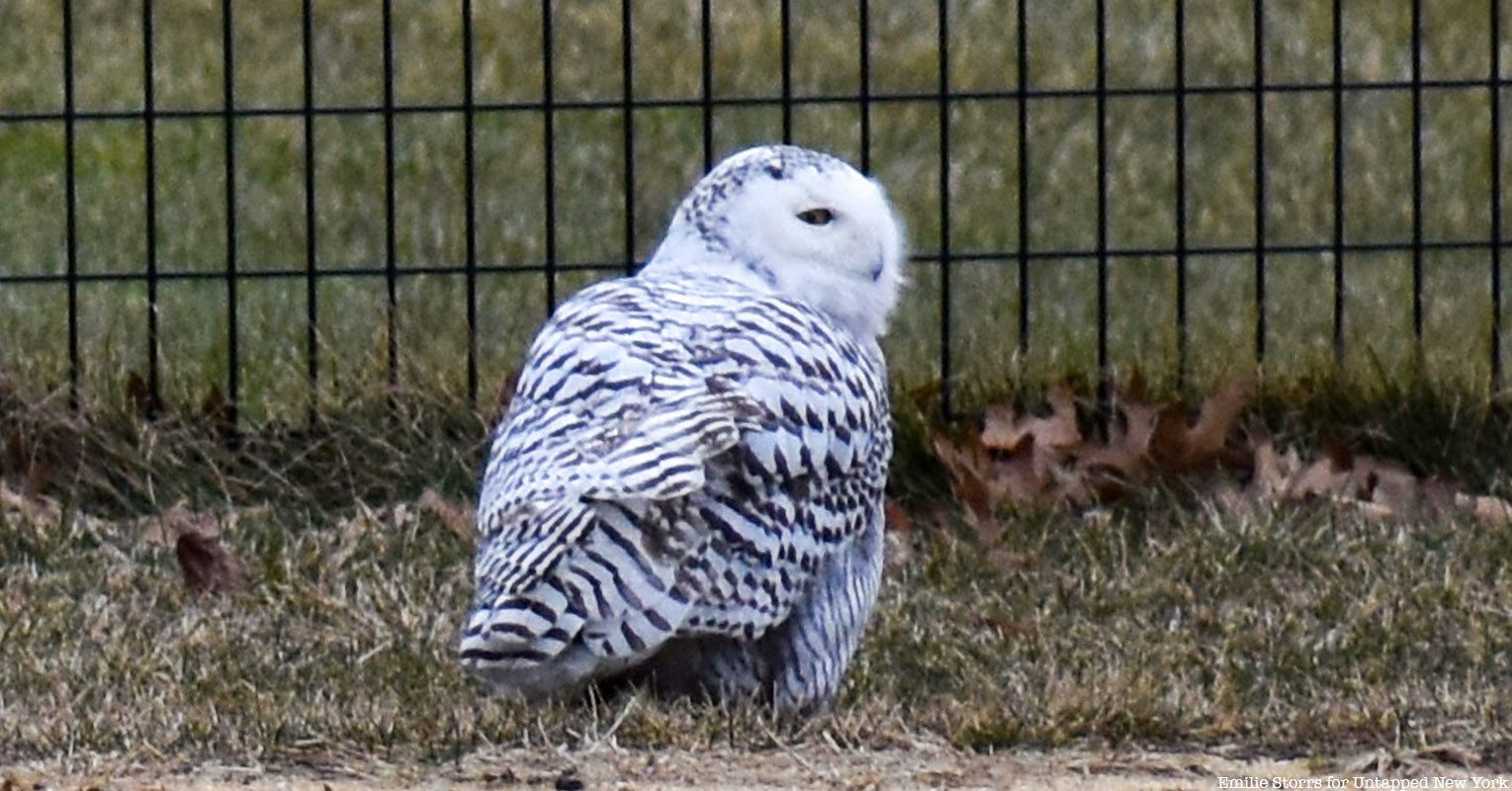
The most recent celebrity bird sighting happened in December 2024 when a snowy owl was seen in Shirley Chisholm State Park. There was a scene in February 2021 when a rare Snowy Owl took up residence in Central Park. The appearance of the majestic white bird was a welcomed bright spot in an otherwise gloomy second winter of the pandemic. With little else to do, crowds of New Yorkers flocked to the park to catch a glimpse of this visitor. Wild City author Thomas Hynes spent a snowy Saturday night with the Snowy Owl and counted a crowd of roughly 100 admirers, which included actor and comedian Steve Martin! The owl didn’t disappoint when it appeared atop one of the turrets on the 1864 pump house at the Reservoir.
Before the Snowy Owl appeared in 2021, the last sighting of this species in Central Park was in 1890, more than 100 years ago! While these owls are usually found in the Arctic regions of North America, Europe or Asia, they pass New York in their normal winter migratory patterns. You can see a Snowy Owl specimen on display in the Theodore Roosevelt Memorial Hall of the American Museum of Natural History. This specific bird was shot by Theordore Roosevelt himself near his home on Long Island in 1876 and donated to the museum in 1911.
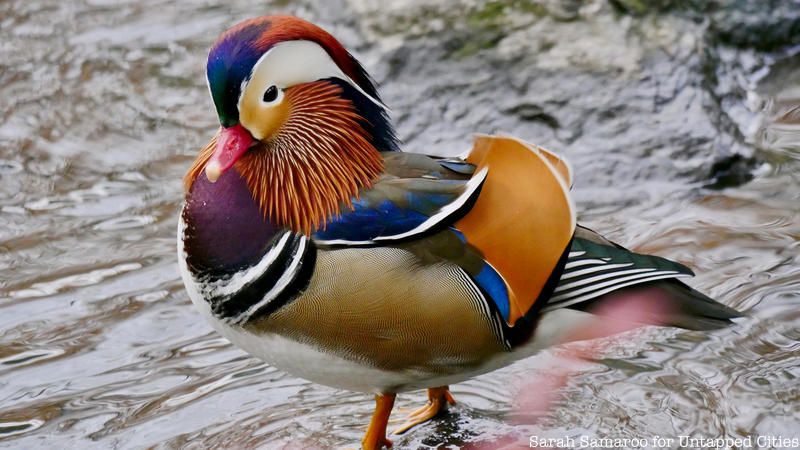
Few birds have thrown New Yorkers into such a frenzy as the mysterious Mandarin Duck did in 2018. The tiny bird made a big splash when he turned up at the Central Park Pond near the Hallett Sanctuary that fall. Mandarin Ducks are usually found in East Asia, so how this guy got to Central Park was quite puzzling. Although the bird had a band on its leg, no one claimed it. When the duck first appeared, the NYC Parks Department told Untapped New York, “It is likely that this duck escaped captivity or was released. Unfortunately, it’s not totally uncommon for people to release pets into a park when they can no longer care for them. This is both against Park rules, and bad for the animal. We have confirmed that it did not come from any of the local zoos.”
Before the Mandarin Duck disappeared as mysteriously as it emerged, there was Mandarin Duck fever in New York City. Dogs were dressed up as the duck, t-shirts were made, The Cut branded the bird “Hot Duck,” and the bird even made it to the pages of gossip website TMZ! The duck made trips to New Jersey and Brooklyn while he was in New York, and was last spotted in March 2019, right before the spring mating season.
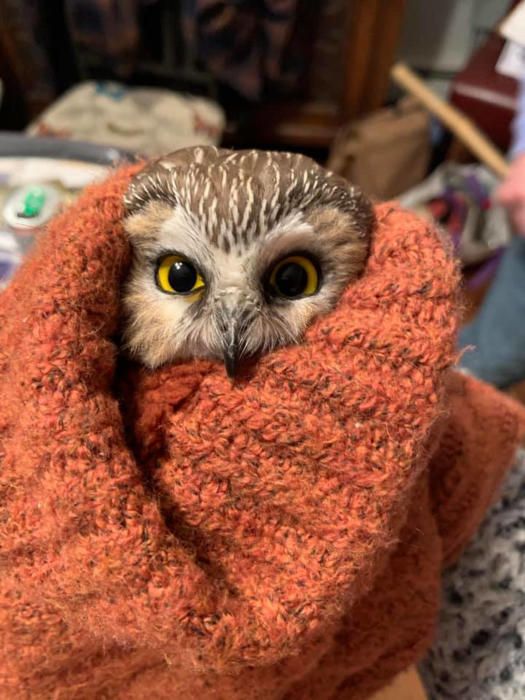
Little Rockefeller, a small Saw-Whet Owl brought some Christmas cheer to New York City in 2020 when he hitched a ride from Oneonta to Rockefeller Center inside the Rockefeller Center Christmas Tree. Though her stay in New York City was brief, the tiny owl with big eyes captured the hearts of New Yorkers who followed her story of rehabilitation. After he was discovered by a crew member on the Christmas tree transport team, Little Rockefeller, as she was dubbed, was sent to the Ravensbeard Wildlife Center in Saugerties to recover from his journey.
Though it looks like a baby, Rocky, as the owl was affectionately called, is a full-grown Saw-Whet Owl. Saw-whet Owls are the smallest owls in the northeast. At Ravensbeard Wildlife Center, Rocky was given fluids and fed “all the mice she would eat.” After receiving a clean bill of health from the vet, the owl was released back into the wild at dusk. If you ever get the chance to go see a rare bird in New York City, please keep in mind the Audubon’s guide for ethical bird photography, which reminds us to avoid causing birds any unnecessary stress or disruption.
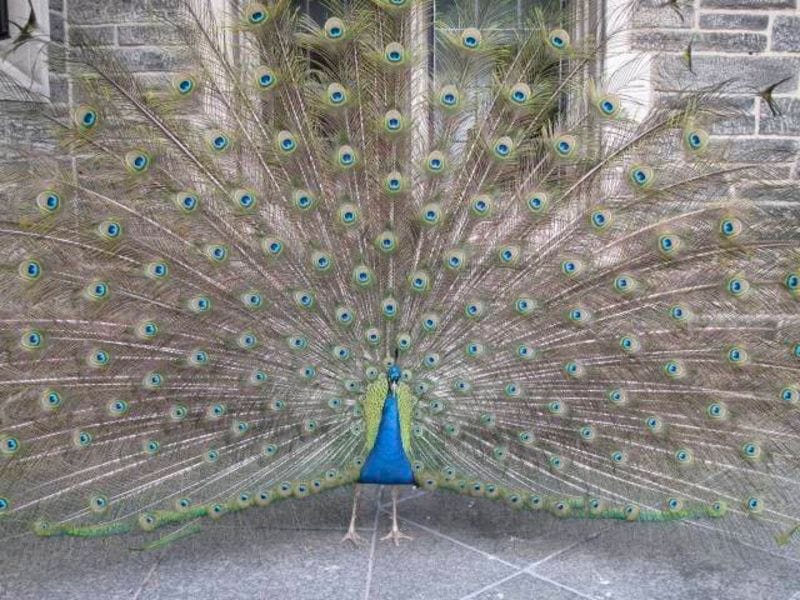
Peacocks were first introduced to the Cathedral of St. John the Divine in the 1980s when the Bronx Zoo made a donation. Jim and Harry, the blue males, arrived in 2002, and Phil, the white-feathered one, came later. These colorful birds are named after clergymen at the Cathedral. One even had his own Twitter account: @CathedralPhil, though the account went silent in 2019. On January 21st, 2023, the three peacocks retired to Animal Nation, an animal sanctuary in upstate New York where they can be properly cared for as they age.
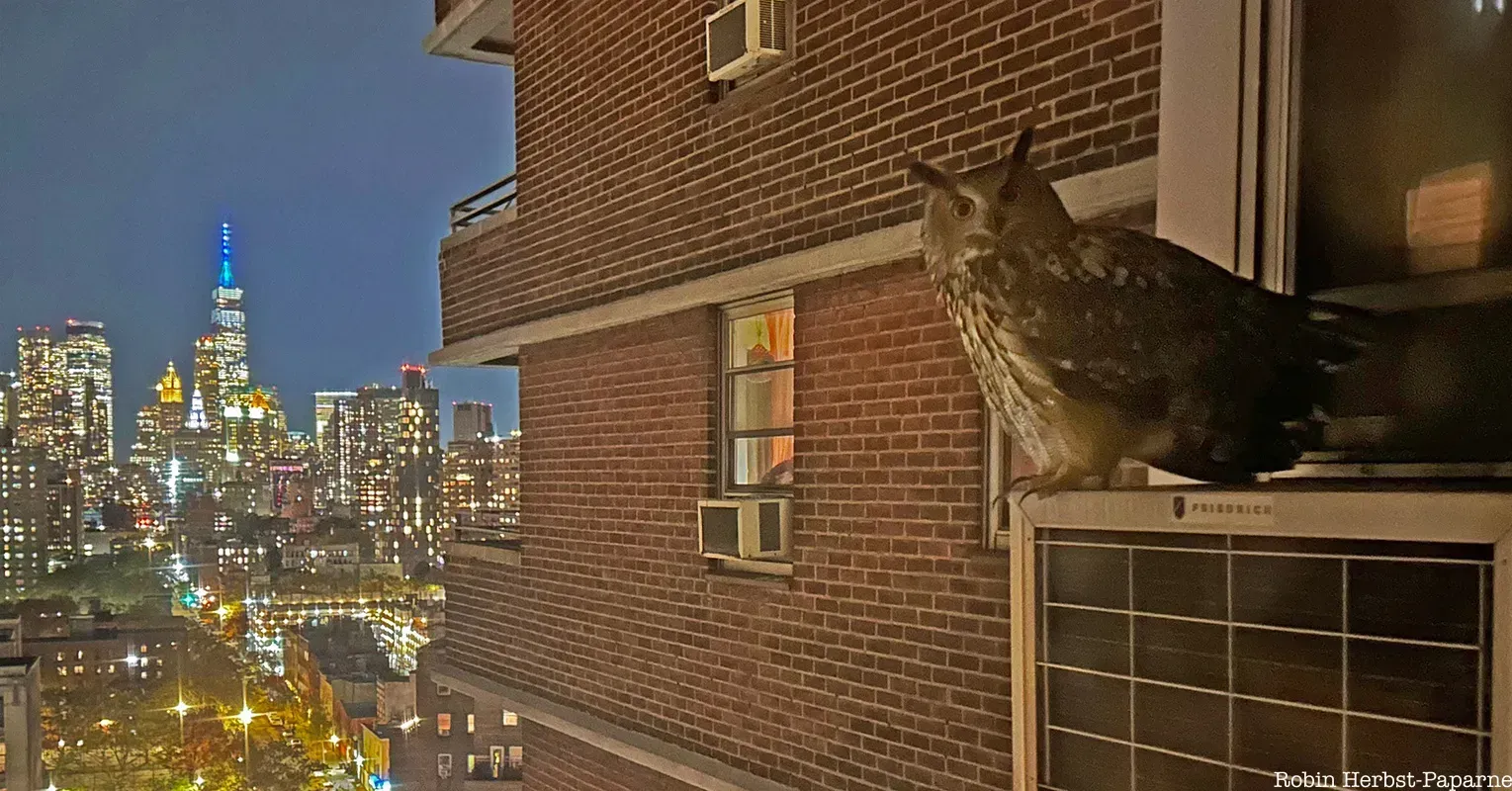
Flaco, an Eurasian eagle owl, gained fame in February 2023 after he was released from his enclosure at the Central Park Zoo by an act of vandalism. During his time as an escapee, New York bird watchers devotedly tracked his movements and reported sightings of the bird from the Lower East Side of Manhattan to the Upper West Side. Flaco's time of freedom tragically came to an end in February 2024 when the 14-year-old owl collided with glass on a building on West 89th Street.
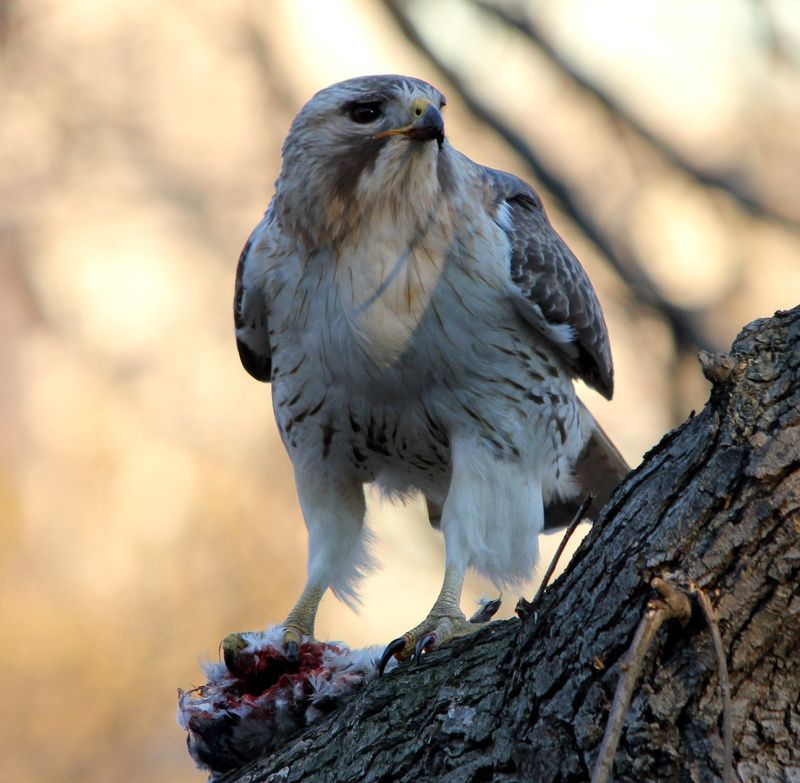
Pale Male needs no introduction: the “world’s most famous red-tailed hawk” has plenty of fans and his own Wikipedia page and a play inspired by his story. Born in 1990, he became one of the first “urban-dwelling” red-tailed hawks known to reside on a building rather than nestling in a tree or on a cliff. Due to his perch on top of a 5th Avenue balcony near Central Park, some of his neighbors over the years have included the likes of Woody Allen and Paula Zahn.
One of his zealous supporters was actress Mary Tyler Moore. Moore advocated for his rights when the co-op board that controlled Pale Male’s building removed his nest due to complaints about droppings and eaten animal carcasses. With help from other animal rights activists, Moore took a fierce stand, which prompted the board to come to an agreement with the local Audubon Society. Pale Male’s nest was eventually replaced, and over the years, birdwatchers and websites like Palemale.com have continued to monitor him.
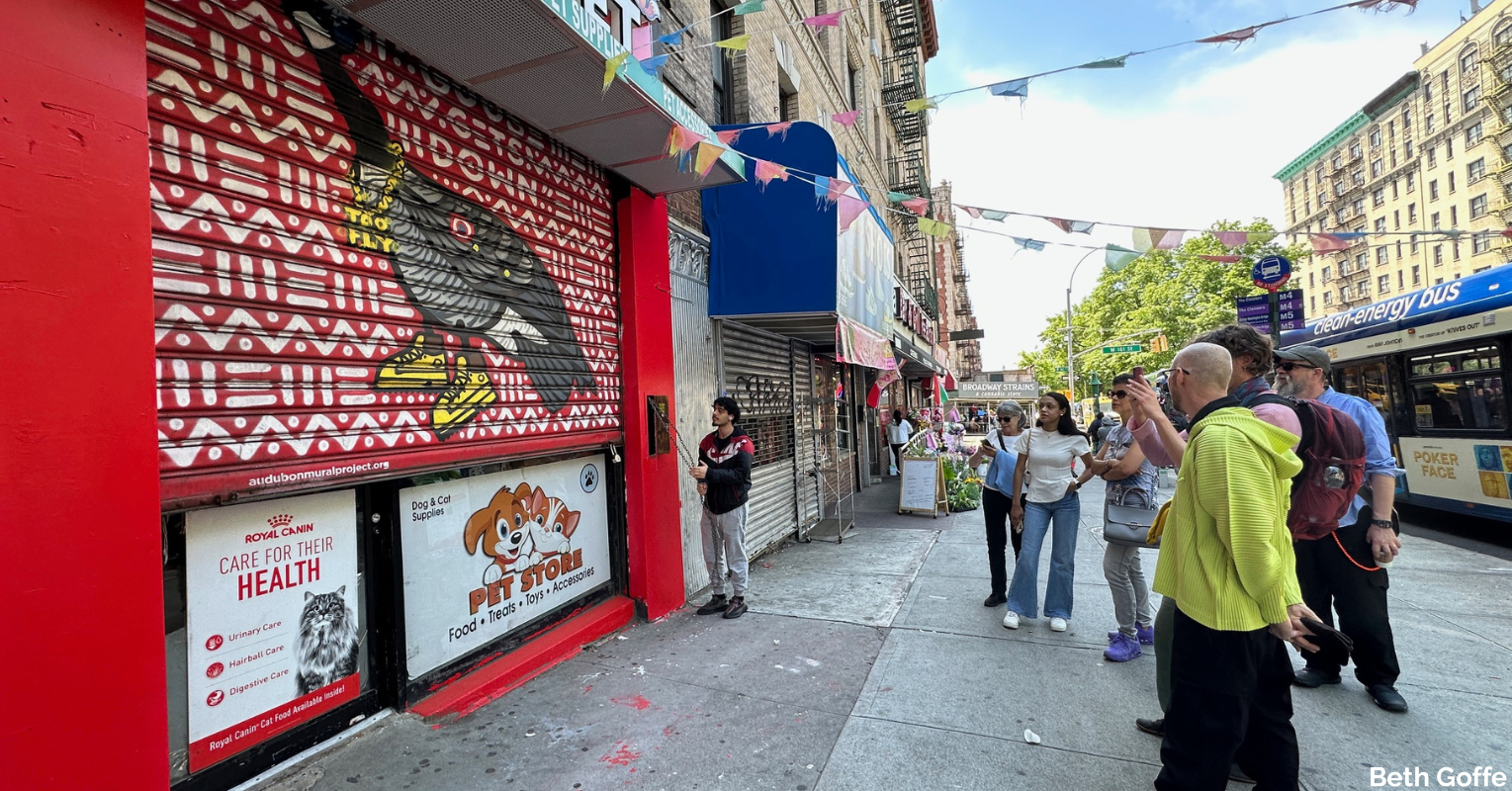
Discover a diverse array of vibrant bird murals in surprising locations around Upper Manhattan, with insight from an experienced birdwatcher!
Next, check out more of NYC’S Most Famous Animals Throughout History
Originally published April 4, 2021
Subscribe to our newsletter